Rockfall Barrier Price 2026: Components, Anchors & What Drives the Cost

A contractor once called us six weeks after buying slope netting from a cheaper source — not about the net, but about everything around it. The anchors were undersized for the rock, the posts were the wrong section, and the energy dissipators were missing entirely. The net itself was fine. That call is why we wrote this. A rockfall barrier price is not one number for the mesh; it is the sum of the net, posts, base plates, anchor bolts, support ropes and brake rings, and the cheap quote almost always shaved one of them. This guide breaks down what each component costs and where budgets actually go, so you can read a barrier quote the way an engineer does.
That phone call changed how we quote slope protection work. We stopped selling "rockfall netting" and started selling systems, because that is what the installation actually needs. This guide is the walkthrough we now give buyers before their first slope order: what a complete package contains, which components do the real work, how the installation sequence goes, and the shortcuts that get taken on site when nobody is checking - because unlike a fence, you cannot inspect a rockfall barrier's anchors by looking at it.
The one habit to take away before anything else: when you request a quotation, ask for the mesh and the full accessory list as separate line items. A supplier who answers that willingly has installed systems before. A supplier who quotes "netting only, accessories by others" is handing you a six-week delay and a compatibility problem disguised as a lower number.
Here is the ground this guide covers:
What a Complete Rockfall Barrier System Actually Contains
Ask for "rockfall netting" and you will receive netting. Ask for a barrier system and the bill of materials looks completely different. These are the components in a passive (catch-fence type) package, and what each one actually does:
| Component | What it does | What goes wrong if it is underspecified |
|---|---|---|
| Wire rope net / ring net | The visible catching surface. Ring nets deform into a pocket on impact, spreading the load. | Rocks punch through or carry the net downhill with them. |
| Steel posts (uprights) | Hold the net panel geometry; the frame the support ropes span between. | Posts buckle on first significant impact; the barrier loses height and stops catching. |
| Base plates & anchor bolts | Transfer post loads into the foundation; often grouted or resin-fixed into rock. | The classic silent failure - posts pull out at the base during exactly the event the barrier exists for. |
| Upper & lower support ropes | Span post to post and carry the net; the ropes, not the mesh, take most of the impact load. | Rope stretch leaves the net sagging below design height within weeks. |
| Brake rings (energy dissipators) | Deform in a controlled way at the rope-post junction, absorbing impact energy so the rope does not have to. | Full impact load hits the rope and anchors at once - the chain fails at its stiffest link instead of its softest. |
| Lacing & connecting ropes, shackles, clips | Join panels to each other and to the ropes; small parts, numerous, easy to under-order. | Crews improvise with binding wire; joints loosen seasonally and panels separate at the seam. |
Notice the pattern: every component except the first one is either buried, tensioned, or deformed on purpose. None of them can be verified from a photograph of the finished barrier, which is precisely why the specification - not the site visit - is where quality is actually bought.
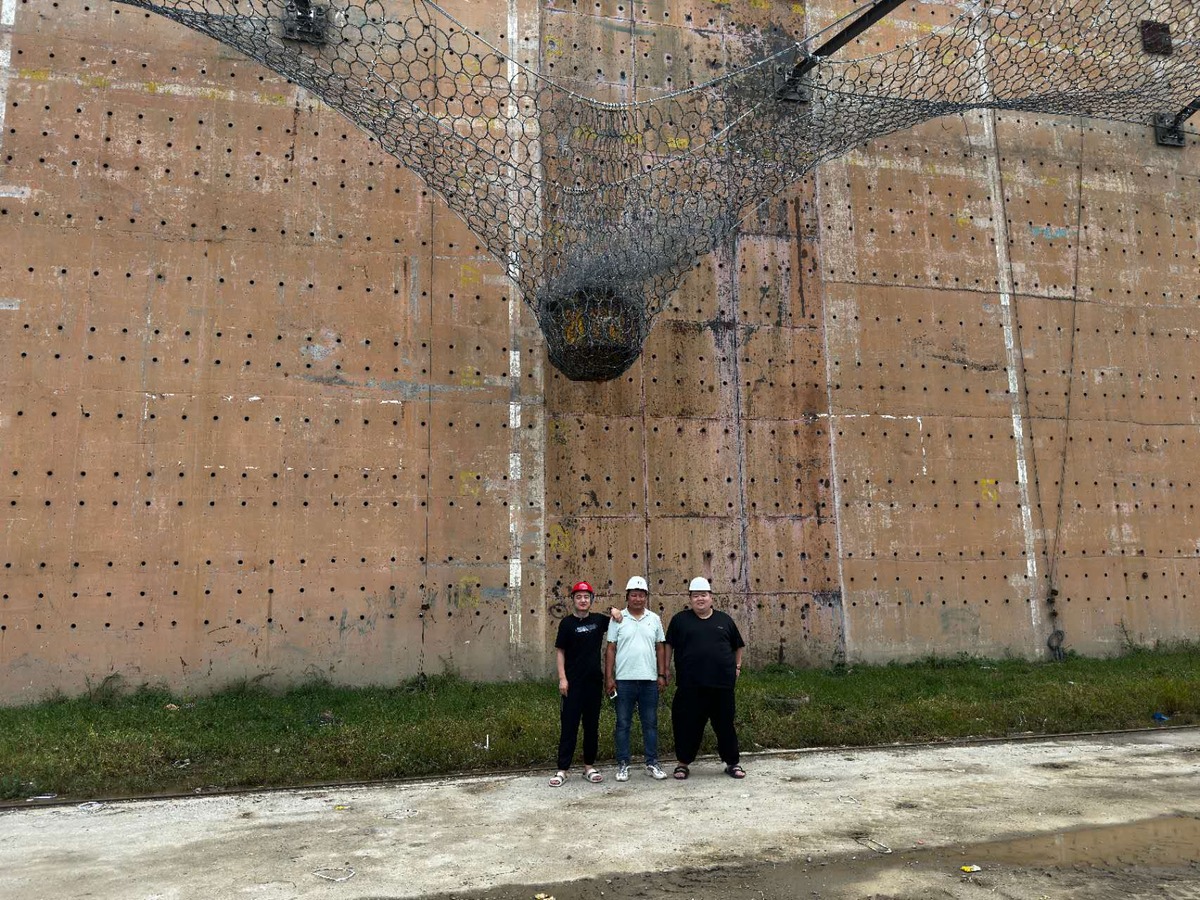
That photograph is from an impact test on a ring-net barrier. Look at what is doing the work: the net has stretched into a deep pocket behind the boulder, which is the design intent - deformation is the energy absorber. But the pocket only forms correctly if the support ropes let it, the brake rings yield at the right force, and the posts stay upright. The mesh gets the photograph; the hardware gets the result.
Active vs Passive: Same Factory, Two Different Kits
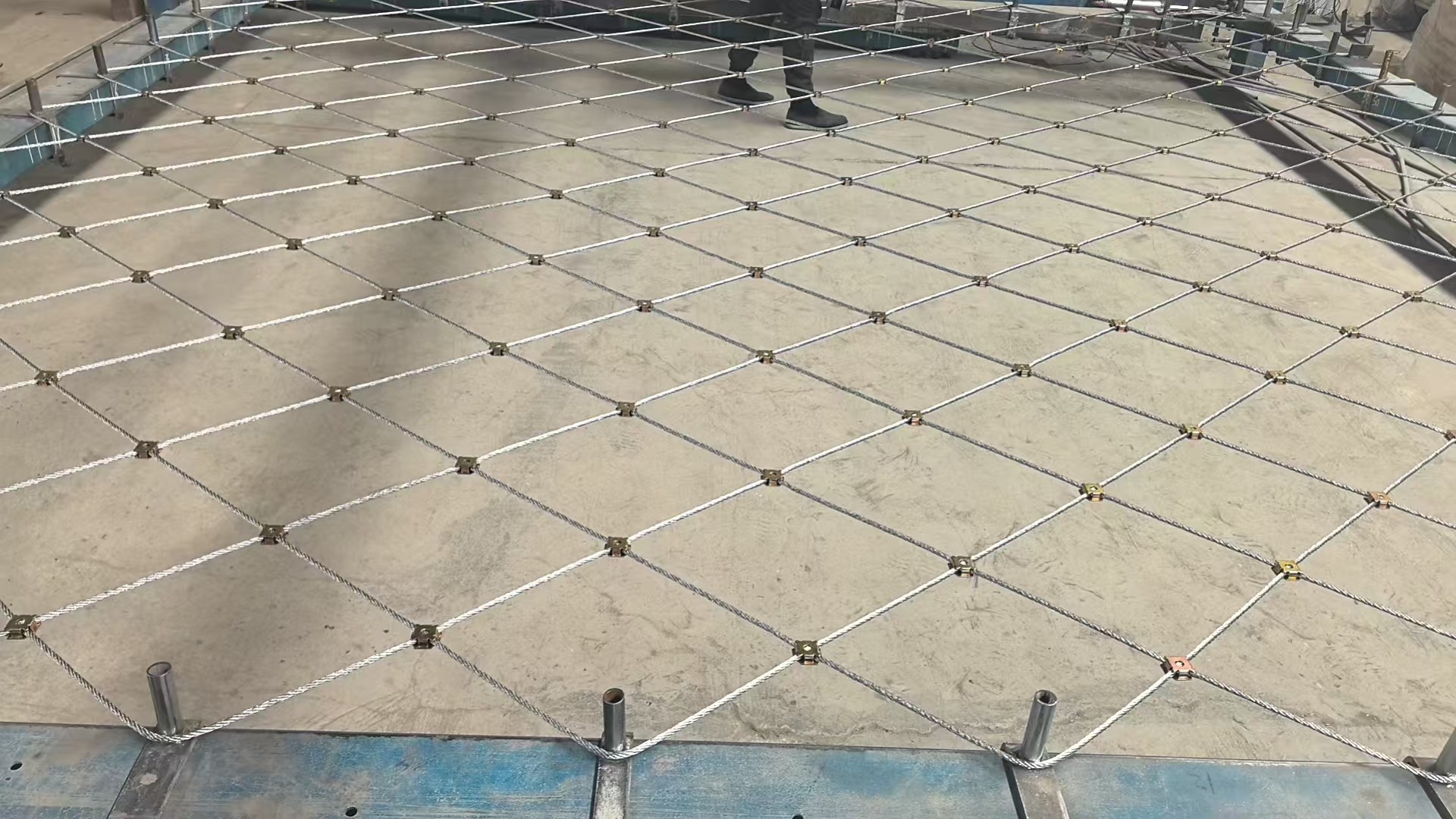
Buyers sometimes treat "active" and "passive" slope protection as two grades of the same product. They are not - they share a factory and some raw material, but the hardware kits barely overlap:
Active protection (drape or pinned mesh) covers the slope face itself. The hardware list is short: mesh rolls, soil nails or rock bolts to pin it, and edge rope to hold the perimeter. There are no posts, no brake rings, no support ropes. The system works by keeping loose material on the slope face rather than catching it mid-air. Because the hardware list is short, active systems are where buyers most often get away with mesh-only procurement - and also where the few hardware items involved (anchors again) matter most, since the entire system hangs on them.
Passive protection (catch fences and barriers) intercepts falling rock in the air, downslope of the source. This is the full kit from the table above: posts, foundations, support ropes, brake rings, and the net itself. The mesh might be 40-60% of the material value, which is why mesh-only quotations look so attractive and why the completed, installed system costs what it costs. When you compare quotations for passive work, compare the entire kit - a quotation that lists anchors, ropes and brake rings as named line items with diameters and grades is worth more than a cheaper one that says "complete set".
On passive barriers, the net is what the rock hits. The anchors are what everything else hits. A barrier is only as good as the steel nobody will ever see again.
Anchors: The Part You Cannot Inspect After Installation
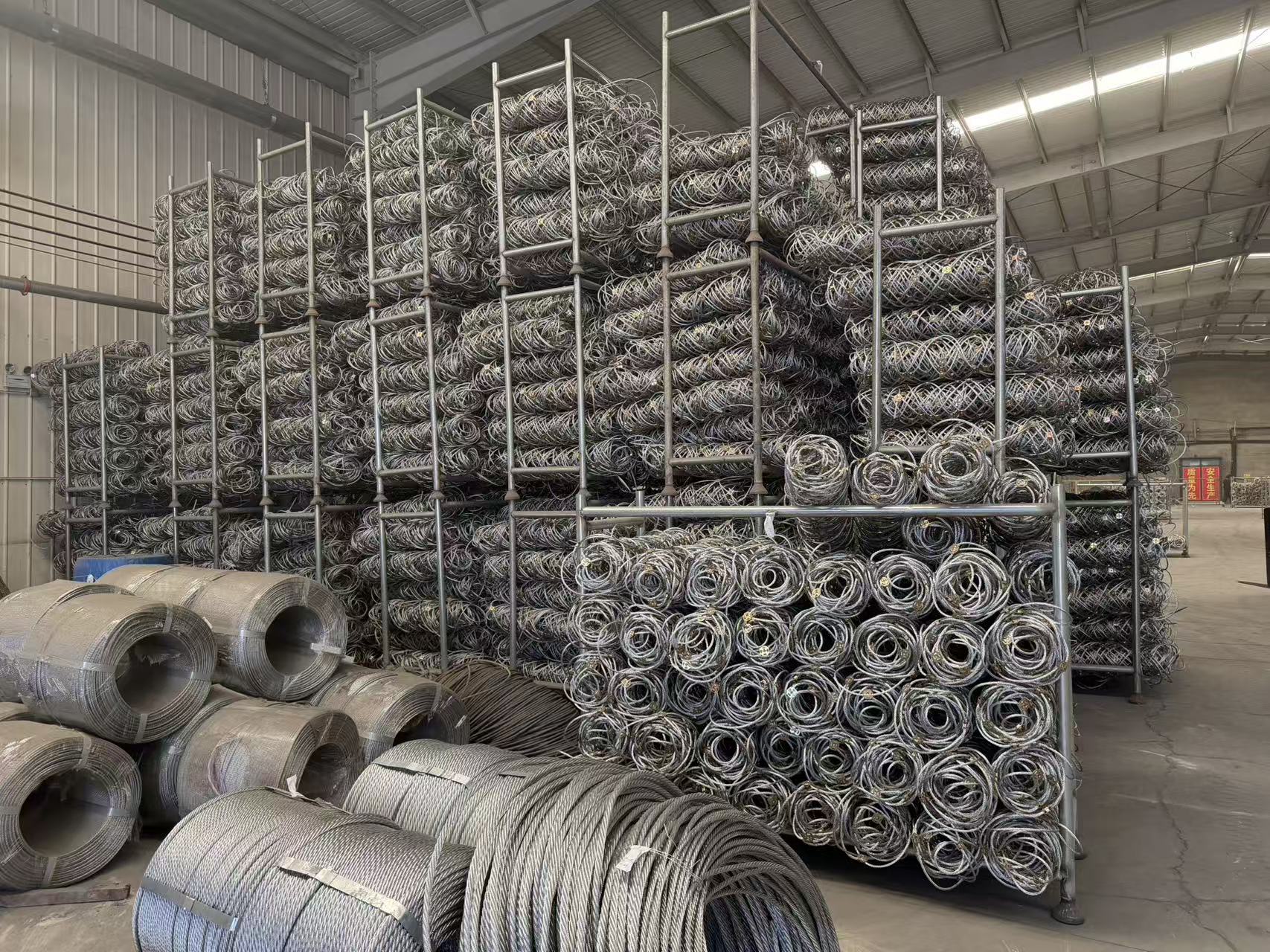
Here is the uncomfortable truth about rockfall barrier quality: the highest-stress components are installed first and covered up immediately. An anchor grouted into rock is invisible for the life of the barrier. If a crew shortens the drilling depth to save time on a steep face - and this happens - nobody will know until the barrier is tested by an actual rockfall, which is the worst possible test to fail.
What keeps this honest is documentation, not inspection. On a properly run installation, every anchor has a record: drilled depth, ground condition encountered, grout batch, and ideally a pull-out test result on a sample of them. When we supply systems for client-managed installation, our advice is always the same - require the anchor log as a delivery item, in the contract, before the crew mobilizes. A contractor who protests that logging anchors is bureaucracy is telling you something useful.
Two site realities worth knowing as a buyer:
Rock is not uniform. A drilling pattern that works on one 50-metre section can hit fractured ground on the next, and anchor lengths get adjusted in the field. That is normal and fine - what matters is that the adjustments are recorded and that the design engineer, not the drilling crew alone, agrees the revised length still achieves the required pull-out resistance.
Corrosion protection applies underground too. A hot-dip galvanized net above ground attached to bare-steel bolts below ground is a system with two different clocks. Anchor rods, like the mesh and ropes, should carry a coating class consistent with the design life - the same zinc-coating logic that governs the visible components, verified per GB/T 1839 test methods.
Panel Overlap, Lacing and the Tensioning Sequence
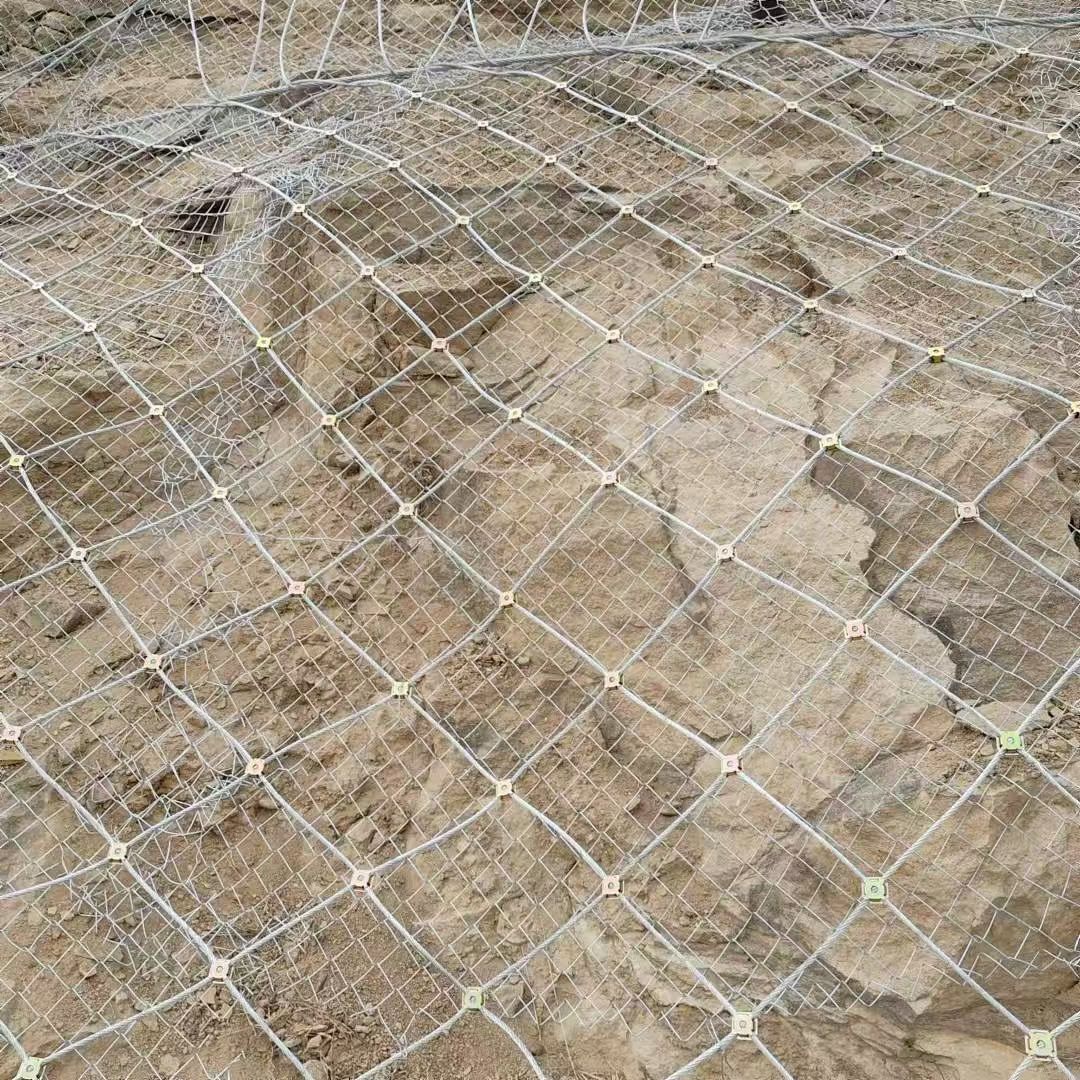
Once the hardware is in the ground, three installation details decide whether the system performs to its drawing - and all three are boring enough to get rushed:
1. Panel overlap and lacing. Adjacent mesh panels are either laced edge-to-edge with the specified connecting rope or overlapped by at least a full mesh aperture, per the design drawing. The failure mode when this is done loosely is gradual: panels breathe in the wind and under small impacts, the lacing loosens, and one season later there is a gap wide enough for the exact rock size the barrier was bought to stop. Lacing is also where crews most often substitute lighter wire than specified, because the proper connecting rope is stiffer and slower to work with. The check is simple - match the lacing rope against the specification sheet in the crate.
2. Support rope tensioning order. Ropes are tensioned in a sequence - typically working symmetrically from the middle of a span outward, or per the manufacturer's procedure - so the net ends up evenly loaded rather than pulled hard at one end and slack at the other. Tensioned in the wrong order, the net never reaches design tautness no matter how much the crew tightens the end fittings afterwards. The symptom of wrong sequence shows up months later as sag between posts, long before any structural problem.
3. Brake ring orientation and installation. Energy-dissipating rings must be installed at the positions and in the orientation the design specifies, usually at the rope-post connections. They work by deforming, which means a brake ring that has already deformed in handling or storage is partially spent before the barrier is even handed over. Damaged rings are cheap to replace before installation and impossible to identify afterwards - another reason the receiving inspection at site matters.
Almost every rockfall barrier failure story I have heard from contractors starts the same way: the installation looked finished. Overlap, tension and hardware condition are invisible in a photo of a completed barrier - and visible in a two-hour site walk if someone knows to look.
Materials and Standards: What Should Be on the Mill Certificates
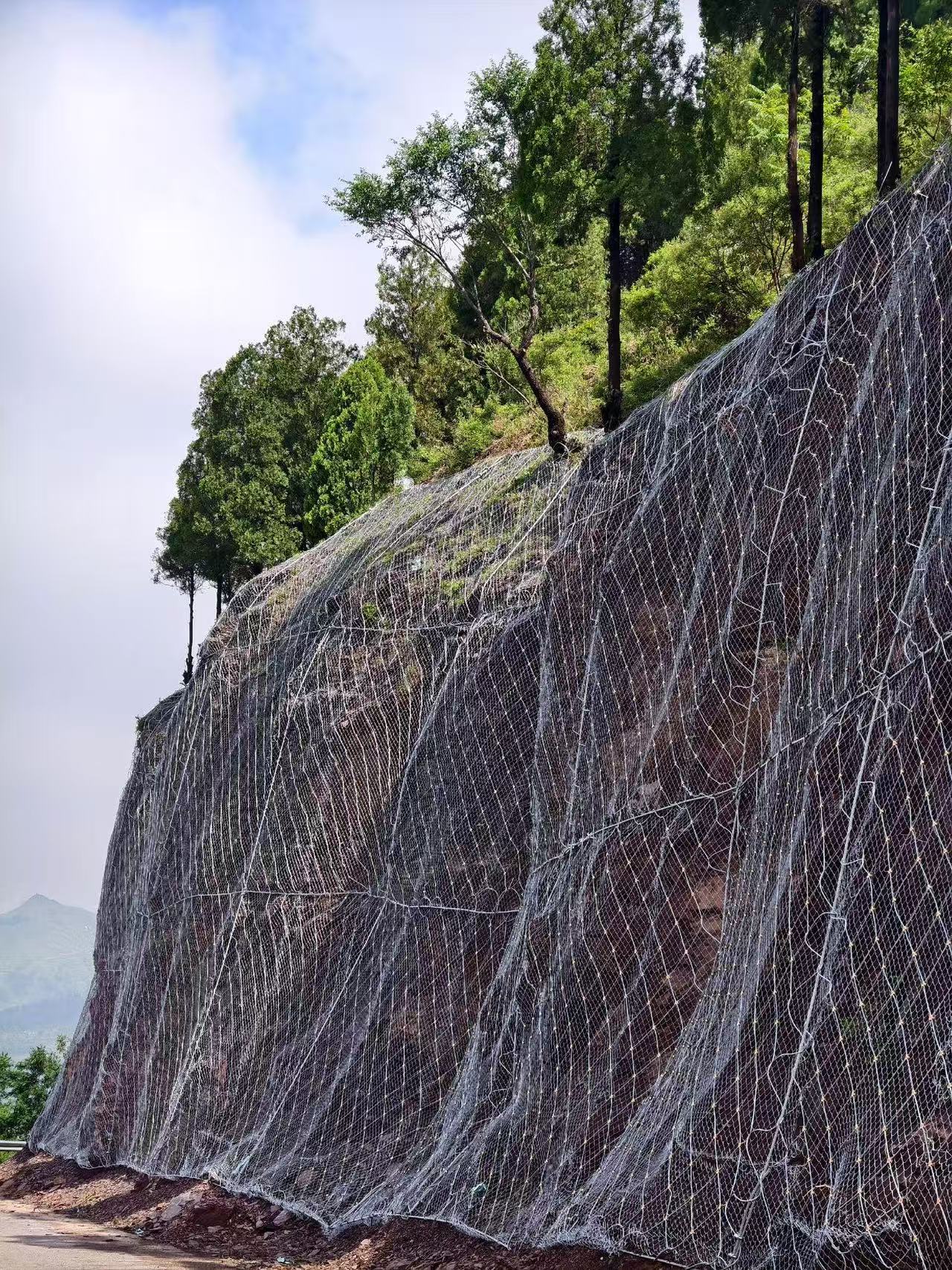
Slope protection hardware in China is governed by JT/T 528-2022, the transportation-industry standard for slope protection nets used on highway and similar works. For buyers comparing quotations, these are the numbers that should appear, per heat number, on the documents that accompany the goods:
| Component | Spec line to expect |
|---|---|
| Steel wire rope (net & support ropes) | Nominal Φ8 mm class, tensile strength ≥1770 MPa, hot-dip galvanized, zinc coating ≥245 g/m² verified per GB/T 1839 |
| Ring net rings | Wire wound and coiled into interlocking rings; joint tensile performance per JT/T 528-2022 |
| Posts & base plates | Structural steel section per drawing; hot-dip galvanized after fabrication (cut edges re-protected) |
| Anchor rods | Steel grade and diameter per design; coating consistent with design life; pull-out resistance per design verification |
| Shackles, clips, lacing rope | Rated and marked; galvanized; supplied in matched grades - not generic hardware-store fittings |
One comparison note for buyers working to European projects: internationally, rockfall barriers are commonly classified by the impact energy they are tested to absorb, under frameworks such as ETAG 027 in the EU - the class number corresponds to the kinetic energy the tested barrier stopped. A Chinese-market designation and a European energy class are describing the same physical idea through different test regimes. When a project references energy classes, ask the supplier to state the tested energy absorption behind the model code rather than accepting the code as self-explanatory - model names across the industry do not map one-to-one, and this is a five-minute question that prevents the wrong kit from being shipped.
The three documents that make a slope protection shipment verifiable: mill certificates tied to heat numbers, the anchor log template for the installer, and the model-to-energy-class statement. Ask for all three at enquiry stage, and half of the industry's quality ambiguity disappears on the spot.
What We Pack in the Crate - and the Site Checks Worth Copying
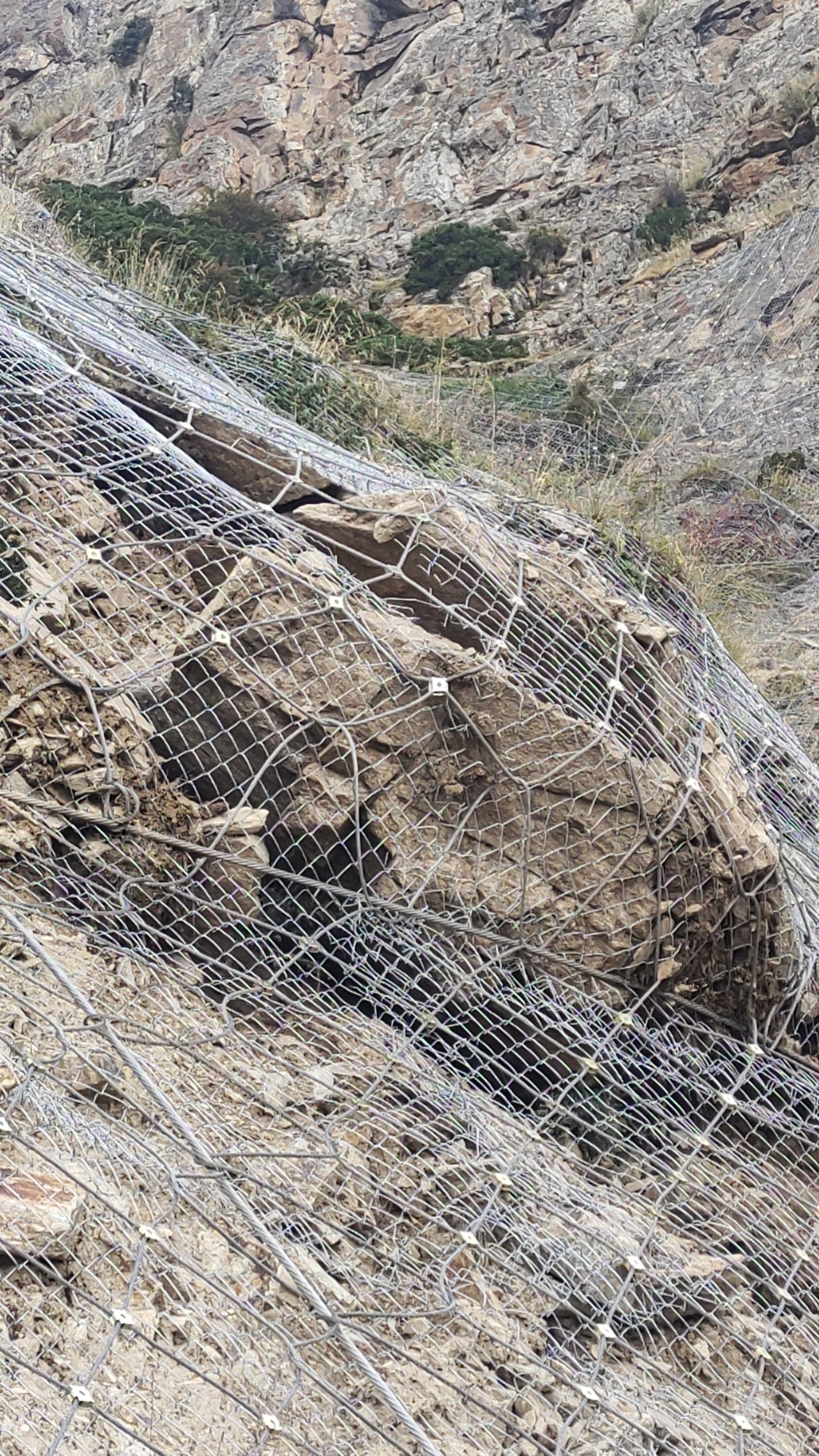
Because accessories are where projects stall, our packing crew loads slope protection orders by sub-system, not by weight: netting banded separately, posts banded with their base plates, ropes coiled and tagged by span, and the small-parts crate - shackles, clips, lacing rope, brake rings - sealed and itemized. Every crate carries a packing list that maps to the system drawing, so a crew on a mountainside can find the parts for one span without opening every bundle on the truck. Lacing rope and small parts are supplied with a modest overage, because site conditions eat them and a 2-kilogram shortage should not stop a 40-person crew.
When the goods arrive on site, these are the checks a receiving crew or third-party inspector can run in a couple of hours, in order:
1. Count against the system drawing, not the packing list alone. The drawing is the contract; the packing list is a claim. Posts per span, ropes per span, brake rings per junction - ticked on the drawing.
2. Rope diameter and net wire diameter by caliper. Sampled per coil and per bundle, straight runs recorded. The same sub-gauge logic that applies to fence wire applies here, with the same weight-based back-check available on the ropes.
3. Zinc coating verification. Magnetic coating gauge on sampled wire and rope; mill certificates matched to heat numbers. For "hot-dip" claims on the mesh, the floor our own goods are held to is 245 g/m² per JT/T 528-2022 and GB/T 1839 test methods.
4. Brake ring condition. Any ring deformed in transit is quarantined and replaced before installation - a spent dissipator is invisible once installed.
5. Fitting grades. Shackles and clips checked for markings and grade stamps. Generic unmarked fittings are where "complete set" quotations quietly cut cost.
6. Post coating on cut edges. Fabrication cuts and field-cut posts must be re-protected; bare cut edges on galvanized posts are rust points at exactly the stress concentration the base plate creates.
None of this requires laboratory equipment - a caliper, a coating gauge, the system drawing and a couple of hours. The expensive version of this checklist is the one performed after a failure, written by whoever the insurance company appoints.
A closing word on what actually protects your project schedule. The contractor from the opening of this article did finish their barrier - but the mesh sat in a yard for weeks while anchors, ropes and brake rings arrived from separate sources, and the site crew improvised tensioning details that had to be redone. The total cost of "cheaper mesh plus separate accessories" exceeded the single-system quotation they had declined, before counting the delay. Spec the complete system, put the anchor log and the certificates in the contract, and a rockfall barrier becomes what it should be: the least dramatic line item on a mountain highway.
What buyers ask us before their first slope order
What components come in a complete rockfall barrier system?
A passive (catch-fence) package contains the wire rope or ring net, steel posts, base plates and anchor bolts, upper and lower support ropes, brake rings (energy dissipators), and the lacing ropes, shackles and clips that join everything. The net alone is only part of the material value - the hardware around it carries the impact loads, so quotations should list every component as a named line item with its grade and diameter.
What is the difference between active and passive slope protection?
Active protection pins mesh directly against the slope face with anchors and edge rope to keep material in place - no posts, ropes or brake rings. Passive protection erects a barrier downslope of the rock source, using posts, foundations, support ropes and energy-dissipating brake rings to catch falling rock in the air. They use different hardware kits and solve different problems; many projects use both.
How are rockfall barrier anchors installed and verified?
Anchors are drilled into rock or soil to the depth on the design drawing, then grouted or resin-fixed, with adjustments recorded where ground conditions differ. Because they are invisible after installation, verification is documentary: a per-anchor log of depth, ground condition and grout batch, plus pull-out tests on a sample. Requiring the anchor log as a contract deliverable is the single most effective quality control on barrier installation.
What standard applies to slope protection nets from China?
Highway and similar slope protection nets are governed by JT/T 528-2022, the transportation-industry standard. Material lines to expect on mill certificates include steel wire rope with tensile strength of at least 1770 MPa and hot-dip zinc coating of at least 245 g/m2, coating weight verified per GB/T 1839 test methods.
Why do slope protection projects get delayed by accessories?
Because buyers source the netting first and treat anchors, ropes, brake rings and small parts as an afterthought - often from separate vendors whose parts do not match the net's connection details. The mesh arrives, the crew mobilizes, and the project stalls waiting for hardware. Quoting the complete package as one system, packed by sub-system with a drawing-mapped packing list, removes that failure mode entirely.
Quote the system, not just the net
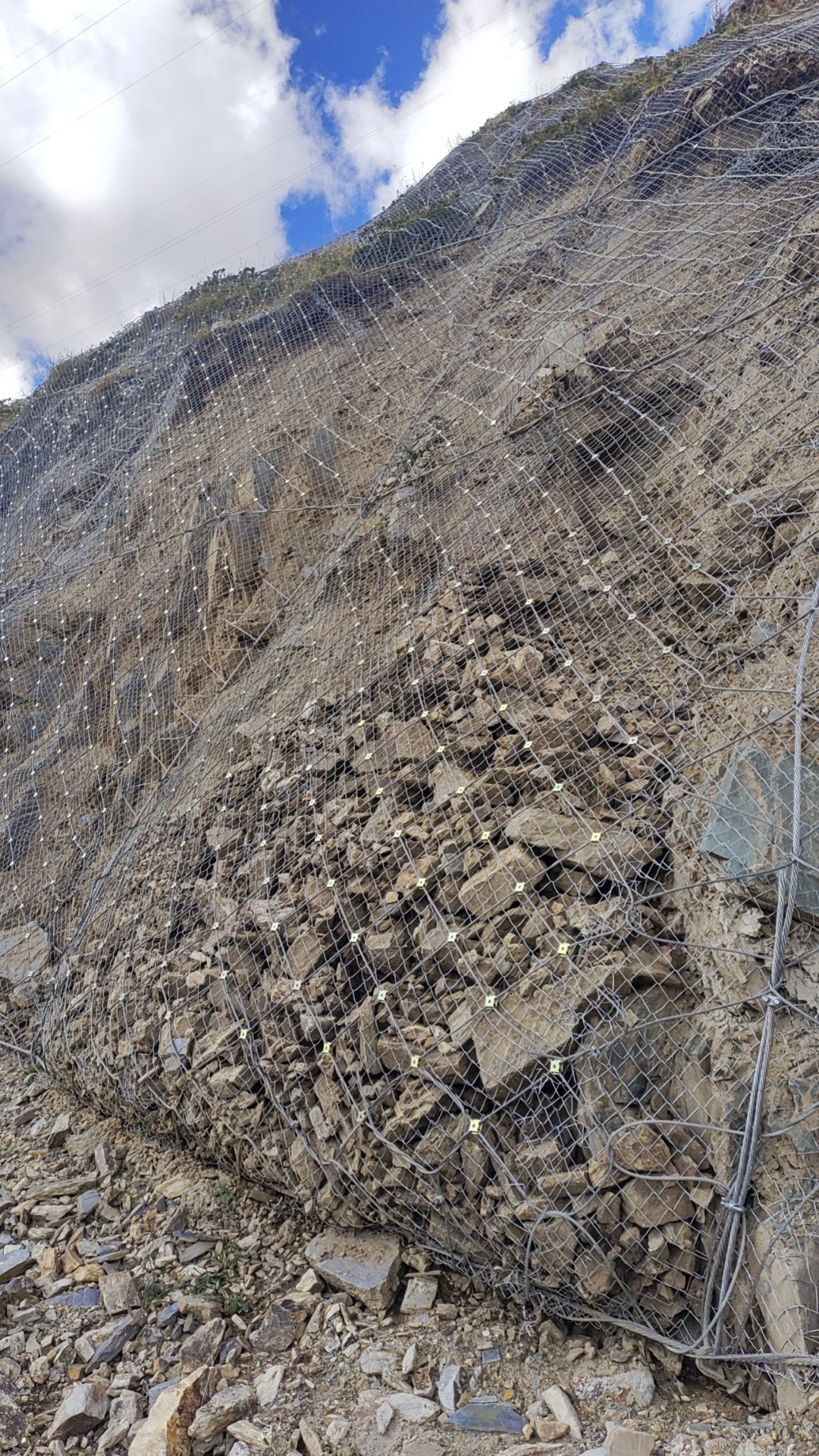
Send us the barrier model or the slope design drawing, the barrier length and height, and your destination port. We quote the complete package - netting, posts, anchors, ropes, brake rings and small parts - as named line items, with mill certificates tied to heat numbers and packing mapped to the system drawing.
WhatsApp +86 15076321111 Email the system requirementsShenzhou Haobo Metal Products Co., Ltd. · slope protection systems to JT/T 528-2022 · FOB Tianjin
Continue reading
For a full installation walkthrough with quality-control checkpoints, see our Rockfall Netting Installation: Step-by-Step Slope Stabilization Guide.