ASTM A975 vs YB/T 4190-2018: Complete Gabion Mesh Standard Comparison for International Procurement (2026 Update)
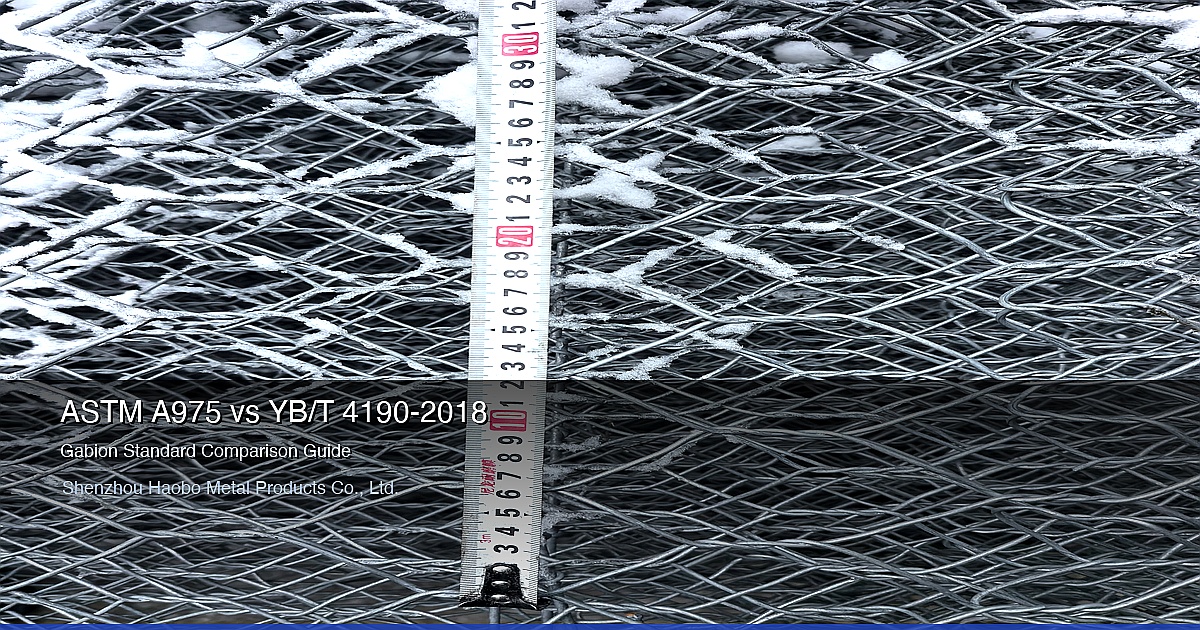
When sourcing gabion mesh for an international project, the first technical question your consultant will ask is not "which factory" but "which standard". Two specifications dominate global gabion procurement: ASTM A975 / A975M (United States, governing North American, Latin American, and U.S.-funded overseas projects) and YB/T 4190-2018 (China, governing domestic Chinese projects, Belt & Road Initiative projects, and most African/Middle Eastern/Southeast Asian buyers sourcing FOB Tianjin). Both are technically rigorous — but they differ meaningfully in wire diameter series, mesh opening tolerances, galvanizing classification, and PVC coating requirements.
Key Takeaways
- ASTM A975 (USA) and YB/T 4190-2018 (China) are functionally equivalent standards for double-twisted hexagonal wire mesh gabions — both specify 350-550 MPa tensile strength, similar mesh opening tolerances, and same fundamental engineering principles.
- The most meaningful technical difference is galvanizing: ASTM A975 has 3 classes (≥230/275/610 g/m²) while YB/T 4190-2018 has a single minimum (≥245 g/m²). To meet ASTM Class 2 from a Chinese factory, specify ≥275 g/m² in the PO.
- For most international buyers sourcing from China (especially Belt & Road, African, Middle Eastern, Southeast Asian projects), YB/T 4190-2018 is the optimal reference standard — it matches factory default production and meets ASTM performance on every key parameter except galvanizing class.
- Wire diameter 2.7 mm × 80×100 mm mesh is the global industry default under both standards. Specify 2.4 mm for Reno mattresses, 3.0 mm for heavier retaining walls, 3.9 mm only available under ASTM.
- Always require Mill Test Certificate (MTC) per batch and consider third-party pre-shipment inspection (SGS/BV) for orders >USD 50,000 — this is independent of which standard you reference.
Table of Contents
- 1. Standard Scope and Origin
- 2. Wire Diameter Series and Tolerance
- 3. Mesh Opening and Tolerance
- 4. Wire Tensile Strength Requirements
- 5. Galvanizing Classification: The Most Important Difference
- 6. PVC Coating Specifications
- 7. Which Standard Should You Specify? 5 Regional Scenarios
- 8. Factory Procurement Checklist (Independent of Standard)
- 9. Conclusion: One Standard Is Not 'Better' Than the Other
Choosing the wrong standard can mean rejected shipments, project delays, or costly third-party re-testing. This guide maps every key parameter of both standards side-by-side, with real procurement decision logic for 5 regional scenarios.
1. Standard Scope and Origin
ASTM A975/A975M is published by ASTM International (formerly American Society for Testing and Materials). First issued in 1997 and most recently revised in 2023, A975 covers "metallic-coated or PVC-coated double-twisted hexagonal wire mesh gabions and revet mattresses". It is the de facto reference for U.S. Army Corps of Engineers, FHWA-funded highway projects, FEMA flood control works, and most North American consultant specifications. It is also commonly referenced in World Bank, IDB, and IADB-financed projects in Latin America.
YB/T 4190-2018 is a Chinese national industry standard (recommended, or "T" 级别) issued by the Ministry of Industry and Information Technology (MIIT) in 2018, replacing the older YB/T 4190-2009. It covers "石笼网" (shílóng wǎng) — galvanized double-twisted hexagonal wire mesh for gabion structures. YB/T 4190-2018 is the reference cited by Chinese design institutes (e.g., CCCC, POWERCHINA, CRCC), and is the most widely produced standard by Chinese gabion factories for export. Most African, Middle Eastern, and Southeast Asian infrastructure projects with Chinese EPC contractors will reference YB/T 4190-2018 (often alongside ISO 1461 for galvanizing reference).
Both standards share the same fundamental engineering principle: double-twisted hexagonal mesh (sometimes called "triple-twist" colloquially) where the wire is twisted in pairs to form a non-raveling hexagonal opening. The structural performance, durability expectations, and design methodology are largely compatible. The differences are in the details.
| Attribute | ASTM A975 / A975M | YB/T 4190-2018 |
|---|---|---|
| Issuing Body | ASTM International (USA) | MIIT (China) |
| Latest Revision | A975-23 (2023) | 2018 (replaces 2009) |
| Unit System | Dual (imperial + metric, A975M metric-only) | Metric (SI units only) |
| Primary Application | North America + US-funded overseas | China + Belt & Road + Chinese EPC export |
| Galvanizing Test Method | ASTM A90 (weigh-strip-weigh) | GB/T 1839 (same principle) |
| Tensile Test Method | ASTM A370 | GB/T 228.1 |
2. Wire Diameter Series and Tolerance
ASTM A975 specifies a finer wire diameter series than YB/T 4190-2018. ASTM defines nine standard wire diameters from 2.0 mm through 4.0 mm, while YB/T 4190-2018 specifies seven standard diameters from 2.0 mm through 4.0 mm (with 2.5 mm added as a non-standard option in some YB factory ranges). Both standards apply the same tolerance: ±0.05 mm for wires up to 2.7 mm, and ±0.08 mm for wires ≥3.0 mm.
| Wire Diameter | ASTM A975 (Standard Sizes) | YB/T 4190-2018 (Standard Sizes) |
|---|---|---|
| 2.0 mm | ✓ | ✓ |
| 2.2 mm | ✓ | ✓ |
| 2.4 mm | ✓ (very common — Reno mattress) | ✓ |
| 2.7 mm | ✓ (most common — basket mesh) | ✓ |
| 3.0 mm | ✓ | ✓ |
| 3.4 mm | ✓ | ✓ |
| 3.9 mm | ✓ (heavy retaining wall) | — |
| 4.0 mm | ✓ (extreme-duty) | ✓ (less common) |
The biggest practical implication is that for most buyers, 2.7 mm × 80×100 mm is the industry-default gabion specification under both standards — that's what most factories stock, what most prices are quoted against, and what the in-stock galvanized wire mesh inventory is sized for. If you need 2.4 mm (Reno mattress) or 3.0 mm (heavier retaining wall), both standards cover it. If you need 3.9 mm, you must use ASTM — YB factories do not regularly stock that diameter for export.
3. Mesh Opening and Tolerance
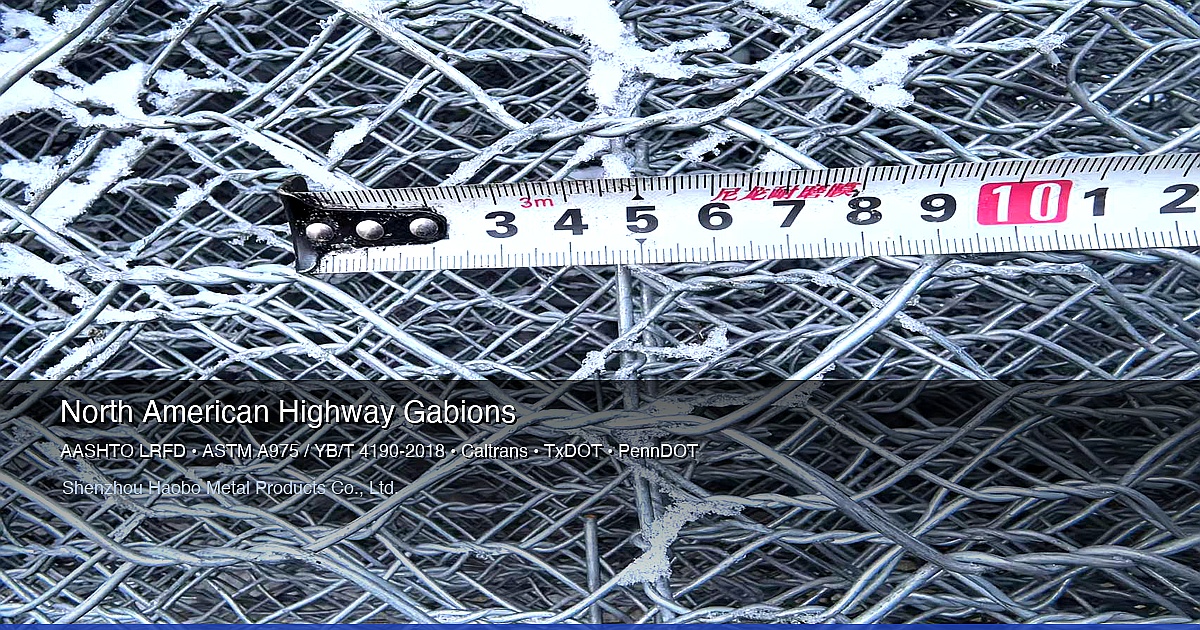
Both standards define three standard mesh openings: 60×80 mm (commonly called "6×8"), 80×100 mm ("8×10", the most widely used globally), and 100×120 mm ("10×12", for lower-stress or larger-rock applications). Both standards allow a tolerance of +16% / -4% on the nominal opening size — meaning an 80×100 mm mesh can legally measure from 76×96 mm to 92.8×116 mm.
YB/T 4190-2018 also includes 120×150 mm as a fourth option (used for low-head erosion control with large rock fill). ASTM A975 does not explicitly include 120×150 mm, but allows "non-standard openings by agreement between purchaser and manufacturer" — meaning YB 120×150 can be supplied to ASTM projects if specified in the contract.
| Mesh (D × V, mm) | ASTM A975 | YB/T 4190-2018 | Typical Application |
|---|---|---|---|
| 60 × 80 | ✓ | ✓ | Reno mattress, low-height revetment |
| 80 × 100 | ✓ (most common) | ✓ (most common) | Standard gabion basket, retaining wall |
| 100 × 120 | ✓ | ✓ | Large-rock fill, scour protection |
| 120 × 150 | By agreement | ✓ | River training, low-head dams |
4. Wire Tensile Strength Requirements
Here is where the two standards are virtually identical. Both specify wire tensile strength in the range of 350–550 MPa (minimum yield strength ~240 MPa for low-carbon galvanized wire). The test methods differ (ASTM A370 vs GB/T 228.1), but both are uniaxial tensile tests on representative wire samples, and the results are directly comparable.
This is a critical point for procurement: if your consultant specifies "ASTM A975 wire" but you source from a Chinese factory whose production line runs to YB/T 4190-2018, you are still getting wire that meets 350–550 MPa tensile strength — because the underlying steel grade and wire drawing process are essentially identical (both use Q235 or equivalent low-carbon steel wire rod). The standards reference different documents for testing, but the material property is the same.
| Property | ASTM A975 | YB/T 4190-2018 |
|---|---|---|
| Wire Tensile Strength | 350–550 MPa | 350–550 MPa |
| Minimum Elongation | ≥10% (200 mm gauge) | ≥8% (100 mm gauge) |
| Steel Grade | Per ASTM A641 (low-carbon) | Per GB/T 343 (low-carbon) |
The elongation difference (10% vs 8%) is nominal and not a practical procurement issue — actual factory production is typically 12–18% elongation, well above both minimums.
5. Galvanizing Classification: The Most Important Difference
This is the section where buyers most often get confused — and where Chinese-vs-U.S. procurement truly diverges.
ASTM A975 specifies three classes of zinc coating, referenced from ASTM A641:
- Class 1 (Standard): ≥230 g/m² (heavily hot-dip galvanized, suitable for most non-marine environments)
- Class 2 (Extra Heavy): ≥275 g/m² (severe environments, soil contact, salt air)
- Class 3 (Extreme): ≥610 g/m² (marine immersion, highly corrosive industrial zones)
YB/T 4190-2018 specifies a single minimum: ≥245 g/m² (referenced from GB/T 1839 test method). In practice, Chinese factories routinely produce to 245, 275, or 300+ g/m², and most export quotes default to 245 g/m² (the minimum). To meet ASTM Class 2 (275 g/m²), Chinese factories must specifically be asked to upgrade — and that typically costs 8–15% more.
| Galvanizing Class | Min. Zinc Coating (g/m²) | Equivalent Standard |
|---|---|---|
| ASTM A975 Class 1 | ≥230 g/m² | Slightly lighter than YB default |
| YB/T 4190-2018 Standard | ≥245 g/m² | Chinese factory default export |
| ASTM A975 Class 2 | ≥275 g/m² | Marine/coastal upgrade (+10% cost) |
| ASTM A975 Class 3 | ≥610 g/m² | Extreme immersion (rare, +30–50% cost) |
Procurement tip: If your consultant specified "ASTM A975 Class 2", you can still source from a Chinese factory — just specify "YB/T 4190-2018 wire, hot-dip galvanized to ≥275 g/m² per ASTM A641 Class 2" in the contract. The factory will produce the same wire and the project will pass U.S. inspection.
6. PVC Coating Specifications
ASTM A975 has detailed PVC coating requirements (gray or other agreed color, 0.50 mm nominal thickness, accelerated UV aging per ASTM G23). YB/T 4190-2018 mentions PVC coating as an option but defers the detailed spec to GB/T 10421 (the Chinese standard for PVC-coated gabion wire). In practice, both standards produce PVC-coated gabions of similar quality when the factory is experienced (Shenzhou Haobo Metal has been producing PVC-coated gabion mesh for 8+ years to both ASTM and YB clients).
Key PVC parameters common to both standards:
- Coating thickness: 0.4–0.6 mm (nominal 0.5 mm)
- Coating adhesion: strip test, no separation between PVC and zinc
- UV resistance: 2,000+ hours QUV exposure without cracking
- Color: gray (RAL 7037) standard; green, black, other colors by agreement
- Salt spray resistance: ≥1,500 hours ASTM B117 without base metal corrosion
For highly corrosive environments (acid mine drainage, coastal seawater, industrial chemical zones), PVC-coated gabion is strongly recommended — and the coating specification should be explicitly written into the purchase order, regardless of which base standard (ASTM or YB) you reference.
7. Which Standard Should You Specify? 5 Regional Scenarios
This is the practical decision logic. Choose your reference standard based on the project location, funding source, and consultant specification.
| Project Scenario | Recommended Standard | Why |
|---|---|---|
| U.S. Army Corps / FHWA-funded U.S. highway project | ASTM A975 Class 2 (≥275 g/m²) | Federal specification; no substitute |
| Latin America (Mexico, Colombia, Peru) — IDB/World Bank funded | ASTM A975 (Class 1 or 2 per environment) | Consultants default to ASTM |
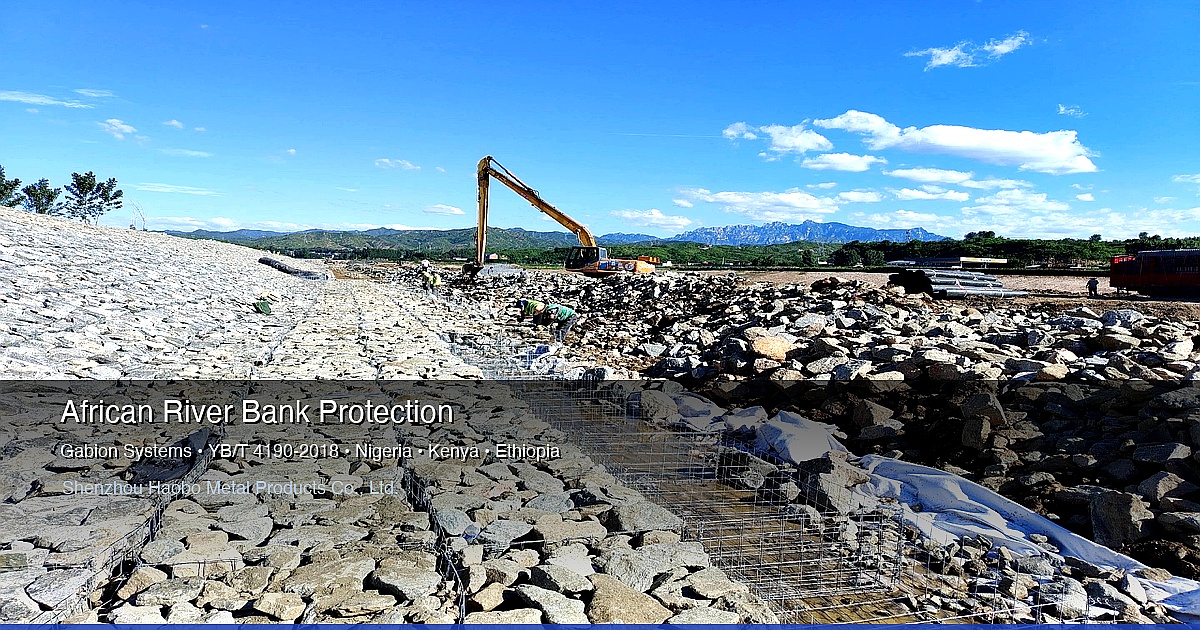
| Africa (Nigeria, Kenya, Ethiopia) — Chinese EPC contractor | YB/T 4190-2018 (≥245 g/m²) | Chinese contractor supply chain; cost-effective |
| Middle East (Saudi NEOM, UAE infrastructure) | YB/T 4190-2018 + ISO 1461 reference | Saudi Aramco / Royal Commission specs accept equivalent |
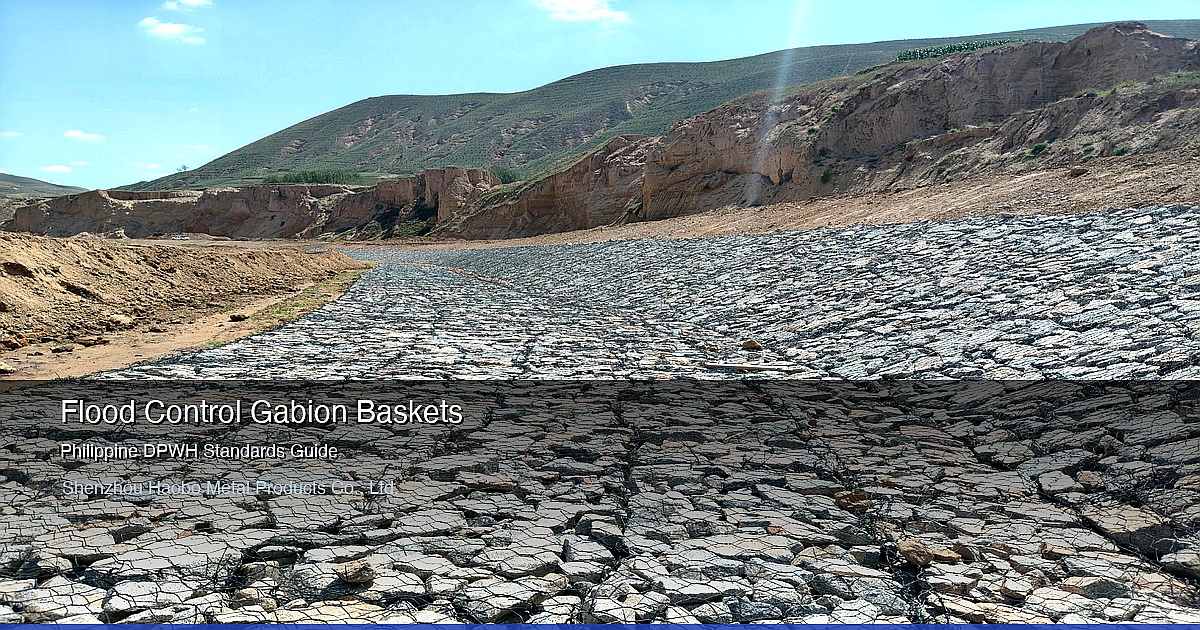
| Southeast Asia (Philippines, Indonesia, Vietnam) | YB/T 4190-2018 (or ASTM A975, both accepted) | Local consultants flexible; FOB Tianjin most economic |
| European Union funded project (anywhere) | EN 10223-3 (European standard, not covered here) | EU procurement requires EN marking |
Critical insight: For most international buyers sourcing from China, YB/T 4190-2018 is the optimal reference standard — it matches what Chinese factories are already producing, it is well-supported in their quality management systems, and the wire meets or exceeds ASTM A975 on every key parameter except galvanizing (where you can upgrade to Class 2 by specific request).
8. Factory Procurement Checklist (Independent of Standard)
Whether you specify ASTM or YB, here is the 7-point pre-shipment inspection checklist we recommend to every buyer sourcing from China:
- Mill Test Certificate (MTC) — factory must provide MTC showing wire diameter, tensile strength, elongation, and zinc coating weight per coil batch.
- Third-party pre-shipment inspection — SGS / BV / TUV at the buyer's cost (≈USD 300–500 per 40' container, well worth it for orders >USD 50K).
- Sample retention — factory keeps 1 m² of production mesh from each batch for 12 months post-shipment for traceability.
- Galvanizing verification — buyer can specify "weigh-strip-weigh test on 5 random wire samples per batch" before container loading.
- Mesh opening tolerance check — measure 10 random openings per roll, must fall within +16%/-4% tolerance.
- Selvedge / edge wire reinforcement — ASTM A975 and YB/T 4190-2018 both require heavier edge wire (typically one size larger than mesh wire); verify before shipment.
- Packing and container loading photo record — factory provides photos of each step; this is your insurance claim evidence if anything arrives damaged.
Haobo Metal provides all 7 of the above as standard for every export order — including free pre-shipment sample retention, third-party inspection coordination, and digital MTC for every batch. Our average production lead time is 15–20 working days for standard 2.7mm × 80×100mm gabion mesh, FOB Tianjin, and we have produced to both ASTM A975 Class 2 and YB/T 4190-2018 specifications for buyers across 50+ countries.
9. Conclusion: One Standard Is Not "Better" Than the Other
ASTM A975 and YB/T 4190-2018 are functionally equivalent standards covering the same engineering product (double-twisted hexagonal wire mesh gabions). Both ensure a high-quality, durable product when sourced from a reputable factory. The choice between them should be driven by project location, funding source, and consultant specification — not by technical merit. The most common procurement error is specifying ASTM Class 2 (275 g/m²) and then accepting a Chinese factory's default 245 g/m² quote without negotiating the upgrade. Get this right upfront, and you avoid re-testing and rejection at destination port.
If you are unsure which standard your project requires, send us your specification sheet (or your consultant's technical specification) and we will provide a side-by-side comparison quote — typically within 24 hours.
Need Help Specifying the Right Gabion Standard for Your Project?
Send us your consultant's specification sheet or BOQ. We will provide a side-by-side comparison quote against ASTM A975 and YB/T 4190-2018 within 24 hours, FOB Tianjin.
www.haobomesh.com | Shenzhou Haobo Metal Products Co., Ltd.