Aviary Mesh for Bird Enclosures: Panels vs Rolls, Aperture Sizes & Installation Guide 2026
Last month a customer from Queensland sent us photos of his old aviary: chain-link mesh with rust bleeding down the frame, a galah chewing the galvanised coating, and a torn corner patched with chicken wire. He asked one question - what would we put in if it were our own birds? This guide is the answer we sent him, expanded with the aperture tables and installation details we use when we weave aviary mesh on our own looms.
What Aviary Mesh Actually Is (and What It Is Not)
Walk into a hardware store and you will be offered three things for a bird enclosure: chicken wire, welded mesh panels, and chain link. All three fail the same way - rigid wires with cut ends and coated surfaces. Beaks find the coating, claws find the cut ends, and rust finds everything else within two or three seasons outdoors.
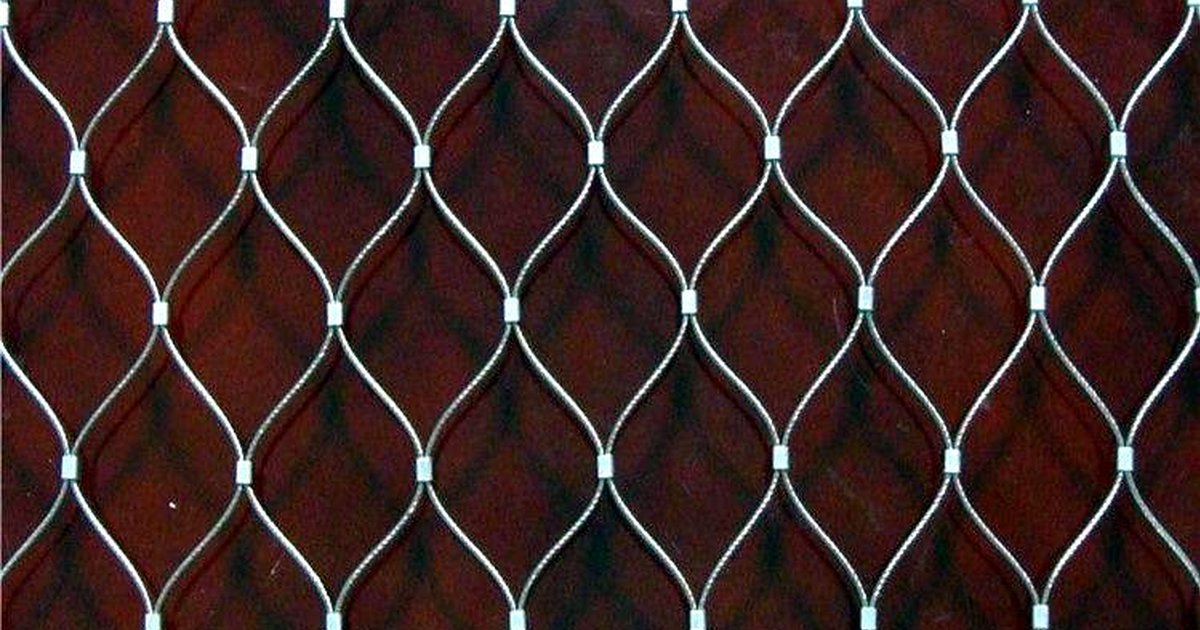
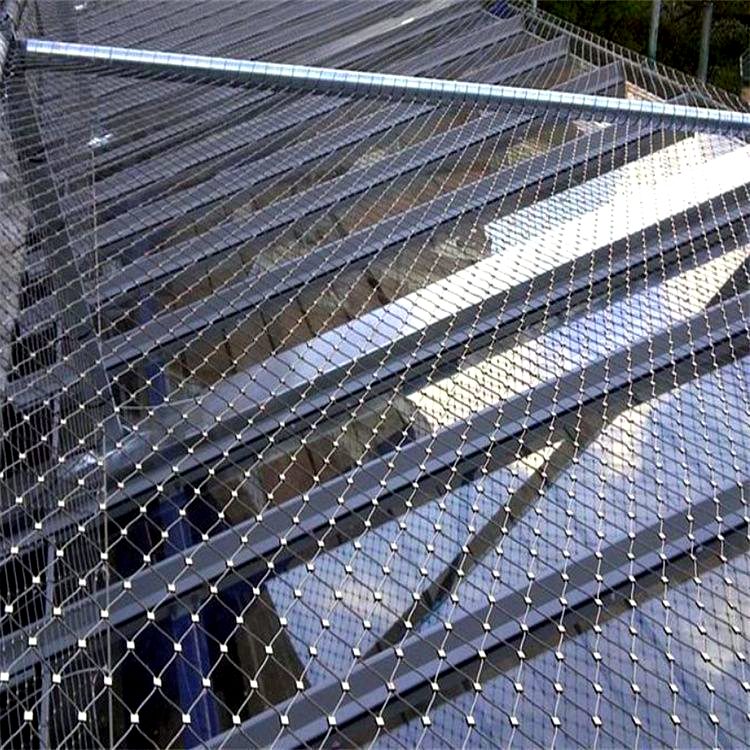
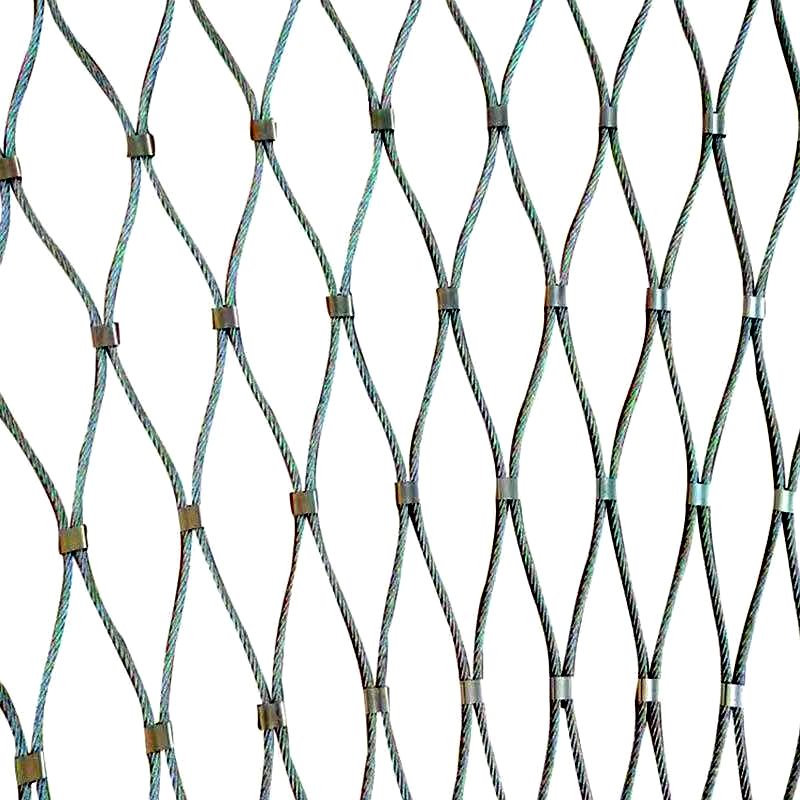
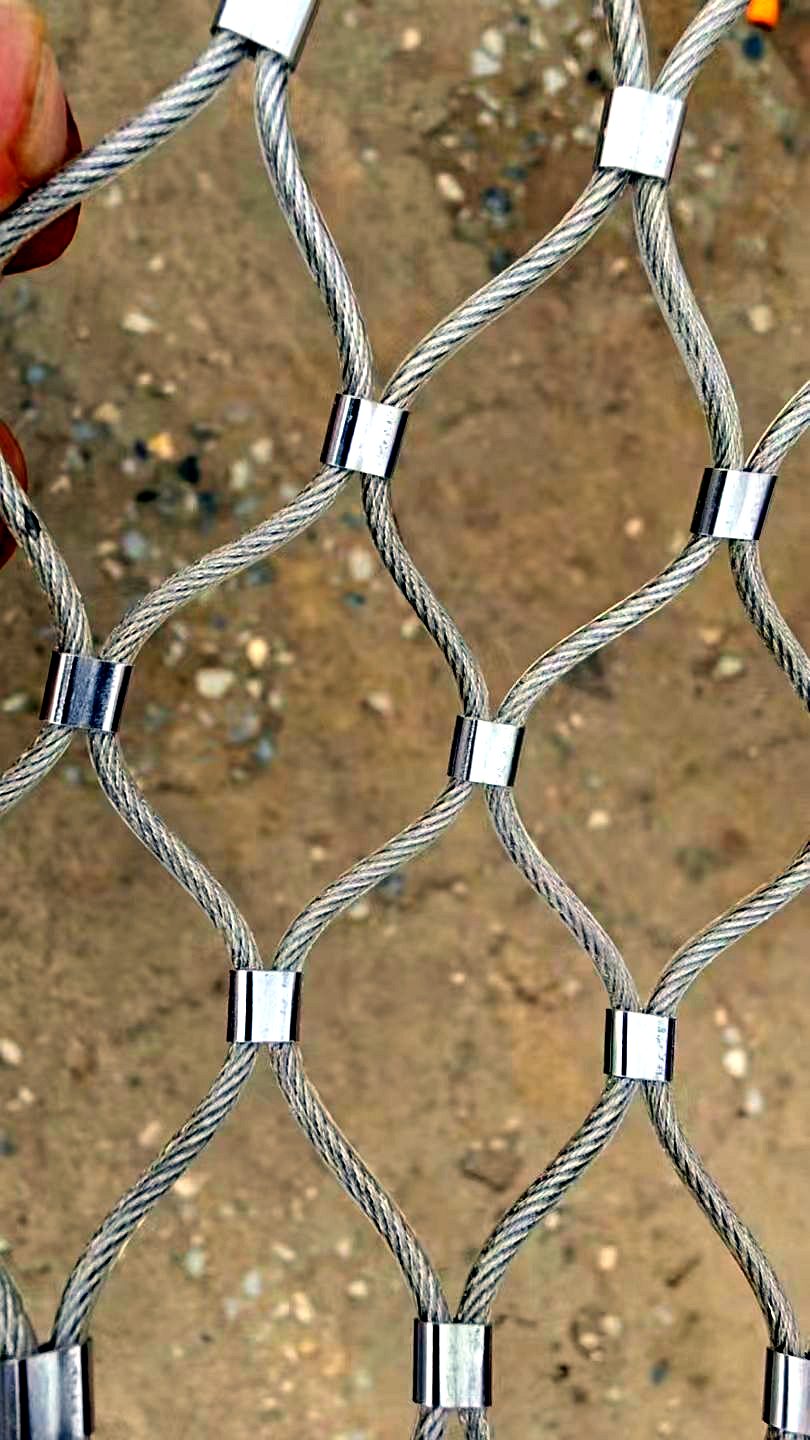
Stainless steel aviary wire mesh - the hand-woven rope mesh we manufacture - works on a completely different principle. Flexible steel cables (7x7 or 7x19 strands) cross at 60 degrees to form a diamond aperture, and every intersection is either inter-woven or locked with a stainless ferrule. There are no welds to crack, no cut ends facing inward, and no coating for a parrot to strip. When a macaw hangs off the mesh and beats its wings, the panel flexes and returns to shape instead of denting permanently.
__FIG1__That flexibility is why zoos moved to rope mesh two decades ago, and why private aviaries and bird parks are following. It is also why the buying decision is less about "which mesh" and more about three numbers: aperture, rope diameter, and format.
Panels vs Rolls: Picking the Format Before Anything Else
Every aviary mesh order we weave falls into one of two formats, and choosing wrong is the most expensive mistake in the whole project.
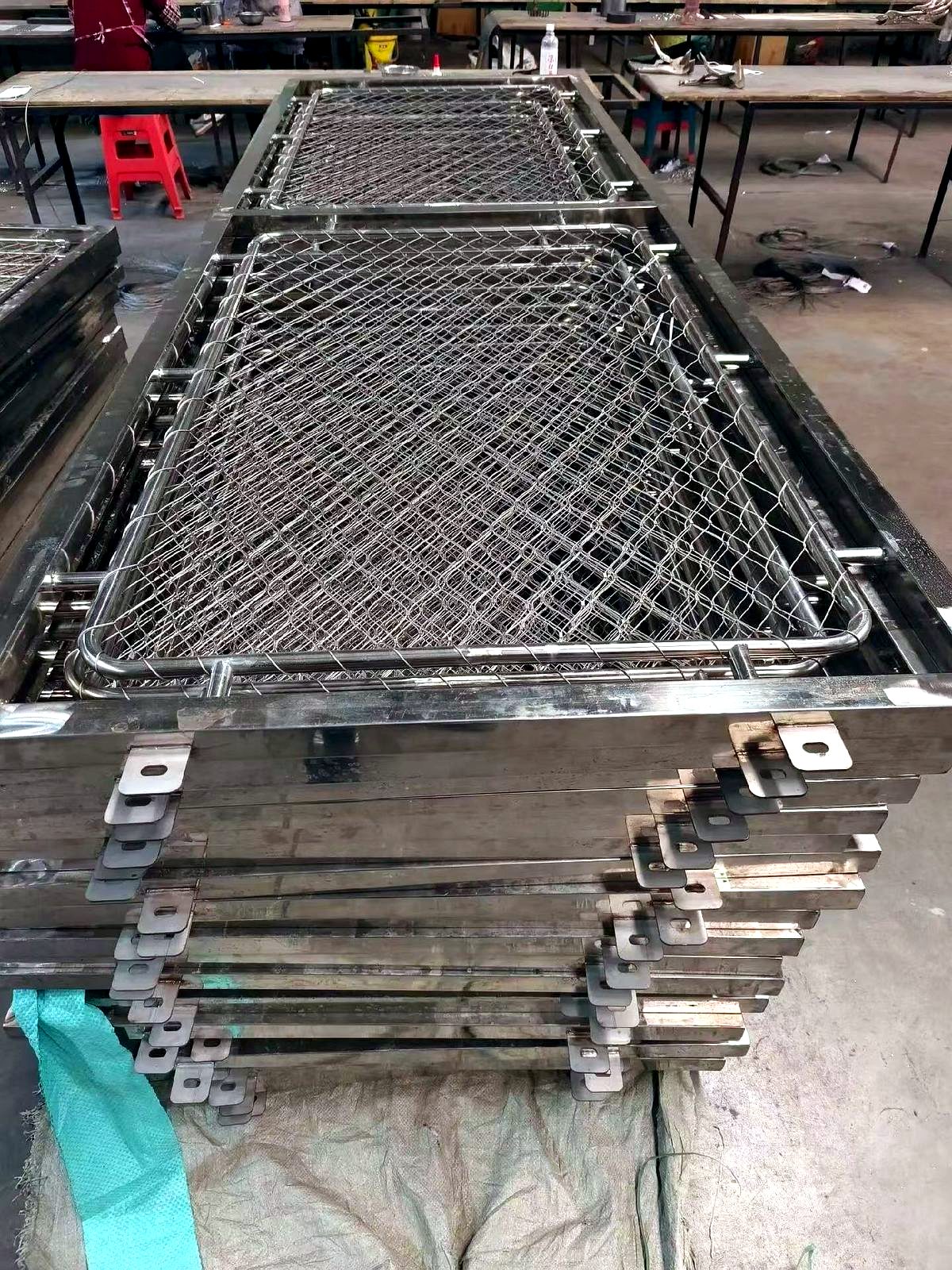
Woven to your frame dimensions, delivered as finished rectangles (or shapes) with the aperture aligned. Best for prefabricated frame systems, modular aviaries, and replacement jobs.
Install time per wall: about one hour. Waste on site: nearly zero.
Long mesh woven as continuous stock, cut and laced on site. Best for large walk-through aviaries, irregular roofs, curved walls, and projects where frames will be built around the mesh.
Material cost per m²: lower. On-site labor: higher - budget for cutting and lacing.
Our rule of thumb after hundreds of enclosure orders: under 200 m² with fixed frames, order panels; over 200 m² or anything curved, order rolls. The Queensland customer above had eleven identical wall frames - panels, obviously. A walk-through aviary roof in a bird park is a roll job every time.
Aperture by Bird Species: The Table We Quote From
Aperture is measured across the diamond opening. Too large and small birds escape or predators reach in; too small and you pay for steel you do not need while losing visibility. These are the pairings we quote from daily:
| Birds / Use | Aperture | Rope Diameter | Construction |
|---|---|---|---|
| Finches, budgerigars, small softbills | 25 x 25 mm | 1.2 - 1.6 mm | 7x7 |
| Cockatiels, conures, small parrots | 30 - 38 mm | 1.6 - 2.0 mm | 7x7 |
| African greys, amazons, medium parrots | 40 - 51 mm | 2.0 - 2.4 mm | 7x7 / 7x19 |
| Macaws, cockatoos (powerful chewers) | 51 - 60 mm | 2.4 - 3.2 mm | 7x19 |
| Pheasants, waterfowl, cranes | 51 - 76 mm | 2.0 - 2.4 mm | 7x7 / 7x19 |
| Raptors, large birds of prey | 60 - 76 mm | 2.4 - 3.2 mm | 7x19 |
| Flamingos, large walk-through roofs | 76 - 102 mm | 2.4 - 3.2 mm | 7x19 |
One warning from experience: mixed aviaries are specified for the smallest bird in the enclosure, not the average. A walk-through aviary holding finches and macaws together needs 25 mm mesh with a heavier rope, not a compromise aperture. And if the enclosure borders a public area, remember you are also fencing against cats, rats, and snakes - the aperture table protects birds from both directions.
Rope Diameter and Cable Construction: Strength Where It Matters
Our looms run rope from 1.0 mm up to 4.0 mm, in two constructions. 7x7 cable (seven strands of seven wires) is the aviary standard for small and medium birds - flexible, soft to the touch, and easy to tension by hand. 7x19 cable (seven strands of nineteen wires) is what we weave for macaw and cockatoo enclosures and for any span over about four meters - the same diameter, but with finer individual wires it survives the constant flexing that powerful chewers inflict.
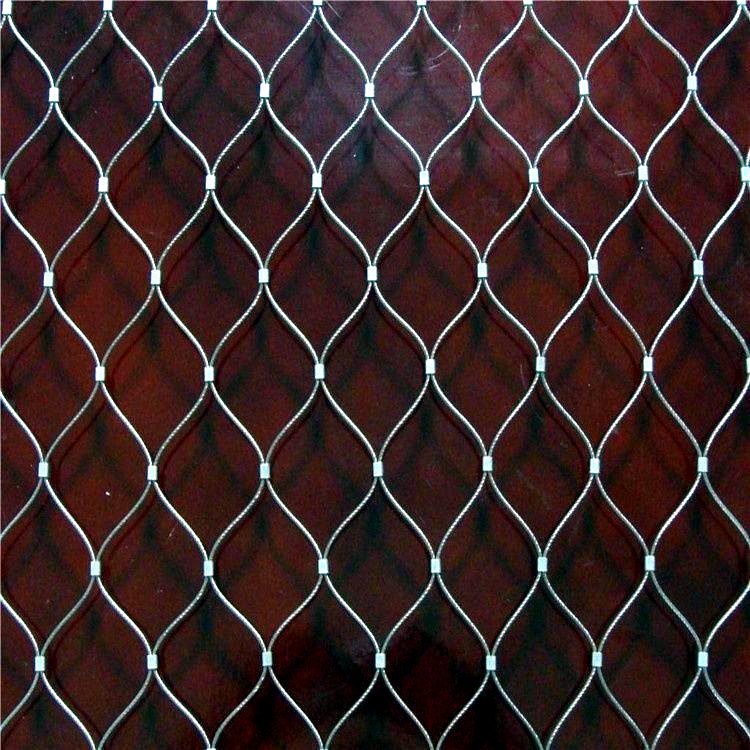
Diameter follows beak strength more than bird size. A 2.0 mm rope is honest protection against most parrots; cockatoos and large macaws have sheared 2.4 mm welds on rigid mesh, which is why we put them behind 3.2 mm woven cable instead. When in doubt, tell us the species list - we have seen enough chewed samples to know what survives.
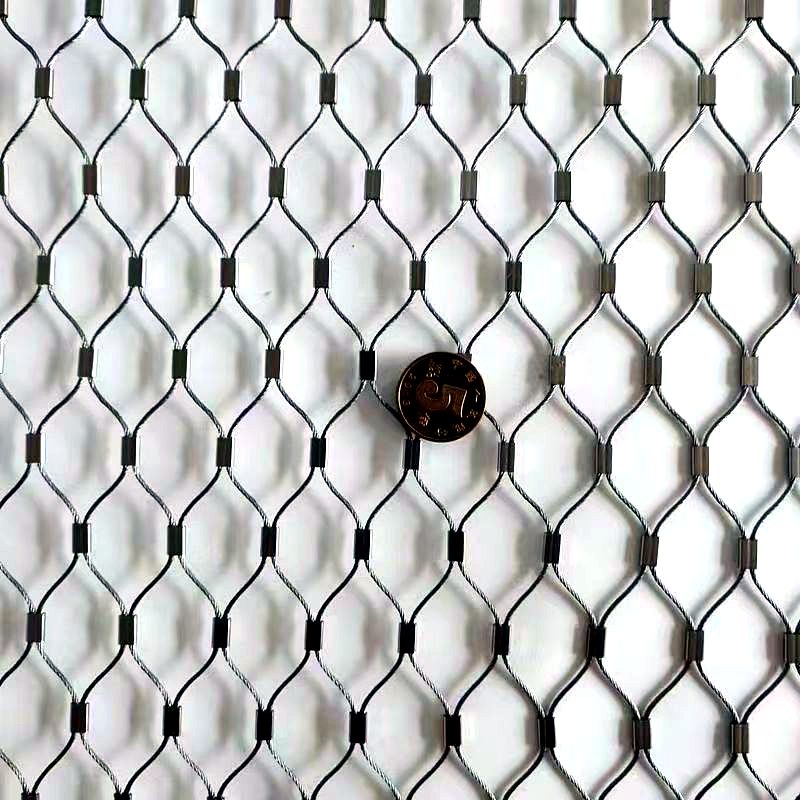
304 or 316L, Natural or Black: Two Choices That Decide Lifespan
Both stainless grades handle rain and humidity without flaking - there is no coating to fail. The difference is corrosion chemistry. Grade 304 is the right choice for inland aviaries and most climates; we weave the majority of enclosure orders in it. Grade 316L adds molybdenum and is what we insist on within roughly five kilometers of salt water, in high-chlorine environments, and for aquatics buildings where disinfectant washes are routine. The price difference per enclosure is small against the cost of re-meshing a corroded panel in year eight.
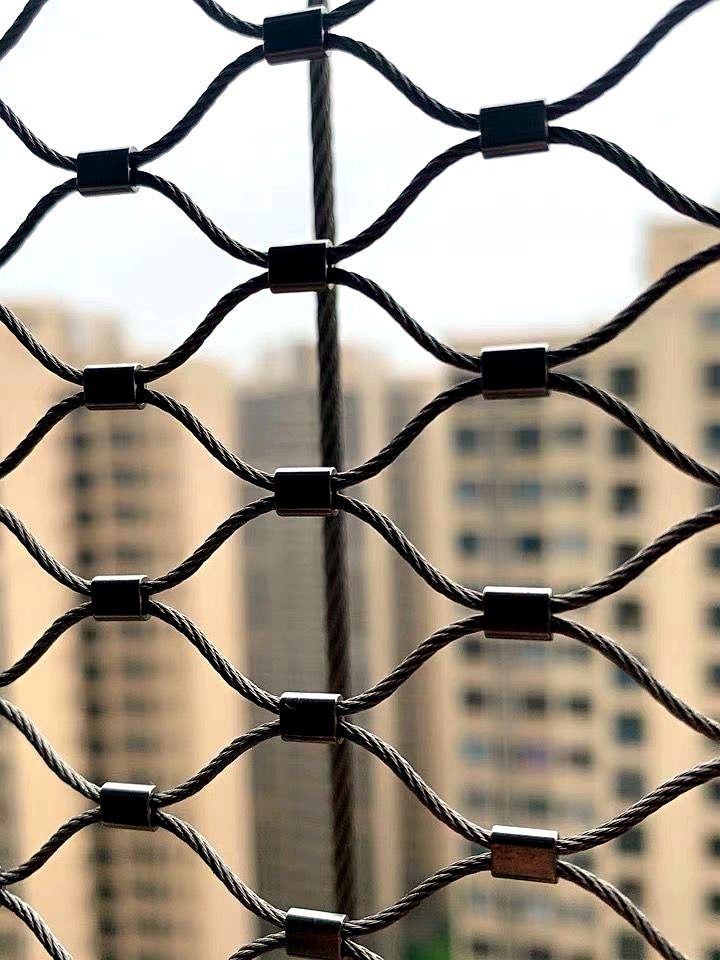
Finish is the second choice. Natural stainless reads as bright silver and suits interiors and modern frames. Black oxidized mesh - the same steel with a dark oxide treatment, not a paint - visually disappears against trees and sky. For visitor-facing aviaries and photography, black is transformative: people stop seeing the fence and start seeing only the birds. It is the finish on almost every zoo order we ship.
Installation: How a Rope Mesh Aviary Wall Actually Goes Up
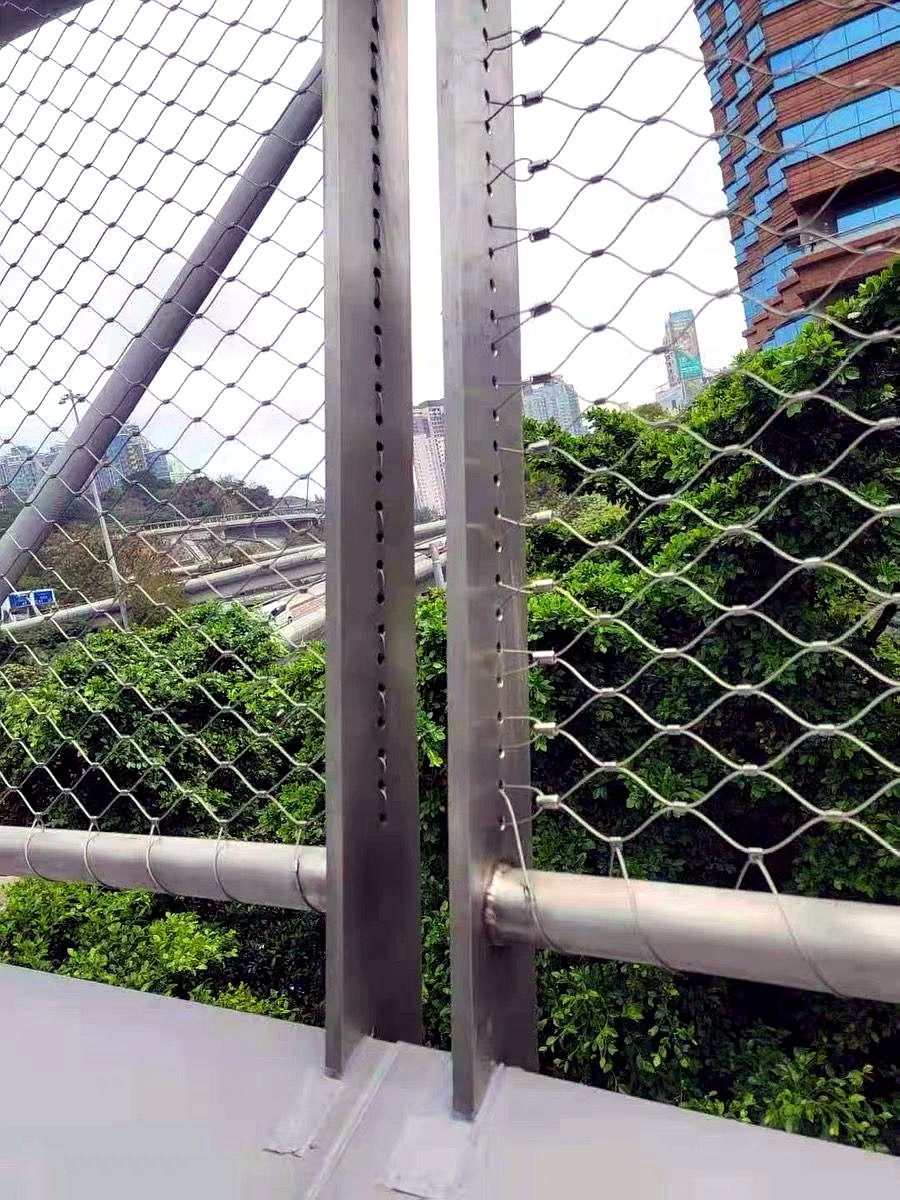
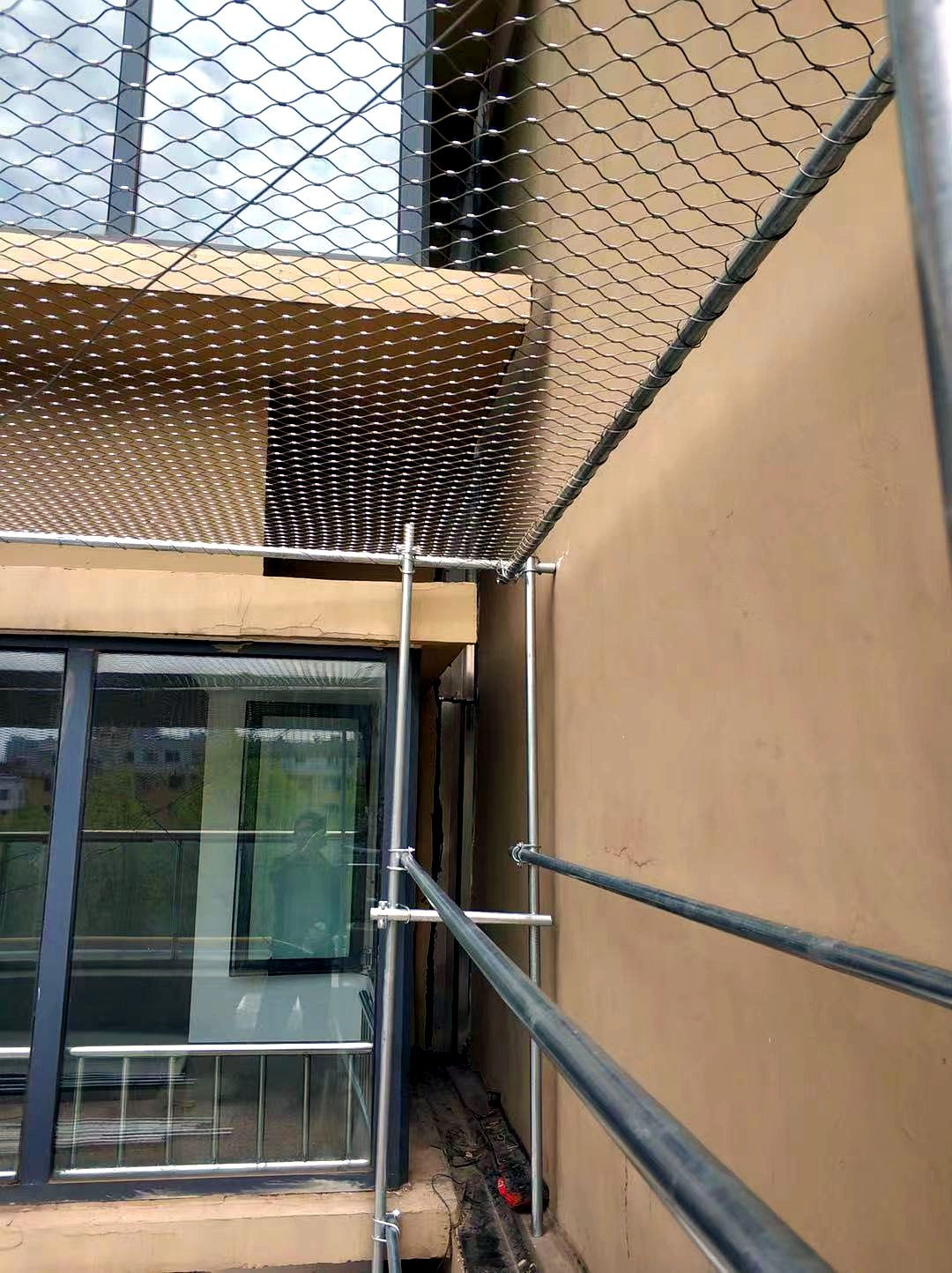
Rope mesh installs differently from rigid panels, and crews used to chain link sometimes fight it for the first hour. The sequence that works:
A competent two-person crew tensions a standard wall panel in about an hour. Roof sections take longer - mostly because of access, not technique.
The Details That Separate a 3-Year Aviary From a 20-Year One
Feed storage needs its own mesh. Rats and sparrows will find any gap near seed. We weave small-aperture panels (25 mm and under, 1.2-1.6 mm rope) specifically for feed rooms and quarantine cages - specify them in the same order and they ship together.
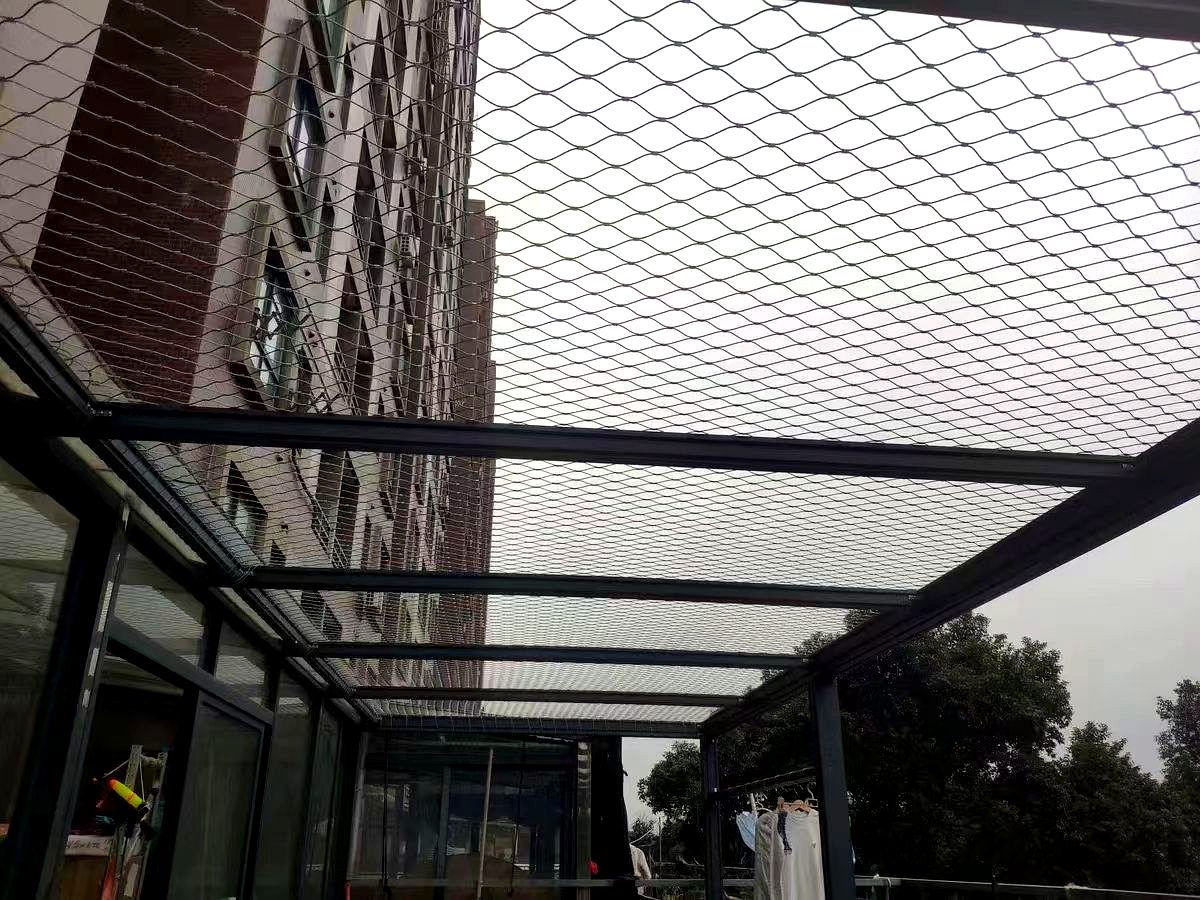
Hardware is not optional. Every panel order we ship includes the border cable schedule, turnbuckles, shackles, and lacing rope matched to the mesh. Galvanized hardware against stainless mesh is a galvanic mistake that shows up as rust streaks within a year - keep every metal in the system stainless.
Check intersections annually. Woven mesh has no welds to fail, but a ferrule that was under-clamped at installation can creep in the first season. A ten-minute walk-around with a pair of pliers in the first year is the only maintenance most enclosures ever need.
Ordering from us directly: we are a weaving factory, not a trading company. Send your species list, enclosure dimensions, and a sketch of the frame - we reply with an aperture and rope specification, a panel-cutting layout, and a hardware schedule, usually within a day. Sample pieces are woven before any production order.
Aviary Mesh Questions Buyers Ask Us
Tell Us Your Species List - We Will Spec the Mesh
Send your enclosure dimensions and a frame sketch. Specification, panel layout, and hardware schedule back within a day. Samples woven before production.
WhatsApp: +86 15076321111 Email the FactoryKeep Reading
- Haobo Production Team, Shenzhou