Stainless Steel Zoo Mesh: Types, Enclosure Design & Supplier Checklist 2026
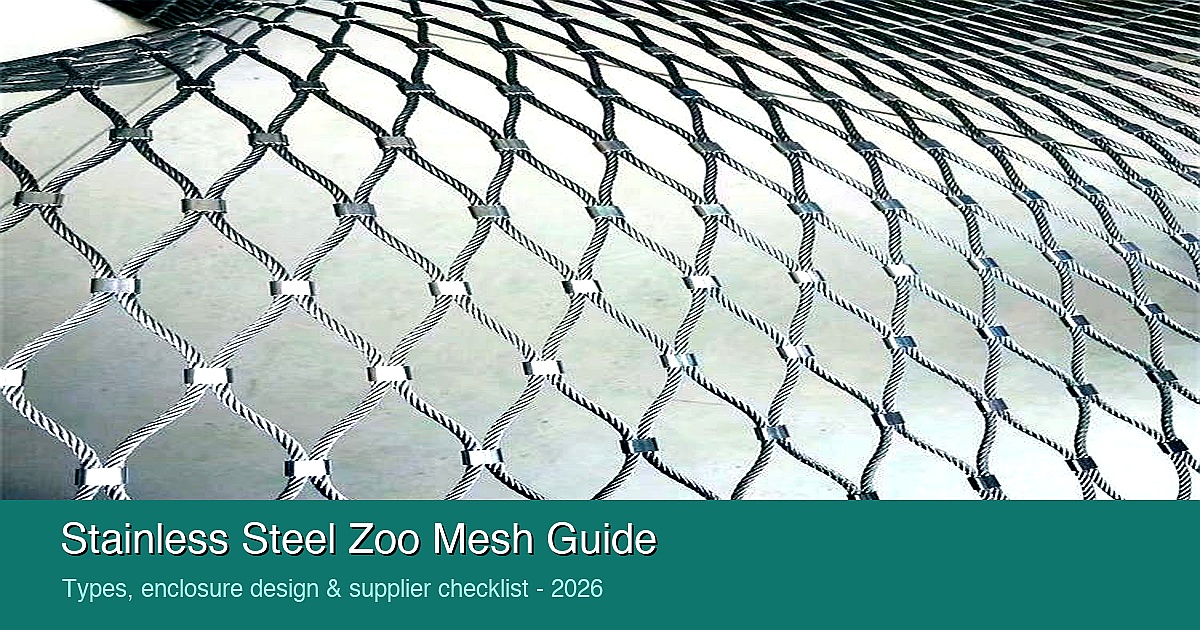
Last month a project manager from a safari park sent us a photo of a leopard enclosure built with chain link fence. The coating was peeling, two wires had been cut with bolt cutters, and the mesh had sagged between the posts. His question was simple: "What should we have used?" The answer is what this article is about - stainless steel zoo mesh, the material we weave every day in our Shenzhou workshop, and the one that has quietly become the default for modern zoo enclosures, walk-through aviaries and balustrade infill.
If you are sourcing zoo enclosure mesh for the first time - or comparing suppliers for a new project - this guide walks through the decisions that actually matter: which construction type, which rope diameter and aperture for which animal, how the mesh gets tensioned, and the seven questions that separate a real factory from a trading company reselling photos.
Who this is for
Zoo and bird-park project managers, enclosure designers, architects specifying balustrade infill, and contractors pricing fall-protection netting. If you need a spec recommendation fast, skip to the selection table - or send us the drawing and we will do it for you.
What Stainless Steel Zoo Mesh Actually Is
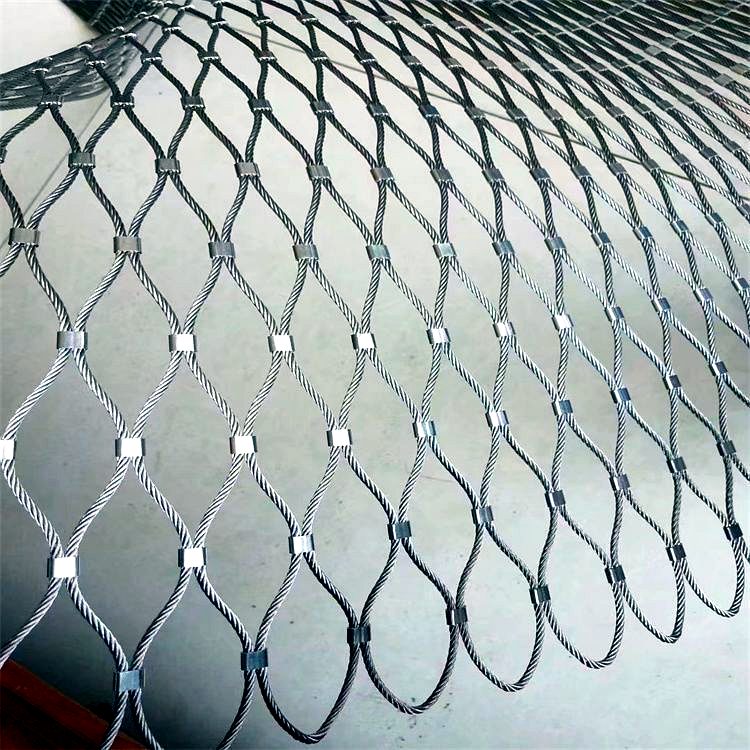
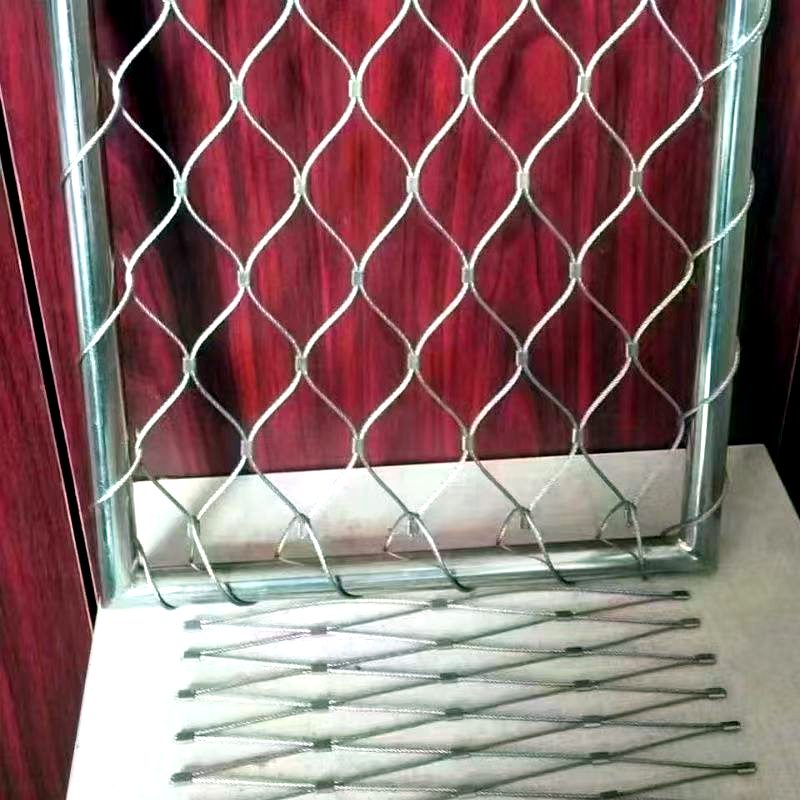
Zoo mesh is a flexible net woven from multi-strand stainless steel wire rope - typically 7×7 or 7×19 construction - formed into a diamond pattern, usually at a 60-degree opening angle. Unlike welded mesh or chain link, there are no welds to crack and no rigid joints. The net behaves like fabric: it drapes over curved structures, absorbs impact energy instead of fighting it, and a single damaged intersection never unzips the whole panel.
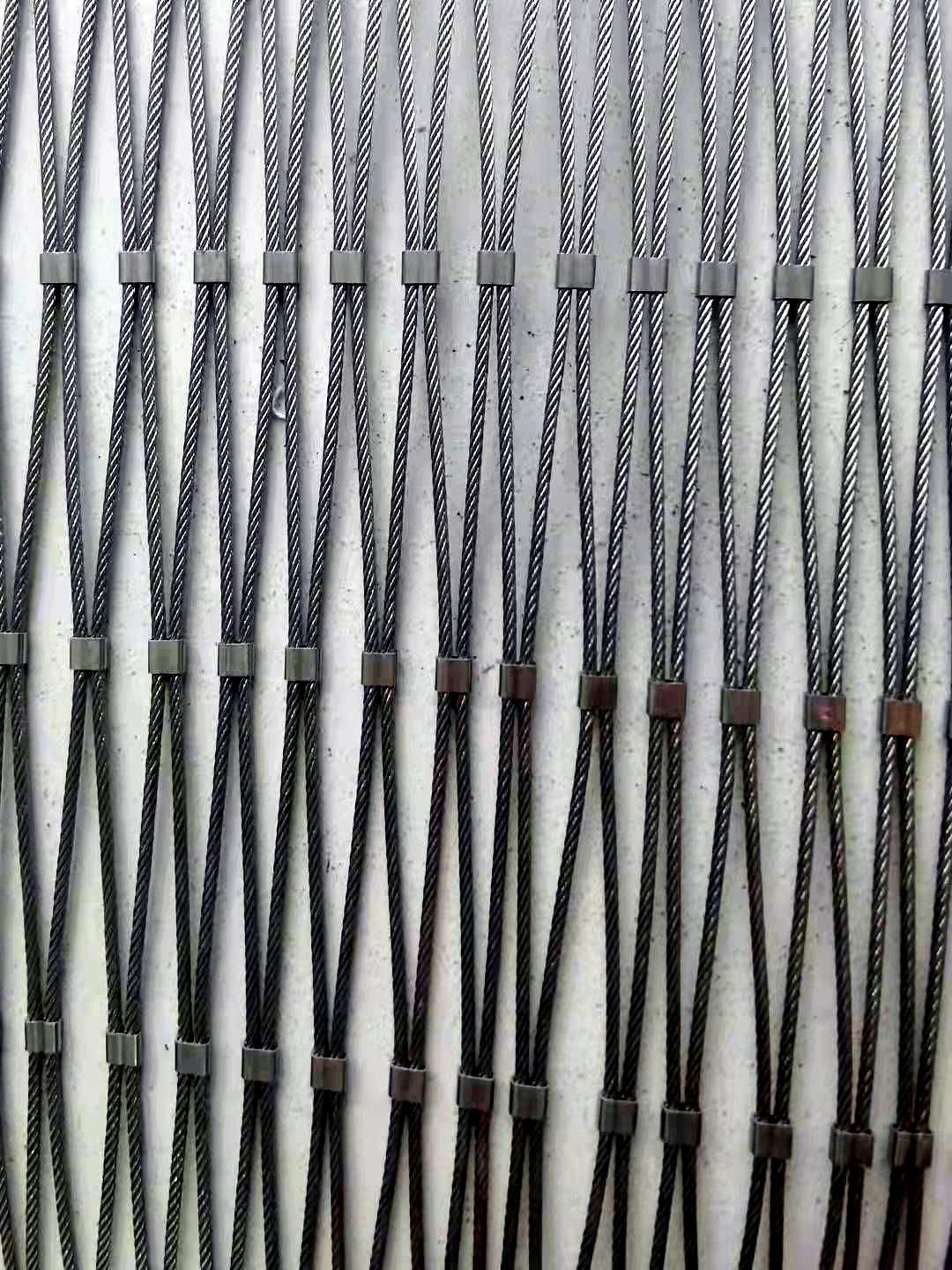
Three properties explain why enclosure architects specify it. Flexibility with memory - an animal charging the net gets a soft stop, not a hard wall, and vets report fewer impact injuries than with rigid fencing. Transparency - a 1.6 mm rope at 80 mm aperture disappears from a visitor's view within a few metres, which is why walk-through aviaries almost always use rope mesh overhead. And corrosion resistance built into the metal itself - no coating to fail, which matters in humid tropical houses, coastal bird parks and anywhere disinfectant gets sprayed daily.
Ferrule vs Inter-Woven: The Two Constructions
Every rope mesh on the market is one of two types. We produce both, and the choice is not about quality - it is about the job.
| Ferrule type | Inter-woven type | |
|---|---|---|
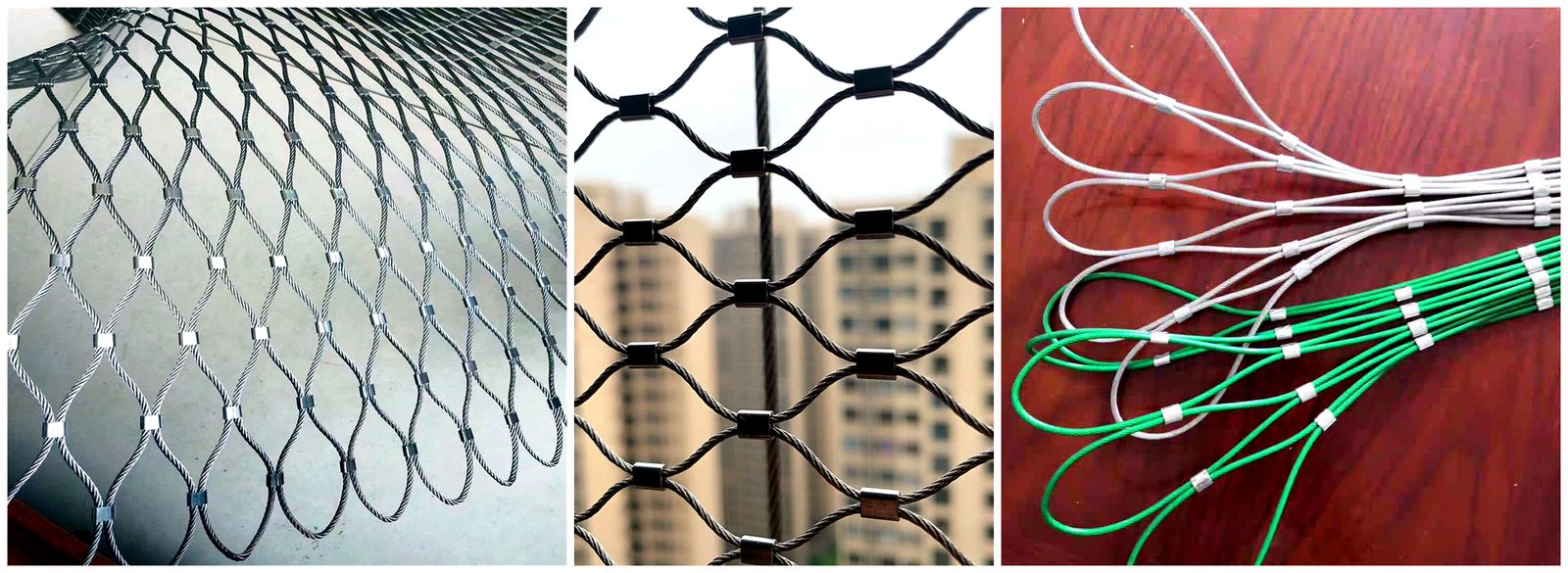
| How it is made | Ropes crossed and locked with pressed stainless or aluminium ferrules | Ropes hand-woven through each other - no hardware at intersections |
| Mesh angle | Fixed by ferrule position - standard 60° | Flexible - can be woven to non-standard angles |
| Weight | Slightly heavier (ferrule mass) | Lightest option at the same rope diameter |
| Best for | Large enclosures, primate and big-cat barriers, balustrade infill - the bulk of orders | Aviaries, small-animal mesh, architectural features |
| Cost position | Lower labour content - usually the economical choice on big areas | Hand-weaving time makes small apertures slower to produce |
A practical note from the workshop floor: below about 40 mm aperture, inter-woven gets slow and expensive because every crossing is hand-threaded. Above 60 mm, ferrule type is almost always the right call. In between, send us the drawing and we will tell you honestly which one suits the panel shape.
Matching Rope Diameter and Aperture to the Animal
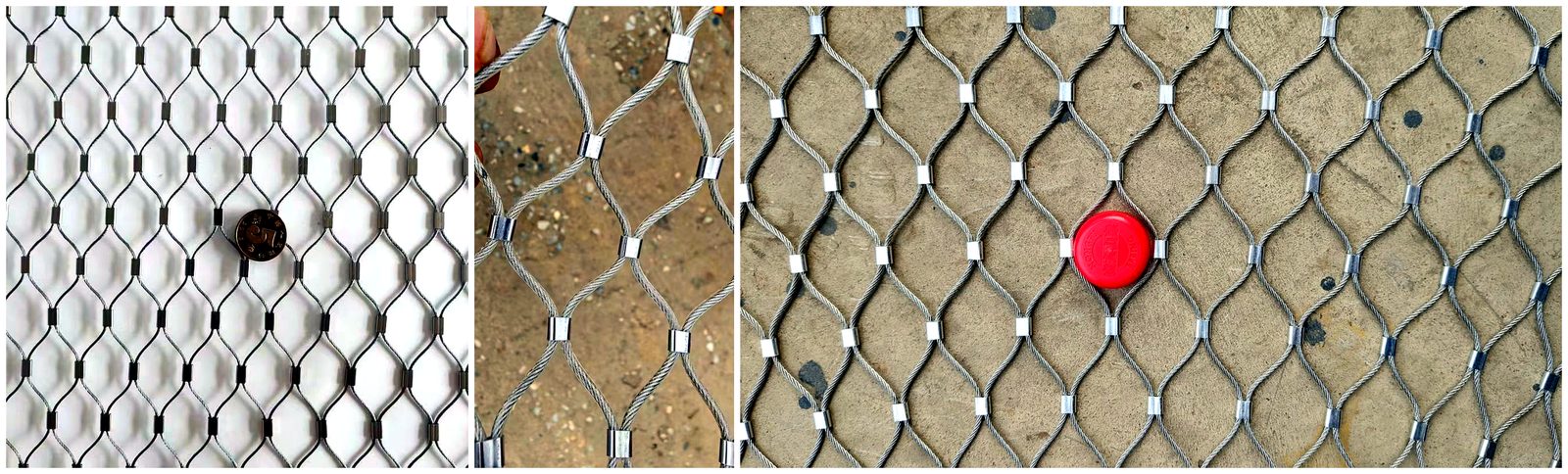
This is the table we send to zoo designers when they ask "what spec do I need?" It reflects the orders we actually produce - your enclosure engineer confirms final loads, but this is where the conversation starts.
| Animal / application | Rope diameter | Mesh aperture | Rope construction |
|---|---|---|---|
| Small birds, aviary roof and walls | 1.0 – 1.6 mm | 25×25 – 40×40 mm | 7×7 |
| Parrots, hornbills, large birds | 1.6 – 2.0 mm | 40×40 – 51×51 mm | 7×7 |
| Monkeys, lemurs, small primates | 2.0 – 2.4 mm | 51×51 – 76×76 mm | 7×7 |
| Great apes, baboons (climbing loads) | 2.4 – 3.2 mm | 60×104 – 76×76 mm | 7×19 |
| Big cats, bears, large hoofstock | 3.2 – 4.0 mm | 76×76 – 102×102 mm | 7×19 |
| Staircase / balustrade infill, green walls | 1.5 – 2.5 mm | 40×40 – 60×104 mm | 7×7 |
| Bridge safety netting, fall protection | 2.0 – 3.2 mm | 50×50 – 80×80 mm | 7×19 |
Two rules of thumb we apply on every quotation. First: climbers need thicker rope, not smaller holes. Primates load the mesh with their full body weight plus momentum - the rope diameter carries that load, the aperture just keeps heads and limbs safe. Second: beaks decide the aperture. A parrot that can get its beak into a diamond will work on that intersection for hours. If the bird can fit its beak through, go one aperture size down.
Four Design Details That Decide Whether the Enclosure Works
The mesh itself is only half the system. The failures we get called about - almost always on enclosures built by others - trace back to these four details.
1. Perimeter cables and edge termination
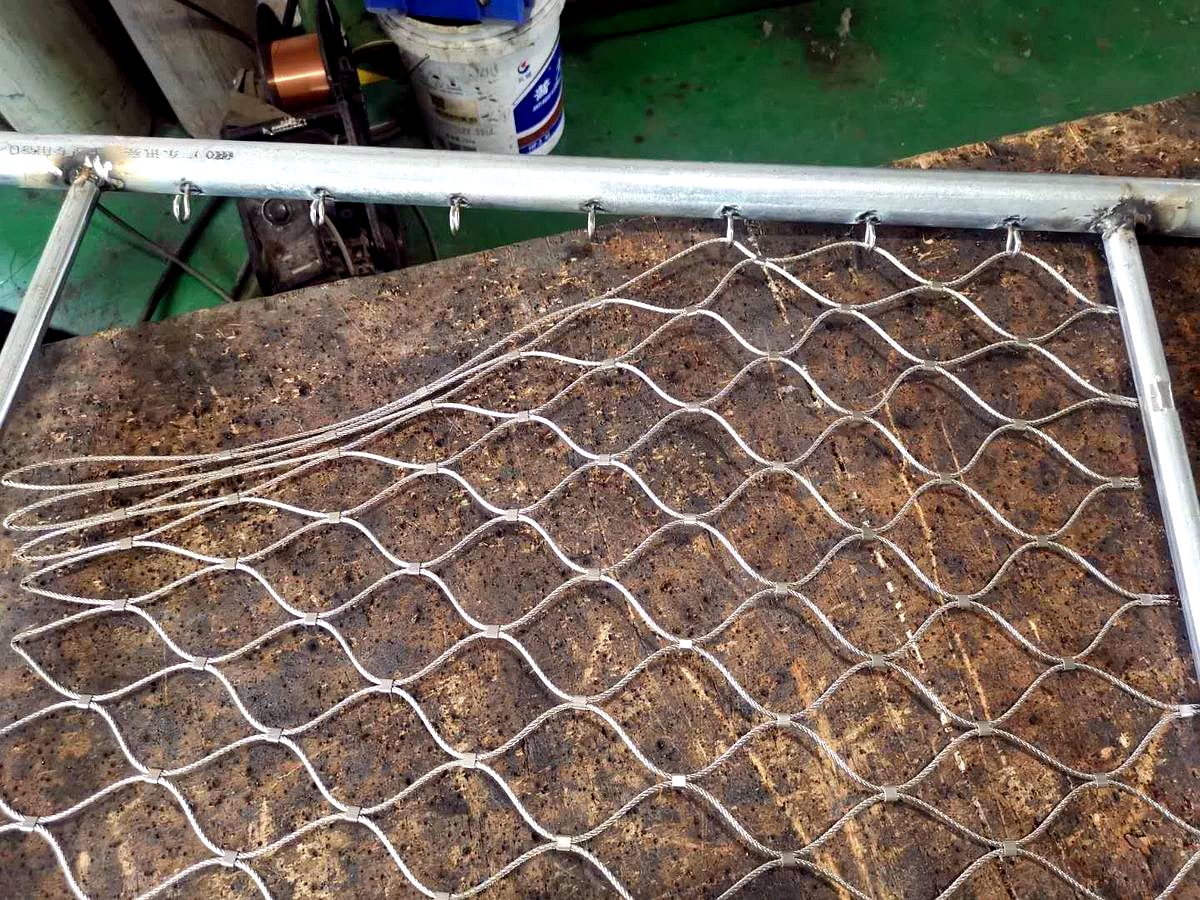
Rope mesh is a tensioned membrane. The loads travel to the edges, so the border rope - usually 6–8 mm stainless cable - and its turnbuckles, shackles and lacing rope are structural, not decorative. We supply panels with the edge rope pre-looped or loose, depending on how your installer prefers to tension. Ask your supplier how the panel edge is finished before you ask the price.
2. Panel shape follows the frame, not the other way round
Because the mesh is woven to order, irregular frames - curved aviary roofs, funnel-shaped catch areas, sloped tops - are not a problem, but they need a dimensioned drawing, not a rough sketch. "About 30 square metres" is not an order; a sketch with five measured edges is. We weave to drawings daily, and a panel that arrives matching the frame saves days of on-site improvisation.
3. Tensioning hardware belongs in the quotation
Budget for turnbuckles, D-shackles, lacing rope and border cable as line items. Suppliers who quote mesh-only prices leave you sourcing marine hardware locally at the worst moment. We include a full hardware schedule with every enclosure quotation.
4. Black oxidized finish for visitor-facing barriers
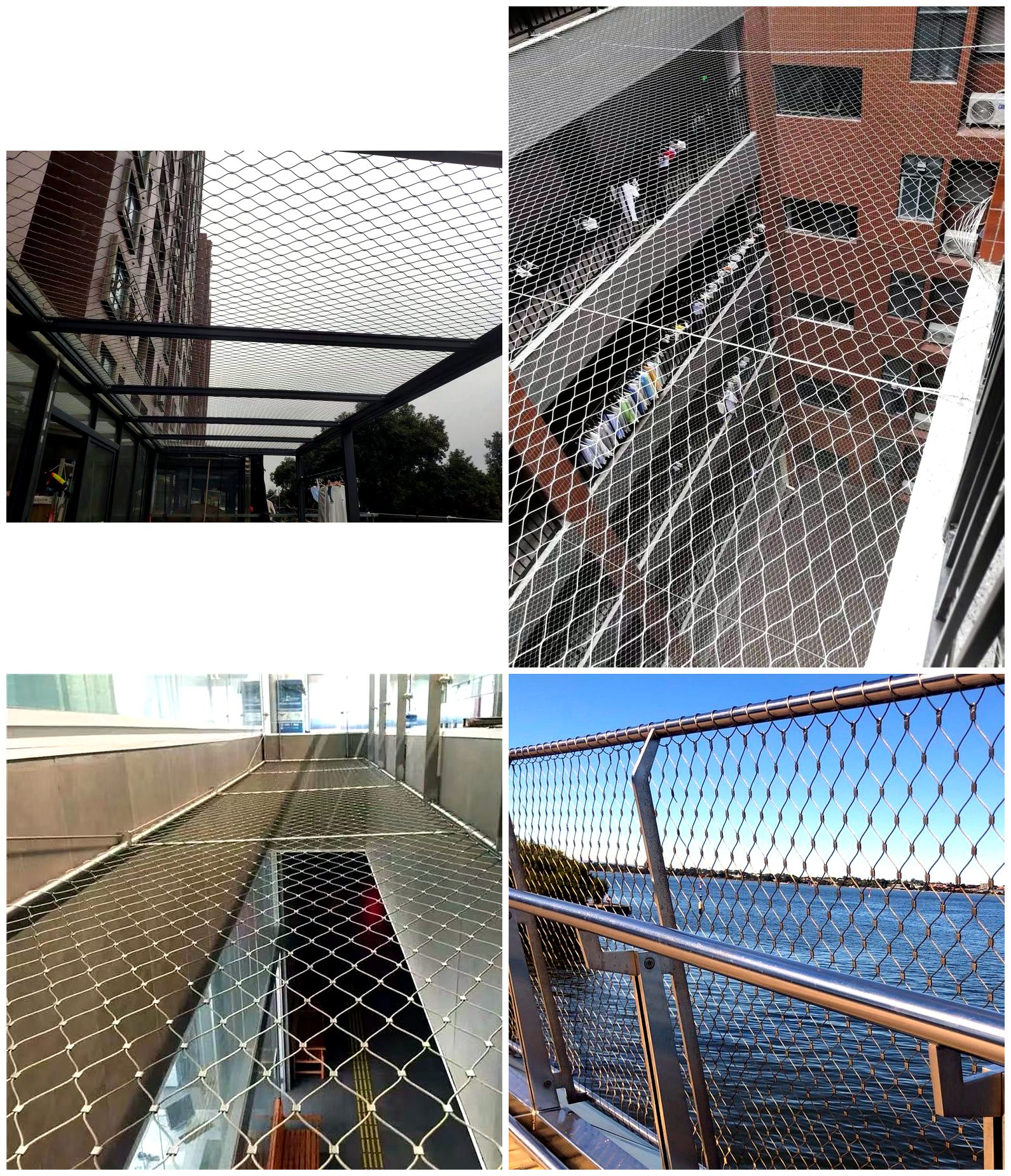
Natural stainless is bright and slightly reflective; against foliage and dark backgrounds it shows up more than you expect. Black oxidized mesh - the same steel, surface-treated, not painted - visually vanishes against planting. Most modern walk-through enclosures and nearly all balustrade infill in landscaped areas now go black. PVC-coated rope in green is the other option where the mesh must disappear into vegetation.
304 vs 316L: When the Upgrade Actually Pays
We produce both grades, so we have no reason to oversell either. The honest version:
- 304 handles the vast majority of zoo and aviary work - inland parks, temperate climates, indoor tropical houses. If the site sits more than a few kilometres from salt water, 304 is the rational choice and saves real money on a big enclosure.
- 316L earns its premium in coastal salt-spray zones, at marine parks, and anywhere the mesh is hosed with chlorinated water or disinfectant daily. The molybdenum content resists pitting exactly where 304 eventually shows tea-staining.
One thing we refuse to do - and you should refuse from any supplier - is quoting "stainless" without stating the grade. There is a persistent grey market in 201-grade steel sold as 304; it rusts within a season outdoors. Every coil we use comes with a mill certificate, and we send a spectrometer report with shipments on request. If a supplier cannot produce a material certificate, the price advantage is the certificate.
The Seven-Question Supplier Checklist
Whether you buy from us or not, these seven questions filter out traders posing as factories. We answer them for our own workshop below each one.
"Can you send a video of the mesh being woven, with today's date?" A factory records this in minutes; a trader needs days. We shoot workshop video for any serious enquiry.
"Which grade - 304 or 316L - and can I have the mill certificate?" Vague answers end here.
"Is the ferrule stainless or aluminium, and what is the slip load?" Ferrule slip strength defines panel integrity. We press stainless ferrules and test sample intersections from every batch.
"Will you weave to my panel drawing, or do you only sell rectangles?" Custom panel shapes are where factories and resellers separate.
"What edge termination and hardware come with the mesh?" Mesh-only quotes hide extra cost in the hardware.
"What is your tolerance on aperture and rope diameter?" Real factories state tolerances because they measure. Traders say "standard".
"Can I start with a sample panel?" We weave A4 swatches and 1 m² sample panels routinely. A supplier reluctant to make a sample is reluctant for a reason.
What a Project Order Looks Like With Us
For context: a recent domestic order was 1,600 m² of 1.6 mm rope at 80×80 mm aperture, woven to the customer's panel drawings and dispatched within days of confirmation. Export orders follow the same path at our rope mesh workshop - drawing confirmation, sample approval if you want it, production, hardware schedule, then packing in rolls or folded panels with edge ropes coiled separately.
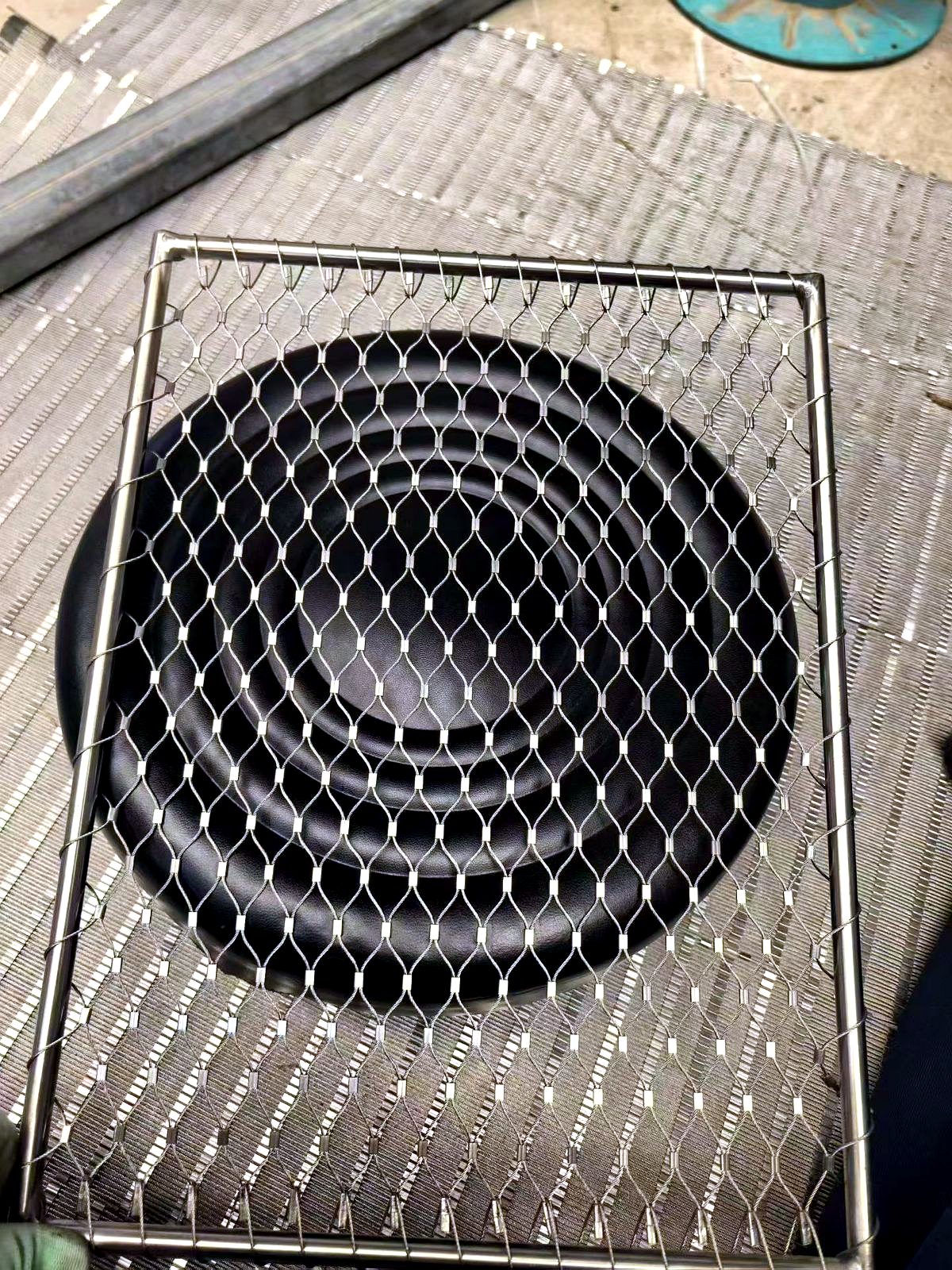
There is no minimum order. A single aviary panel and a full safari park perimeter go through the same drawing-confirm-weave-inspect process. Production lead time is typically around a week depending on queue and specification, and sea freight from Tianjin port serves most zoo project destinations.
Frequently Asked Questions
What mesh size do I need for a walk-through aviary?
For mixed small birds, 1.2 to 1.6 mm rope at 25x25 to 40x40 mm aperture in 304 grade covers most species. Parrots and large-beaked birds push you one aperture size down and up to 2.0 mm rope. Send us the species list and we will suggest the specification.
Can the mesh be curved or shaped to a dome?
Yes. The diamond structure drapes naturally over curved frames, and panels can be woven to irregular shapes from a dimensioned drawing. Domes, funnels and sloped aviary roofs are routine work for our workshop.
Is black mesh as corrosion-resistant as natural stainless?
Yes. The black finish is an oxidation treatment of the steel itself, not a coating that can peel. Corrosion resistance is unchanged; the finish is chosen purely so the mesh visually disappears against planting and shadows.
How is the mesh tensioned on site?
Panels lace to a perimeter border cable with stainless lacing rope, then tension via turnbuckles to the frame. We supply the complete hardware schedule - border cable, turnbuckles, shackles, lacing rope - with the mesh, so nothing is sourced blind on site.
What is the difference between 7x7 and 7x19 rope?
Both are stranded stainless cable. 7x7 (49 wires) is stiffer and used for lighter meshes; 7x19 (133 wires) is more flexible and fatigue-resistant, preferred for heavy climbing loads and large-animal barriers.
Do you make samples before the production order?
Yes. A4 swatches ship with quotations, and 1 m2 sample panels in the final specification can be woven for project approval before full production. There is no minimum order.
From the workshop, not a trading desk
Send the enclosure drawing - get a spec recommendation and factory quote back
Tell us the animal species or application, the panel dimensions, and the site conditions (coastal, indoor, disinfection routine). We reply with rope diameter, aperture, construction type and a hardware schedule - the people answering work twenty metres from the looms.
Keep reading
Gabion Prices in South Africa
The five-part anatomy inside every gabion quote - the same factory-direct logic, applied to baskets.
How to Build a Gabion Wall
Our 8-step build sequence - the same woven-wire family, the rigid cousin of rope mesh.
Gabion Ideas for Real Projects
Fifteen ways contractors use wire mesh structures - from retaining walls to architectural features.
A note on how this was written: the specification table reflects what our looms actually run - rope 1.0 to 4.0 mm, apertures 25 to 150 mm, 304 and 316L, ferrule and inter-woven - and the supplier checklist is the one we would use ourselves if we were buying. No lifespan promises and no fixed prices appear here on purpose: both depend on the drawing, and any fixed number would be stale within a quarter. Written by the production team at Shenzhou Haobo Metal Products Co., Ltd.