Rockfall Protection Netting Buyer's Guide: How to Source SNS Active & Passive Systems to JT/T 528-2022
In the autumn of 2023 a site engineer on a mountain highway project in Southeast Asia sent us photos on WhatsApp: a ring net barrier torn open like wet paper, and a two-tonne boulder sitting calmly in the lane below it. The barrier had been bought through a local trader who ordered "rockfall netting" by the tonne — no energy rating, no anchor layout, no test certificate behind any of it. The paperwork said 500 kJ. Nobody had ever verified a single number.
That phone call is the reason this guide exists. Most rockfall protection netting around the world is specified by capable engineers who have never set foot in a weaving workshop. They know what the system must do; they cannot read a factory quotation for the warning signs hiding in it. We weave wire rope netting and ring nets in Hebei for slopes in the Philippines, the Middle East, Central Asia and West Africa, and what follows is the briefing we would give a friend about to place their first order — written from the production floor, not from a brochure.
On this page
- 1. What "Rockfall Protection Netting" Actually Means
- 2. Active or Passive? The Decision That Drives Everything Else
- 3. SNS Slope Protection: Reading the Model Codes Like a Local
- 4. Ring Net Barriers: Where Quality Hides
- 5. What JT/T 528-2022 Specifies — and What It Leaves Open
- 6. Factory Quality Signals: Details That Separate Serious Producers
- 7. How Rockfall Netting Price Is Really Built
- 8. Inspection, Packing and Shipping: Where Good Projects Go Bad
- 9. The Ten-Minute Checklist Before You Wire the Deposit
What "Rockfall Protection Netting" Actually Means
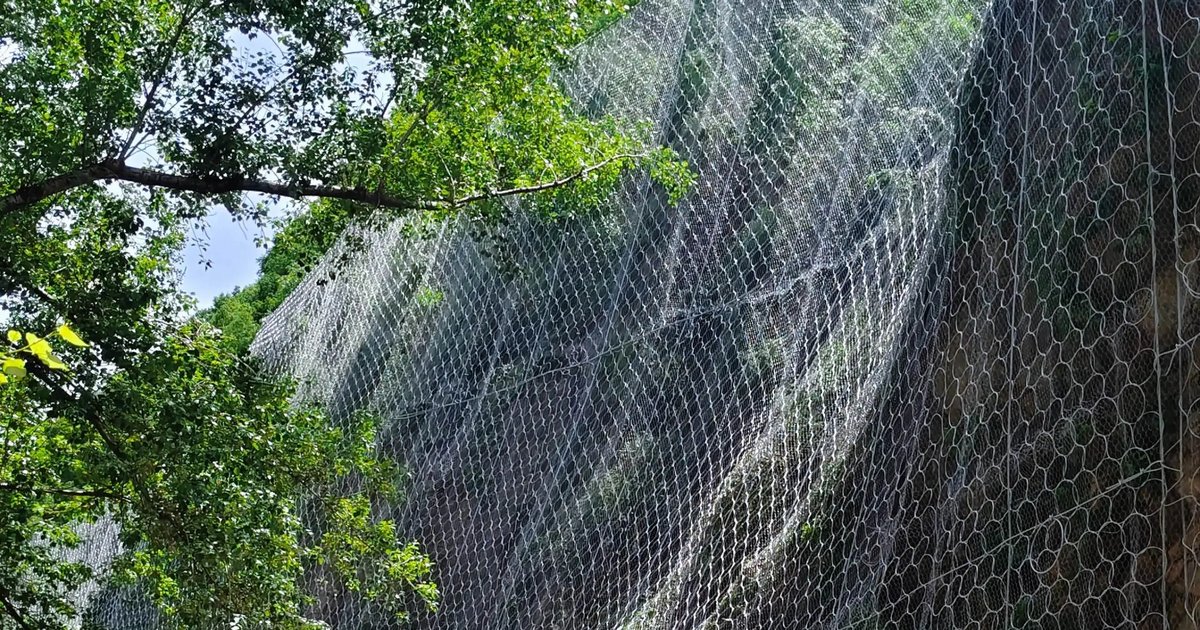
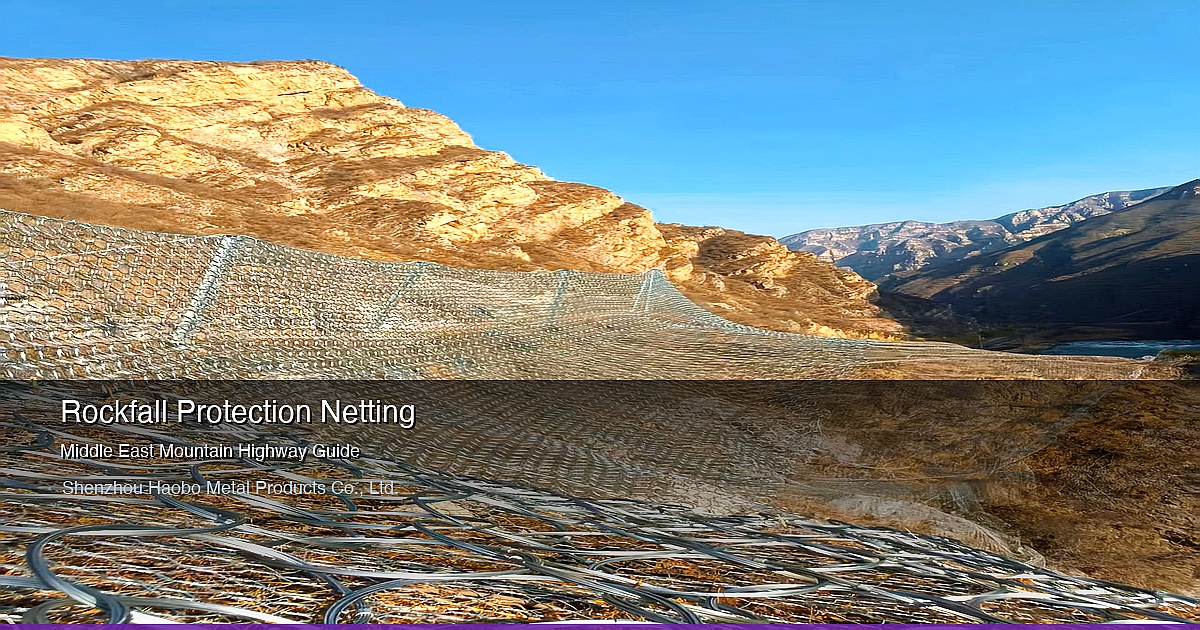
The phrase gets used loosely in enquiries, and that looseness costs money. When a buyer types rockfall protection netting into a search box, at least four different products can answer: high-tensile steel cord wire rope netting pinned tight over a rock face; a lighter woven drape mesh that simply guides small debris down the slope; welded or twisted catch fencing; and engineered ring net barriers that arrest large blocks mid-flight. They differ by an order of magnitude in both cost and function.
Here is the quick disambiguation we walk every new buyer through:
| System | What It Does | Typical Slope Problem |
|---|---|---|
| Drape mesh (soil nail + mesh) | Controls ravel, small weathered fragments | Surface spalling, scree creep |
| Active wire rope netting (SNS GPS type) | Pretensioned net holds rock mass together | Jointed rock, wedge failures |
| Diamond passive barrier (SNS RX type) | Standing fence arrests falling blocks | Corridor rockfall at moderate energy |
| Ring net barrier (SNS RXI type) | Interlinked rings deform to absorb energy | High-energy impacts, 500 kJ and above |
If your enquiry just says "rockfall netting, please quote", a lazy quotation desk will price the cheapest of the four and win the order on price. Specify the system, the standard, and the energy class — in writing — before you compare anyone's numbers.
Active or Passive? The Decision That Drives Everything Else
Before wire diameters, before galvanizing weights, before price: the slope itself decides whether you need an active or a passive system. Get this wrong and no amount of material quality will save the project.
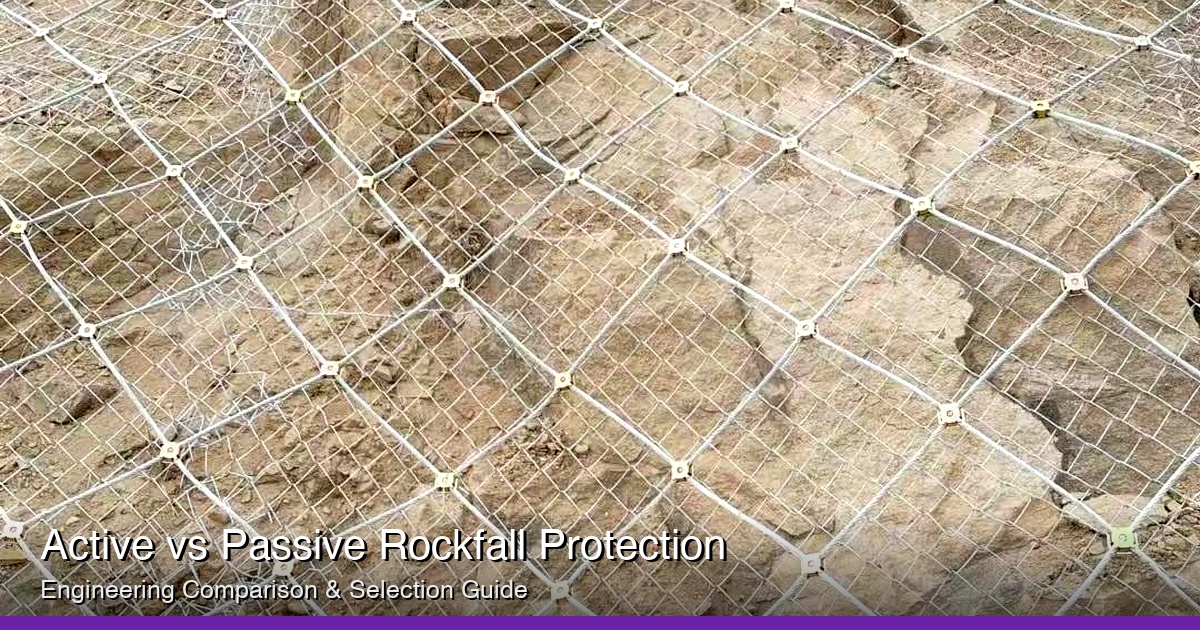
Active rockfall netting is draped and pretensioned onto the face. It works like a compression bandage — holding the rock mass together so individual blocks never gain the momentum to detach. It is priced and ordered per square metre of covered face, plus anchors, and it shines on long, accessible highway cuttings where you can put machinery against the slope.
Passive rockfall protection concedes that rocks will fall, and stands a barrier in their path at the toe or mid-slope. The structure absorbs impact through controlled deformation: the net stretches, brake elements or deformation tubes yield, posts tip within designed limits. It is the only realistic option where the face is too steep, too high, or too unstable to work on directly — and it is ordered as a system (net + posts + anchors + energy dissipation), not by the metre of mesh.
One thing worth internalizing early: the same slope often needs both. We regularly quote packages where the upper cut gets active wire rope netting and the lower corridor gets a run-out ring net barrier, because the client's geotechnical report demanded redundancy. An honest supplier will tell you that; a trading company will sell you whichever product line it happens to hold stock in.
SNS Slope Protection: Reading the Model Codes Like a Local
Chinese design drawings — and, increasingly, drawings across Belt & Road projects in Africa and Central Asia — label these systems as SNS slope protection (Safety Netting System), a naming convention that carried over from the original Swiss-German systems into Chinese practice. The codes look cryptic until you learn two patterns, and then they tell you the net type and energy class in one glance.
| Code Family | Net Type | Reading the Number |
|---|---|---|
| GPS1 / GPS2 | Active, steel rope net + secondary mesh | Suffix marks heavier rope / added layers |
| GER / GTC | Active, steel grid or hybrid | Simplified active systems, lighter faces |
| RX-025 / RX-050 / RX-075 | Passive, diamond rope net | Number x 10 = energy class in kJ (250 / 500 / 750) |
| RXI-050 / 075 / 100 / 150 / 200 | Passive, ring net barrier | Ring nets reach energy classes beyond diamond nets |
The RXI series is where most international enquiries end up, so learn that one cold: RXI-100 is a 1,000 kJ ring net barrier, and the "I" means the net is made of interlocked rings rather than a woven diamond. When a drawing says RXI-150 and a quotation comes back describing a woven diamond net "equivalent", that is not an equivalent — that is a substitution, and it will fail differently under load. We have seen it happen more than once on traded orders.
A note on European practice: projects specced by international consultants often reference ETAG 027 (now EAD 230025) classes instead, with tested energy capacities ranging from roughly 100 kJ up past 3,000 kJ for the heaviest ring net barriers. The physics is identical; the paperwork differs. A factory producing to JT/T 528-2022 can generally map its system to an ETAG class — but demand the mapping in writing, not verbally.
Ring Net Barriers: Where Quality Hides
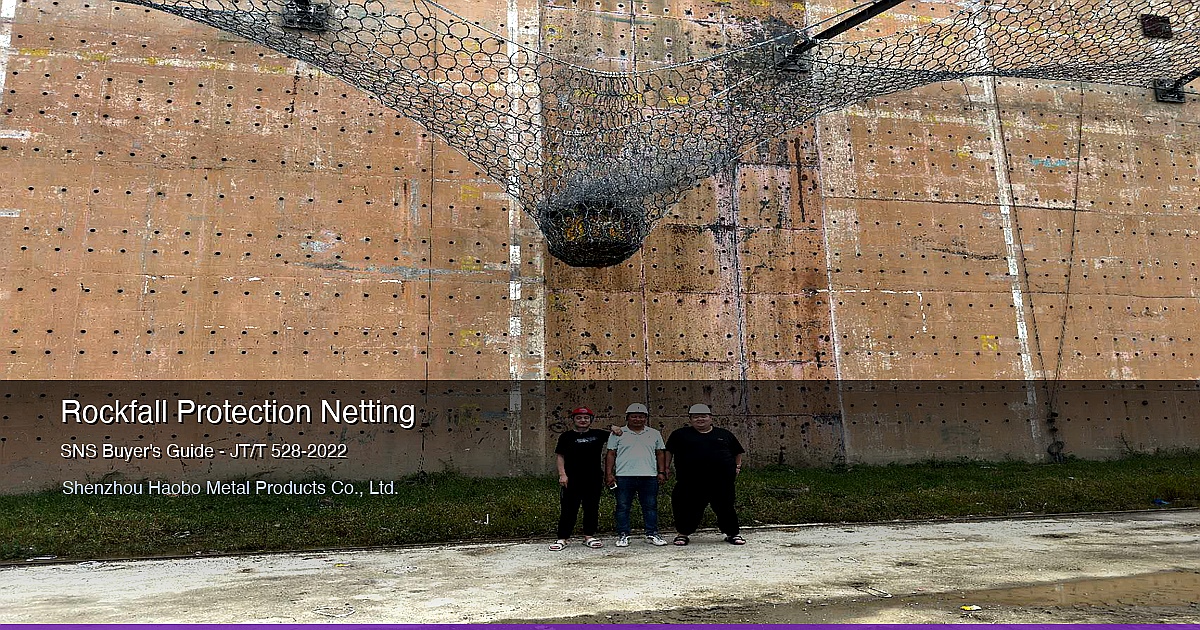
A ring net barrier is the highest-energy product in the family, and the easiest one to quietly downgrade. The net is built from individual steel rings, each ring formed from one or more turns of steel wire and clamped or interlocked with its neighbours. The energy absorption comes from rings stretching and deforming — so three variables decide whether your barrier performs: the wire's tensile class, the number of turns per ring, and the rings' density per square metre.
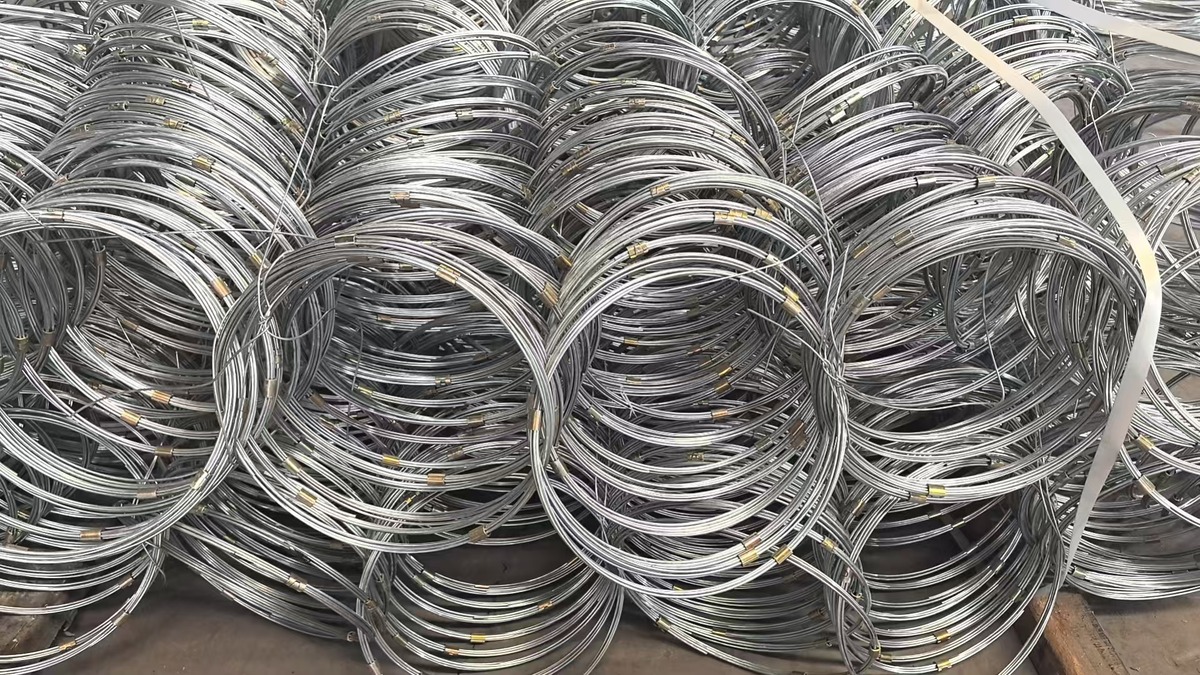
Here is the detail most buyers never hear: ring count per square metre is a drawing requirement, and it is the single most common corner cut in this industry. Dropping from a dense ring layout to a sparser one saves visible kilograms of wire, survives a casual visual inspection, and lowers the barrier's real energy capacity well below its label. When we inspect a competitor's sample or a client's failed net, counting rings per square metre is literally the first thing we do — it takes ten minutes with a tape measure. If your supplier's quotation does not state ring configuration per m2, ask for it in writing. A serious factory answers from the drawing without hesitating.
Same logic applies to the posts and anchorages. Energy class ratings assume a specific post section, base assembly, and anchor group; a "500 kJ system" shipped with undersized posts is not a 500 kJ system in any meaningful sense. The posts are usually where freight and steel costs concentrate — which is exactly why they get quietly slimmed.
What JT/T 528-2022 Specifies — and What It Leaves Open
The governing Chinese standard for flexible rockfall protection systems is JT/T 528-2022, the 2022 revision of the highway-industry standard that replaced the 2004 edition. For procurement purposes it pins down the material floor:
- Steel wire rope: the 8 mm rope class commonly used in netting must deliver a tensile strength of at least 1,770 MPa, with the rope constructed per the standard's lay requirements.
- Corrosion protection: hot-dip galvanizing at 245 g/m² minimum, verified by the weigh-strip-weigh method aligned with GB/T 1839.
- System performance: energy classes and component requirements for passive barriers, consistent with the RX/RXI code structure described above.
What the standard deliberately does not do is your engineering. Slope survey, run-out analysis, barrier positioning, anchor lengths, and pull-out capacity all belong to the designer of record. A factory that offers to "design it for you free" as part of a quotation is offering marketing, not engineering — take the materials specification from the factory, and the layout from a qualified geotechnical engineer who has actually seen your slope.
For buyers outside China, the practical translation is this: JT/T 528-2022 tells you the wire is genuine and the zinc is real; it does not tell you the barrier will stop your rock. Those are two separate questions, and conflating them is how projects end up with torn nets and surprised site engineers.
Factory Quality Signals: Details That Separate Serious Producers
You can triangulate a supplier in about fifteen minutes of looking, if you know what to look at. None of these require an audit visit:
1. Mill test certificates per batch, offered unprompted. Wire rod arrives at the workshop with an MTC from the steel mill stating tensile class and chemistry. A producer weaving 1,770 MPa rope netting has those documents on file and can attach them to a quotation. If the reply is "our quality is very good, don't worry" — worry.
2. Zinc weight stated numerically, not adverbially. "Heavily galvanized" is not a specification; "245 g/m² min, weigh-strip-weigh per GB/T 1839" is. A magnetic coating-thickness gauge on random samples at pre-shipment inspection gives you an independent cross-check — it is a USD 60 instrument and it settles arguments instantly.
3. The secondary mesh trap. Active systems pair the main steel rope net with a finer secondary mesh (often around 2.2 mm wire) that catches small fragments. This is the classic downgrade vector on traded orders: the headline net arrives correct, and the secondary mesh quietly drops to a thinner wire. It is invisible unless you micrometer it. We caught exactly this on a client's shipment from a third-party supplier in 2024 — the fix cost them a re-order and six weeks of schedule.
4. Ring configuration and post sections quoted explicitly. Covered above, but it belongs on this list: a quotation you can hand to your engineer, line by line, without calling anyone.
5. How they talk about what they don't do. The most reassuring sentence a supplier can say is some version of "that energy class needs a different net than what you've specced — here's why." Suppliers who never push back are selling whatever they have.
How Rockfall Netting Price Is Really Built
Here is the honest structure behind every rockfall netting price you will ever receive, and the reason three quotes for the "same" barrier can differ by a factor of three:
- Net type and energy class. Ring nets carry more steel and more fabrication time than diamond rope nets; stepping an RXI barrier up one energy class adds real kilograms of high-tensile wire.
- Ring configuration and wire turns — the same invisible variable from the quality section. Cheaper quotes are very often sparser nets.
- Post and base steel. Heavy sections, hot-rolled and galvanized, are a major cost block — and the most tempting one to thin down.
- Zinc weight. Going from light commercial coating to the 245 g/m² class the standard requires changes the wire's cost noticeably. Some "bargain" quotes are simply under-coated wire.
- Anchor and hardware completeness. A complete system includes rope anchors, sewing rope, boundary rope, brake elements, templates. Incomplete kits are cheap until the installer is on site with missing parts and a slope above him.
So when the lowest quotation lands 60% under the others, it is not a discovery — it is a different product wearing your drawing's number. On anything life-safety adjacent, treat a suspiciously cheap quote as information about the goods, not about the market. We would rather lose an order on price than see our netting arrive under someone else's substitution six months later — which is, roughly, how this article started.
Freight is its own conversation: FOB Tianjin is the standard export basis from our region, and on barrier projects the posts, not the nets, usually decide the container plan.
Inspection, Packing and Shipping: Where Good Projects Go Bad
The two weeks before vessel loading are where even well-specified orders get ruined. Four things from our export log:
Post length is a container problem. Barrier posts of 3 metres or longer do not fit a standard 40' high-cube on the diagonal once you account for door clearance and flooring. They ship upright on flat-racks, or in open-top containers with proper dunnage and lashing — which costs more and books out faster, particularly in peak season. If your forwarder quotes everything as "40HQ, no problem" on a barrier project with 3 m posts, they have not done the arithmetic yet. Find out in week one, not at the terminal.
Nets want to be rolled, posts want to be bundled — plan the mix. Rolled ring nets and rope netting pack dense and travel well. The inefficiency is almost always in the posts and base plates. An experienced factory will give you a container-loading plan with the actual packing photos from a comparable prior shipment; ask for exactly that.
Do the ten-minute checks at loading, not at arrival. Count rings per m2 against the drawing. Micrometer five random secondary-mesh wires. Run the coating gauge over a dozen rope samples. Photograph every bundle tag. All of this is free, all of it takes less than an hour, and any of it can still be fixed while the container is at the factory — after sailing, every defect is a claim, a delay, and a memory.
Anchor work is the site's half of the warranty. The best barrier money can buy still depends on anchors grouted to depth and proven by pull test. When clients send us photos of failed systems, the net is usually intact — the anchor pulled, or the layout never matched the run-out geometry. Budget the pull tests; they are cheap insurance on a system whose whole job is one bad afternoon.
The Ten-Minute Checklist Before You Wire the Deposit
Print this and pin it above the quotation stack:
- System named and coded on paper: active (GPS/GER/GTC) or passive (RX/RXI), with the energy class your geotech actually called for.
- JT/T 528-2022 compliance stated for the wire: 8 mm rope class at 1,770 MPa minimum, zinc 245 g/m² minimum per GB/T 1839 — or the ETAG 027 mapping, in writing.
- Ring configuration per m² and post section quoted explicitly, not "equivalent system".
- Mill test certificates attached per batch, not promised.
- Complete hardware list: anchors, sewing rope, boundary rope, brake elements, templates.
- Container plan confirmed for your actual post lengths — flat-rack or open-top priced in.
- Pre-shipment inspection agreed: rings counted, wire micrometered, zinc gauged, photos logged.
That is the whole game. If a quotation survives all seven questions, the price attached to it is a real price — whatever the number is — and the net that arrives in Tianjin's next sailing will behave the way its drawing says it should.
If you only remember five things
- "Rockfall protection netting" covers four distinct products — drape mesh, active wire rope netting, diamond passive barriers, and ring net barriers. Naming the exact system and energy class on paper is what makes quotations comparable.
- SNS slope protection codes decode simply: GPS/GER/GTC are active systems, RX/RXI are passive barriers, and the number gives the energy class in tens of kJ — RXI-100 means a 1,000 kJ ring net barrier.
- JT/T 528-2022 sets the material floor for export systems: 8 mm class steel wire rope at 1,770 MPa minimum tensile strength and hot-dip galvanizing at 245 g/m2 minimum (GB/T 1839 verification). Slope layout and anchor design remain the geotechnical engineer's job.
- The quietest corner-cuts in this industry are ring count per m2, secondary mesh wire diameter, and post section — all invisible to casual inspection, all catchable with a tape measure, a micrometer and a coating gauge before loading.
- On the same energy class, three honest quotes can differ by a factor of three because of steel content, ring density, and zinc weight — treat the outlier-low price as information about the goods, not the market.
Not Sure Which Rockfall System Your Slope Actually Needs?
Send us your cross-section drawings or just a few photos of the slope. We will recommend an active or passive configuration with a quoted, itemized materials list within 24 hours — FOB Tianjin.
A useful first message usually includes:
- Slope photos or cross-section drawings
- Design energy class if your geotech has one (e.g. RXI-100)
- Approximate coverage area or barrier length
- Destination port, for FOB Tianjin freight planning
www.haobomesh.com · Shenzhou Haobo Metal Products Co., Ltd.
Further reading on rockfall systems