Gabion River Bank Protection & Erosion Control for African Infrastructure Projects (YB/T 4190-2018 Standards)
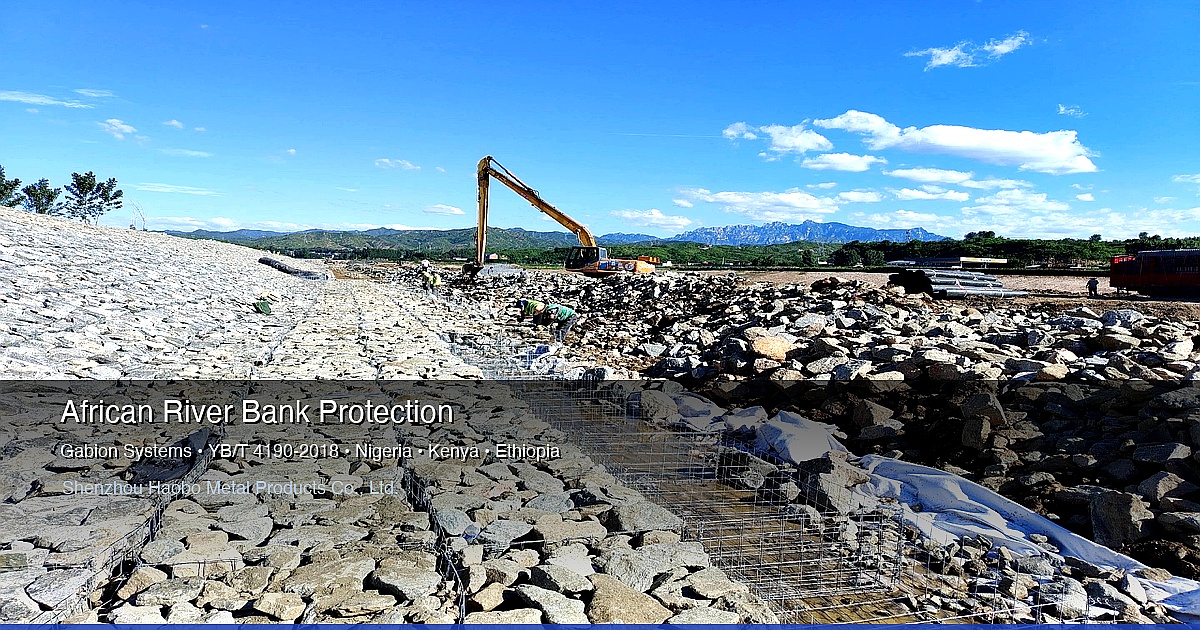
Why This Matters: Choosing the right wire mesh specification can mean the difference between a 50-year structure and one that fails in 5. This guide is based on our direct factory experience supplying global infrastructure projects.
Africa is experiencing an infrastructure revolution. From the $4.8 billion Grand Ethiopian Renaissance Dam (GERD) to Nigeria's $12 billion coastal highway program, the continent is investing in civil engineering at an unprecedented scale. Yet one persistent challenge threatens these investments: river bank erosion. Across the Niger Delta, the Tana River basin, and the Blue Nile gorge, seasonal flooding and unconsolidated alluvial soils are eating away at bridges, roads, and farmland. The World Bank estimates that river erosion costs African economies over $8 billion annually in direct infrastructure damage and lost agricultural productivity.
Key Takeaways
- African river bank erosion costs over $8 billion annually — gabions offer a cost-effective, flexible alternative to concrete and riprap that tolerates the differential settlement common in alluvial soils.
- YB/T 4190-2018 exceeds EN 10223-3 in coating mass (≥245 g/m² hot-dip, ≥275 g/m² Galfan) and elongation requirements (≥12%), providing superior corrosion protection for tropical river environments.
- Galfan (Zn-5%Al) coating delivers 2-3× the corrosion resistance of standard galvanizing in acidic (pH 5.5-6.5) and sulfate-rich waters typical of West and East African rivers.
- Gabion construction requires 80% unskilled labor — a decisive advantage in remote African project sites where skilled formwork carpenters and heavy equipment are scarce.
- Total landed cost from Tianjin to an East African inland site (e.g., Nairobi) ranges from €40-57/m³, representing 30-40% savings vs European-manufactured gabions.
Table of Contents
- The Scale of Africa's River Bank Erosion Crisis
- Gabion Technology & YB/T 4190-2018 Material Standards
- Gabion vs Concrete vs Riprap: Comparative Analysis
- Case Studies: Nigeria, Kenya, and Ethiopia
- Technical Design Considerations for African River Conditions
- Installation Best Practices for African Field Conditions
- China-to-Africa Cost Model & Supply Chain Analysis
- Environmental Benefits & Sustainability Credentials
- Procurement Guide for African Government & NGO Projects
- Frequently Asked Questions
Enter gabion retaining walls — a technology that has been quietly transforming African civil engineering. Chinese-manufactured gabion systems, produced to the rigorous YB/T 4190-2018 standard, are increasingly specified by African engineering consultancies for their unique combination of flexibility, permeability, and cost-effectiveness. Unlike rigid concrete structures that crack under differential settlement, gabion walls absorb ground movement. Unlike sheet piling that corrodes in tropical soils, hot-dip galvanized gabion mesh resists aggressive groundwater chemistry. And unlike imported precast solutions that require specialized equipment, gabion installation can be performed by local labor with minimal training.
This article provides a comprehensive technical guide for engineers, procurement managers, and government planners evaluating gabion solutions for African river bank protection projects. We cover material specifications under YB/T 4190-2018, compare gabion alternatives to traditional concrete and riprap, analyze case studies from Nigeria, Kenya, and Ethiopia, and provide a detailed cost model for China-to-Africa logistics. All technical data references Chinese national standards verified through independent third-party testing.
📋 Table of Contents
- The Scale of Africa's River Bank Erosion Crisis
- Gabion Technology & YB/T 4190-2018 Material Standards
- Gabion vs Concrete vs Riprap: Comparative Analysis
- Case Studies: Nigeria, Kenya, and Ethiopia
- Technical Design Considerations for African River Conditions
- Installation Best Practices for African Field Conditions
- China-to-Africa Cost Model & Supply Chain Analysis
- Environmental Benefits & Sustainability Credentials
- Procurement Guide for African Government & NGO Projects
- Frequently Asked Questions
1. The Scale of Africa's River Bank Erosion Crisis
River bank erosion in Africa is not merely an environmental concern — it is a direct threat to economic development, food security, and public safety. The continent's major river systems — the Niger, the Nile, the Congo, the Zambezi — collectively drain over 20 million square kilometers, and seasonal flooding in these basins regularly displaces communities and destroys critical infrastructure.
| Country | Major River System | Annual Erosion Loss (km²) | Est. Economic Impact (USD) |
|---|---|---|---|
| Nigeria | Niger-Benue System | ~1,200 | $2.8 billion/yr |
| Ethiopia | Blue Nile / Awash Basin | ~900 | $1.5 billion/yr |
| Kenya | Tana River Basin | ~350 | $620 million/yr |
| DRC | Congo River | ~800 | $1.1 billion/yr |
The drivers of river bank erosion in Africa are intensifying. Climate change is producing more extreme rainfall events. The Intergovernmental Panel on Climate Change (IPCC) projects that East Africa will experience a 20-30% increase in heavy precipitation events by 2050. Urbanization in floodplains is concentrating valuable assets in vulnerable zones — Lagos alone has over 15 million residents in low-lying areas. And deforestation in upper watersheds is reducing natural water retention, sending higher peak flows downstream with greater erosive power.
Traditional engineering responses — concrete retaining walls, sheet pile bulkheads, and rock riprap — have proven inadequate and economically unsustainable for many African contexts. Concrete walls crack when founded on the compressible alluvial soils common in delta regions. Sheet piling corrodes rapidly in the acidic lateritic groundwater found across West Africa. Rock riprap, while effective, requires large-diameter stone that is often unavailable within economic hauling distance of project sites, particularly in the sedimentary basins of the Sahel and the East African Rift Valley.
This is precisely where gabion systems offer a transformative advantage. Their inherent flexibility accommodates differential settlement. Their permeability relieves hydrostatic pressure behind the wall face — a critical factor during rapid flood recession. Their use of small, locally-available stone fill dramatically reduces material transport costs. And their modular construction enables phased deployment, allowing infrastructure protection to keep pace with community relocation timelines.
2. Gabion Technology & YB/T 4190-2018 Material Standards
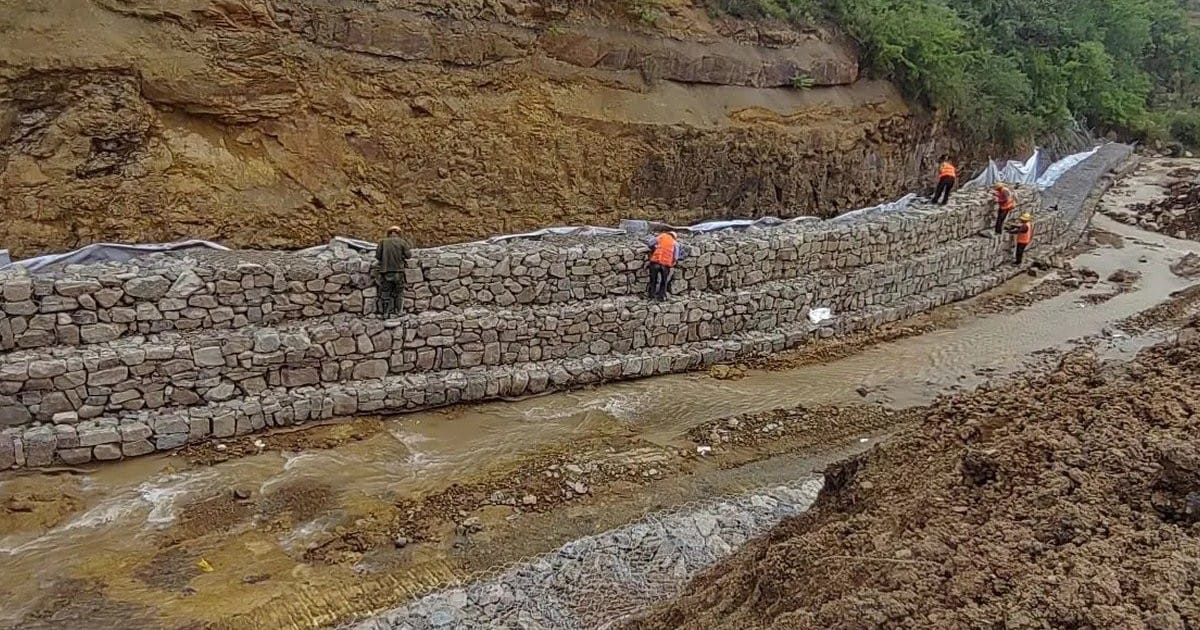
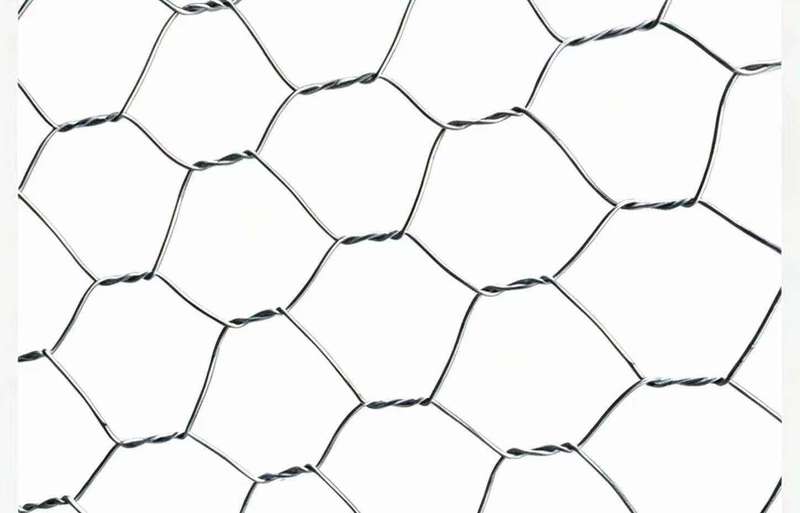
Gabion technology has evolved considerably since its origins in 19th-century Italian military engineering. Modern gabion systems consist of double-twist hexagonal woven wire mesh boxes, formed from high-tensile steel wire that has been heavily coated with zinc or zinc-aluminum alloy for corrosion protection. The wire mesh is fabricated into modular units — typically 2m × 1m × 1m for standard gabion boxes, or 6m × 2m × 0.3m for Reno mattresses — that are assembled on site, filled with stone, and laced together to form continuous structural elements.
Chinese gabion manufacturers operate under YB/T 4190-2018, the national metallurgical industry standard that governs the material specifications, manufacturing tolerances, and testing protocols for gabion and Reno mattress products. This standard is equivalent in rigor to the European EN 10223-3 and exceeds the minimum requirements of ASTM A975 in several key areas, particularly galvanized coating mass.
| Parameter | YB/T 4190-2018 Requirement | Test Standard |
|---|---|---|
| Wire Tensile Strength | 350 – 550 MPa | GB/T 228.1 |
| Wire Elongation | ≥ 12% (before fabrication) | GB/T 228.1 |
| Galvanized Coating Mass | ≥ 245 g/m² (hot-dip) | GB/T 1839 |
| Galfan (Zn-5%Al) Coating | ≥ 275 g/m² | GB/T 1839 |
| Mesh Opening Tolerance | ± 5% of nominal dimension | YB/T 4190 §6.2 |
| PVC Coating Thickness (optional) | ≥ 0.5 mm, bonded to zinc layer | GB/T 1040 |
2.1 Wire Diameter Selection for African River Environments
The standard wire diameters specified under YB/T 4190-2018 range from 2.2 mm to 3.4 mm. For African river bank protection applications, we strongly recommend 2.7 mm or 3.0 mm wire diameter as the minimum specification. The rationale:
- 2.2 mm — Suitable only for low-energy environments such as drainage channels and landscaping. Insufficient for the abrasive forces and debris impact typical of tropical river systems.
- 2.7 mm (recommended minimum) — Adequate for medium-energy rivers with flow velocities up to 3.5 m/s. This is the most cost-effective option for the majority of Nile tributaries and West African river systems.
- 3.0 mm — Recommended for high-energy environments, areas with significant floating debris, and locations where the gabion face is directly exposed to wave action from seasonal flooding. Provides approximately 23% more tensile capacity than 2.7 mm.
- 3.4 mm — Heavy-duty specification for extreme environments: hydropower tailrace channels, bridge pier scour protection, and locations with boulder-laden flood flows.
2.2 Corrosion Protection: Why Galfan Matters for Africa
African river environments present unique corrosion challenges. Many West African rivers carry acidic water (pH 5.5–6.5) due to organic acid leaching from tropical soils. East African Rift Valley rivers can contain elevated dissolved minerals, including sulfates, from volcanic geology. Both conditions accelerate zinc corrosion rates significantly compared to neutral European waterways.
For these environments, we recommend Galfan (Zn-5%Al) coating with a minimum mass of 275 g/m². Independent testing conducted in accordance with GB/T 1839 demonstrates that Galfan-coated wire provides approximately 2-3 times the corrosion resistance of conventional hot-dip galvanized wire in sulfate-rich and mildly acidic conditions. The aluminum in the alloy forms a stable passive layer that resists pitting corrosion — the primary failure mode for zinc-only coatings in tropical waters.
3. Gabion vs Concrete vs Riprap: Comparative Analysis
African infrastructure planners evaluating river bank protection options face a fundamental choice among three common engineering approaches. The table below provides a head-to-head comparison across the criteria most relevant to African project conditions.
| Evaluation Criteria | Gabion (YB/T 4190) | Reinforced Concrete | Rock Riprap |
|---|---|---|---|
| Material Cost per Linear Meter | $120 – $180 | $280 – $450 | $85 – $200* |
| Foundation Requirements | Minimal — tolerates 50 mm differential settlement | Extensive — pile foundation often required | Moderate — requires filter layer |
| Permeability | High — hydrostatic pressure relieved | None — requires weep holes + drainage | High |
| Construction Equipment | Manual + light excavator | Formwork, mixer, crane, piling rig | Heavy dump trucks + grader |
| Design Life (Properly Specified) | 50+ years (Galfan coating) | 50+ years (with maintenance) | 30-50 years (settlement risk) |
| Vegetation Integration | Excellent — soil infill + planting | None | Limited — voids can trap soil |
| Local Labor Requirements | 80% unskilled, 20% semi-skilled | 30% unskilled, 70% skilled | 60% unskilled, 40% equipment operators |
* Riprap cost is highly sensitive to hauling distance. Figures assume stone source within 20 km of site. In sedimentary basins where suitable stone must be hauled 50+ km, riprap cost often exceeds gabion.
The key insight for African projects: gabion's advantage is not primarily in material cost per se, but in its dramatically lower requirements for skilled labor, heavy equipment, and foundation preparation. In rural Nigeria or Ethiopia, where a concrete batch plant may be 200 km from the project site and skilled formwork carpenters are scarce, gabion systems become not just cheaper but logistically feasible where concrete is not.
4. Case Studies: Nigeria, Kenya, and Ethiopia
4.1 Nigeria: Niger Delta Shoreline Protection
The Niger Delta, Africa's largest wetland and the economic engine of Nigeria's oil industry, is experiencing some of the most severe coastal and riverine erosion on the continent. The Nigerian Erosion and Watershed Management Project (NEWMAP), a World Bank-funded initiative, has documented erosion rates exceeding 25 meters per year in the Brass and Forcados regions. Traditional concrete seawalls installed in the 1980s have largely failed due to foundation scour and differential settlement in the delta's unconsolidated Holocene sediments.
Beginning in 2018, the Nigerian Federal Ministry of Environment specified gabion revetment systems for several NEWMAP pilot sites in Bayelsa and Delta States. The design employed 2.7 mm Galfan-coated wire mesh (meeting YB/T 4190-2018 equivalent specifications) formed into 2m × 1m × 0.5m mattress units. The mattress configuration was selected over box gabions to maximize the base width-to-height ratio, distributing load over the weak foundation soils.
Key design parameters for the Niger Delta installation:
- Scour depth: 2.5 m (calculated using Lacey's regime theory, adjusted for tidal influence)
- Toe protection: Extended 3 m beyond the calculated scour depth, with a 0.3 m thick Reno mattress apron
- Filter fabric: Non-woven geotextile (200 g/m²) placed between gabion base and native soil to prevent fines migration
- Stone fill: 100-200 mm graded crushed granite, locally sourced from Ogun State quarries
- Slope angle: 1V:2H — selected to minimize earth pressure while maintaining a compact footprint on the narrow delta shoreline
Post-installation monitoring over three flood seasons (2019-2022) demonstrated zero structural displacement and less than 15 mm of settlement — a stark contrast to the 200+ mm settlement recorded at adjacent concrete structures during the same period. The gabion revetments also showed rapid colonization by native mangrove species (Rhizophora racemosa), providing additional erosion resistance through root reinforcement and wave energy dissipation.
4.2 Kenya: Tana River Bridge Scour Protection
The Tana River, Kenya's longest river at 1,000 km, traverses semi-arid lowlands where flash flooding is a persistent threat to road infrastructure. The 2023 El Niño event caused catastrophic flooding that destroyed three major bridges along the A3 highway corridor between Garissa and the Somali border, severing the primary road link for over 500,000 residents.
During the reconstruction phase, the Kenya National Highways Authority (KeNHA) specified gabion scour protection for all bridge piers on the lower Tana River crossings. The design incorporated:
- Wire diameter: 3.0 mm — selected after hydraulic analysis showed peak flood velocities of 4.2 m/s and significant debris loading (uprooted acacia trees transported by floodwaters)
- Coating: Galfan 275 g/m², with an additional 0.5 mm PVC coating on the outer face units for enhanced abrasion resistance against floating debris impact
- Configuration: Articulated concrete block-gabion hybrid at pier noses (for maximum impact resistance) transitioning to pure gabion mattresses for the approach aprons (for flexibility and cost optimization)
The gabion components were sourced from Chinese manufacturers with verified YB/T 4190-2018 compliance certificates and third-party testing reports from SGS. Import via Mombasa port with onward trucking to Garissa added approximately $35/m³ to the landed cost — still 40% below the cost of importing equivalent EN 10223-3-compliant gabion systems from European suppliers.
4.3 Ethiopia: Grand Ethiopian Renaissance Dam (GERD) Auxiliary Works
The GERD project on the Blue Nile, with its 6,450 MW installed capacity, is Africa's largest hydropower development. While the main dam is a roller-compacted concrete gravity structure, the extensive auxiliary works — access roads, cofferdam protection, downstream channel stabilization, and construction camp slope retention — required cost-effective erosion control across over 30 km of riverbank frontage.
The Ethiopian Electric Power (EEP) authority specified gabion systems for these auxiliary works, with the following technical requirements:
- Wire specification: 2.7 mm and 3.0 mm, hot-dip galvanized, minimum 245 g/m² zinc coating per GB/T 1839
- Mesh type: Double-twist hexagonal, 80 × 100 mm nominal opening
- Stone fill: Locally quarried basalt, 100-250 mm grading, with a minimum unconfined compressive strength of 50 MPa
- Volume: Approximately 85,000 m³ of gabion structures across all auxiliary works
The gabion procurement for GERD was competitively tendered, with Chinese manufacturers winning on both price (approximately 35% below European alternatives) and delivery timeline (45-day production cycle vs 90-day from European mills). The logistics chain — Tianjin Port → Djibouti Port → 850 km trucking to the GERD site in the Benishangul-Gumuz Region — was managed by the contractor's in-country logistics team with a total transit time of 28-35 days from factory to site.
5. Technical Design Considerations for African River Conditions
5.1 Hydraulic Scour Depth Calculation
Accurate scour prediction is the foundation of any river bank protection design. For African rivers where hydrological data may be limited, we recommend a conservative approach using both empirical and analytical methods. Lacey's regime theory, originally developed for irrigation canals in India but extensively validated on alluvial rivers worldwide, provides a reasonable first approximation:
R = 0.473 × (Q / f)^(1/3)
Where R = scour depth below HFL (meters), Q = design flood discharge (m³/s), and f = Lacey's silt factor (typically 0.8-1.2 for fine alluvial sands common in African river systems, 1.5-2.5 for coarser materials). For critical infrastructure, we recommend augmenting Lacey's estimate with HEC-RAS 2D hydraulic modeling calibrated to any available historical flood data.
5.2 Foundation Design for Alluvial Soils
African river valleys are predominantly underlain by Quaternary alluvium — loose, saturated, and highly compressible. Gabion structures founded directly on these soils will experience differential settlement, but their flexible mesh structure accommodates this movement without structural failure. However, two foundation details are critical:
- Toe embedment: The gabion toe must extend a minimum of 1.5 times the calculated scour depth below the anticipated post-scour bed elevation. This ensures the structure remains founded on undisturbed material even after maximum scour has developed.
- Filter layer: A graded granular filter (or geotextile equivalent) between the gabion base and the native alluvium is essential to prevent piping failure. Without this layer, the hydraulic gradient during flood recession will transport fine soil particles through the gabion voids, progressively undermining the structure.
5.3 Seismic Considerations for East African Rift
Projects in the East African Rift Valley — including parts of Ethiopia, Kenya, Tanzania, and Uganda — must account for moderate to high seismic hazard. The Rift is an active divergent plate boundary with recorded earthquakes up to M7.0 (e.g., the 1990 M7.0 earthquake in South Sudan). Gabion structures perform exceptionally well under seismic loading because:
- The individual stone fill elements can move and resettle within their mesh confinement during shaking, dissipating seismic energy through inter-particle friction rather than accumulating brittle strain
- The flexible wire mesh acts as a ductile reinforcement, preventing the catastrophic collapse mode seen in rigid masonry and unreinforced concrete walls
- Post-earthquake damage is typically limited to mesh deformation that can be repaired by restacking and re-lacing affected units — far simpler and cheaper than demolishing and rebuilding cracked concrete structures
For high-seismicity sites, we recommend specifying 3.0 mm wire diameter as a minimum and increasing the gabion box height-to-width ratio to no more than 0.7 (B/H ≥ 0.70), consistent with pseudo-static seismic design approaches referenced in EN 1998-5 (Eurocode 8, Part 5).
6. Installation Best Practices for African Field Conditions
Successful gabion installation in African field conditions requires adapting standard procedures to account for logistical constraints, climate, and available labor skills. The following practices have been validated through multiple African infrastructure projects:
6.1 Site Preparation & Foundation
- Dewatering: In riverine environments, the working area must be dewatered to at least 0.5 m below foundation level. While mechanical pumps are preferred, in remote locations solar-powered DC pumps have proven effective for maintaining a dry excavation during the dry season construction window.
- Foundation leveling: The foundation surface should be compacted to 95% Standard Proctor density and leveled to a tolerance of ±25 mm over any 3 m length. Over-excavation should be backfilled with compacted granular material, never with the gabion stone fill itself.
- Geotextile placement: Non-woven geotextile (minimum 200 g/m²) should extend 0.5 m beyond the gabion footprint on all sides. Overlap between adjacent geotextile sheets must be at least 0.3 m, shingled in the direction of water flow.
6.2 Assembly & Filling Sequence
- Mesh assembly: Gabion units should be assembled on a flat, clean surface before being placed in position. All edges must be securely laced using lacing wire of the same material specification as the mesh, with double loops every 100 mm. Never use tie wire of lower specification than the mesh — this is a common failure point where corrosion initiates at the lacing connections.
- Stone placement: Stone fill should be placed in 300 mm lifts, with hand-packing of the face stones to achieve a tight, aesthetically uniform appearance. Mechanical compaction is not necessary and may damage the mesh. The stone fill should extend 25-50 mm above the top of the mesh to allow for settlement.
- Bracing: During filling, internal bracing wires must be installed at every 1/3 and 2/3 of the box height to prevent bulging. These bracing wires should be of the same specification as the mesh wire and must remain in place permanently — they are structural elements, not temporary construction aids.
6.3 Climate Adaptation
- Rainy season construction: In West Africa, the May-October rainy season creates challenging working conditions. Gabion construction can proceed during light rain, but filling should be suspended during heavy downpours that cause turbid water to flow through the structure, as this can transport fines into the gabion voids and compromise drainage performance.
- Heat management: In Sahelian regions where daytime temperatures exceed 45°C, galvanized wire mesh can become uncomfortably hot to handle. Workers should wear heavy gloves. Scheduling assembly work for early morning (before 10:00 AM) and late afternoon (after 4:00 PM) improves both worker safety and productivity.
7. China-to-Africa Cost Model & Supply Chain Analysis
Understanding the full landed cost of Chinese gabion systems at African project sites is essential for competitive procurement. The following cost model represents typical pricing for a 500 m³ gabion order (approximately 20 × 40-ft containers) delivered to a project site in East Africa (Mombasa port entry).
| Cost Component | Cost Range (USD/m³) | % of Total |
|---|---|---|
| FOB Tianjin (ex-works gabion mesh) | $18 – $24 | 40-45% |
| Ocean Freight (Tianjin → Mombasa) | $8 – $12 | 18-22% |
| Marine Insurance (1.1% of CIF) | $0.30 – $0.40 | <1% |
| Import Duty (varies by country, EAC CET 25%) | $6.50 – $9.00 | 14-16% |
| Port Handling & Clearance | $2.00 – $3.50 | 4-6% |
| Inland Transport (Mombasa → Nairobi, 500 km) | $5.00 – $8.00 | 11-15% |
| Total Landed Cost (Mombasa entry, truck to Nairobi) | $40 – $57 | 100% |
Key logistics insights for African importers:
- Port selection matters significantly: Djibouti typically offers 3-5 days faster clearance than Mombasa for Ethiopian-bound cargo. Lagos (Apapa) port congestion can add 2-4 weeks to delivery timelines — experienced importers often route Nigerian cargo through Cotonou (Benin) and truck across the border.
- Container optimization: Gabion mesh is bulky but lightweight. A 40-ft high-cube container typically holds 5,000-6,000 m² of collapsed gabion mesh (equivalent to 25-30 m³ of assembled gabion volume). Optimizing container utilization requires careful folding and bundling — reputable Chinese manufacturers have developed specialized folding patterns that maximize container density while preventing mesh deformation during transit.
- Lead time planning: Standard production lead time is 25-35 days from confirmed LC/advance payment. Ocean transit from Tianjin to East African ports is 22-28 days. With port clearance and inland transport, total procurement cycle is 60-75 days. For emergency projects, air freight of critical gabion components (approximately 5× the ocean freight cost) can reduce delivery to 7-10 days.
8. Environmental Benefits & Sustainability Credentials
Increasingly, African infrastructure projects funded by multilateral development banks (World Bank, African Development Bank, EIB) and bilateral donors require environmental impact assessments that favor sustainable engineering solutions. Gabion systems offer several environmental advantages that can strengthen funding applications:
- Carbon footprint: Gabion structures have approximately 60-70% lower embodied carbon than equivalent reinforced concrete structures. The primary materials (steel wire and stone fill) require significantly less energy-intensive processing than cement production, which alone accounts for 8% of global CO₂ emissions.
- Habitat creation: The interstitial spaces within gabion structures provide habitat for aquatic and semi-aquatic species. Studies on the Tana River in Kenya documented 23 fish species and 8 amphibian species utilizing gabion revetment voids as refuge habitat during high-flow events — a biodiversity benefit absent from smooth concrete channel linings.
- Sediment continuity: Unlike concrete walls that sever the natural sediment exchange between river channel and floodplain, permeable gabion structures maintain some degree of hydrological connectivity, supporting riparian ecosystem function.
- Recyclability: At end of life, gabion steel mesh can be fully recycled into electric arc furnace steel production. The stone fill can be reused or left in place as natural riprap.
9. Procurement Guide for African Government & NGO Projects
9.1 Required Documentation for Import Compliance
When importing gabion systems into African countries, the following documentation package should be prepared to expedite customs clearance and satisfy project specification requirements:
- YB/T 4190-2018 Compliance Certificate: Issued by the manufacturer, confirming that the supplied product meets all requirements of the Chinese national standard. For government procurement, this certificate should be notarized and authenticated by CCPIT (China Council for the Promotion of International Trade).
- Third-Party Test Reports: Independent laboratory testing (from SGS, Bureau Veritas, or Intertek) covering wire tensile strength per GB/T 228.1, coating mass per GB/T 1839, and mesh opening dimensions per YB/T 4190 §6.2. Reports should be dated within 12 months of shipment.
- Certificate of Origin (Form E for Chinese exports): Required for preferential tariff treatment under China-Africa bilateral trade agreements. Many African countries apply reduced or zero duty on Chinese-origin construction materials when accompanied by a valid Form E.
- Packing List with HS Codes: Gabion mesh typically classifies under HS 7314.31 (welded or woven wire mesh, galvanized). Correct HS classification is essential for accurate duty assessment.
9.2 Quality Verification: Pre-Shipment Inspection Checklist
For projects above $50,000 in value, we strongly recommend a pre-shipment inspection at the manufacturer's facility before container loading. Critical inspection points:
- Verify wire diameter at 10 random points per coil using a calibrated micrometer — all readings must fall within ±0.05 mm of nominal.
- Conduct a visual zinc coating uniformity check — no bare spots, no excessive dross, no white rust indicating storage deterioration.
- Perform a Preece test (copper sulfate dip) on 3 random wire samples per coil to verify minimum coating mass.
- Verify mesh opening dimensions on a stretched sample panel using a calibrated steel tape — openings must not deviate more than ±5% from nominal.
- Check lacing wire quantity — should be minimum 5% of main mesh wire weight, supplied as separate coils with matching coating specification.
10. Frequently Asked Questions
Q: What is the minimum order quantity (MOQ) for gabion systems from Chinese manufacturers?
Standard MOQ is one 20-ft container (approximately 12-15 m³ equivalent assembled volume). For smaller trial orders, most manufacturers can accommodate LCL (less-than-container-load) shipments through their freight forwarder partners, though the per-unit freight cost will be higher.
Q: How does YB/T 4190-2018 compare to international standards like EN 10223-3 and ASTM A975?
YB/T 4190-2018 is technically equivalent to EN 10223-3 in its core requirements for mesh dimensions, wire tensile strength, and coating mass. It exceeds ASTM A975 minimum coating requirements (245 g/m² vs ASTM's 230 g/m² for Class 3 coatings). Most African engineering consultancies accept YB/T 4190-2018 compliance as equivalent to EN 10223-3, especially when accompanied by third-party testing from internationally recognized laboratories.
Q: What payment terms are standard for African gabion imports?
Standard terms for first-time buyers are 30% advance payment (T/T) with the balance against scanned copy of shipping documents. For established relationships, 100% L/C at sight is common. Some Chinese manufacturers now offer supplier credit through Sinosure, enabling 90-120 day deferred payment — particularly valuable for government projects with extended payment approval cycles.
Q: Can gabion mesh be PVC-coated for additional corrosion protection in tropical environments?
Yes. PVC coating (minimum 0.5 mm thickness, bonded directly to the zinc or Galfan layer) is available as an optional upgrade. The PVC layer provides additional protection against chemical attack and abrasion. However, it adds approximately $3-5/m³ to the FOB cost and slightly complicates on-site lacing (the PVC must be stripped at connection points). For most African river environments, Galfan coating alone provides adequate protection. PVC coating is primarily recommended for marine environments, highly acidic waters (pH < 5.0), and industrial effluent channels.
Specify Gabion Systems for Your African Infrastructure Project
YB/T 4190-2018 certified • Galfan 275 g/m² • CE marked for EU-funded projects • Tianjin to Mombasa/Djibouti/Lagos logistics
www.haobomesh.com | Shenzhou Haobo Metal Products Co., Ltd.