Gabion Baskets for Philippine Flood Control and Riverbank Protection: DPWH Item 502 Guide, Design Methodology, and BOQ Template 2026
Why This Matters: Choosing the right wire mesh specification can mean the difference between a 50-year structure and one that fails in 5. This guide is based on our direct factory experience supplying global infrastructure projects.
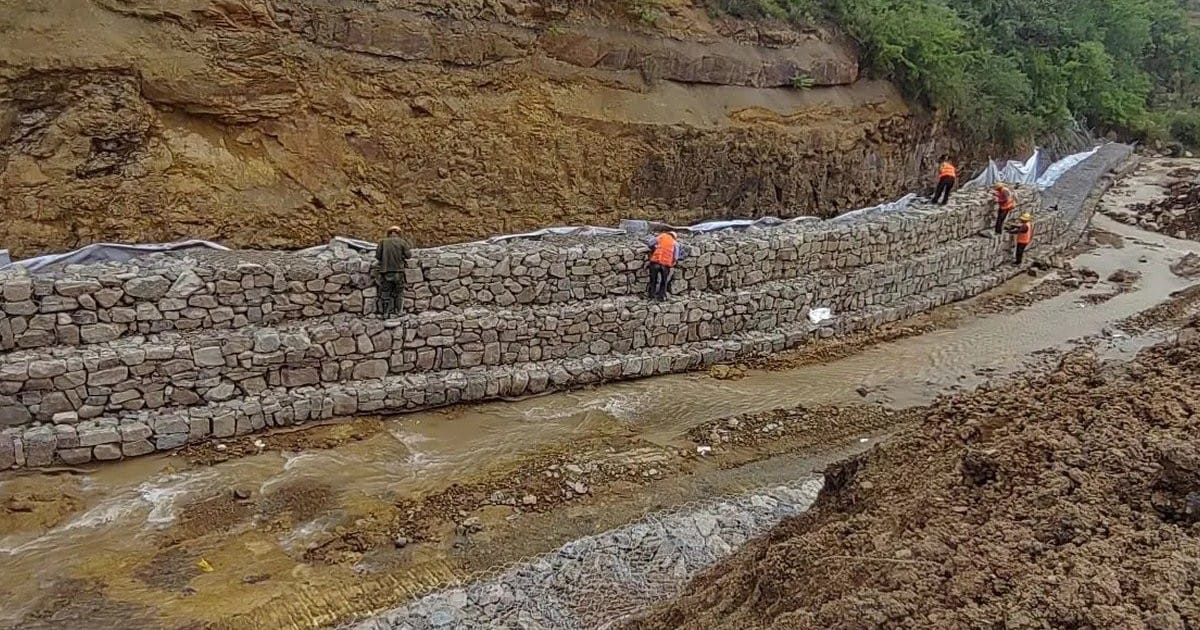
Flood control is one of the most pressing infrastructure challenges in the Philippines. With an average of 20 tropical cyclones entering the Philippine Area of Responsibility (PAR) each year, combined with monsoon rains and river basin flooding, the country faces billions of pesos in flood damage annually. Gabion baskets — rectangular wire mesh containers filled with stones — have emerged as a preferred flood control and riverbank protection solution for DPWH (Department of Public Works and Highways) projects across the archipelago.
Key Takeaways
- Gabion structures are the preferred DPWH flood control solution because they combine flexibility (survive seismic and scour loads that destroy rigid concrete walls), self-drainage (eliminate hydrostatic pressure buildup), and cost-effectiveness (30-40% cheaper than equivalent reinforced concrete walls at PHP 8,000-12,000/linear meter vs PHP 15,000-20,000)
- The #1 cause of gabion flood wall failure in Philippine rivers is NOT structural overload — it is toe scour undermining the foundation; Reno mattress aprons must extend at least 1.5× calculated scour depth (HEC-18/CSU equation), with a minimum 2.0m width for small rivers and 4.0m for large river systems
- Pasig-Marikina River gabion revetment (5.8km, 14,500 boxes, PHP 1.8B) survived Typhoon Ulysses 2020 at 22.0m water level — zero structural failure — outperforming adjacent concrete-lined sections that showed significant cracking and joint separation
- Cagayan de Oro River post-Sendong rehabilitation (8.2km, 18,000 boxes, PHP 2.4B) taught three critical lessons: overdesign toe protection for 2× calculated scour, use 3.0mm wire in high-velocity bends, and specify angular crushed rock (d50=150-250mm) instead of rounded river stone to prevent settlement
Table of Contents
- 1. The Philippine Flood Control Challenge: Why Gabions Are the Preferred Solution
- 2. Applicable Philippine Standards and DPWH Specifications for Gabion Flood Control
- 3. Gabion Types for Philippine Flood Control Applications
- 4. Design Methodology for Gabion Flood Control Structures
- 5. Case Study 1: Pasig-Marikina River Flood Control Revetment
- 6. Case Study 2: Cagayan de Oro River Flood Protection — Typhoon Sendong Recovery
- 7. Gabion Basket Sizing Guide for Philippine Flood Control
- 8. Sample BOQ for Philippine Gabion Flood Control Structure
- 9. Sourcing Gabion Baskets from China for Philippine DPWH Projects
- 10. Installation Best Practices for Philippine Flood Control Gabions
- Conclusion
This comprehensive guide covers gabion basket specifications for Philippine flood control projects under DPWH Item 502 and 503, riverbank protection design methodology, box-type vs mattress-type gabion selection, project case studies (Pasig-Marikina River and Cagayan de Oro River), BOQ preparation, and FOB Tianjin sourcing from China-based manufacturers like Shenzhou Haobo Metal Products Co., Ltd.
1. The Philippine Flood Control Challenge: Why Gabions Are the Preferred Solution
The Philippines' unique geography makes flood control an ongoing battle. The archipelago has 421 principal river basins, with 18 major river basins covering over 1,400 km² each. These rivers experience dramatic discharge variations between the dry season (November-April) and wet season (May-October), often exceeding bankfull capacity during typhoon events.
1.1 Key Flood Statistics
| Metric | Data | Source |
|---|---|---|
| Average annual typhoons entering PAR | 19-20 | PAGASA |
| Annual flood damage (average) | PHP 15-20 billion | NDRRMC |
| River basins requiring flood control | 154 priority basins | DPWH Flood Management Master Plan |
| Population affected by flooding annually | 2-3 million people | World Bank |
| DPWH flood control budget (2026) | PHP 100+ billion | GAA FY 2026 |
1.2 Why Gabions for Flood Control?
DPWH has increasingly specified gabion structures for flood control projects over traditional concrete-lined channels and retaining walls. The key advantages of gabions in Philippine flood control applications are summarized below:
| Gabion Advantage | Description | Comparison to Concrete |
|---|---|---|
| Flexibility & Drainage | Gabions are flexible, porous structures that allow water to drain through, reducing hydrostatic pressure buildup behind walls | Concrete walls require weep holes and drainage systems; gabions are inherently self-draining |
| Scour Resistance | Gabion mattresses and aprons absorb flow energy at the toe, preventing undermining — the #1 cause of flood wall failure | Concrete structures are rigid and vulnerable to toe scour, often requiring expensive pile foundations |
| Seismic Performance | Gabions deform without structural failure during earthquakes — critical in the Philippines (Zone 4 seismic per NSCP 2015) | Concrete retaining walls crack and fail under seismic loading; require expensive expansion joints and reinforcement |
| Construction Speed | Gabions can be installed year-round, including during wet season, with simple mechanical equipment (excavator + rock fill) | Concrete placement requires dry conditions, formwork, curing time (28 days minimum) |
| Cost | Gabion structures are typically 30-40% cheaper than equivalent reinforced concrete walls (PHP 8,000-12,000/linear meter vs PHP 15,000-20,000) | Higher material, formwork, and labor costs |
| Environmental Compatibility | Gabions allow vegetation growth and natural habitat integration; rocks sourced from local quarries | Concrete is impermeable, disrupts natural drainage, high carbon footprint |
2. Applicable Philippine Standards and DPWH Specifications for Gabion Flood Control
All gabion structures for Philippine flood control projects must comply with the following standards and specifications:
2.1 DPWH Standard Specifications
| DPWH Spec | Description | Key Requirements |
|---|---|---|
| Item 502 | Gabions and Mattresses | Primary specification for gabion basket and Reno mattress supply and installation |
| Item 503 | Gabion Structures | Construction methodology for gabion walls, revetments, and groynes |
| Item 500 | Pipe Culverts and Storm Drains | Often combined with gabion headwalls and aprons for drainage structures |
| Item 506 | Stone Masonry | Stone fill quality requirements for gabion baskets |
| DGCS Vol. 3 | Water Resources Engineering | Hydraulic design, flood frequency analysis, and scour depth calculation |
2.2 Material Specifications for Gabion Wire
DPWH Item 502 specifies the following wire mesh requirements for gabion flood control structures:
| Parameter | Requirement | Test Standard |
|---|---|---|
| Wire material | Low carbon steel wire, heavily galvanized | ASTM A641 / YB/T 4190-2018 |
| Mesh type | Double-twisted hexagonal woven mesh | EN 10223-3 |
| Wire diameter (standard) | 2.7mm (3.0mm for high-velocity flow zones) | – |
| Selvedge wire diameter | 3.4mm minimum | – |
| Lacing wire diameter | 2.2mm minimum | – |
| Mesh opening | 80mm × 100mm (standard); 60mm × 80mm (fast-flowing rivers) | – |
| Zinc coating weight | Minimum 245 g/m² (Galfan Zn-5%Al: 275 g/m²) | GB/T 1839 / ASTM A90 |
| Tensile strength | 350-550 MPa | ISO 6892-1 |
| PVC coating (optional) | 0.4-0.6mm PVC over galvanized wire for aggressive water | EN 10245-2 |
3. Gabion Types for Philippine Flood Control Applications
Two main gabion types are used in Philippine flood control: box gabions and Reno mattresses. Understanding when to use each is critical for design efficiency.
3.1 Gabion Boxes (Box-Type Gabions)
Applications: Retaining walls, flood walls, groynes, check dams, bridge abutment protection.
| Box Size (L × W × H) | Volume | Stone Fill (tons) | Typical Use |
|---|---|---|---|
| 2.0m × 1.0m × 1.0m | 2.0 m³ | 3.2-3.6 | Standard flood wall (single row) |
| 2.0m × 1.0m × 0.5m | 1.0 m³ | 1.6-1.8 | Low-height revetment, terrace walls |
| 3.0m × 1.0m × 1.0m | 3.0 m³ | 4.8-5.4 | Large flood walls (2+ meters height) |
| 4.0m × 1.0m × 1.0m | 4.0 m³ | 6.4-7.2 | Deep-water groynes, heavy scour zones |
| 1.5m × 1.0m × 1.0m | 1.5 m³ | 2.4-2.7 | Curved revetment sections, wing walls |
3.2 Reno Mattresses (Mattress-Type Gabions)
Applications: Riverbed and bank protection, scour aprons, channel linings, bridge pier scour protection.
| Mattress Size (L × W × H) | Volume | Stone Fill (tons) | Typical Use |
|---|---|---|---|
| 6.0m × 2.0m × 0.30m | 3.6 m³ | 5.8-6.5 | Riverbank protection (standard) |
| 6.0m × 2.0m × 0.50m | 6.0 m³ | 9.6-10.8 | Bridge pier scour aprons |
| 5.0m × 2.0m × 0.30m | 3.0 m³ | 4.8-5.4 | Canal and drainage channel lining |
| 4.0m × 2.0m × 0.50m | 4.0 m³ | 6.4-7.2 | High-velocity river bend protection |
| 6.0m × 2.0m × 0.23m | 2.76 m³ | 4.4-5.0 | Embankment toe protection, lightweight |
4. Design Methodology for Gabion Flood Control Structures
4.1 Hydraulic Design Parameters
The design of gabion flood control structures begins with hydraulic analysis of the river reach. Key parameters that Philippine design engineers must determine:
| Parameter | Description | Design Standard |
|---|---|---|
| Design flood discharge (Qdesign) | 50-year or 100-year flood flow (m³/s) based on catchment area and rainfall intensity | DPWH DGCS Vol. 3 / PAGASA rainfall IDF curves |
| Flow velocity (V) | Average and local maximum velocity at the gabion structure location (m/s) | Manning's equation or HEC-RAS modeling |
| Scour depth (ds) | Local and general scour depth at structure toe, typically 1.5-3.0× flow depth | HEC-18 / CSU equation |
| Water level (HWL) | High water level during design flood (m MSL) | Flood frequency analysis (LP3 distribution) |
| Bed material | Median grain size (d50) of riverbed sediment | Sieve analysis per ASTM D422 |
| Bankfull width | River width at bankfull stage (m) | Field survey + satellite imagery |
4.2 Scour Protection Design
Scour — the erosion of riverbed material around structures due to flowing water — is the most common cause of gabion flood control structure failure in the Philippines. Typhoon-induced floods generate extreme velocities that can rapidly undermine gabion walls if the toe is inadequately protected.
Scour depth calculation (CSU/HEC-18 equation):
ds / y = 2.0 × K1 × K2 × K3 × (a / y)0.65 × Fr0.43
Where:
ds = scour depth (m)
y = flow depth upstream of structure (m)
K1 = pier shape factor (1.0 for round-nose, 1.1 for square-nose)
K2 = angle of attack factor (1.0 for aligned flow)
K3 = bed condition factor (1.1 for clear-water scour)
a = pier width (m)
Fr = Froude number = V / (g × y)1/2
Toe protection design rule: The gabion apron or Reno mattress must extend at least 1.5 × calculated scour depth from the structure face, with a minimum 2.0m width for small rivers and 4.0m for large river systems.
4.3 Gabion Wall Stability Checks
For gabion retaining walls used as flood barriers, the following stability checks per DPWH DGCS must be satisfied:
| Stability Check | Minimum FOS | Formula (Simplified) |
|---|---|---|
| Sliding | 1.5 | FOSsliding = ΣHresisting / ΣHdriving ≥ 1.5 |
| Overturning | 2.0 | FOSoverturning = ΣMresisting / ΣMdriving ≥ 2.0 |
| Bearing capacity | 3.0 | FOSbearing = qultimate / qapplied ≥ 3.0 |
| Global slope stability | 1.5 | FOSglobal = τresisting / τdriving ≥ 1.5 |
| Internal shear | 1.3 | Check gabion-gabion interface friction (φ = 35° for angular rock fill) |
5. Case Study 1: Pasig-Marikina River Flood Control Revetment
The Pasig-Marikina River Basin is one of the most flood-prone areas in Metro Manila. Following the devastating Typhoon Ondoy (Ketsana) in 2009, which caused PHP 11 billion in damage and submerged 80% of Metro Manila, DPWH implemented a comprehensive flood control program along the Marikina River, heavily utilizing gabion structures.
5.1 Project Overview
| Project Parameter | Details |
|---|---|
| Location | Marikina River, Barangay Tumana to Barangay Malanday, Marikina City |
| River section length | 5.8 km of revetment walls |
| Gabion type used | Box gabions (2.0m × 1.0m × 1.0m) + Reno mattresses (6.0m × 2.0m × 0.50m) for toe protection |
| Design flood | 100-year return period, Q = 2,650 m³/s |
| Total gabion boxes installed | Approximately 14,500 boxes (box gabions) + 2,900 Reno mattresses |
| Stone fill required | Approximately 96,000 tons (locally sourced from Rizal province quarries) |
| Construction period | 2012-2018 (multiple phases) |
| Total project cost (gabion portion) | PHP 1.8 billion (approx. PHP 310,000/linear meter including all civil works) |
5.2 Design Features
- Stepped gabion wall profile: 3-tier stepped design, each tier 1.0m high × 2.0m wide, with 0.5m setback between tiers to reduce lateral earth pressure and improve stability under saturated conditions.
- Geotextile filter: Non-woven geotextile (200 g/m²) installed behind all gabion walls to prevent fine soil migration from the embankment into the gabion voids, which would cause settlement and loss of passive earth resistance.
- Reno mattress scour apron: 6.0m wide × 0.50m thick Reno mattress extending from the wall toe into the riverbed, designed for calculated scour depth of 3.2m (1.6 × ds = 5.0m, but limited by river geometry).
- Gabion groynes: 5 perpendicular gabion groynes (15-20m length each) installed at critical bend locations to redirect flow away from the bankline.
5.3 Performance During Typhoon Ulysses (2020)
Typhoon Ulysses (Vamco) in November 2020 produced the highest Marikina River water level since Ondoy 2009, reaching 22.0 meters (above mean sea level) — exceeding the 21.5m level during Ondoy. The gabion revetment performed as follows:
- Zero structural failure: No gabion wall sections collapsed or required emergency reconstruction.
- Minor scour damage: 3 locations (total 180 linear meters) showed Reno mattress settlement of 100-200mm due to deeper-than-expected scour; repaired by adding supplementary mattresses.
- Wire mesh inspection: Post-Ulysses inspection showed all wire mesh intact, no broken wires or basket deformation. Zinc coating measurements showed expected wear rate consistent with 50+ year design life.
- Comparison to concrete sections: Adjacent concrete-lined sections (built pre-2010) showed significant cracking, joint separation, and undermining — demonstrating gabions' superior performance under extreme flood loading.
6. Case Study 2: Cagayan de Oro River Flood Protection — Typhoon Sendong Recovery
Typhoon Sendong (Washi) in December 2011 caused catastrophic flash flooding in Cagayan de Oro City, killing over 1,200 people and destroying thousands of riverside homes. The post-disaster flood control program, implemented by DPWH Region X with JICA technical assistance, extensively utilized gabion structures for riverbank rehabilitation.
6.1 Project Specifications
| Parameter | Details |
|---|---|
| Location | Cagayan de Oro River, Barangay Balulang to Barangay Bonbon |
| Gabion section length | 8.2 km (combined box gabion + Reno mattress) |
| Gabion box size | 2.0m × 1.0m × 1.0m, 4.0m × 1.0m × 1.0m (deep sections) |
| Reno mattress size | 6.0m × 2.0m × 0.30m (riverbank), 6.0m × 2.0m × 0.50m (bridge pier aprons) |
| Total gabion boxes | ~18,000 boxes + 4,500 mattresses |
| Stone fill source | Locally quarried basalt, d50 = 150-250mm |
| Construction period | 2014-2019 |
| Cost | PHP 2.4 billion (PHP 292,000/linear meter) |
6.2 Lessons Learned for Future Philippine Gabion Flood Control Projects
- Overdesign the toe protection: The CDO project initially specified Reno mattresses extending 4.0m from the wall face. Post-Typhoon Vinta (2017) inspection revealed scour at 2 locations required extending mattresses to 6.0m. Recommendation: design toe protection for 2.0× calculated scour depth.
- Use heavier wire in high-velocity bends: Standard 2.7mm wire baskets at outside river bends showed accelerated abrasion from bedload sediment (sand and gravel) during high flows. Subsequent specifications upgraded these sections to 3.0mm wire.
- Stone fill quality control is critical: Early phases used locally available rounded river stone (d50 = 80-120mm), which settled excessively (up to 200mm in the first year). Later phases switched to angular crushed basalt (d50 = 150-250mm), virtually eliminating settlement.
- Gabions work best as a system: The most successful sections combined box gabions (upper wall) + Reno mattresses (toe) + gabion groynes (flow redirection). Standalone gabion walls without toe protection or flow redirection showed the most damage.
7. Gabion Basket Sizing Guide for Philippine Flood Control
Proper basket sizing is essential for both structural performance and cost optimization. The following table provides recommended basket sizes for common Philippine flood control applications:
| Application | Recommended Box Size | Wire Diameter | Mesh Opening | Diaphragm Spacing |
|---|---|---|---|---|
| Low-height revetment (H ≤ 1.5m) | 2.0m × 1.0m × 0.5m | 2.7mm | 80mm × 100mm | 1.0m |
| Standard flood wall (H = 1.5-3.0m) | 2.0m × 1.0m × 1.0m | 2.7mm / 3.0mm* | 80mm × 100mm | 1.0m |
| Deep flood wall (H > 3.0m) | 3.0m × 1.0m × 1.0m or 4.0m × 1.0m × 1.0m | 3.0mm | 80mm × 100mm | 1.0m |
| River groyne / spur dike | 4.0m × 1.5m × 1.0m | 3.0mm | 60mm × 80mm | 1.0m |
| Check dam (small stream) | 2.0m × 1.0m × 0.5m stacked | 2.7mm | 80mm × 100mm | 1.0m |
| Bridge pier scour apron | Reno mattress 6.0m × 2.0m × 0.50m | 2.7mm | 60mm × 80mm | 2.0m |
| Riverbank mattress lining | Reno mattress 6.0m × 2.0m × 0.30m | 2.7mm | 80mm × 100mm | 2.0m |
| High-velocity bend protection | Reno mattress 6.0m × 2.0m × 0.50m | 3.0mm | 60mm × 80mm | 2.0m |
* Use 3.0mm wire in the Philippines under any of these conditions: (a) river velocity > 4.0 m/s, (b) bedload containing coarse gravel (>50mm), (c) coastal or brackish water exposure, or (d) wall height exceeding 3.0m.
8. Sample BOQ for Philippine Gabion Flood Control Structure
Below is a sample Bill of Quantities for a typical 100-meter gabion flood control revetment (3-tier stepped wall, H = 3.0m, with Reno mattress toe protection):
| Item No. | Description | Unit | Quantity | Unit Price (PHP) | Amount (PHP) |
|---|---|---|---|---|---|
| 1.0 | Gabion Boxes (2.0m × 1.0m × 1.0m) | ||||
| 1.1 | Supply of gabion boxes (2.7mm galvanized wire, 80×100mm mesh) | pc | 450 | 4,200 | 1,890,000 |
| 1.2 | Stone fill material (angular crushed rock, d50=150-200mm) | m³ | 900 | 850 | 765,000 |
| 1.3 | Assembly and installation labor | pc | 450 | 1,200 | 540,000 |
| 2.0 | Reno Mattresses (6.0m × 2.0m × 0.50m) | ||||
| 2.1 | Supply of Reno mattresses (2.7mm galvanized wire) | pc | 35 | 8,500 | 297,500 |
| 2.2 | Stone fill for mattresses | m³ | 210 | 850 | 178,500 |
| 2.3 | Mattress placement labor | pc | 35 | 2,500 | 87,500 |
| 3.0 | Supporting Works | ||||
| 3.1 | Excavation and foundation preparation | m³ | 300 | 450 | 135,000 |
| 3.2 | Non-woven geotextile filter (200 g/m²) | m² | 800 | 180 | 144,000 |
| 3.3 | Backfill material (granular) | m³ | 400 | 350 | 140,000 |
| 4.0 | Contingency (10%) | 417,750 | |||
| TOTAL (100m section) | PHP 4,595,250 | ||||
| Cost per linear meter | PHP 45,953/m |
Note: Unit prices are indicative 2026 DPWH project estimates. Actual prices vary by location, project scale, and stone fill source distance. Ocean freight from Tianjin to Manila adds approximately PHP 1,200-1,800/gabion box for China-sourced baskets.
9. Sourcing Gabion Baskets from China for Philippine DPWH Projects
9.1 Why Philippine Contractors Source from China
The Philippines has limited domestic gabion basket manufacturing capacity. Most large DPWH flood control projects source gabion baskets from China due to:
| Factor | China Sourcing Advantage |
|---|---|
| Manufacturing capacity | Large factories can produce 50,000-100,000 boxes/month — critical for fast-track DPWH flood control projects with tight deadlines |
| Price | FOB Tianjin pricing typically 20-35% lower than domestic Philippine manufacturing (when available) |
| Quality consistency | ISO 9001-certified factories with in-house galvanizing lines and testing laboratories meet DPWH Item 502 specifications |
| Customization | Chinese manufacturers can produce any basket size, wire diameter, and coating specification — not limited to standard catalog items |
| Shipping frequency | Multiple weekly vessel departures from Tianjin to Manila (5-7 days transit), Cebu (8-10 days), and Davao (10-12 days) |
9.2 Shipping and Logistics
| Logistics Element | Details |
|---|---|
| Port of loading | Tianjin Port, China |
| Port of discharge (Luzon) | Manila International Container Terminal (MICT) or Manila North Harbor |
| Port of discharge (Visayas) | Cebu International Port |
| Port of discharge (Mindanao) | Davao Sasa Port or Cagayan de Oro Port |
| Transit time | Manila: 5-7 days / Cebu: 8-10 days / Davao/CDO: 10-12 days |
| Container loading | 1× 40' HC container holds approximately 600-700 gabion boxes (2.0m × 1.0m × 1.0m) flat-packed |
| Ocean freight (40' HC, Tianjin → Manila) | Approximately USD 1,800-2,500 (subject to seasonal fluctuation) |
| Import duty | 5% MFN rate for wire mesh products (HS Code 7314.31.00) |
| VAT | 12% on CIF + duty |
10. Installation Best Practices for Philippine Flood Control Gabions
10.1 Foundation Preparation
- Excavation: Excavate foundation trench to 0.5m below design toe level or below scour depth (whichever is deeper). Compact foundation to 95% Standard Proctor density.
- Geotextile placement: Install non-woven geotextile filter (minimum 200 g/m²) on the excavated face with 300mm overlap between sheets. Extend geotextile 500mm above the design gabion top level.
- Leveling course: Place 100mm thick granular leveling course (crushed stone, d&sup5;&sup0; = 20-40mm) to provide a flat, uniform bearing surface.
10.2 Gabion Assembly
- Unfold and align: Unfold flat-packed gabion baskets on firm, level ground or directly on the prepared foundation. Ensure all panels are square before lacing.
- Lacing method: Use continuous lacing method — alternating single and double loops every 100-120mm — with 2.2mm lacing wire. All edges and diaphragms must be securely laced before stone filling begins.
- Internal ties: Install internal tie wires between opposite faces at 300-400mm spacing (horizontal and vertical) to prevent bulging during filling and settlement.
10.3 Stone Filling
- Stone size: Stone fill must be 100-250mm diameter (d&sup5;&sup0; = 150-200mm), angular and durable. Do not use rounded river stones — they settle and roll within baskets, causing wall deformation.
- Filling method: Fill in 300mm lifts, hand-placing face stones for visual appearance and tight packing. Fill interior with mechanically placed stone, avoiding wire mesh damage.
- Overfill allowance: Overfill baskets by 25-50mm to allow for initial settlement (typically 5-10% of basket height during the first wet season).
- Lid closure: After filling, stretch the lid tightly and lace securely using the same continuous lacing method.
10.4 Critical Quality Control Points for Philippine Conditions
| QC Check | Frequency | Acceptance Criteria |
|---|---|---|
| Wire zinc coating test | 1 sample per 5,000 baskets (per lot) | ≥ 245 g/m² (ASTM A90 / GB/T 1839) |
| Wire tensile test | 1 sample per 5,000 baskets | 350-550 MPa (ISO 6892-1) |
| Mesh opening verification | 10% of baskets delivered | ±5% of specified opening |
| Stone fill gradation | 1 test per 500 m³ | 90-100% within 100-250mm |
| Foundation compaction | 1 test per 100m length | ≥ 95% Standard Proctor |
| Lacing integrity | Visual — all baskets | No gaps > 25mm between wire and adjacent panel |
Conclusion
Gabion baskets have proven to be one of the most effective, cost-efficient, and resilient solutions for Philippine flood control projects. From the Pasig-Marikina River revetment that survived Typhoon Ulysses to the Cagayan de Oro River rehabilitation post-Sendong, gabion structures consistently demonstrate superior performance under the extreme hydraulic and seismic conditions that characterize Philippine river environments.
For DPWH contractors and project designers, proper basket sizing, adequate toe protection (design for 2× calculated scour depth), quality stone fill (angular crushed rock, d&sup5;&sup0; = 150-250mm), and systematic quality control at every stage are the keys to successful gabion flood control projects that will protect Philippine communities for 50+ years.
Sourcing gabion baskets from China-based manufacturers like Shenzhou Haobo Metal Products Co., Ltd. offers Philippine contractors competitive pricing (20-35% below domestic), reliable quality (ISO 9001 + DPWH Item 502-compliant), and the manufacturing capacity to support large-scale projects with tight construction schedules.
Need Gabion Baskets for Your Flood Control Project?
Tell us your river section length, design flood discharge, and basket size requirements. We provide DPWH Item 502-compliant gabion baskets and Reno mattresses with FOB Tianjin pricing within 48 hours. Bulk orders for DPWH contractors: 40' HQ containers, 600-700 boxes each, 5-7 days to Manila.
www.haobomesh.com | Shenzhou Haobo Metal Products Co., Ltd.