Rockfall Protection Netting Installation Guide for Philippine Expressway Projects: TECCO Active Systems, DPWH Item 516, and TPLEX Case Study 2026
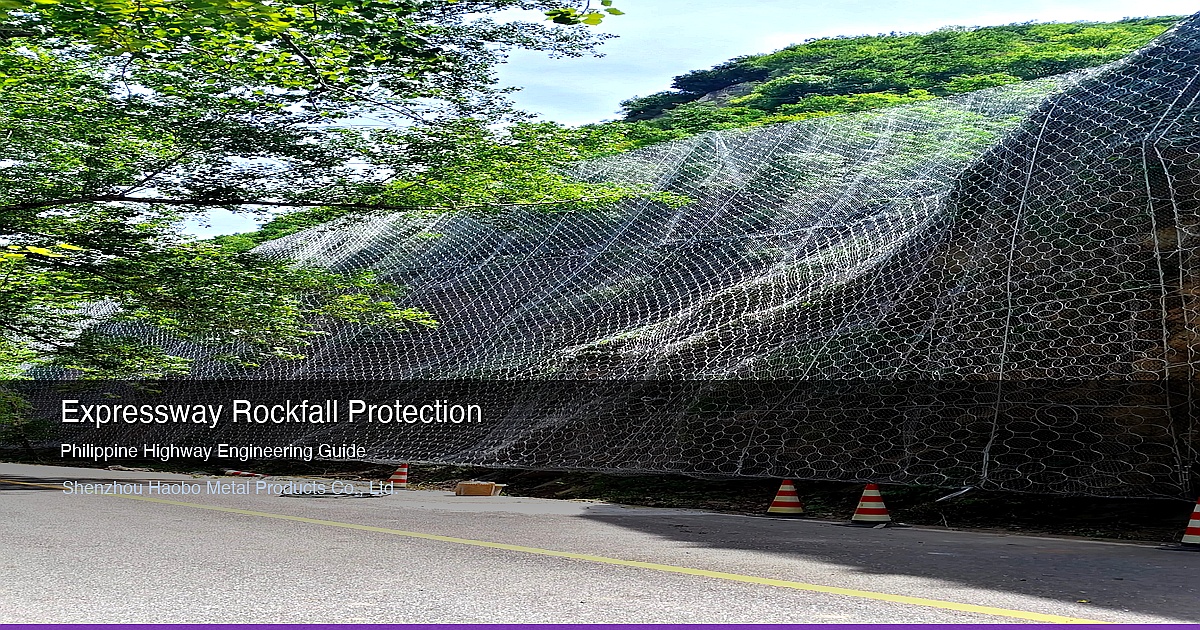
Introduction: Rockfall Protection on Philippine Expressways
The Philippine expressway network has expanded dramatically over the past decade. NLEX (North Luzon Expressway), SLEX (South Luzon Expressway), TPLEX (Tarlac-Pangasinan-La Union Expressway), STAR Tollway, and SCTEX (Subic-Clark-Tarlac Expressway) collectively span over 500 kilometers, with more extensions under construction through DPWH's Build Better More program.
Key Takeaways
- Rockfall protection netting is safety-critical infrastructure for Philippine expressways — not an optional add-on; retrofitting after an incident costs 3-5x more than proactive installation
- DPWH DO 50 s2020 and Item 516 are the governing standards for expressway slope protection, supplemented by JT/T 528-2022 for flexible system specifications and ETAG 027 for energy certification
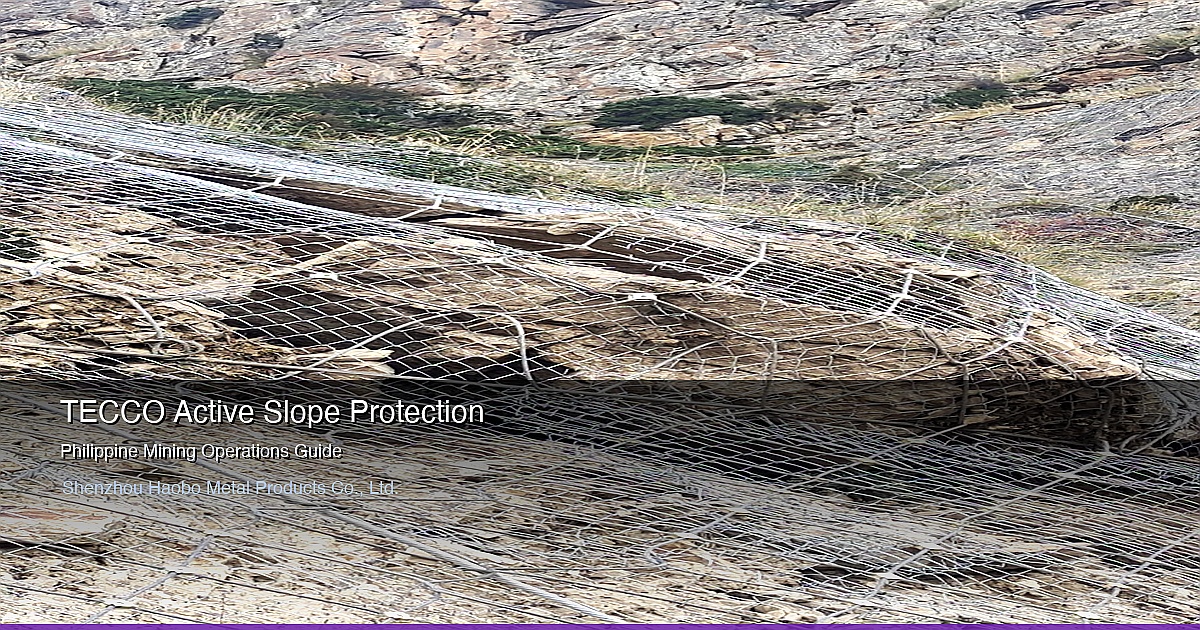
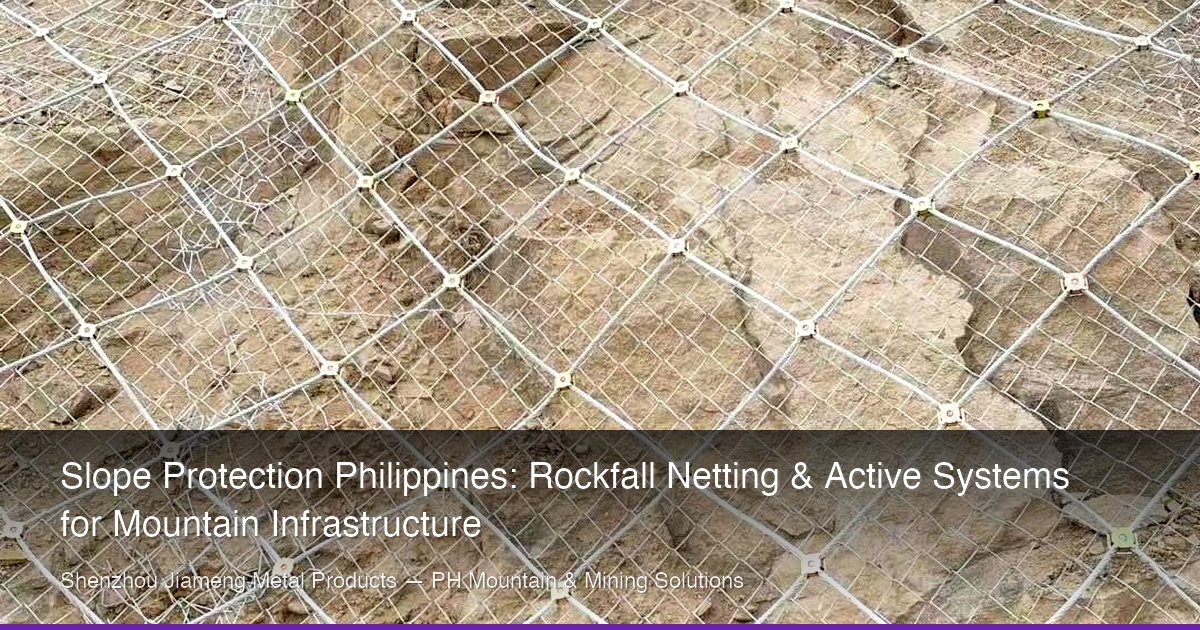
- Active TECCO G65/3 mesh (3mm wire, 65mm mesh opening, 1,770 MPa) with systematic anchors (25-32mm, 3-6m depth, 3m x 3m grid) is the preferred system for accessible expressway cut slopes in moderately weathered rock
- TPLEX Pozorrubio-Sison case study: 2,800m2 installation over diorite slope (RMR 35-50), PHP 13.1M total (PHP 4,677/m2 installed), zero rockfall incidents reaching roadway since 2019, survived Typhoons Ulysses (2020) and Karding (2022)
Table of Contents
- 1. Introduction: Rockfall Protection on Philippine Expressways
- 2. Applicable Philippine Standards and Regulations
- 3. Site Assessment and Rockfall Hazard Evaluation
- 4. Rockfall Protection System Selection
- 5. Installation Methodology for Active Rockfall Netting
- 6. Case Study: TPLEX Rockfall Protection — Pozorrubio to Sison Section
- 7. Quality Control and Acceptance Testing
- 8. Post-Installation Maintenance and Monitoring
- 9. Conclusion: Protecting Philippine Expressways from Rockfall
What many of these expressways share is a common hazard: rockfall from cut slopes. When highways are carved through mountainous terrain — as NLEX does through the Sierra Madre foothills, or as TPLEX does approaching the Cordillera — steep rock cuts are created. These cuts expose weathered, fractured rock faces that can release falling rocks onto the roadway below.
A single rockfall incident on an expressway can cause:
- Vehicle damage or occupant injury (vehicles traveling at 80–100 km/h cannot avoid falling rocks)
- Lane closures and traffic disruptions affecting thousands of commuters
- Liability claims against the tollway operator
- Emergency repair costs far exceeding the cost of preventive installation
This guide provides a comprehensive framework for rockfall protection netting design and installation on Philippine expressway projects. We cover DPWH standards, system selection, installation methodology, quality control, and cost estimation — all tailored to Philippine geological conditions and regulatory requirements.
Key Takeaway: Rockfall protection netting is not an optional add-on for expressway cut slopes — it is a safety-critical system that should be integrated into the slope design from the beginning. Retrofitting after a rockfall incident costs 3–5× more than proactive installation.
Applicable Philippine Standards and Regulations
Rockfall protection systems for Philippine expressways must comply with the following standards and guidelines:
| Standard | Title/Scope | Relevance to Rockfall Protection |
|---|---|---|
| DPWH DO No. 50, Series 2020 | Design Guidelines for Road Slope Protection Works | Primary reference for slope protection design on national roads and expressways. Specifies acceptable rockfall risk levels and protection system requirements. |
| DPWH DGCS Volume 2B | Design Guidelines, Criteria, and Standards — Bridges (Geotechnical) | Slope stability analysis methodology; rock mass classification (RMR, GSI) for cut slope design. |
| DPWH Standard Specification Item 516 | Slope Protection Works | Material specifications, installation procedures, and acceptance criteria for slope protection including rockfall netting systems. |
| JT/T 528-2022 (China Standard) | Technical Specification for Flexible Protection Systems for Rockfall and Landslide | Internationally recognized standard for flexible rockfall protection systems. Many Philippine projects reference this standard for material specifications. |
| ETAG 027 | European Technical Approval Guideline for Falling Rock Protection Kits | European standard for rockfall barrier energy certification. Used as a reference for system performance verification. |
| DENR DAO 2000-98 (MGB) | Mines and Geosciences Bureau Regulations | Required for expressway segments passing through mining or quarry areas; geohazard assessment requirements. |
Site Assessment and Rockfall Hazard Evaluation
Before selecting a rockfall protection system, a thorough site assessment is essential. Each expressway cut slope has unique geological conditions that determine the appropriate protection strategy.
Step 1: Rock Mass Characterization
Classify the rock mass using the Rock Mass Rating (RMR) system (Bieniawski, 1989) or Geological Strength Index (GSI). Key parameters to evaluate:
| Parameter | Measurement Method | Impact on Protection Design |
|---|---|---|
| Joint spacing | Scanline survey; measure spacing between discontinuities | Controls potential rock block size; closer spacing = smaller blocks, wider spacing = larger blocks |
| Joint orientation (dip/dip direction) | Compass-clinometer measurement of major joint sets | If joints dip toward the roadway (>45° dip), risk is high; evaluate kinematic feasibility of planar/wedge failure |
| Joint condition | Roughness (JRC), aperture, infilling material, weathering | Open joints with clay infilling indicate active slope movement |
| Rock strength | Schmidt hammer rebound; point load test (ISRM standard) | Weak rock (<25 MPa UCS) produces smaller, more frequent rockfalls; strong rock (>100 MPa) produces larger, less frequent events |
| Weathering grade | ISRM weathering classification (Grade I–VI) | Grade IV–V (highly to completely weathered): active rockface required; Grade II–III: passive drape mesh may suffice |
| Groundwater | Observe seepage, staining, vegetation indicators | High groundwater pressure reduces joint shear strength; may require drainage system integration |
Step 2: Rockfall Trajectory Analysis
Rockfall trajectory analysis uses specialized software (RocFall, CRSP, or Rockyfor3D) to simulate potential rockfall paths from the slope face to the roadway. Key outputs:
- Bounce height: Maximum height rocks reach during descent — determines barrier height requirements
- Kinetic energy: Maximum energy (kJ) at impact — determines barrier energy capacity
- Runout distance: How far rocks travel — determines barrier placement distance from slope toe
Step 3: Risk Classification
Based on the hazard assessment and expressway traffic volumes, classify the slope section:
| Risk Level | Description | Required Protection | Typical Philippine Expressway Location |
|---|---|---|---|
| High | Active rockfall with potential for vehicle impact; AADT >30,000 vehicles/day | Active system (TECCO or wire rope net) + rockfall barrier at toe | NLEX Sierra Madre section; TPLEX Cordillera approach; Kennon Road (if upgraded to expressway standard) |
| Medium | Occasional rockfall; AADT 10,000–30,000; rock blocks <0.5 m³ typical | Passive drape mesh or ring net drape system | SCTEX Porac-Floridablanca section; STAR Tollway Batangas |
| Low | Isolated loose blocks; AADT <10,000; blocks <0.1 m³ | Spot scaling + geotextile erosion mat; periodic inspection | Minor expressway connector roads |
Rockfall Protection System Selection
For Philippine expressway projects, two primary categories of rockfall protection are used:
1. Active Protection Systems (TECCO / Wire Rope Net)
Purpose: Prevent rockfall at the source by securing the entire slope face.
System Components:
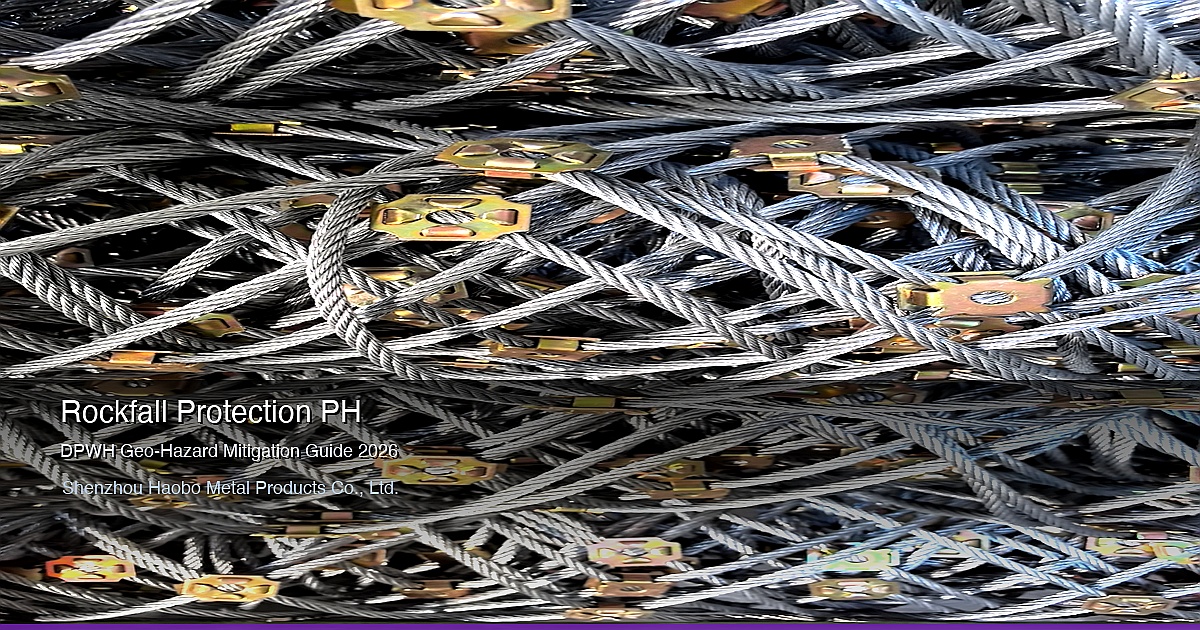
- High-tensile steel wire mesh: TECCO G65/3 (3mm wire, 65mm × 65mm mesh opening) or equivalent with 1,770 MPa minimum tensile strength
- Spike plates: 320mm × 220mm, 8mm thick, hot-dip galvanized, connecting mesh to anchors
- Systematic anchors: 25–32mm diameter, 3–6m length, fully grouted, installed at 3m × 3m grid pattern
- Perimeter anchors: 28–32mm diameter, 4–8m length, at slope crest and edges
- Boundary ropes: 16mm diameter steel wire rope at mesh edges for load transfer
Best for: Highly fractured rock masses (RMR 20–50), slopes with daylighting joints, active weathering zones. Typical design prevents rock blocks up to 0.5m³ from detaching.
2. Passive Protection Systems (Ring Net / Rockfall Barrier)
Purpose: Intercept rocks after they have detached but before they reach the roadway.
System Components:
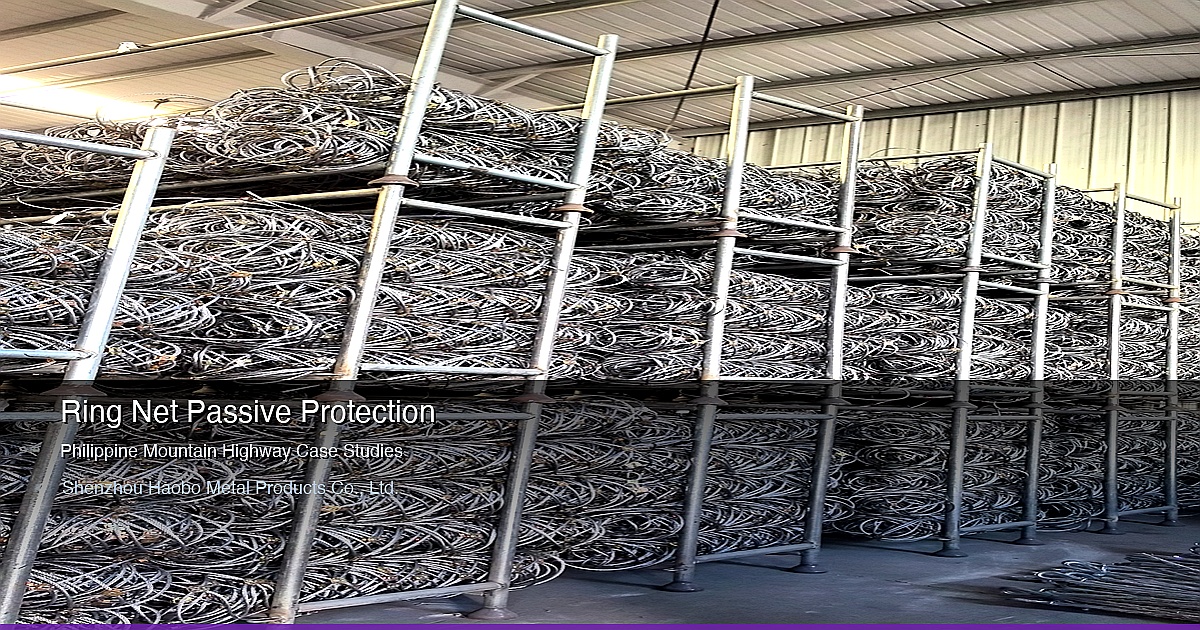
- Ring net panels: Interconnected steel rings (19mm wire, 350mm ring diameter) absorbing energy through plastic deformation
- Support posts: H-beam steel (HEA 160–200), hot-dip galvanized, spaced at 10m intervals
- Uphill anchor cables: 20mm steel wire rope, 4–6m anchor depth
- Brake elements: Energy-dissipating rings that deform under impact to absorb kinetic energy
- Energy capacity: 500–5,000 kJ (standard models); Philippine expressway applications typically require 1,000–3,000 kJ
Best for: Steep slopes where active systems are difficult to install, slopes above tunnels or overpasses, secondary protection behind active systems for critical highway sections.
System Selection Decision Matrix
| Slope Condition | Recommended System | Reasoning |
|---|---|---|
| Moderately weathered rock, RMR 40–60, slope angle 60–75° | Active TECCO mesh + systematic anchors | Rock mass is drillable for anchors; active prevention is more cost-effective than passive barriers |
| Highly fractured rock, RMR 20–40, slope angle 70–85° | Active TECCO + passive ring net barrier at toe | Combined system: active for small frequent rockfalls, passive barrier for larger events |
| Very steep (>80°), inaccessible slope face | Passive ring net barrier + spot scaling | Cannot safely install active system; rely on barriers for protection |
| Slope above tunnel portal or bridge abutment | Active system mandatory + passive backup | Consequence of failure is extreme; redundancy required |
| Weathered volcanic rock (tuff, agglomerate) — common in Central Luzon | Active TECCO with deeper anchors (6–8m) | Volcanic rock has lower anchor pull-out capacity; longer anchors required |
Installation Methodology for Active Rockfall Netting
This section details the step-by-step installation procedure for TECCO-type active rockfall protection systems on Philippine expressway slopes. The methodology follows DPWH Item 516 and JT/T 528-2022 standards.
Step 1: Site Preparation and Safety Setup
- Install temporary traffic management: lane closure with advance warning signs (minimum 500m before worksite for expressways)
- Clear loose rock and vegetation from slope face using rope access technicians (IRATA Level 2 minimum)
- Establish anchor point layout on slope face using survey equipment (total station or GPS RTK)
- Set up rope access systems: top-rope anchors, abseil lines, safety lines for all technicians
Step 2: Anchor Drilling and Installation
- Drill anchor holes using pneumatic rock drill (Atlas Copco or equivalent) with 64–76mm bit diameter
- Drill depth: 3–6m for systematic anchors, 4–8m for perimeter anchors (deeper in weathered rock)
- Clean holes with compressed air and water flushing to remove drilling debris
- Insert 25–32mm deformed steel bar (Grade 60 or 75, per DPWH Item 405)
- Grout using cement mortar (1:1 cement:sand ratio, w/c 0.4–0.45) with expanding agent for full bond
- Allow minimum 7 days curing before tensioning (14 days for anchors in weathered rock)
Step 3: Mesh Unrolling and Positioning
- Unroll TECCO mesh panels from the crest, allowing gravity to assist in positioning
- Overlap adjacent mesh panels by minimum 150mm (one full mesh cell)
- Connect overlapping edges using C-rings or spiral binding wire at every second mesh cell
Step 4: Spike Plate Installation
- Position spike plate over each anchor head, aligned perpendicular to the slope face
- Thread anchor bar through spike plate center hole
- Install hemispherical nut and washer; torque to 50–70 N·m (calibrated torque wrench required)
- Install locking nut as secondary retention
Step 5: Boundary Rope Installation
- Install 16mm diameter boundary ropes along mesh perimeter (crest, toe, and side edges)
- Thread through edge mesh cells every 500mm
- Connect boundary rope to perimeter anchors using 3-clip wire rope grips (minimum)
- Tension boundary ropes using turnbuckle or hydraulic tensioner to 10–15 kN pretension
Step 6: Quality Control Testing
- Anchor pull-out test: Test 5% of all anchors (minimum 3 per slope section) to 1.5× design load. Acceptance: no displacement >5mm at test load.
- Mesh tension test: Apply lateral load of 2 kN at center of largest mesh span using dynamometer. Acceptance: deflection <50mm.
- Visual inspection: Verify all spike plates torqued, all boundary ropes properly clipped, no mesh damage or gaps.
Case Study: TPLEX Rockfall Protection — Pozorrubio to Sison Section
The TPLEX segment between Pozorrubio (Pangasinan) and Sison passes through the foothills of the Cordillera Central mountain range. During construction in 2017–2018, several cut slopes in weathered diorite exhibited active rockfall that threatened the southbound carriageway.
Site Conditions:
- Slope height: 35m, angle: 72°
- Rock type: Diorite, Grade III–IV weathering
- Major joint set: 3 sets, one dipping 55° toward roadway
- Potential rock block size: 0.1–0.5 m³ (estimated from joint spacing)
- AADT: 25,000 vehicles/day (2019 data)
- Rainfall: 2,500 mm/year (Pangasinan average)
Solution Design:
- Active protection: TECCO G65/3 high-tensile mesh covering 2,800 m²
- Systematic anchors: 32mm Ø, 4.5m depth, 3m × 3m grid (315 anchors total)
- Perimeter anchors: 32mm Ø, 6m depth at crest (42 anchors)
- Boundary ropes: 16mm steel wire rope at all edges
- Drainage integration: Horizontal drains (50mm Ø PVC, 10m depth) at 5m spacing to reduce groundwater pressure behind slope
Installation and Performance:
- Installation duration: 6 weeks (single crew of 8 rope access technicians)
- Post-installation monitoring: 12-month quarterly inspection
- Performance: Zero rockfall incidents reaching the roadway since installation (2019–2026)
- Typhoon performance: Withstood Typhoon Ulysses (2020) and Typhoon Karding (2022) with winds exceeding 150 km/h — mesh intact, no anchor displacement
Cost Breakdown (2020 prices, PHP):
| Item | Unit Cost | Quantity | Total (PHP) |
|---|---|---|---|
| TECCO G65/3 mesh (supplied FOB Tianjin, installed) | PHP 1,800/m² | 2,800 m² | PHP 5,040,000 |
| Systematic anchors (drilling, supply, grouting) | PHP 8,500/ea | 315 ea | PHP 2,677,500 |
| Perimeter anchors | PHP 12,000/ea | 42 ea | PHP 504,000 |
| Boundary ropes and accessories | Lump sum | 1 LS | PHP 350,000 |
| Horizontal drains | PHP 3,500/m | 350m (35 drains × 10m) | PHP 1,225,000 |
| Rope access labor + supervision | Lump sum | 6 weeks | PHP 1,800,000 |
| Traffic management (lane closures) | PHP 250,000/week | 6 weeks | PHP 1,500,000 |
| TOTAL | PHP 13,096,500 | ||
| Cost per square meter of slope protected | PHP 4,677/m² |
This cost represents a fully installed, turnkey solution. For comparison, a single rockfall incident causing a lane closure on an expressway costs an estimated PHP 500,000–2,000,000 in emergency repairs, traffic disruption, and liability — meaning the protection system pays for itself after preventing approximately 7–26 incidents.
Quality Control and Acceptance Testing
Per DPWH Standard Specification Item 516, the following quality control procedures are mandatory for rockfall protection systems on Philippine expressways:
Material Testing Requirements:
| Material | Test | Standard | Frequency | Acceptance Criteria |
|---|---|---|---|---|
| Wire mesh | Tensile strength | ISO 6892-1 | 1 test per 500 m² | Minimum 1,770 MPa |
| Wire mesh | Zinc coating mass | GB/T 1839 (gravimetric method) | 1 test per 500 m² | Minimum 245 g/m² (both sides) |
| Wire mesh | Mesh opening size | Caliper measurement | 1 test per 100 m² | ±5% of nominal opening |
| Anchor bar | Yield strength | ASTM A615 / PNS 49 | 1 test per batch (max 20 tons) | Grade 60 min (414 MPa yield) |
| Anchor grout | Compressive strength (28-day) | ASTM C109 | 3 cubes per 100 anchors | Minimum 25 MPa |
| Anchor system | Pull-out test | ASTM D4435 / BS 8081 | 5% of anchors (min 3 per section) | No displacement >5mm at 1.5× design load |
| Wire rope | Breaking strength | ISO 3108 | 1 test per 500m | Per manufacturer specification |
Post-Installation Maintenance and Monitoring
Rockfall protection systems on expressways require systematic inspection because failure can directly impact public safety. The recommended inspection schedule follows DPWH Bridge Management System (BMS) principles adapted for slope protection assets:
| Inspection Type | Frequency | Scope |
|---|---|---|
| Routine Visual | Quarterly | Drive-by inspection from roadway. Check for visible mesh sagging, rock accumulation behind mesh, anchor plate displacement, drainage functionality. |
| Post-Typhoon | Within 72 hours of Signal No. 3+ | Rope access inspection of entire slope face. Check mesh integrity, anchor tension, rock accumulation, drainage blockage, boundary rope condition. |
| Annual Detailed | Yearly (January recommended) | Full rope access inspection with anchor pull-out testing (test 2% of anchors). Mesh tension measurement. Rock accumulation removal if >100mm depth accumulated. Photographic documentation from fixed reference points. |
| 5-Year Major Assessment | Every 5 years | Complete system review. Wire mesh sample removal for laboratory tensile and coating testing. Anchor corrosion assessment (excavate 3 anchors to 0.5m depth for visual inspection). Geotechnical reassessment of slope stability. |
Common Maintenance Issues and Solutions:
- Rock accumulation behind mesh: If depth >100mm, open mesh at lowest point and remove accumulated debris. Re-secure mesh after cleaning.
- Loose spike plates: Re-torque to 50–70 N·m. If anchor has slipped, install additional anchor adjacent and connect via mesh clip.
- Mesh corrosion: Spot-treat with zinc-rich paint (92% zinc). If corrosion exceeds 10% of mesh area, plan for mesh replacement within 2 years.
- Boundary rope abrasion: Replace if 3 or more outer strands are broken. Install abrasion protection (rubber sleeve) at contact points.
- Drainage blockage: Clear horizontal drains using high-pressure water jetting. Install filter sock if siltation is recurrent.
Conclusion: Protecting Philippine Expressways from Rockfall
As the Philippine expressway network continues to expand through increasingly challenging terrain, rockfall protection will become a standard element of every mountain road project. The key lessons from existing expressway projects are clear:
- Design protection into the project from the start. Retrofitting rockfall netting after a slope has been cut and opened to traffic costs 3–5× more than integrating protection into the original slope design.
- Invest in thorough site investigation. The quality of your rockfall protection design depends entirely on the quality of your geological data. RMR classification, kinematic analysis, and trajectory modeling are not optional — they are the foundation of a safe design.
- Select the right system for the hazard. Active systems (TECCO/wire rope net) prevent rockfall at the source and are preferred for accessible slopes. Passive barriers catch rocks that have already fallen and are appropriate for inaccessible or very steep slopes. Combined systems provide defense-in-depth for critical highway sections.
- Inspect and maintain systematically. A rockfall protection system that works perfectly at installation can degrade within years if not maintained. Quarterly inspections and immediate repair of any damage keep the system performing at design capacity.
For expressway contractors, DPWH project engineers, and tollway operators: rockfall protection netting is an investment in public safety, operational continuity, and long-term asset value. The cost of protection is a fraction of the cost of a single major rockfall incident.
Need rockfall protection netting systems for your Philippine expressway project? We manufacture TECCO mesh, ring net barriers, and complete system components to JT/T 528-2022 and DPWH specifications. FOB Tianjin delivery to all Philippine ports. Contact us for a project-specific quotation.
Need Rockfall Protection Netting for Your Expressway Project?
Send us your slope parameters — height, angle, rock type (RMR), AADT, and distance to roadway. Our engineering team provides TECCO mesh specifications, anchor design, and FOB Tianjin pricing within 48 hours.
www.haobomesh.com | Shenzhou Haobo Metal Products Co., Ltd.