Razor Wire and High-Security Fencing for Philippine Industrial Parks: PEZA Compliance, Typhoon Design, and Installation Guide 2026
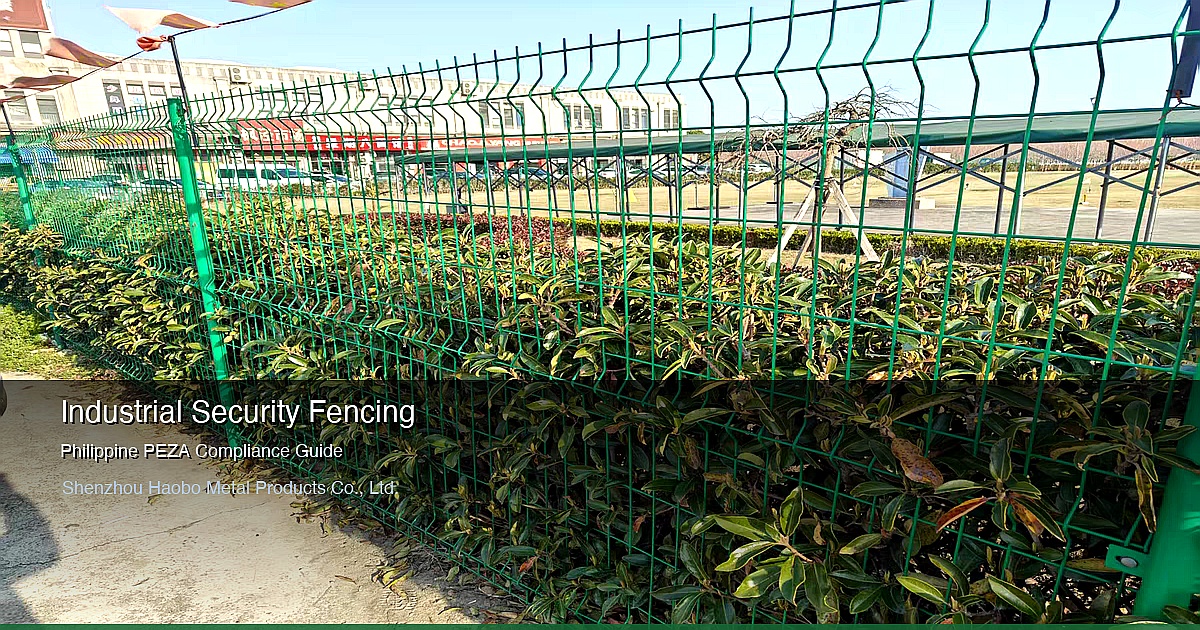
Introduction: Razor Wire Security for Philippine Industrial Facilities
Security fencing for Philippine industrial parks, economic zones, and critical infrastructure is not just about keeping intruders out — it is a regulatory requirement. The Philippine Economic Zone Authority (PEZA) mandates specific perimeter security standards for all registered enterprises. Power utilities like MERALCO and NGCP require anti-climb fencing around substations. The National Telecommunications Commission (NTC) specifies security fencing for telecom towers and data centers.
Key Takeaways
- PEZA mandates minimum 2.4m perimeter fencing with controlled entry/exit points for all registered enterprises — razor wire on Y-arm brackets is the standard anti-climb topping for Philippine industrial parks
- BTO-22 razor wire (450mm coil, 22mm blades, galvanized 60 g/m2 zinc on core wire) provides 8-12 year service life inland and is sufficient for most PEZA applications; BTO-60 cross-type or stainless steel AISI 304 recommended for NGCP substations and critical infrastructure
- NSCP 2015 wind load design: 358 anti-climb mesh fences with razor wire require 2.0m post spacing and 500x500x1000mm footings in Zone II (250 kph) — wider spacing risks fence collapse during typhoons
- 500m integrated security fence BOQ (welded mesh + BTO-22 razor wire + Y-arms): PHP 1,689,155 total, PHP 3,378 per linear meter — a fraction of the asset value it protects
Table of Contents
- 1. Introduction: Razor Wire Security for Philippine Industrial Facilities
- 2. Philippine Regulatory Requirements for Industrial Security Fencing
- 3. Razor Wire Types and Specifications
- 4. Integrated Fence System Design (Base Fence + Razor Wire)
- 5. Typhoon Wind Load Design for Security Fencing
- 6. Razor Wire Installation Methodology
- 7. Cost Estimation: Integrated Security Fence for PEZA Industrial Park
- 8. Maintenance and Inspection of Razor Wire Fencing
- 9. Conclusion: Building a Security Perimeter That Lasts
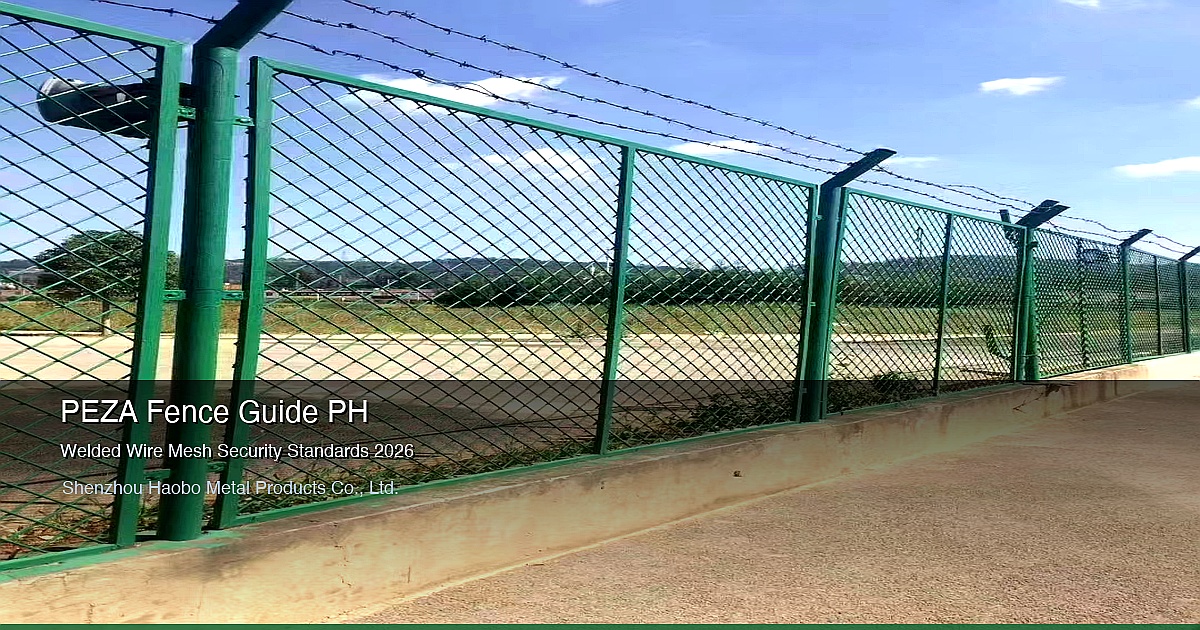
Among the available security fencing options, razor wire (also called concertina wire or barbed tape) is the most widely used deterrent in Philippine industrial applications. When combined with a welded wire mesh fence or chain link fence as the base barrier, razor wire creates a formidable physical and psychological deterrent that meets PEZA and utility security standards.
This guide provides a comprehensive framework for razor wire and high-security fence design for Philippine industrial parks, PEZA zones, utility substations, and telecom facilities. We cover regulatory requirements, razor wire types and specifications, installation methods, cost estimation, and maintenance — all tailored to Philippine conditions including typhoon wind loads and tropical corrosion.
Key Takeaway: A properly designed razor wire fence is not just a coil of sharp metal on top of a fence — it is an engineered security system that must withstand 250 km/h typhoon winds, resist corrosion in tropical humidity, and comply with PEZA, MERALCO, and NTC standards.
Philippine Regulatory Requirements for Industrial Security Fencing
Different regulatory bodies in the Philippines mandate specific perimeter security requirements. Understanding these is essential for compliance and insurance purposes.
| Regulatory Body | Applicable Standard | Key Fencing Requirements |
|---|---|---|
| PEZA | PEZA Board Resolution No. 00-312 (PEZA Rules and Regulations, Rule VII) | Perimeter fence minimum 2.4m height; controlled single entry/exit gate; 24/7 security guard post; adequate lighting along perimeter; fence must prevent unauthorized entry and concealment of intruders |
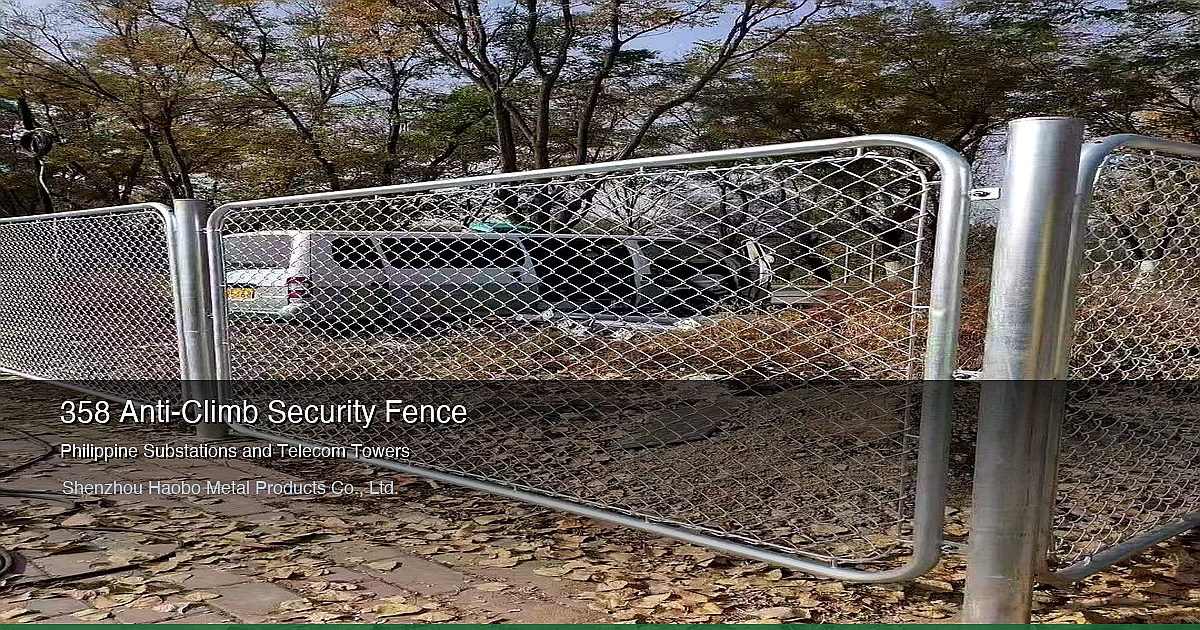
| MERALCO | MERALCO Distribution Facilities Standards Manual, Section 4 | Substation perimeter fence minimum 2.4m height; 358 anti-climb mesh or welded wire mesh recommended; warning signs every 10m; locked access gate; minimum 3m clearance from energized equipment |
| NGCP | NGCP Transmission Line Design Manual, Section 6 | Transmission substations require minimum 2.4m fence with anti-climb topping; CCTV coverage of entire perimeter; intrusion detection system for critical substations (>230 kV); 5m cleared zone outside fence |
| NTC | NTC Memorandum Circular 02-05-2019 | Telecom tower sites: perimeter fence minimum 2.0m height; lockable gate; site access log; "No Trespassing" signage in English and Filipino |
| BFP | Fire Code of the Philippines (RA 9514), IRR Section 10 | Industrial occupancy: perimeter fence must not impede fire department access; gate width minimum 4m for fire truck access; emergency access points every 100m of continuous fence |
| NSCP 2015 | Section 207C — Wind Loads | Fence structures must resist wind loads per NSCP wind zone maps. Most industrial parks in Luzon fall under Zone II (250 kph basic wind speed). Fence posts and razor wire supports must be designed for wind load. |
Razor Wire Types and Specifications
Razor wire comes in several configurations, each suited to different security levels and installation methods. Understanding the options helps in selecting the right product for your specific application.
Razor Wire Coil Types
| Type | Coil Diameter | Blade Profile | Loops per Coil | Coverage (linear m per coil) | Best Application |
|---|---|---|---|---|---|
| BTO-22 (Barbed Tape Obstacle) | 450mm (18 inches) | 22mm blade width | 33 loops | 7–8m | Standard industrial fence top — most common in Philippine industrial parks |
| BTO-30 | 700mm (28 inches) | 22mm blade width | 33 loops | 7–8m | Higher security — substations, data centers, military facilities |
| BTO-60 (Cross-type) | 900mm (36 inches) | 22mm blade width, cross-wrapped pattern | 56 loops | 5–6m | Maximum deterrent — critical infrastructure, power plants |
| Flat-wrap (wall-mount) | 300mm flattened | 22mm blade width | 18 loops per meter | As required | Wall-top mounting — perimeter walls, building parapets |
Razor Wire Material Specifications
| Component | Specification | Standard |
|---|---|---|
| Core wire | 2.5mm ± 0.05mm high-tensile galvanized steel wire, minimum 1,370 MPa tensile strength | ASTM A641 / GB/T 343 |
| Blade strip | 0.5mm ± 0.05mm galvanized steel strip, stamped with sharp barbs at 34mm ± 1mm spacing | GB/T 26941.3-2011 |
| Zinc coating (core wire) | Minimum 60 g/m² (hot-dip galvanized) | GB/T 1839 |
| Zinc coating (blade strip) | Minimum 120 g/m² (hot-dip galvanized) | GB/T 1839 |
| Stainless steel option | AISI 304 or 316 stainless steel for coastal/high-corrosion environments | ASTM A240 |
| Clip/fastener | Galvanized steel clip, minimum 2.0mm thickness, connecting adjacent loops at 120° intervals | Manufacturer standard |
Corrosion Protection Options for Philippine Climate
- Standard galvanized: Suitable for inland industrial parks (Laguna, Cavite, Bulacan). Expected service life: 8–12 years before significant rust appears.
- Heavy galvanized (double coating): Recommended for coastal industrial zones (Bataan, Batangas, Cebu, Subic). 120+ g/m² zinc. Expected service life: 15–20 years.
- Stainless steel (304): Recommended for severe coastal environments (within 500m of shoreline), chemical plants, and food processing facilities. Expected service life: 25+ years. Cost premium: 2.5–3× galvanized.
- PVC-coated galvanized: Additional protection with 0.4mm PVC coating over galvanized core. Available in green, black, or gray. Expected service life: 12–18 years. Cost premium: 1.3–1.5× galvanized.
Integrated Fence System Design (Base Fence + Razor Wire)
Razor wire is typically installed as a topping on a base security fence. The base fence provides the primary physical barrier, while the razor wire provides the anti-climb deterrent. The two must be designed as an integrated system.
Recommended Base Fence Options for Philippine Industrial Applications
| Fence Type | Security Level | Height (Standard) | Best For |
|---|---|---|---|
| 358 Anti-Climb Mesh | Maximum | 2.4–3.0m | MERALCO/NGCP substations, data centers, high-security PEZA zones, military facilities |
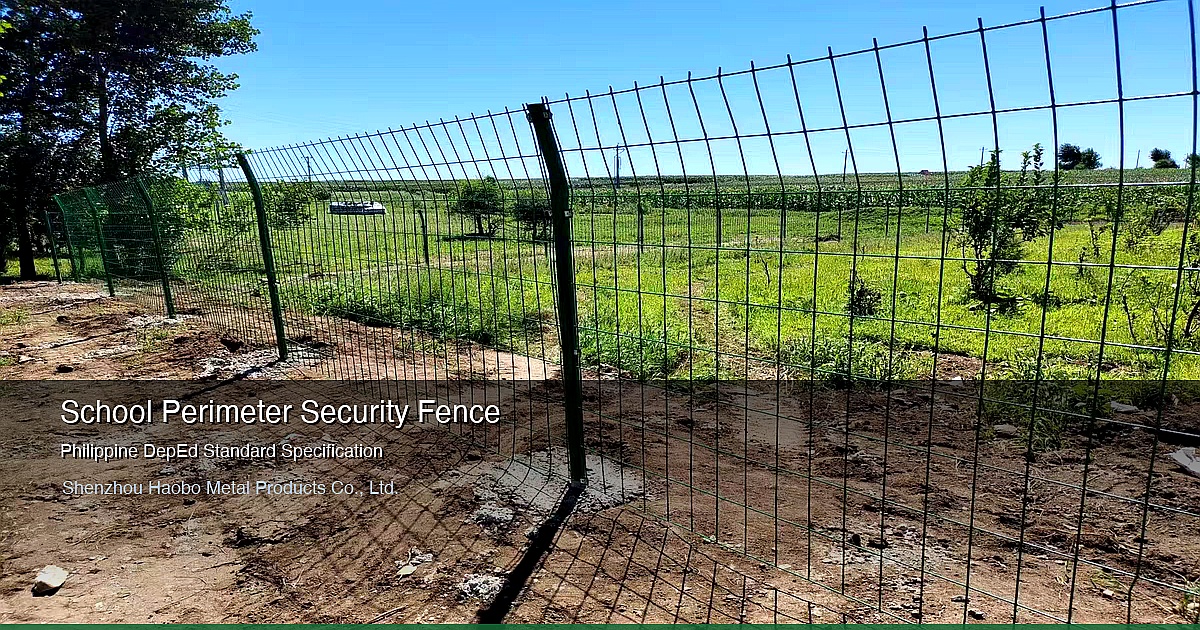
| Welded Wire Mesh (656 mesh) | High | 2.0–2.4m | PEZA industrial parks, manufacturing plants, warehouses, telecom tower sites |
| Chain Link Fence | Medium | 2.0–2.4m | General industrial perimeters, construction sites, agricultural processing facilities |
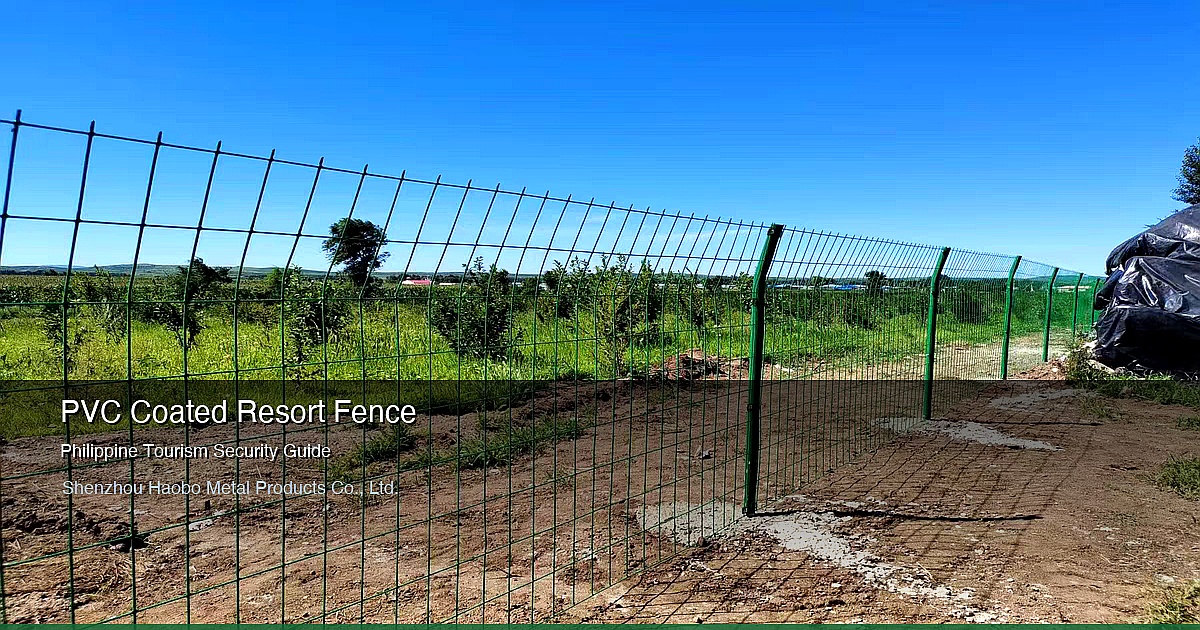
| PVC-Coated Welded Mesh | High (plus aesthetics) | 2.0–2.4m | Corporate campuses, hotel/resort perimeters, high-visibility PEZA zones, embassy compounds |
System Integration: Base Fence + Razor Wire Topping
The critical design element is the Y-arm bracket that supports the razor wire coil above the fence line. Proper Y-arm design is essential for typhoon resistance.
| Component | Specification | Notes |
|---|---|---|
| Fence post | Square tube 60mm × 60mm × 2.0mm or Ø76mm × 2.0mm, hot-dip galvanized | Post spacing: 2.5m (welded mesh) or 3.0m (chain link). In typhoon-prone areas, reduce spacing to 2.0m. |
| Post embedment | Minimum 600mm in concrete footing (400mm × 400mm × 800mm deep) | In soft soil, increase footing depth to 1.0m. Use M20 concrete (20 MPa minimum). |
| Y-arm bracket | 3 arms at 120°: one vertical extension from post, two angled outward at 45° from vertical. Made from 40mm × 40mm × 2.0mm galvanized steel angle or tube. | Height of Y-arm extension: 500–750mm above fence top rail. Weld bracket to post top plate (6mm thick). |
| Razor wire coils | 3 coils total: one on each arm of the Y-bracket. Each coil stretched to 80–90% of full extension (tighter stretch = more difficult to cut or climb). | Secure coils to Y-arm using stainless steel cable ties or galvanized binding wire at every clip point (300mm spacing). |
| Top rail | 50mm × 50mm × 2.0mm galvanized square tube or Ø48mm × 2.0mm round tube | Continuous top rail provides structural tie between posts and attachment point for fence mesh. |
| Bottom rail / tension wire | 3.0mm galvanized tension wire at bottom of mesh to prevent lifting | Essential for chain link fence; recommended for welded mesh in areas with loose soil. |
Typhoon Wind Load Design for Security Fencing
Security fences in the Philippines must resist typhoon wind loads without collapsing or losing the razor wire topping. A collapsed fence during a typhoon creates a security breach at the worst possible time — when emergency services are stretched thin.
Wind Load Calculation per NSCP 2015
The design wind pressure on a fence is calculated as:
P = qz × G × Cf
Where:
- qz = Velocity pressure at height z = 0.613 × Kz × Kzt × Kd × V² (N/m²)
- V = Basic wind speed (250 kph = 69.4 m/s for Zone II, most of Luzon)
- Kz = Exposure coefficient (0.85 for Exposure B in industrial parks)
- Kzt = Topographic factor (1.0 for flat terrain; up to 1.4 for hilltops)
- Kd = Wind directionality factor (0.85 for buildings and solid signs; use for fences)
- G = Gust effect factor (0.85 for rigid structures)
- Cf = Force coefficient (1.2 for solid fences; 0.8 for chain link with >50% open area)
Practical Design Values for Philippine Industrial Parks:
| Fence Type | Effective Wind Pressure (NSCP Zone II) | Required Post Spacing | Required Footing Size |
|---|---|---|---|
| 358 Anti-Climb Mesh (solid, <10% open area) | 1,950 N/m² (approx. 200 kg/m²) | 2.0m maximum | 500mm × 500mm × 1,000mm deep |
| Welded Wire Mesh 656 (partial open, ~30% open area) | 1,370 N/m² (approx. 140 kg/m²) | 2.5m maximum | 400mm × 400mm × 800mm deep |
| Chain Link (open mesh, ~80% open area) | 390 N/m² (approx. 40 kg/m²) | 3.0m maximum | 300mm × 300mm × 600mm deep |
Razor Wire Wind Considerations:
- Razor wire coils add windage area to the fence top. For BTO-22 coils (450mm diameter), each linear meter of razor wire adds approximately 0.45 m² of wind-exposed area per coil. With 3 coils on a Y-arm, this adds approximately 1.35 m²/m.
- Use stainless steel cable ties (not plastic) to secure razor wire to Y-arms. Plastic ties degrade in UV exposure and can snap under typhoon winds.
- In areas with frequent typhoons (Bicol, Eastern Visayas, Northern Luzon), consider using flat-wrap razor wire instead of coiled type, as flat-wrap has significantly lower wind resistance.
Razor Wire Installation Methodology
Step 1: Prepare the Base Fence
- Verify that all fence posts are plumb (within 5mm per meter of height) and footings are fully cured (minimum 7 days for concrete).
- Confirm that the top rail is continuous and securely fastened to all posts.
- Check that the fence mesh is properly tensioned and free of gaps at the bottom.
Step 2: Install Y-Arm Brackets
- Weld or bolt Y-arm brackets to the top of each fence post. If bolting, use M10 stainless steel bolts with nylon lock nuts.
- Verify that the Y-arm angle is consistent: center arm vertical, side arms at 45° from vertical.
- Apply zinc-rich paint to all welds and any areas where galvanizing was damaged during installation.
Step 3: Stretch and Install Razor Wire Coils
- Anchor one end of the razor wire coil to the first post using stainless steel binding wire (3 turns minimum).
- Stretch the coil to 80–90% of its maximum extension. For BTO-22 with 33 loops, maximum stretched length is approximately 8m; install at 6.5–7.5m per coil.
- Use a razor wire stretcher tool (or two people with heavy leather gloves) to maintain even tension during installation. Never use bare hands — razor wire blades are extremely sharp.
- Secure the stretched coil to each intermediate Y-arm at every clip point (typically every 300mm) using stainless steel cable ties or 2.0mm galvanized binding wire.
- At the end of each coil, secure to the terminal post with binding wire (5 turns minimum).
- Repeat for all 3 coils (one per Y-arm).
Step 4: Connect Adjacent Coils
- Overlap the end of one coil with the start of the next by minimum 500mm (approximately 2 loops).
- Bind the overlapping sections together at every clip point.
- Ensure there are no gaps between coil sections — even a 100mm gap provides a handhold for climbing.
Step 5: Quality Control
- Walk the entire fence line and verify: all coils are at consistent tension, no sagging sections, all clips fastened, all Y-arms securely attached.
- Verify that razor wire extends at least 200mm beyond the fence line on both sides (prevents sidestepping at end posts).
- Test a random sample of binding wire connections by attempting to pull them apart (apply 20 kg force).
- Install warning signs: "DANGER: RAZOR WIRE — SEVERE INJURY HAZARD" in English and Filipino ("BABALA: MATALIM NA ALAMBRE — MAAARING MAGDULOT NG MATINDING SUGAT") at 20m intervals along the fence.
Safety Requirements During Installation:
- All installers must wear: heavy leather gauntlet gloves (minimum 2mm thick), long-sleeved shirt and pants, safety glasses, steel-toe boots.
- First aid kit with tetanus prophylaxis must be on-site.
- Razor wire should never be installed during rain (slippery conditions increase injury risk and compromise binding wire tension).
Cost Estimation: Integrated Security Fence for PEZA Industrial Park
The following cost estimate is for a typical PEZA-registered industrial park in Laguna or Cavite — 500 linear meters of perimeter fencing with 2.4m high welded wire mesh base fence + BTO-22 razor wire topping on Y-arms. Prices are 2026 estimates, FOB Tianjin for materials, with installation labor in Philippines.
Bill of Quantities: 500 Linear Meters Integrated Security Fence
| Item | Specification | Quantity | Unit Cost (PHP) | Total (PHP) |
|---|---|---|---|---|
| Base Fence — Welded Wire Mesh 656 | ||||
| Welded wire mesh panels (2.4m × 2.5m) | 656 mesh (75mm × 150mm opening), 3.0mm wire, galvanized 275 g/m² | 200 panels | PHP 2,800 | PHP 560,000 |
| Square tube posts (60mm × 60mm × 2.0mm) | 3.2m length (2.4m above ground + 0.8m embedment), hot-dip galvanized | 201 posts (at 2.5m spacing) | PHP 950 | PHP 190,950 |
| Top rail (50mm × 50mm × 2.0mm) | 6m length, hot-dip galvanized | 84 lengths | PHP 1,100 | PHP 92,400 |
| Post caps (plastic, UV-stabilized) | 60mm × 60mm square post cap | 201 pcs | PHP 45 | PHP 9,045 |
| Fasteners (bolts, nuts, clamps) | M8 stainless steel, complete set | 1 lot | Lump sum | PHP 45,000 |
| Razor Wire Topping | ||||
| BTO-22 razor wire coils (galvanized) | 450mm diameter, 33 loops, 7.5m coverage per coil | 200 coils (500m × 3 coils ÷ 7.5m) | PHP 520 | PHP 104,000 |
| Y-arm brackets | 3-arm, 40mm × 40mm × 2.0mm galvanized, 500mm arm length | 201 pcs | PHP 850 | PHP 170,850 |
| Stainless steel cable ties | 4.6mm × 300mm, 304 stainless steel | 3,000 pcs | PHP 15 | PHP 45,000 |
| Binding wire (2.0mm galvanized) | 25 kg coil | 4 coils | PHP 1,800 | PHP 7,200 |
| Concrete Footing | ||||
| Ready-mix concrete (M20, 20 MPa) | Delivered to site, pumpable | 28 m³ (400mm × 400mm × 800mm × 201 posts + 10% waste) | PHP 4,500/m³ | PHP 126,000 |
| Installation Labor | ||||
| Site preparation and excavation | 6-person crew, 3 days | 18 person-days | PHP 800/day | PHP 14,400 |
| Post installation and concreting | 6-person crew, 5 days | 30 person-days | PHP 800/day | PHP 24,000 |
| Mesh panel installation | 6-person crew, 5 days | 30 person-days | PHP 800/day | PHP 24,000 |
| Razor wire installation | 4-person crew (specialized), 5 days | 20 person-days | PHP 1,200/day | PHP 24,000 |
| Supervision (foreman) | 1 foreman, 15 days | 15 person-days | PHP 1,500/day | PHP 22,500 |
| Other Costs | ||||
| Warning signs (English + Filipino) | 600mm × 400mm aluminum composite, reflective | 25 signs (every 20m) | PHP 450 | PHP 11,250 |
| Tools and equipment rental | Concrete mixer, welding machine, post hole digger, razor wire stretcher | 1 lot | Lump sum | PHP 35,000 |
| Transport (materials delivery) | Manila port to Laguna industrial park | 2 × 10-wheeler truck | PHP 15,000/trip | PHP 30,000 |
| Contingency (10%) | Unforeseen costs, wastage, minor variations | PHP 153,560 | ||
| GRAND TOTAL (500 linear meters) | PHP 1,689,155 | |||
| Cost per linear meter | PHP 3,378/m |
Note: This estimate assumes FOB Tianjin material pricing. Ocean freight from Tianjin to Manila for a 20-foot container is approximately PHP 80,000–120,000 (2–3 tons of fence materials). Import duty on steel fence products is 5% under ASEAN-China FTA (Form E required), plus 12% VAT. Add approximately PHP 200,000–250,000 for customs clearance, duties, and VAT.
Maintenance and Inspection of Razor Wire Fencing
Security fencing is a passive system — it works 24/7 without active operation. However, it requires regular inspection to ensure it maintains its deterrent effectiveness.
Monthly Inspection Checklist:
- Walk the entire perimeter — check for any gaps in razor wire coils, sagging sections, or detached coils
- Inspect all Y-arm brackets for rust, loose bolts, or deformation
- Check binding wire and cable ties — replace any that are loose or broken
- Verify warning signs are present, legible, and securely mounted
- Trim vegetation within 1m of the fence (vegetation can be used as concealment or climbing aid)
- Check for signs of attempted intrusion: bent mesh, cut wires, disturbed razor wire coils
- Inspect fence posts for leaning (check with spirit level; report if >2° from vertical)
Post-Typhoon Inspection (within 24 hours):
- Full perimeter walk — priority inspection
- Check for wind-damaged razor wire coils (displaced, tangled, or detached)
- Inspect for fallen trees or branches that may have damaged the fence
- Verify that no sections of fence have collapsed or leaned excessively
- Repair any damage immediately — a damaged fence during post-typhoon recovery is a significant security vulnerability
Annual Maintenance Tasks:
- Apply zinc-rich paint to any rust spots on posts, Y-arms, or top rails
- Replace any razor wire coils showing significant corrosion (>10% surface rust)
- Re-tension any razor wire coils that have sagged more than 100mm
- Re-torque all bolted connections on Y-arms
- Clean and repaint warning signs if faded
- Lubricate gate hinges and locks
- Test gate alarm system (if installed)
Conclusion: Building a Security Perimeter That Lasts
A properly designed and installed razor wire security fence is the first line of defense for Philippine industrial facilities. Whether you operate a PEZA-registered factory in Laguna, a MERALCO substation in Bulacan, or an NGCP transmission facility in Batangas, your perimeter security must meet three criteria:
- Regulatory Compliance: Meet PEZA, MERALCO, NGCP, NTC, and BFP requirements for fence height, access control, signage, and fire access.
- Typhoon Resistance: Withstand NSCP Zone II wind loads (250 kph basic wind speed) without collapse. This requires proper post spacing, adequate footing embedment, and robust Y-arm bracket design.
- Corrosion Durability: In Philippine tropical conditions, standard galvanized razor wire can begin showing rust within 8–12 years. For coastal installations or facilities requiring extended service life, specify heavy galvanized, PVC-coated, or stainless steel materials.
The cost of a properly designed security fence — approximately PHP 3,400 per linear meter for a complete system — is a small fraction of the value it protects: your facility, equipment, inventory, personnel, and operational continuity.
Need razor wire, welded mesh fence panels, 358 anti-climb mesh, or complete security fencing systems for your Philippine industrial facility? We manufacture to DPWH, PEZA, MERALCO, and NSCP standards. FOB Tianjin delivery to all Philippine ports with competitive pricing. Contact us for a project quotation today.
Need Razor Wire or Security Fencing for Your PEZA Facility?
Send us your perimeter dimensions, security level requirements, wind zone, and coastal proximity. We provide razor wire specifications, base fence design, complete BOQ, and FOB Tianjin pricing within 24 hours.
www.haobomesh.com | Shenzhou Haobo Metal Products Co., Ltd.