Gabion Retaining Wall Maintenance and Inspection Guide for Philippine Tropical Climate: Corrosion Assessment, Typhoon Damage Repair, and DPWH-Compliant Schedule 2026
Introduction: Why Gabion Wall Maintenance Matters in the Philippines
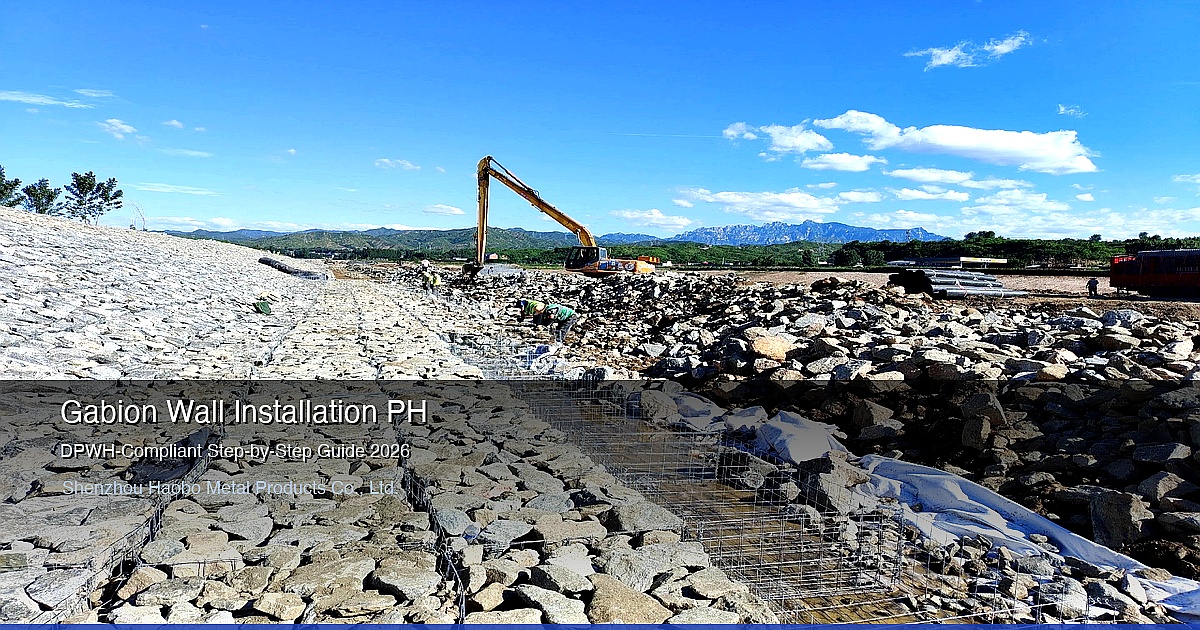
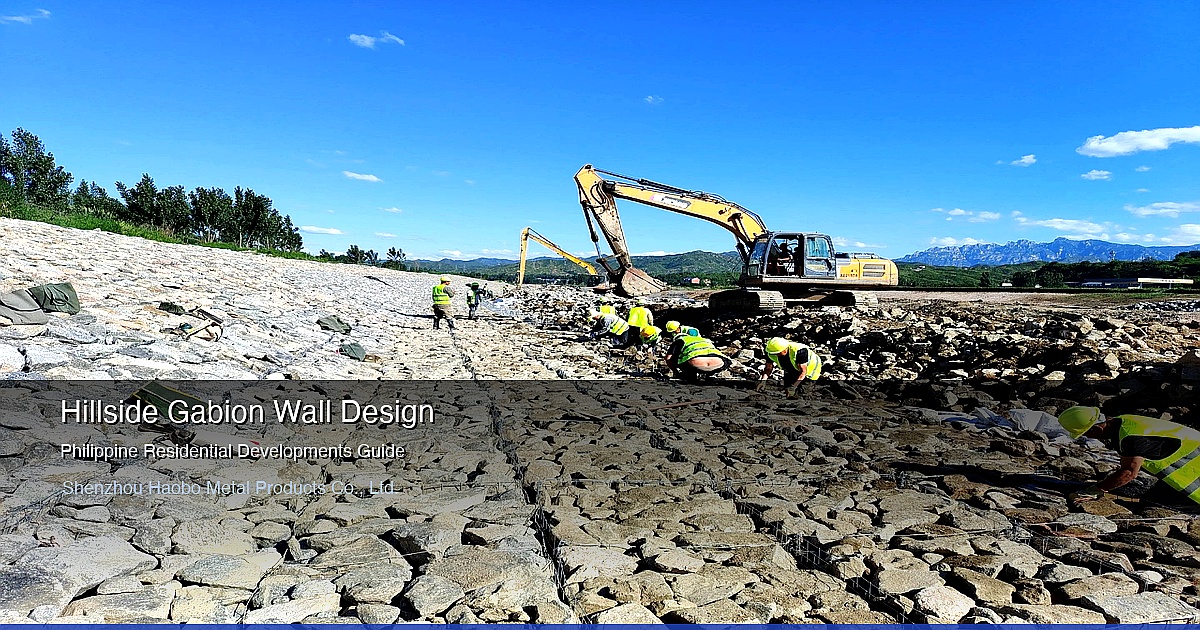
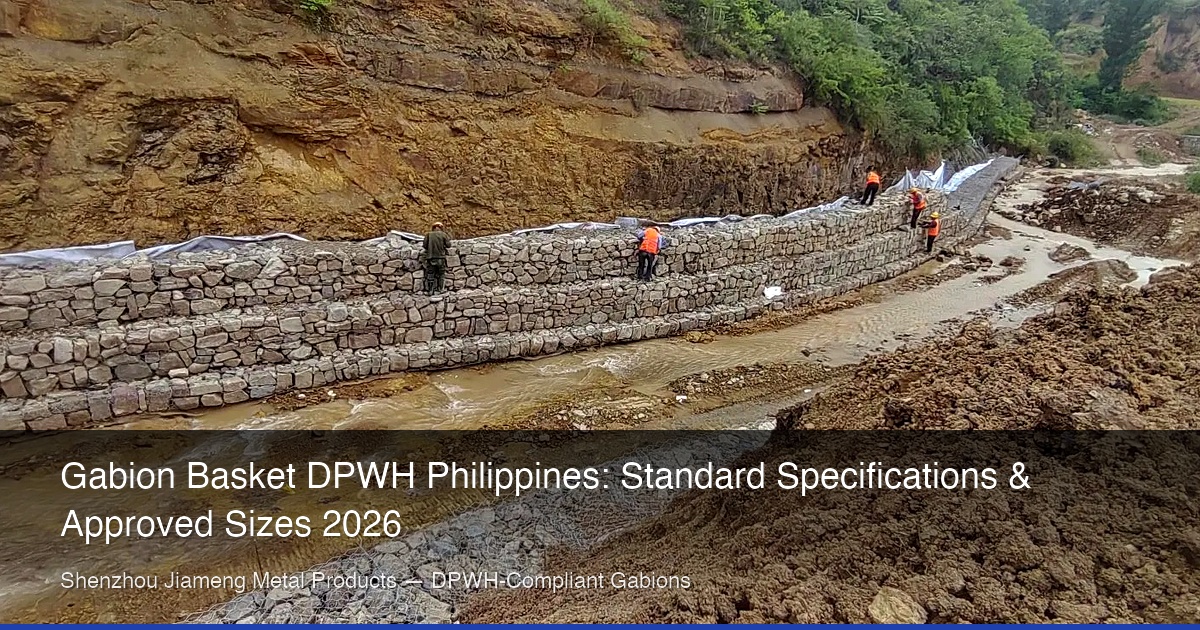
Gabion retaining walls are one of the most widely used slope stabilization and flood control solutions in the Philippines. From DPWH riverbank protection projects in Cagayan de Oro to hillside residential developments in Tagaytay and Antipolo, thousands of gabion structures are in service across the archipelago.
Key Takeaways
- The single biggest threat to gabion walls in the Philippines is corrosion — not structural overload; systematic zinc thickness monitoring can extend wall life by 20-30 years
- Philippine tropical climate (75-85% humidity, 20 typhoons/year, acidic volcanic soil pH 4.0-5.5) creates one of the most aggressive environments for gabion walls globally
- Standard galvanized wire zinc coating (245 g/m2) lasts 9-18 years inland and only 4-9 years in coastal zones — walls over 10 years old are likely approaching the end of zinc protective life
- Post-typhoon inspection within 72 hours is critical: minor damage unrepaired after one typhoon becomes progressive deterioration and wall collapse during the next storm
- Proactive annual maintenance (PHP 124K-202K per 100m wall) costs approximately 1-2% of construction cost — 10 years of maintenance equals the cost of one full reconstruction (PHP 1.2-2.5M)
Table of Contents
- 1. Introduction: Why Gabion Wall Maintenance Matters in the Philippines
- 2. Philippine Climate Challenges for Gabion Walls
- 3. Corrosion Assessment Methodology
- 4. Post-Typhoon Inspection Protocol
- 5. Repair Methods for Common Gabion Wall Damage
- 6. Inspection Schedule for Philippine Gabion Walls
- 7. Special Considerations for Coastal Gabion Walls
- 8. Maintenance Cost Estimation for Philippine Gabion Walls
- 9. Documentation and Record-Keeping
- 10. Conclusion: Making Your Gabion Wall Last 50+ Years in the Philippines
But here is what most project owners and contractors overlook: the Philippine tropical climate is one of the most aggressive environments for gabion walls anywhere in the world. The combination of high humidity (75-85% year-round average), frequent typhoons (average 20 per year), acidic volcanic soil in many regions, and salt spray in coastal areas creates a perfect storm for gabion wall deterioration.
Without a systematic inspection and maintenance program, a gabion wall that should last 50-75 years can fail in as little as 5-10 years. The good news? With proper maintenance, gabion walls in the Philippines can exceed their design life and continue performing for decades.
This guide provides a comprehensive maintenance and inspection framework specifically designed for gabion retaining walls in Philippine tropical climate conditions. We cover corrosion assessment, structural inspection after typhoons, repair methodologies, and a practical inspection schedule aligned with DPWH standards.
Key Takeaway: The single biggest threat to gabion walls in the Philippines is not structural overload — it is corrosion of the wire mesh. A systematic inspection program focused on corrosion monitoring can extend wall life by 20-30 years.
Philippine Climate Challenges for Gabion Walls
Before diving into inspection procedures, it is essential to understand the specific environmental challenges that gabion walls face in the Philippines.
| Climate Factor | Typical Philippine Range | Impact on Gabion Walls | Risk Level |
|---|---|---|---|
| Annual Rainfall | 1,000–4,000 mm (varies by region) | Constant moisture accelerates zinc corrosion; acidic rainwater (pH 4.5–5.5 in urban areas) attacks galvanized coating | High |
| Humidity | 75–85% year-round average | Persistent moisture film on wire surface sustains electrochemical corrosion even without rainfall | High |
| Typhoon Frequency | Average 20 tropical cyclones/year, 8–9 make landfall | Extreme hydraulic forces on waterfront walls; wind-driven debris impact; scour at wall base | Critical |
| Soil Acidity (Volcanic Regions) | pH 4.0–5.5 (Tagaytay, Baguio, Bicol) | Acidic soil contact accelerates zinc depletion rate by 2–3× compared to neutral soil | High |
| Coastal Salt Spray | Chloride deposition up to 200 mg/m²/day within 500m of shoreline | Chloride ions penetrate zinc coating and attack base steel; pitting corrosion risk | Critical (within 500m of coast) |
| Temperature | 25–35°C daily average | Higher temperatures accelerate chemical reaction rates; thermal expansion/contraction stresses mesh connections | Moderate |
The corrosion rate of galvanized steel in Philippine tropical conditions is approximately 2–4 μm per year in inland areas and 4–8 μm per year in coastal zones, according to ISO 9223 atmospheric corrosivity classification. For a standard gabion wire with 245 g/m² zinc coating (approximately 35 μm thickness per side), the zinc layer can be fully depleted in:
- Inland areas: 9–18 years (without maintenance)
- Coastal areas: 4–9 years (without maintenance)
- Volcanic soil contact: 6–12 years (buried portions)
This means that if your gabion wall is more than 10 years old in the Philippines, you are likely approaching the end of the zinc coating's protective life — and systematic inspection becomes critical.
Corrosion Assessment Methodology
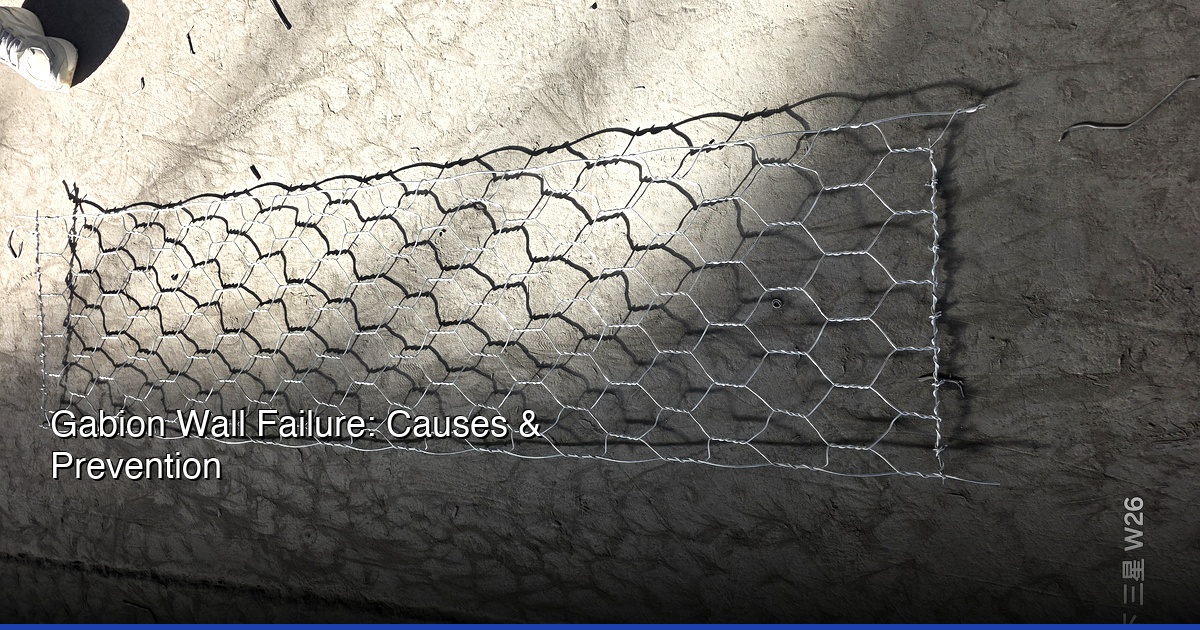
Corrosion is the primary failure mechanism for gabion walls in the Philippines. The wire mesh is the structural "skeleton" of the wall — once it corrodes through, individual baskets lose integrity, stone fill can spill out, and the entire wall section can collapse.
Zinc Coating Remaining Life Assessment
The zinc coating on gabion wire provides sacrificial (cathodic) protection to the underlying steel. As long as zinc remains, the steel is protected. The key question during inspection is: how much zinc coating remains?
| Visual Indicator | Zinc Remaining | Action Required |
|---|---|---|
| Bright, shiny metallic silver surface | 90–100% (full protection) | Routine monitoring — next inspection in 2 years |
| Dull gray, uniform matte surface | 50–90% (good protection) | Routine monitoring — next inspection in 1–2 years |
| White zinc oxide powder (white rust) visible | 30–50% (reduced protection) | Increased monitoring — inspect every 6 months; plan for recoating within 2–3 years |
| Brown/red rust spots appearing on wire surface | 10–30% (zinc locally depleted) | Urgent — spot repair with zinc-rich paint within 6 months; increased monitoring |
| Extensive rust coverage (>30% of surface area) | 0–10% (zinc nearly gone) | Critical — steel is corroding; plan for basket replacement or wall reconstruction within 1 year |
| Wire diameter visibly reduced, pitting visible | 0% (steel section loss) | Emergency — structural integrity compromised; immediate repair or replacement required |
Field Test: Magnetic Thickness Gauge
For quantitative assessment, use a magnetic coating thickness gauge (ISO 2178 compliant). This non-destructive test measures the remaining zinc thickness at multiple points on accessible wire surfaces.
Procedure:
- Select 5–10 test points per wall section, distributed across different baskets and elevations
- Clean each test point with a soft brush to remove dirt (do not use abrasive methods)
- Take 3 readings per point and record the average
- Compare against the minimum specification: 245 g/m² ≈ 35 μm per side for standard gabion wire
- If average remaining zinc is below 50 μm (for both sides combined), plan for recoating
- If average remaining zinc is below 20 μm, plan for basket replacement
Pro Tip: Focus thickness gauge measurements on the critical zones where corrosion is most aggressive:
- Wire intersections (lacing points) — mechanical damage during installation often scrapes zinc
- Bottom 30 cm of the wall — constant moisture and soil contact
- Splash zone (30–100 cm above ground) — alternating wet-dry cycles accelerate corrosion
- Areas with vegetation contact — trapped moisture and organic acids
- Coastal installations within 500m of shoreline
Post-Typhoon Inspection Protocol
After every major typhoon event (Signal No. 3 or above, or any storm that passes within 100 km of the project site), a comprehensive structural inspection must be conducted within 72 hours. Delaying inspection allows minor damage to escalate into wall failure during subsequent rainfall events.
Post-Typhoon Inspection Checklist
| Inspection Item | What to Look For | Severity Classification |
|---|---|---|
| 1. Wall Face Deformation | Bulging, leaning, or buckling of the wall face | Minor (<5 cm bulge): Monitor. Moderate (5–15 cm): Plan repair. Major (>15 cm): Immediate action |
| 2. Basket Connection Failure | Broken or loose lacing wire between adjacent baskets; gaps between basket units | Any gap >5 cm between baskets: Repair immediately to prevent stone loss |
| 3. Stone Fill Loss | Empty or partially empty baskets; stone spill at wall base | Any visible empty basket section: Refill within 1 week to prevent progressive unraveling |
| 4. Scour at Wall Base | Erosion of foundation soil; exposed basket bottoms; undermining | Exposed foundation depth >30 cm: Critical — requires immediate scour protection |
| 5. Drainage System Blockage | Clogged weep holes; water staining on wall face; hydrostatic pressure evidence | Standing water behind wall: Clear drains immediately to prevent pressure buildup |
| 6. Slope Movement Above Wall | Cracks in ground surface above wall; tilted trees or poles; new erosion gullies | Any surface cracks wider than 2 cm: Investigate slope stability; may indicate deeper failure |
| 7. Wire Mesh Damage | Cut, torn, or broken individual wires; mesh openings enlarged | Any broken wire: Repair within 2 weeks. Multiple broken wires in same basket: Replace basket |
| 8. Vegetation Overgrowth | Roots penetrating baskets; large plants growing on or through the wall | Woody vegetation with stem diameter >2 cm: Remove — roots can displace stones and damage mesh |
Typhoon Damage Severity Classification
Use the following classification to prioritize repair actions:
- Green (Minor): Superficial damage only — small areas of stone loss (<0.5 m²), minor bulging (<5 cm), no structural compromise. Repair within 30 days.
- Yellow (Moderate): Localized structural damage — single basket deformation, isolated lacing failure, moderate stone loss (0.5–2 m²). Repair within 7 days.
- Red (Critical): Structural compromise — multiple basket failure, large bulge (>15 cm), foundation scour, slope movement above wall. Emergency response — repair within 48 hours; consider temporary shoring.
Repair Methods for Common Gabion Wall Damage
Method 1: Zinc-Rich Coating Repair (Minor Corrosion)
When to use: Brown rust spots visible but no wire diameter reduction. Zinc coating locally depleted but steel intact.
Procedure:
- Clean the affected area with a wire brush to remove loose rust (to ISO 8501 St2 standard)
- Apply a zinc-rich epoxy primer (minimum 92% zinc in dry film) to 100 μm dry film thickness
- Allow to cure for 24 hours before exposure to rain
- Re-inspect after 6 months to verify coating integrity
Materials: Two-component zinc-rich epoxy primer (e.g., International Interzinc 52, Jotun Barrier 80, or equivalent). Cost: approximately PHP 150–250 per linear meter of wire treated.
Method 2: Basket Relacing and Stone Refill (Localized Damage)
When to use: Lacing wire broken between baskets; some stone loss but mesh still intact; wire connections failed at top or side of basket.
Procedure:
- Remove any loose stones from the affected joint area
- Thread new lacing wire (same specification as original: typically 2.2mm galvanized steel wire) through the mesh openings of both adjacent baskets
- Lace in a continuous spiral pattern, alternating every other mesh opening
- Pull tight after every 3–4 loops using a lacing tool or pliers
- Re-fill any lost stone through the top opening, using stone of the same gradation (typically 100–200 mm for standard gabions)
- Secure the lid with new lacing wire after refilling
Stone Fill Specifications for Refill:
- Size: 100–200 mm (4–8 inches) for standard gabion baskets
- Shape: Angular, not rounded river stone (angular stone interlocks better)
- Durability: Minimum 25 MPa compressive strength; no more than 10% loss in sodium sulfate soundness test (ASTM C88)
- Gradation: Well-graded to minimize voids (target void ratio <30%)
Method 3: Partial Basket Replacement (Moderate Damage)
When to use: Single basket extensively corroded or deformed; mesh broken in multiple locations; stone fill spilled out of one basket but adjacent baskets intact.
Procedure:
- Install temporary shoring or support for baskets above the damaged unit
- Cut the lacing wire connecting the damaged basket to all adjacent baskets
- Remove the damaged basket (may require cutting mesh with bolt cutters)
- Remove stone fill from the void and inspect adjacent basket faces for hidden damage
- Assemble a new replacement basket of identical dimensions on-site
- Position the new basket in the void and lace to all adjacent baskets
- Fill the new basket with stone in 30 cm lifts, placing larger stones at the face for appearance
- Install internal tie wires (bracing wires) every 30 cm vertically to prevent bulging
- Secure the lid with continuous lacing
Method 4: Foundation Scour Repair (Critical)
When to use: Foundation soil eroded from beneath wall base; basket bottoms exposed or undermined. This is the most critical repair because foundation failure can trigger complete wall collapse.
Procedure:
- Immediately divert surface water away from the wall base using temporary drainage channels
- Excavate the scoured area to firm, undisturbed soil
- Place a geotextile filter fabric (minimum 200 g/m² non-woven) on the excavated surface
- Fill with compacted granular material (crushed stone or gravel, max particle size 75 mm) in 15 cm lifts
- Compact each lift to 95% modified Proctor density
- Place a Reno mattress (6m × 2m × 0.3m typical) extending 2m upstream and downstream of the scoured zone as scour protection
- For severe scour in riverbank applications, consider installing a sheet pile cutoff wall to 2m below the estimated scour depth
Inspection Schedule for Philippine Gabion Walls
Following the DPWH Design Guidelines, Criteria, and Standards (DGCS) Volume 3 for Water Engineering Projects, we recommend the following inspection schedule adapted for Philippine conditions:
| Inspection Type | Frequency | Scope | Responsible Party |
|---|---|---|---|
| Routine Visual Inspection | Monthly (inland) / Bi-weekly (coastal) | Walk the full length of the wall. Check for visible deformation, stone loss, rust spots, vegetation growth, and drainage issues. Document with dated photographs. | Site maintenance staff |
| Seasonal Pre-Typhoon Inspection | May–June (before typhoon season onset) | Complete structural assessment. Measure any bulging/deformation against baseline. Inspect all lacing connections. Clear drainage systems. Reinforce any areas showing early signs of distress. | Qualified engineer or experienced contractor |
| Post-Typhoon Inspection | Within 72 hours of any Signal No. 3+ typhoon | Full post-typhoon checklist (Section 3 above). Document all damage with GPS-tagged photographs. Classify damage severity (Green/Yellow/Red). Initiate repairs based on severity classification. | Qualified engineer + maintenance crew |
| Annual Comprehensive Inspection | Yearly (recommended: January, after typhoon season ends) | Zinc thickness measurement at 10+ points. Detailed deformation survey. Drone survey for large walls. Stone fill condition assessment. Foundation scour survey. Written report with repair recommendations. | Licensed civil/geotechnical engineer |
| 5-Year Detailed Assessment | Every 5 years | Complete structural integrity review. Wire sample extraction for laboratory tensile testing. Geotechnical investigation of foundation and retained soil. Design life reassessment. Major rehabilitation planning if needed. | Geotechnical engineering consultant |
Special Considerations for Coastal Gabion Walls
Gabion walls in coastal environments (within 500m of the shoreline) require significantly more aggressive maintenance due to chloride-induced corrosion. The combination of salt spray, high humidity, and warm temperatures creates a C5-M (very high marine) corrosivity environment per ISO 12944.
Additional Coastal Maintenance Requirements:
- Inspection frequency doubled: Routine visual inspection every 2 weeks instead of monthly
- Zinc thickness measurement every 6 months instead of annually
- Freshwater washing: Rinse exposed wire surfaces with freshwater every 3 months to remove salt deposits (salt is hygroscopic — it attracts moisture and maintains a corrosive electrolyte film on the wire surface)
- Galfan (Zn-5%Al) coating strongly recommended for new coastal installations — Galfan provides 2–3× the corrosion resistance of pure zinc in marine environments
- PVC-coated wire considered for critical coastal structures with design life >50 years
- Cathodic protection using sacrificial zinc anodes may be cost-effective for large, high-value coastal gabion structures
Coastal Inspection Focus Areas:
- Tidal zone (between mean low water and mean high water): Most aggressive zone — alternate immersion and atmospheric exposure
- Splash zone (above high water, within wave reach): Very high corrosion rate due to constant wetting and high oxygen availability
- Atmospheric zone (above splash zone): Chloride deposition from salt spray; corrosion decreases with distance from shoreline
Maintenance Cost Estimation for Philippine Gabion Walls
Proactive maintenance is dramatically cheaper than reactive repair. The following cost estimates are based on 2026 Philippine market rates and provide a realistic budget framework for gabion wall maintenance programs.
| Maintenance Activity | Estimated Cost (PHP) | Frequency | Annual Cost (PHP) |
|---|---|---|---|
| Routine visual inspection (per 100m wall length) | PHP 5,000–8,000 (labor + transport) | 12× per year (inland) | PHP 60,000–96,000 |
| Zinc thickness measurement (10 points) | PHP 15,000–25,000 (including equipment rental) | 1× per year | PHP 15,000–25,000 |
| Drainage system cleaning (per 100m) | PHP 3,000–5,000 | 2× per year (pre- and mid-typhoon season) | PHP 6,000–10,000 |
| Vegetation clearing (per 100m) | PHP 2,000–4,000 | 2× per year | PHP 4,000–8,000 |
| Zinc-rich paint spot repair (per linear meter of wire) | PHP 150–250 | As needed (estimate 20m/year for 100m wall) | PHP 3,000–5,000 |
| Basket relacing and stone refill (per linear meter of joint) | PHP 800–1,200 | As needed (estimate 5m/year for 100m wall) | PHP 4,000–6,000 |
| Single basket replacement (2m × 1m × 1m unit) | PHP 8,000–12,000 (materials + labor) | As needed (estimate 1 basket per 5 years per 100m wall) | PHP 1,600–2,400 (annualized) |
| Annual comprehensive inspection (engineer) | PHP 30,000–50,000 | 1× per year | PHP 30,000–50,000 |
| TOTAL Annual Maintenance Budget (100m wall, inland) | PHP 123,600–202,400 |
Cost Comparison: Proactive vs. Reactive
- Proactive maintenance (as above): PHP 124,000–202,000 per year per 100m wall
- Full wall reconstruction (100m × 3m high gabion wall): PHP 1,200,000–2,500,000
- Ratio: 10 years of proactive maintenance ≈ cost of one reconstruction
The financial case is clear: every peso spent on maintenance returns approximately 10 pesos in avoided reconstruction costs over the wall's design life.
Documentation and Record-Keeping
Systematic documentation is essential for tracking the condition of gabion walls over time and making data-driven maintenance decisions. Without records, each inspection starts from zero, and slow-developing problems go unnoticed until they become critical.
Essential Documentation for Each Inspection:
- Inspection Report Form: Date, inspector name, weather conditions, wall section(s) inspected
- Photographic Record: Dated, geotagged photographs from fixed reference points (take photos from the same positions every inspection for direct comparison)
- Deformation Survey: Measurements of any bulging, leaning, or settlement against baseline survey
- Zinc Thickness Log: Tabulated readings from each measurement point with trend analysis
- Repair Log: Date, location, type, and cost of all repairs performed
- Typhoon Event Log: Record of all typhoon events affecting the site with wind speeds, rainfall totals, and observed damage
Digital Record-Keeping Recommendation:
Maintain a cloud-based digital inspection database (Google Sheets is free and sufficient for small projects; dedicated asset management software for larger portfolios). Use the following columns:
Date | Wall Section | Inspection Type | Zinc Reading (avg μm) | Deformation (mm) | Damage Observed | Repairs Needed | Repairs Completed | Photos Link | Inspector
Conclusion: Making Your Gabion Wall Last 50+ Years in the Philippines
Gabion walls are inherently durable structures, but the Philippine tropical environment is unforgiving. The difference between a wall that fails in 10 years and one that lasts 50+ years comes down to three things:
- Corrosion Monitoring: Track zinc coating thickness annually. When zinc drops below 50 μm (combined), plan for recoating. When zinc drops below 20 μm, plan for basket replacement. Do not wait for visible rust to appear — by then, structural steel loss has already begun.
- Post-Typhoon Inspection Discipline: Every Signal No. 3+ typhoon requires a full inspection within 72 hours. The most common failure scenario in the Philippines is a typhoon causing minor damage that is not repaired, leading to progressive deterioration and eventual collapse during the next storm.
- Proactive Maintenance Budgeting: Annual maintenance costs approximately PHP 1,200–2,000 per linear meter per year — roughly 1–2% of the wall's construction cost. This is a fraction of what emergency reconstruction would cost.
For project owners and contractors maintaining gabion walls in the Philippines, the message is simple: inspect regularly, repair promptly, document everything. Your gabion wall will reward you with decades of reliable service.
Need gabion baskets, Reno mattresses, or replacement units for your maintenance program? We manufacture to DPWH specifications and ship FOB Tianjin to Manila, Cebu, and Davao. Contact us for a quotation today.
Need Gabion Baskets for Wall Maintenance?
Tell us your wall dimensions, current condition, and replacement basket needs. We provide DPWH-compliant gabion baskets, Reno mattresses, and repair components with FOB Tianjin pricing within 48 hours. Emergency orders for post-typhoon repairs prioritized.
www.haobomesh.com | Shenzhou Haobo Metal Products Co., Ltd.