How to Order Gabions from China: A Buyer's Guide
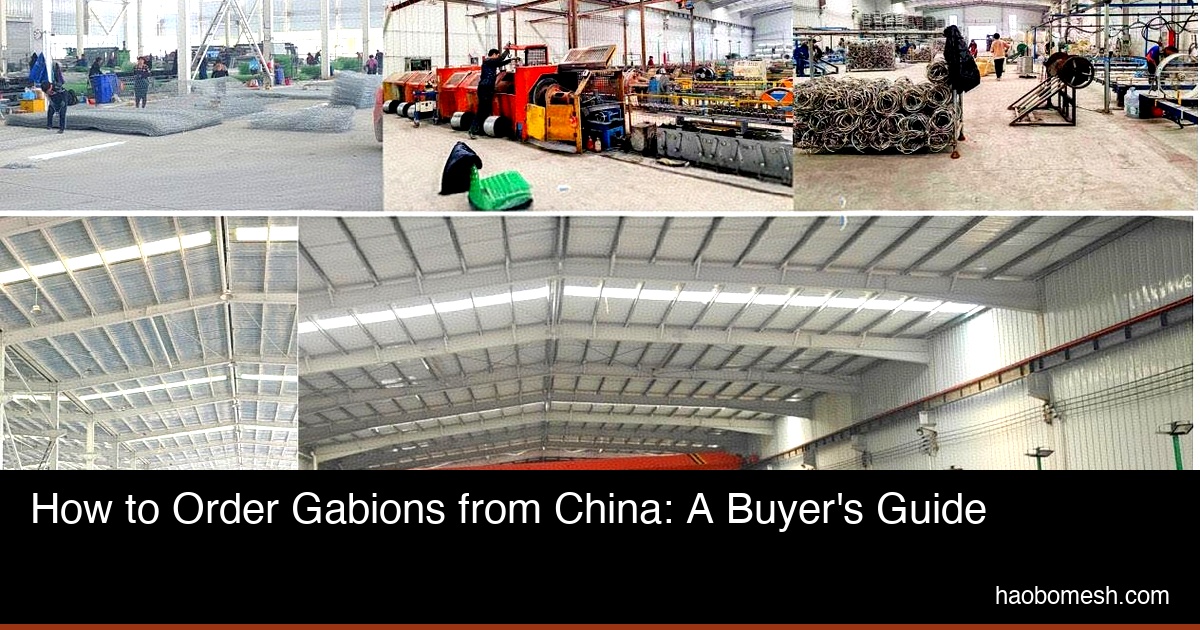
China is the world’s largest producer of welded wire mesh and woven gabion baskets. For international contractors, distributors, and infrastructure developers, ordering gabions from China can cut material costs by 20–40% while maintaining quality standards such as ASTM A975, EN 10223-3, and BS 8002. However, the process is only successful if you know how to choose the right supplier, structure your inquiry, and manage quality control.
Key Takeaways
- China advantage — Chinese factories offer 20–40% lower unit costs due to scale, vertical integration, and flexible customization.
- Supplier types — Choose between trading companies (small orders, many options) and direct manufacturers (large orders, better pricing).
- RFQ essentials — Always include dimensions, wire spec, mesh size, coating, quantity, standard, and delivery port.
- Quality control — Request material certificates, third-party inspection reports, and pre-shipment samples for first orders.
- Shipping — Sea freight is standard; a 20-foot container holds roughly 800–1,000 m² of flat gabion panels.
Table of Contents
1. Why Buy Gabions from China?
China accounts for a major share of global wire mesh and gabion production. The country has a mature supply chain that spans raw steel, drawing, galvanizing, weaving, welding, and export logistics. This vertical integration gives Chinese manufacturers three advantages:
Cost competitiveness. Large-scale production and lower overheads translate to factory-direct prices that are hard to match in Europe or North America.
Customization flexibility. Chinese factories can produce custom wire diameters, mesh sizes, basket dimensions, and coatings with relatively short lead times.
Export experience. Established manufacturers understand international standards, packaging requirements, and container loading optimization for bulky gabion products.
2. Types of Gabion Suppliers in China
Not every supplier in China is a factory. Understanding the three main types helps you set realistic expectations.
| Supplier Type | Best For | Pros | Cons |
|---|---|---|---|
| Direct manufacturer | Large orders, repeat buyers | Lowest price, full QC control | Higher MOQ, longer communication |
| Trading company | Small orders, mixed products | Fast quotes, flexible MOQ | Higher price, less QC visibility |
| OEM/ODM factory | Custom designs, branded packaging | Custom engineering support | Higher NRE, longer lead time |
For most civil engineering projects, a direct manufacturer with export experience is the best balance of price, quality, and reliability. For first-time buyers with smaller volumes, a trading company can reduce complexity.
3. How to Vet a Gabion Manufacturer
Before placing an order, verify the supplier’s capabilities and legitimacy. Use this checklist:
- Business license and export license. Ask for a scanned copy or check the company on the national enterprise registry.
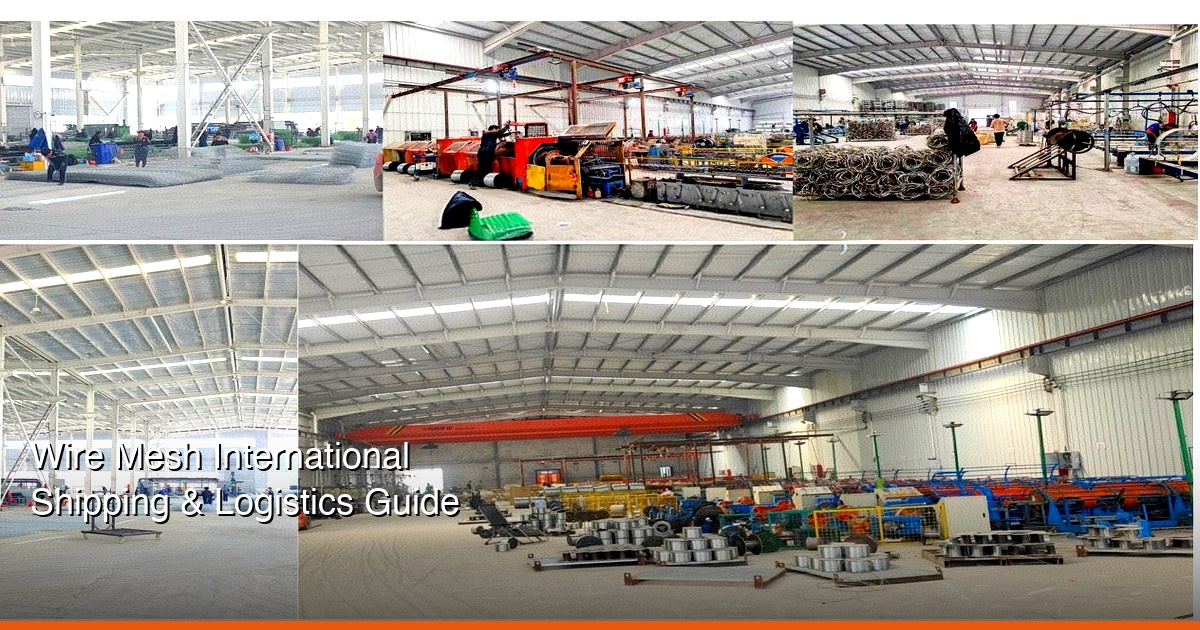
- Factory audit. Use video calls, third-party inspection services, or an on-site visit to confirm production capacity.
- Certifications. Look for ISO 9001, ISO 14001, and product test reports matching your target standard.
- Reference projects. Ask for case studies, photos, or contactable overseas customers.
- Production equipment. Verify they own mesh weaving machines, welding lines, galvanizing baths, and PVC coating lines.
- Communication quality. A responsive technical team is essential for custom orders and after-sales support.
At Haobo Metal, we welcome factory audits and provide ISO certificates, material test reports, and reference project documentation on request.
4. RFQ Checklist: What to Include
A complete Request for Quotation (RFQ) reduces back-and-forth and helps suppliers give accurate pricing. Include the following:
| RFQ Item | Example | Why It Matters |
|---|---|---|
| Product type | Woven gabion basket / welded gabion box | Determines production process and price |
| Basket dimensions | 2.0×1.0×1.0 m, 2.0×1.0×0.5 m | Drives wire usage and freight volume |
| Wire diameter | 2.7 mm body / 3.4 mm selvedge | Affects strength and cost |
| Mesh size | 80×100 mm / 60×80 mm | Controls stone selection and wire density |
| Coating | Galvanized / Galfan / Galfan + PVC | Determines corrosion resistance and service life |
| Quantity | 1,000 m² or 500 baskets | Needed for MOQ and freight calculation |
| Standard | ASTM A975 / EN 10223-3 / BS 8002 | Defines testing and acceptance criteria |
| Delivery terms | FOB Tianjin / CIF Hamburg | Controls risk and freight responsibility |
Suppliers who ask clarifying questions are usually more reliable than those who instantly quote without understanding your project.
5. Sampling and Quality Inspection
Never commit to a full container without seeing a physical sample or production sample. Request:
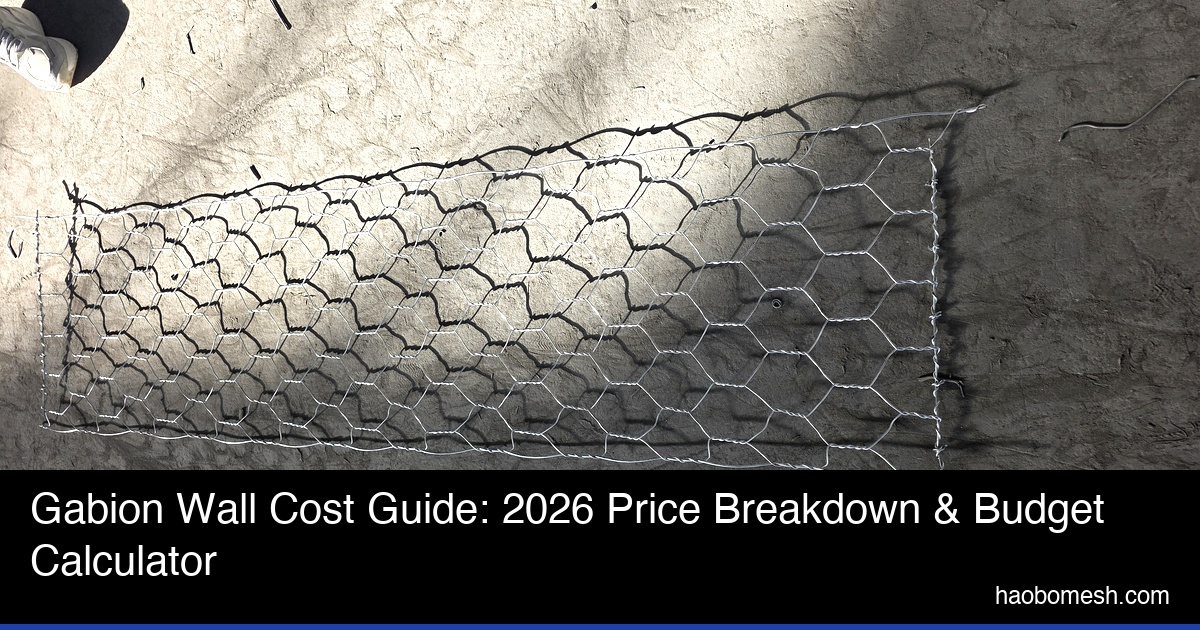
- A small sample basket or wire coil showing coating and mesh quality
- Material certificates or mill test reports for the steel wire
- Galvanizing or PVC coating test reports
- Tensile strength and elongation test data
For first orders, consider hiring a third-party inspection agency such as SGS, BV, or TÜV to check production before shipment. Pre-shipment inspection typically costs $200–$500 per man-day and can prevent costly rejections.
At Haobo Metal, we provide free samples for serious projects and support third-party inspections at our factory in Hebei, China.
6. Pricing, Payment Terms, and Incoterms
Typical payment structures for Chinese gabion suppliers are:
| Term | Typical Split | Risk Level |
|---|---|---|
| T/T in advance | 100% before production | High risk for buyer |
| T/T with deposit | 30% deposit, 70% before shipment | Balanced |
| T/T against B/L | 30% deposit, 70% against copy of B/L | Lower risk for buyer |
| L/C at sight | Letter of credit | Low risk, higher bank fees |
Incoterms define who pays for freight and where risk transfers. Common options for gabion exports are:
- FOB — Seller delivers to port; buyer arranges ocean freight.
- CIF — Seller pays freight and insurance to destination port.
- DDP — Seller delivers to buyer’s door; most expensive but simplest for buyer.
For most buyers, CIF is the simplest balance of cost and control.
7. Shipping and Logistics from China
Gabion baskets are shipped flat-packed to maximize container space. A standard 20-foot container holds approximately 800–1,000 m² of flat panels, depending on basket thickness and packing method.
| Shipping Mode | Transit Time | Best For |
|---|---|---|
| Sea freight (FCL) | 20–40 days | Standard bulk orders; lowest cost |
| Sea freight (LCL) | 25–45 days | Small orders under a full container |
| Rail freight | 15–22 days | Europe-bound shipments |
| Air freight | 3–7 days | Urgent samples only; very expensive for bulky goods |
Plan for customs clearance at the destination port, which may take 2–7 days depending on the country and documentation quality. Required documents usually include commercial invoice, packing list, bill of lading, certificate of origin, and sometimes a quality inspection certificate.
8. Common Mistakes to Avoid
First-time buyers often make these mistakes. Avoid them to save money and time:
Ignoring the mesh-to-stone rule. Stone must be at least 1.5 times the mesh aperture. If you order 60×80 mm mesh but plan to fill with 100 mm stone, the stone will not fit properly.
Choosing price over specification. A low quote may mean thinner wire, lower zinc coating, or recycled PVC. Always compare quotes on identical specs.
Skipping the sample. Photos and catalogs can be misleading. A physical sample reveals wire quality, coating thickness, and welding accuracy.
Unclear packing requirements. Gabions are bulky. Without clear palletizing or bundle instructions, unloading at site becomes chaotic and expensive.
Not confirming standards. Specify ASTM, EN, or BS standards in the contract and tie payment to compliant test reports.
9. Conclusion
Ordering gabions from China is a cost-effective strategy when done methodically. Start by identifying whether you need a direct manufacturer or a trading company, then vet suppliers through certifications, samples, and reference checks. Send a detailed RFQ with dimensions, wire specification, mesh size, coating, quantity, and delivery terms. Use 30/70 payment terms with pre-shipment inspection for first orders, and choose CIF or FOB based on your logistics capability.
With the right supplier, Chinese-made gabions can meet or exceed international standards at a fraction of the cost of local sourcing.
Frequently Asked Questions
Is it safe to buy gabions from China?
Yes, if you vet the supplier, request material certificates, and use secure payment terms. Direct manufacturers with ISO certification and export experience are generally reliable.
What is the typical MOQ for gabions from China?
Direct manufacturers usually require 500–1,000 m² or one full container. Trading companies may accept smaller orders but at higher unit prices.
How long does shipping take from China to Europe?
Sea freight to Europe takes 25–40 days, while rail freight via the China-Europe Railway Express takes 15–22 days.
Request a Gabion Quote from China
Send us your project specs and delivery port. We will reply with FOB/CIF pricing, lead time, and sample options within 24 hours.