Galvanized vs PVC Coated Welded Wire Mesh Fence: Coating Comparison, Lifespan, and Cost Analysis
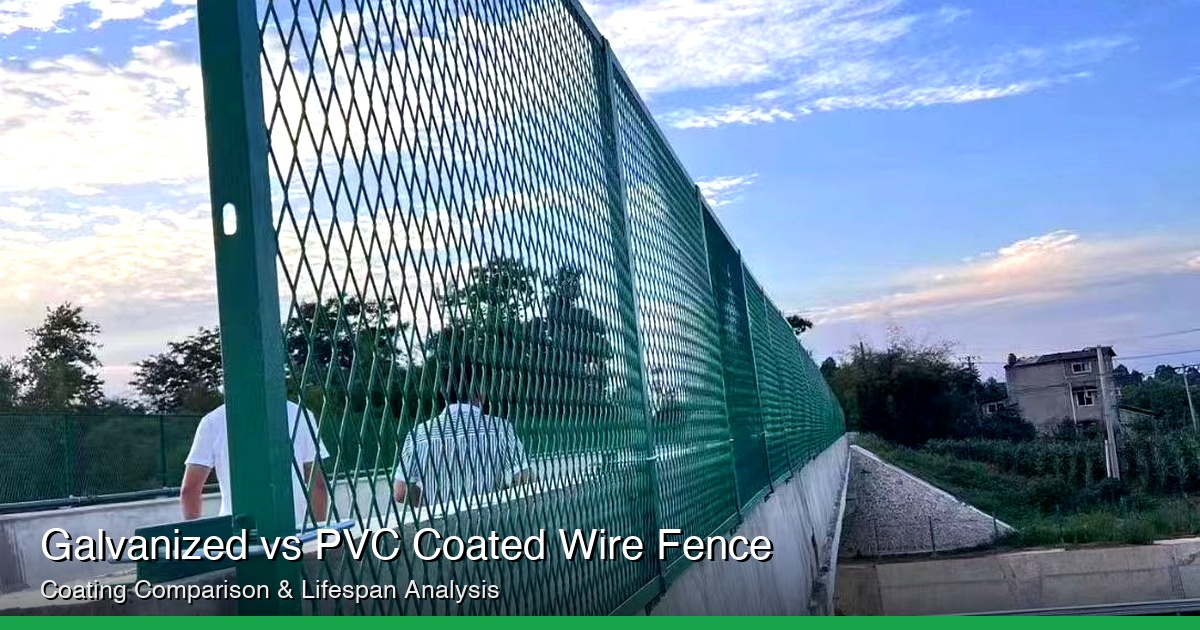
Welded wire mesh fencing is the workhorse of industrial perimeter security, agricultural enclosures, and public infrastructure protection. But the steel wire itself — vulnerable to rust and corrosion — is only as durable as its protective coating. Two coating technologies dominate the market: hot-dip galvanizing and PVC (polyvinyl chloride) coating. Each has distinct advantages, and choosing the wrong one for your environment can mean the difference between a 30-year fence and one that needs replacement in five. This guide breaks down the chemistry, performance data, and cost trade-offs to help you specify with confidence.
Table of Contents
1. Understanding Fence Coating Technologies
Steel corrosion is an electrochemical process. When bare steel is exposed to moisture and oxygen, iron atoms lose electrons (oxidation) and form iron oxide — rust. A protective coating interrupts this process by creating a barrier between the steel surface and the corrosive environment. The two mainstream approaches are fundamentally different:
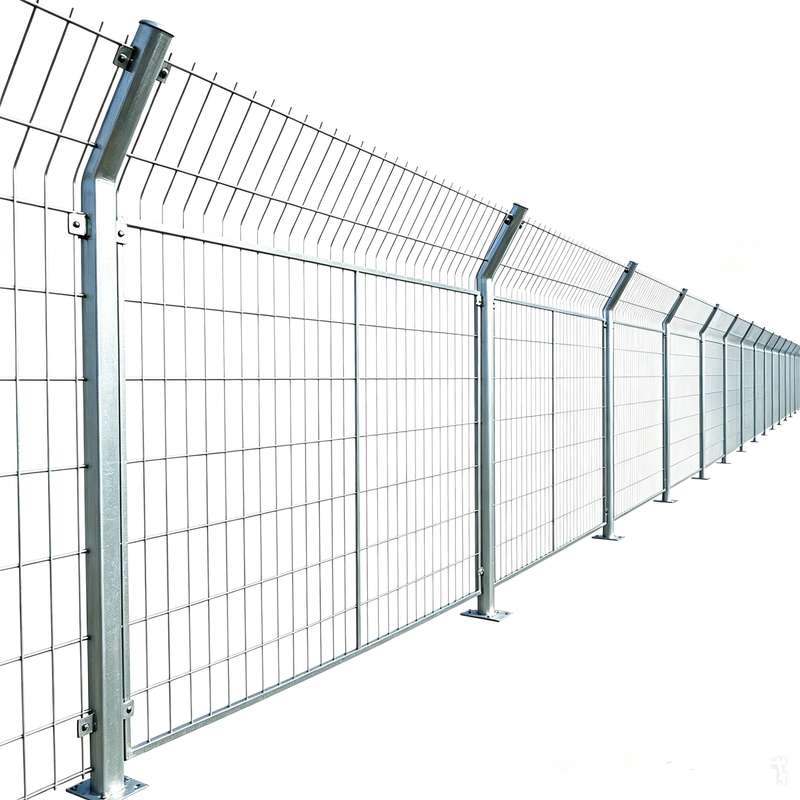
- Hot-Dip Galvanizing: The steel wire is immersed in molten zinc (approximately 450°C). The zinc reacts with the steel surface to form a series of zinc-iron alloy layers topped with a pure zinc outer layer. This creates a metallurgical bond — the coating is not merely on the surface; it is part of the steel. Furthermore, zinc provides cathodic (sacrificial) protection: if the coating is scratched, the surrounding zinc corrodes preferentially, protecting the exposed steel.
- PVC Coating: A layer of polyvinyl chloride plastic (typically 0.4–0.8mm thick) is extruded or dip-applied over a galvanized steel core wire. PVC provides a physical barrier to moisture and oxygen but offers no sacrificial protection. If the PVC layer is breached, the underlying zinc coating provides secondary protection — which is why PVC-coated wire always starts with a galvanized core.
The fundamental trade-off: galvanized coating provides active electrochemical protection with a metallic appearance; PVC coating provides a thicker physical barrier with customizable aesthetics at the cost of sacrificial protection capability.
2. Hot-Dip Galvanized Coating: Process and Performance
Hot-dip galvanizing is the most widely used metallic coating for fence wire worldwide, governed by international standards including EN 10244-2 (Europe), ASTM A641/A641M (United States), and AS/NZS 4534 (Australia/New Zealand).
Coating Weight Classes (EN 10244-2):
| Coating Class | Min. Coating Weight (g/m²) | Approx. Thickness (µm) | Typical Service Life (C3 environment) |
|---|---|---|---|
| Class A | 60 | 8 | 5–10 years — light-duty, temporary fencing |
| Class B | 120 | 17 | 10–20 years — general agricultural fencing |
| Class C (Heavy) | 215 | 30 | 20–30 years — industrial and perimeter security |
| Class D (Extra Heavy) | 260 | 37 | 30–50 years — marine, coastal, extreme environments |
The Zinc-Iron Alloy Layer Structure: When steel is hot-dip galvanized, the zinc does not simply coat the surface — it reacts with the iron in the steel to form intermetallic layers. The cross-section (from steel outward) is:
- Gamma Layer (Gamma Phase): 75% Zn / 25% Fe — the hardest layer (250 DPN hardness), thin (1–2µm), closest to the steel substrate
- Delta Layer (Delta Phase): 90% Zn / 10% Fe — columnar crystal structure, 5–10µm thick, provides excellent adhesion
- Zeta Layer (Zeta Phase): 94% Zn / 6% Fe — acicular (needle-like) crystals, 10–20µm thick, the primary bonding interface
- Eta Layer (Eta Phase): Nearly pure zinc (>99% Zn) — the outermost layer, 5–15µm thick, provides the initial corrosion barrier
This layered structure means that even if the outer pure zinc layer is consumed by corrosion, the underlying alloy layers continue to provide protection. The total coating thickness for a Class C heavy galvanized wire is approximately 35–45µm — remarkably thin compared to PVC, yet remarkably durable due to the metallurgical bond and sacrificial protection mechanism.
3. PVC Coating: Plastic Protection Layer Explained
PVC coating adds a polymer layer over an already-galvanized steel core wire. The PVC is applied by one of two methods: extrusion (where molten PVC is pressure-extruded onto the wire as it passes through a die) or fluidized-bed dipping (where preheated wire is dipped into a bed of fluidized PVC powder).
PVC Coating Construction:
| Layer | Thickness | Function |
|---|---|---|
| Steel Core Wire | φ2.0–4.0mm | Structural strength — carries all mechanical loads |
| Galvanized Layer | 15–30µm (Class C) | Primary corrosion protection; sacrificial anode if PVC breached |
| Primer/Adhesion Layer | 5–10µm | Bonds PVC to galvanized surface; prevents delamination |
| PVC Outer Layer | 0.4–0.8mm (400–800µm) | Physical moisture barrier; UV resistance (with stabilizers); color |
PVC Color Options and Applications:
- Green (RAL 6005): Most common — blends with vegetation for parks, gardens, golf courses, residential fencing
- Black: Highest UV resistance (carbon black is the most effective UV stabilizer) — industrial sites, highways
- White: Aesthetic — residential communities, decorative fencing, horse paddocks
- Custom colors: Available on large orders (typically >5,000 sqm) — matched to corporate branding or architectural specifications
Critical PVC Quality Factors: Not all PVC coatings are created equal. Three factors determine long-term performance:
- Plasticizer Content: PVC is naturally rigid. Plasticizers (typically phthalates) are added to make it flexible enough to withstand bending without cracking. Low-quality coatings with insufficient plasticizer will crack when the fence panel is flexed during transport or installation.
- UV Stabilizers: PVC degrades under ultraviolet radiation through a process called photodegradation — the polymer chains break down, causing discoloration, embrittlement, and eventual cracking. Titanium dioxide (TiO₂) and carbon black are the primary UV stabilizers. Without adequate stabilizers, PVC can become brittle within 3–5 years of outdoor exposure.
- Adhesion Quality: The bond between PVC and the galvanized substrate is the Achilles' heel of PVC-coated wire. Poor adhesion leads to blistering — moisture penetrates through pinholes in the PVC and becomes trapped between the plastic layer and the zinc coating, causing localized corrosion that lifts and delaminates the coating.
4. Corrosion Resistance: Salt Spray Test Comparison
The salt spray (fog) test per ASTM B117 / ISO 9227 is the industry-standard accelerated corrosion test. Test specimens are continuously exposed to a 5% NaCl salt fog at 35°C in a controlled chamber. While the test does not perfectly replicate real-world conditions, it provides a standardized basis for comparing coating performance.
Comparative Salt Spray Performance:
| Coating Type | Hours to First Red Rust | Hours to 5% Red Rust | Equivalent Outdoor Life (C3) |
|---|---|---|---|
| Electro-Galvanized (8µm) | 48–96 | 120–200 | 3–5 years — not recommended for outdoor use |
| Hot-Dip Galv. Class A (60 g/m²) | 200–400 | 500–800 | 8–15 years — agricultural, temporary |
| Hot-Dip Galv. Class C (215 g/m²) | 600–1,000 | 1,500–2,500 | 20–35 years — industrial, security |
| Hot-Dip Galv. Class D (260 g/m²) | 1,000–1,500 | 2,500–4,000 | 35–50 years — marine, coastal |
| PVC Coated (0.5mm + Galv Core) | 1,500–3,000 | 3,000–5,000+ | 25–40+ years — depends on UV stability |
Corrosion Environment Classification (ISO 12944-2):
| Category | Zinc Corrosion Rate (µm/year) | Typical Environment |
|---|---|---|
| C1 — Very Low | ≤0.1 | Heated indoor spaces, desert climates |
| C2 — Low | 0.1–0.7 | Rural areas, low pollution |
| C3 — Medium | 0.7–2.1 | Urban, industrial, moderate SO₂ |
| C4 — High | 2.1–4.2 | Industrial, coastal (low salinity) |
| C5 — Very High | 4.2–8.4 | Marine, high humidity, high salinity |
A Class C galvanized coating (30µm) in a C3 environment will theoretically last 30 ÷ 2.1 = 14 years before the zinc is fully consumed. However, because the underlying zinc-iron alloy layers also provide protection, the actual time to first red rust is significantly longer — typically 20–35 years.
5. UV Stability and Color Retention
This is where the critical difference between the two coating types emerges: galvanized coatings are inherently UV-stable (zinc does not degrade under UV light), while PVC coatings require chemical stabilizers to resist photodegradation. The quality of these stabilizers — not the PVC itself — determines long-term aesthetic performance.
Galvanized Coating Appearance Over Time:
- Initial: Bright, shiny metallic silver — the "spangle" pattern characteristic of hot-dip galvanizing
- 6–12 months: Surface oxidizes to a uniform matte gray as the zinc forms a protective zinc carbonate patina (ZnCO₃). This is normal and desirable — the patina is actually more corrosion-resistant than fresh zinc.
- Long-term: Remains matte gray throughout service life. No color fading, no chalking, no peeling. The fence simply looks "industrial" — which is acceptable or even preferred for many security applications.
PVC Coating Appearance Over Time:
- 0–3 years (premium PVC): Color remains vibrant. Green stays green, black stays black.
- 3–7 years: Color begins to fade — greens become lighter, whites yellow slightly. This is surface-level UV degradation of the polymer matrix.
- 7–15 years: Chalking appears — a white powdery residue on the surface caused by polymer breakdown. The PVC becomes progressively more brittle.
- 15+ years: Cracking and peeling become likely, particularly at stress points (bends, cuts, clamp locations). Once the PVC cracks, moisture reaches the galvanized core, and corrosion accelerates at the breach points.
The Climate Factor: PVC aging accelerates dramatically with UV exposure intensity. A fence in Phoenix, Arizona (UV Index 8–11) will degrade roughly 2–3× faster than the same fence in London, UK (UV Index 2–5). In tropical climates with high UV and humidity (Southeast Asia, Middle East, Northern Australia), the combined effect of photodegradation and moisture cycling can reduce PVC service life to 7–12 years.
6. Cost Comparison and Selection Guide
Material Cost Comparison (per sqm of finished fence panel, 3.0mm wire, 50×100mm mesh):
| Coating | Material Cost (USD/m²) | Expected Life (C3) | Cost/Year (USD/m²/yr) |
|---|---|---|---|
| HDG Class C (215 g/m²) | 6–9 | 25–35 years | 0.20–0.36 |
| HDG Class D (260 g/m²) | 7–10 | 35–50 years | 0.16–0.29 |
| PVC Coated (0.5mm, Class C core) | 9–14 | 20–35 years | 0.30–0.70 |
| PVC Coated (0.7mm, Class C core) | 11–16 | 25–40 years | 0.32–0.64 |
Selection Decision Matrix:
| Criteria | Choose Galvanized | Choose PVC Coated |
|---|---|---|
| Appearance Priority | Industrial metallic look acceptable | Green/black/white color desired |
| UV Exposure | High UV index locations (preferred) | Moderate UV — premium PVC required for desert |
| Corrosion Environment | C4–C5 marine/coastal (Class D) | C2–C3 acceptable; C4–C5 needs thick PVC |
| Mechanical Abuse | High (no coating to scratch off) | Low — scratches expose galvanized core |
| Maintenance | Zero — self-healing patina | Low — may need cleaning to remove chalk |
| Budget Priority | Lowest upfront cost | Premium for appearance |
Need Industrial Welded Mesh Fencing?
Specify your perimeter length, height, coating preference, and environment type. We will provide a customized quotation with material certificates and coating test reports within 24 hours.
📱 Request Fence Quote Send Email Inquiry