Gabion Wire Diameter Guide: How to Choose 2.7mm, 3.0mm, or 4.0mm for Your Project
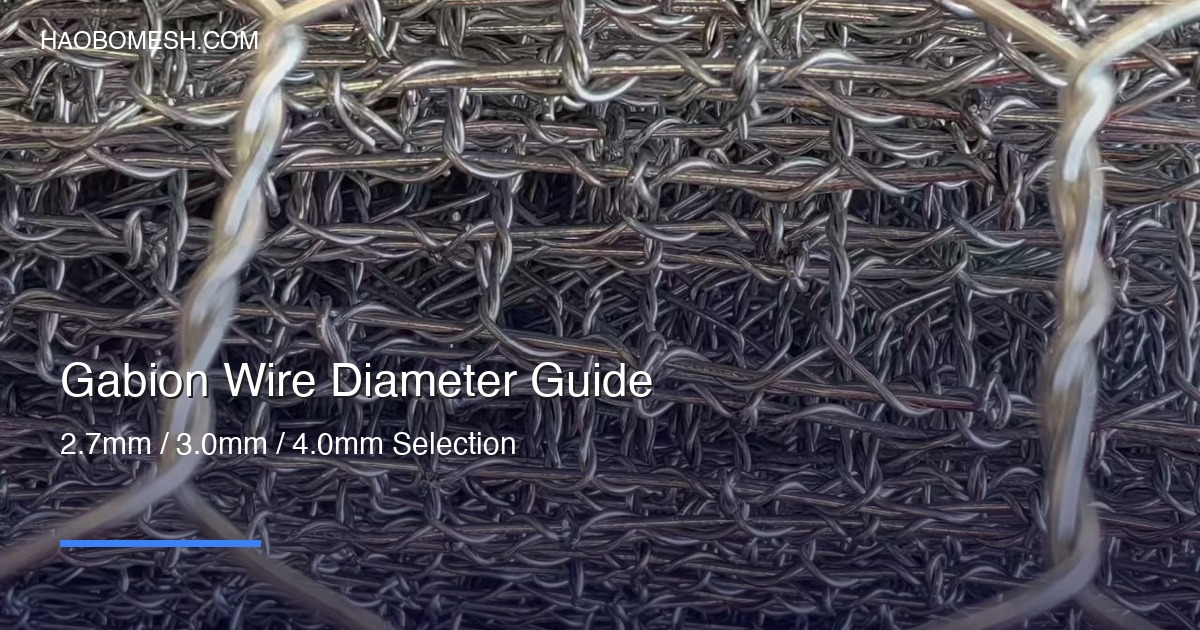
Selecting the correct wire diameter for your gabion project is one of the most critical engineering decisions you will make. An undersized wire leads to basket deformation, stone loss, and premature structural failure. An oversized wire wastes money on material you do not need. This guide breaks down the three most common diameters — 2.7mm, 3.0mm, and 4.0mm — with real-world application data, loading capacities, and cost implications to help you specify with confidence.
Table of Contents
- 1. Why Wire Diameter Matters in Gabion Engineering
- 2. 2.7mm Wire: Standard Choice for Retaining Walls
- 3. 3.0mm Wire: Heavy-Duty Applications
- 4. 4.0mm Wire: Maximum Strength for Critical Infrastructure
- 5. How Coating Affects Effective Wire Diameter
- 6. Quick Selection Guide: Which Diameter for Your Project?
1. Why Wire Diameter Matters in Gabion Engineering
Wire diameter directly determines the tensile strength, deformation resistance, and service life of a gabion basket. In engineering terms, the relationship is not linear — a small increase in diameter delivers a disproportionately large gain in structural performance.
Here is the core engineering relationship:
- Tensile Strength: The maximum tensile load a wire can withstand before breaking is proportional to the cross-sectional area (r²). Moving from 2.7mm to 3.0mm increases cross-sectional area by approximately 23%, translating to roughly 23% higher tensile capacity.
- Bending Stiffness: The moment of inertia (proportional to r⁴) governs resistance to bending. A 3.0mm wire is roughly 52% stiffer than a 2.7mm wire under the same load — a massive practical difference for tall retaining walls.
- Corrosion Margin: Thicker wires retain structural integrity longer as surface corrosion progresses. A 4.0mm wire with 0.05mm of surface corrosion loses only 2.5% of its cross-section, compared to 3.7% for 2.7mm wire.
The following table summarizes the key mechanical properties across the three common diameters, assuming EN 10223-3 compliant wire with minimum 380 MPa tensile strength:
| Property | 2.7mm | 3.0mm | 4.0mm |
|---|---|---|---|
| Cross-Sectional Area | 5.73 mm² | 7.07 mm² | 12.57 mm² |
| Min. Breaking Load (380 MPa) | 2.18 kN | 2.69 kN | 4.78 kN |
| Weight per meter (approx.) | 45 g/m | 55 g/m | 99 g/m |
| Relative Material Cost | 1.0x (baseline) | 1.23x | 2.19x |
2. 2.7mm Wire: Standard Choice for Retaining Walls
2.7mm is the most commonly specified wire diameter for gabion retaining walls up to 3 meters in height. It represents the sweet spot between structural adequacy and material economy for the vast majority of civil engineering and landscaping projects.
Typical applications for 2.7mm wire:
- Retaining walls up to 3m height (highway embankments, residential landscaping)
- Freestanding garden walls and architectural gabion features
- Small-scale riverbank erosion control with low flow velocity (< 2 m/s)
- Gabion planter boxes and decorative elements
- Noise barrier walls along secondary roads
Engineering notes: When specifying 2.7mm wire, always confirm that the wire meets EN 10223-3 or ASTM A975 standards. The minimum zinc coating weight for galvanized 2.7mm wire should be 245-275 g/m² (EN 10244-2 Class A). For projects in marine or acidic environments, upgrade to Galfan (Zn-5%Al) coating rather than increasing wire diameter — it is more cost-effective.
A common mistake buyers make is specifying 2.7mm "to save money" on walls taller than 3m. The short-term material savings are typically wiped out by the cost of additional bracing, closer bracing spacing, or premature deformation. For walls exceeding 3m, move to 3.0mm — the 23% cost increase is justified by the engineering margin.
3. 3.0mm Wire: Heavy-Duty Applications
3.0mm diameter wire is the preferred specification for gabion walls between 3-6 meters in height, and for any application where lateral earth pressure exceeds standard retaining wall loads. Military engineering manuals (including USACE guidelines) recommend 3.0mm as the minimum for tactical and semi-permanent gabion structures.
Typical applications for 3.0mm wire:
- Retaining walls 3-6m height
- Riverbank and coastal protection with moderate-to-high flow velocity (2-4 m/s)
- Bridge abutment scour protection
- Culvert headwalls and wing walls
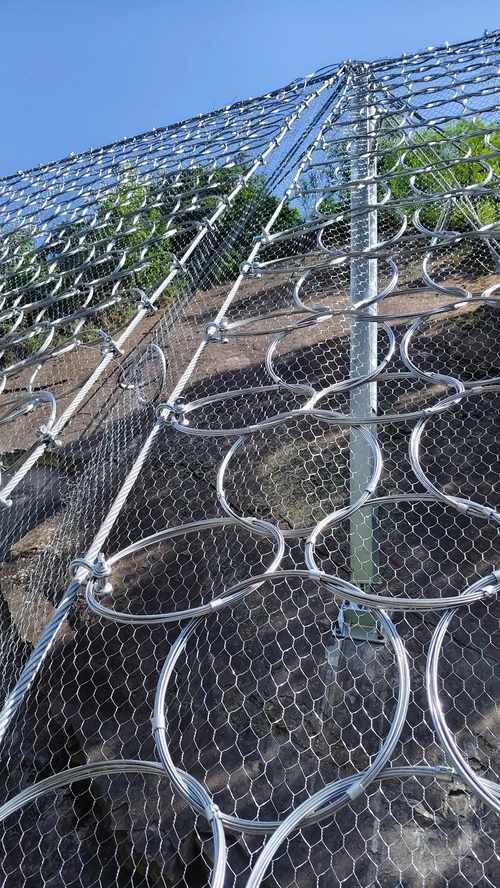
- Rockfall catch fences and drapery support systems
- Gabion weirs and check dams
Engineering notes: At 3.0mm, the increased bending stiffness (52% higher than 2.7mm) significantly reduces basket bulging — a common failure mode in taller walls. This means you can often use wider basket cells or reduce the number of internal diaphragms, partially offsetting the higher material cost through simpler fabrication.
For permanent flood control structures, 3.0mm wire with Galfan coating is the minimum specification recommended by most hydraulic engineering authorities in Europe and Southeast Asia. The combination of higher tensile strength and superior corrosion resistance ensures a design life exceeding 50 years even in aggressive environments.
4. 4.0mm Wire: Maximum Strength for Critical Infrastructure
4.0mm wire is specified for the most demanding applications where failure is not an option. At more than double the tensile capacity of 2.7mm, it is used in critical infrastructure, high-energy hydraulic environments, and permanent military fortifications.
Typical applications for 4.0mm wire:
- Retaining walls exceeding 6m height (tiered with geogrid reinforcement)
- High-energy river training structures (flow velocity > 4 m/s)
- Coastal seawall and breakwater armor units
- Landslide stabilization and debris flow barriers
- Highway rockfall protection in mountainous terrain
- Mining haul road retaining structures
Cost-impact analysis: 4.0mm wire costs approximately 2.2x more than 2.7mm per linear meter. However, the cost is justified when you consider that a single 4.0mm gabion wall may replace a tiered 2.7mm wall with intermediate benches, reducing excavation volume, foundation preparation, and installation labor. In projects where space is constrained (e.g., narrow highway corridors), the ability to build taller with a single-tier wall often makes 4.0mm the only viable option.
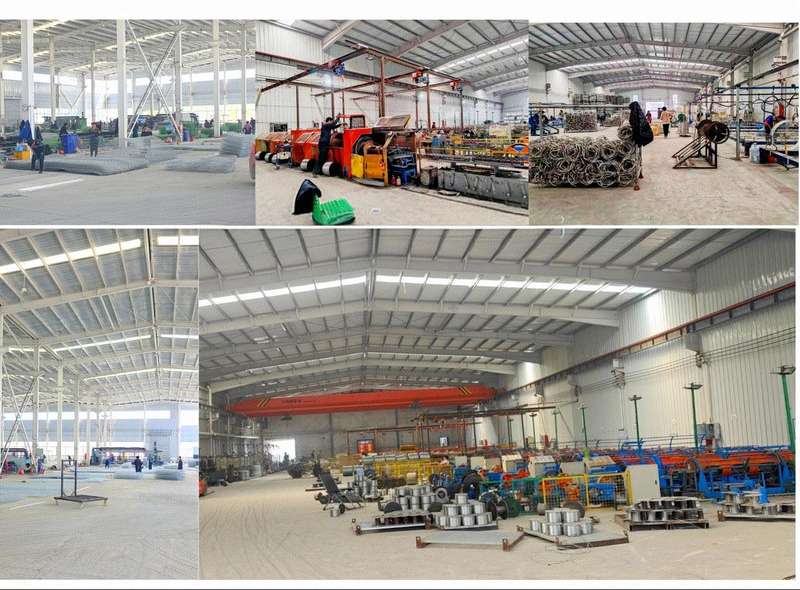
Procurement note: Not all manufacturers stock 4.0mm wire mesh panels. Always confirm production capability and lead time before specifying 4.0mm in your tender documents. At HaoBo, we maintain dedicated 4.0mm production lines with typical lead times of 15-20 days for 40HC container quantities.
5. How Coating Affects Effective Wire Diameter
When specifying wire diameter, it is essential to clarify whether you are referencing the core wire diameter (before coating) or the overall diameter (after coating). This distinction is commonly misunderstood and leads to non-conforming deliveries.
| Coating Type | Core Wire | Coating Thickness | Overall Diameter |
|---|---|---|---|
| Hot-Dip Galvanized (Class A) | 2.70mm | ~0.05mm per side | ~2.80mm |
| Galfan (Zn-5%Al) | 2.70mm | ~0.05mm per side | ~2.80mm |
| PVC-Coated (0.5mm PVC) | 2.20mm | 0.50mm per side | 3.20mm |
| PVC-Coated (0.7mm PVC) | 2.70mm | 0.70mm per side | 4.10mm |
Critical specification rule: Always specify the core wire diameter in your purchase order and technical specification. The coating is a separate parameter. Example correct specification: "Wire diameter: 2.70mm core, hot-dip galvanized to EN 10244-2 Class A, min. zinc coating 275 g/m²."
Some overseas suppliers quote the overall diameter (including PVC coating) as the wire diameter — this is misleading. A "3.2mm PVC-coated wire" with a 2.2mm core has only 65% of the tensile strength of a true 3.0mm galvanized wire. Always request a test certificate showing the core wire diameter.
6. Quick Selection Guide: Which Diameter for Your Project?
Use the decision flowchart below to select the appropriate wire diameter for your project. When in doubt, consult our engineering team — we provide free technical review of your project specifications.
Selection Decision Tree
Step 1 — Wall height:
- Wall height ≤ 3m → Start with 2.7mm (go to Step 2)
- Wall height 3-6m → Start with 3.0mm (go to Step 2)
- Wall height > 6m → Start with 4.0mm (go to Step 2)
Step 2 — Environment:
- Fresh water / inland / dry → Keep base selection; specify hot-dip galvanized
- Marine / coastal / acidic soil → Keep base selection; upgrade coating to Galfan or PVC
- High abrasion (mountain streams with bed load) → Upgrade one diameter level AND specify Galfan
Step 3 — Criticality:
- Non-critical (landscaping, decorative) → Keep base selection
- Critical infrastructure (highway, bridge, flood defense) → Upgrade one diameter level
Selecting the right wire diameter is an engineering decision — not a purchasing decision. The cost difference between 2.7mm and 3.0mm is typically less than 15% of total project cost, but using undersized wire can lead to repairs that cost 5-10x the initial savings. When in doubt, consult our technical team with your project drawings and we will provide a detailed specification recommendation at no charge.
Specify the Right Wire Diameter — Talk to Our Engineers
Send us your wall height, site conditions, and project type. Our engineering team will recommend the optimal wire diameter, coating, and mesh configuration — with a detailed quotation within 24 hours.
📱 WhatsApp Inquiry Send Email