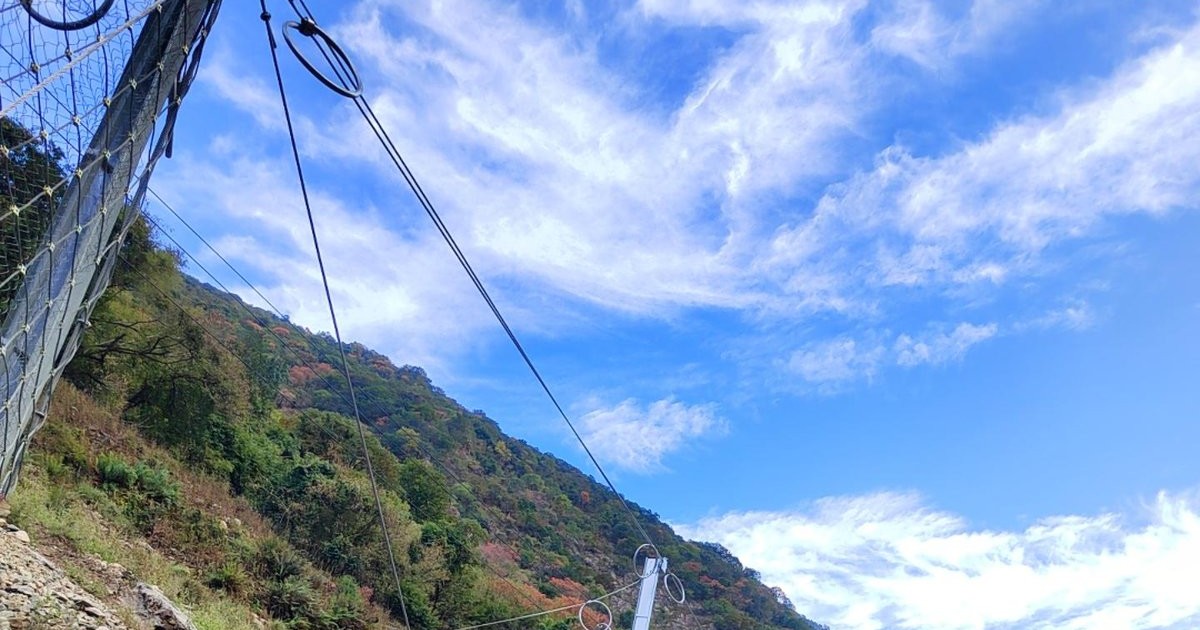
Rockfall Protection Netting for Middle East Mountain Highways: UAE, Oman, Saudi Arabia ETAG 027 Design Guide 2026
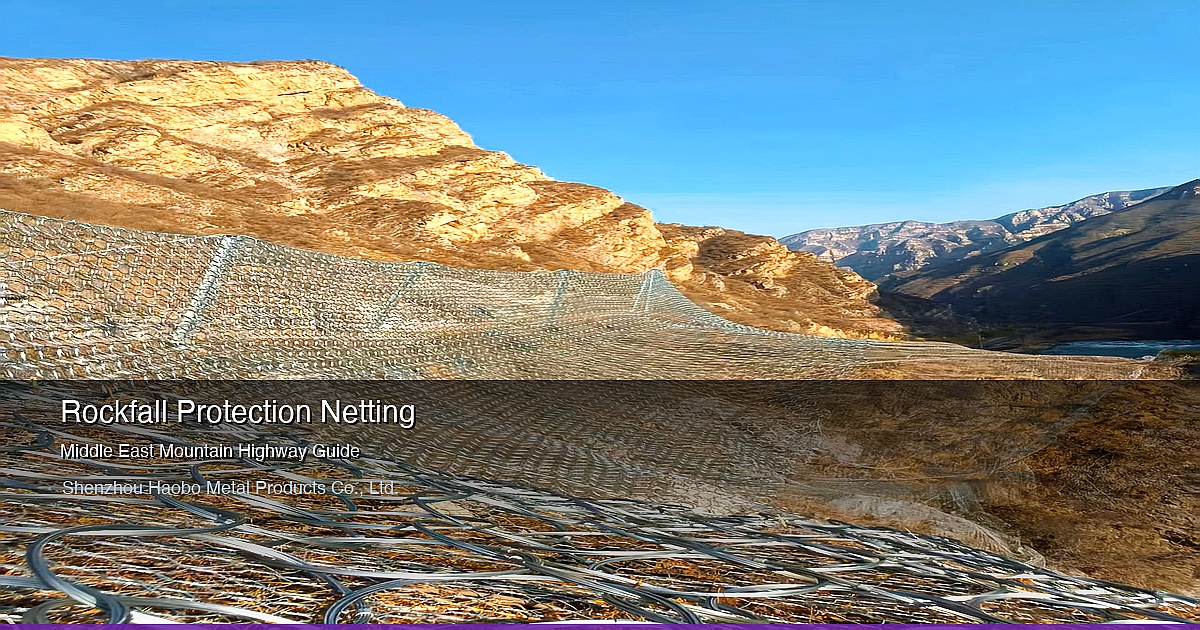
From Our Factory Floor: As a direct manufacturer, Haobo Metal shares real-world insights from thousands of completed projects across 30+ countries. This guide combines field data with international engineering standards.
Introduction: Rockfall Protection for Middle East Mountain Highways
The Middle East is not typically associated with mountain infrastructure challenges — the popular image is of vast deserts and coastal plains. Yet the region contains some of the world's most strategically critical and geologically challenging mountain highway corridors: the Hajar Mountains of Oman and the UAE (with Jabal Shams reaching 3,009m), the Asir and Sarawat ranges of Saudi Arabia (rising to 3,133m at Jabal Sawda), the Alborz Mountains of northern Iran, and the Taurus Mountains of southern Turkey. These mountain highways carry a disproportionate share of regional trade, tourism, and energy infrastructure — and they face significant rockfall and slope instability risks that demand engineered protection solutions.
Key Takeaways
- Middle Eastern mountain highways face distinctive rockfall risks: Thermal fatigue from extreme diurnal temperature cycling (15-25°C daily range), episodic intense rainfall triggering joint water pressure, salt crystallization in coastal mountains, and moderate seismic activity along the Arabian Plate margins combine to create chronic rockfall hazards. Active drape mesh systems and passive ring net barriers provide proven, cost-effective protection.
- The JT/T 528-2022 standard provides the material specification framework: High-tensile wire mesh (3.0mm, ≥1,770 MPa), ring net barriers with energy ratings from 100-5,000+ kJ MEL, and comprehensive full-scale dynamic testing requirements. For Middle Eastern conditions, upgrading to Galfan coating (275-350 g/m²) for coastal sites and specifying 65×65mm mesh openings for small-block slopes are recommended enhancements.
- Rockfall trajectory analysis is mandatory for design: 2D/3D computer simulation (minimum 1,000 trajectories per cross-section) determines the 95th-98th percentile kinetic energy and bounce height at proposed barrier locations. For high-traffic trade corridors, 98th percentile values govern the design rather than 95th — reflecting the higher consequence of failure.
- Two-tier barrier systems optimize cost and performance for slopes over 100m: A mid-slope barrier (500-1,000 kJ) intercepts blocks before full acceleration, while a toe barrier (1,000-3,000 kJ) provides secondary catch. This configuration reduces total system cost by 20-30% compared to a single high-energy toe barrier while providing redundancy.
- Chinese manufacturers offer ETAG 027-certified systems at 35-45% cost savings: FOB Tianjin prices of USD 280-380/m for energy class 3 barriers, 8-12 week lead times, and in-house testing capability up to 5,000 kJ MEL. Combined with 18-22 day ocean freight to Gulf ports, the total procurement cycle from order to site delivery is 12-16 weeks.
Table of Contents
- 1. Introduction: Rockfall Protection for Middle East Mountain Highways
- 2. The Middle Eastern Rockfall Environment: Distinctive Geological and Climatic Factors
- 3. Rockfall Protection System Types for Middle Eastern Applications
- 4. Material Specifications: Chinese National Standards for Middle Eastern Projects
- 5. Design Methodology for Middle Eastern Mountain Highways
- 6. Installation and Construction in Middle Eastern Conditions
- 7. Procurement: Chinese Rockfall Protection Systems for Middle Eastern Projects
- 8. Maintenance and Inspection Protocol
The Middle Eastern geological context presents unique rockfall challenges distinct from the tropical and temperate mountain environments more commonly associated with slope protection. The combination of extreme temperature cycling (daily ranges of 15-25°C, seasonal ranges of -5°C to 50°C+), episodic but intense rainfall events (orographic precipitation and rare but violent thunderstorm cells), actively uplifting tectonic terrain along the Arabian Plate margins, and mechanically weathered rock masses with open joint systems creates slope failure mechanisms that require carefully tailored protection system design.
This article provides a comprehensive engineering guide to rockfall protection netting systems for Middle Eastern mountain highway applications, referencing the Chinese national standard JT/T 528-2022 alongside European ETAG 027 certification requirements and regional highway authority specifications. The guide covers system selection, energy rating, material specifications, design methodology, and practical considerations for procurement, installation, and maintenance in Middle Eastern conditions.
The Middle Eastern Rockfall Environment: Distinctive Geological and Climatic Factors
Geological Context: Active Tectonics and Mechanically Weathered Rock
The Arabian Plate is moving north-northeast at approximately 15-25 mm/year relative to the Eurasian Plate, generating ongoing crustal compression along the Zagros-Bitlis suture zone and creating active fault systems throughout the region. This tectonic activity produces two critical characteristics relevant to rockfall protection design:
1. Steep, tectonically over-steepened slopes: Mountain highways in the Hajar and Asir ranges are frequently cut through rock masses with slope angles of 60-85° (near-vertical to overhanging in places). These slopes are in a state of metastable equilibrium — stable under normal conditions, but susceptible to catastrophic failure during triggering events (rainfall, seismic shaking, or temperature-induced joint dilation).
2. Open, dilated joint systems: Unlike the tight, interlocking joint networks of alpine environments, Middle Eastern rock masses have experienced multiple cycles of tectonic loading and thermal expansion, producing open joint apertures of 10-100mm with low or zero cohesion. Block detachment is controlled primarily by joint geometry (orientation, spacing, persistence) rather than rock material strength — a competent limestone block can detach along open joints regardless of its UCS (Unconfined Compressive Strength).
Climate-Driven Weathering: Thermal Fatigue and Episodic Water
The Middle Eastern mountain climate is characterized by extreme diurnal temperature ranges — from near-freezing at night to 45°C+ by mid-afternoon during summer months. This thermal cycling creates progressive rock mass degradation through thermal fatigue:
- Thermal expansion/contraction: A 30°C daily temperature swing produces thermal strains of approximately 0.15-0.25 mm per meter of rock (assuming coefficient of thermal expansion α = 5-8 × 10⁻⁶/°C for limestone). Over thousands of cycles, this micro-strain accumulates as permanent joint dilation and progressive loss of inter-block friction.
- Hydration-dehydration cycling: Episodic rainfall events — often intense but brief (20-50mm in 2-4 hours) — cause rapid wetting of exposed rock faces followed by equally rapid drying under solar radiation. Clay minerals within joints swell during wetting and shrink during drying, generating expansive pressures of 0.5-2.0 MPa that gradually wedges blocks apart.
- Salt crystallization: In coastal mountain ranges (Hajar Mountains within 50km of the Gulf of Oman, Asir escarpment within 100km of the Red Sea), salt-laden aerosols deposit NaCl and CaSO₄ crystals within rock joints. Crystallization pressures during drying cycles can exceed 10-20 MPa, far exceeding the tensile strength of most sedimentary rocks (typically 2-10 MPa for limestone and sandstone).
Rockfall Triggering Events
For Middle Eastern mountain highways, the critical rockfall triggering events are:
| Trigger Type | Frequency | Typical Rockfall Volume | Design Implication |
|---|---|---|---|
| Rainfall infiltration (rare events) | 2-5 per year | 0.5-5.0 m³ (small-medium blocks) | Primary trigger; design for saturated joint friction (φ reduced by 5-10°) |
| Seismic shaking (Mw 4.5-6.5) | 1-2 per decade | 1.0-20+ m³ (medium-large blocks) | Critical for UAE-Oman border (Dibba fault zone); Saudi Asir (Red Sea rift) |
| Thermal stress (daily cycles) | Continuous | 0.01-0.5 m³ (small blocks, frequent) | Ongoing deterioration; netting provides containment of progressive spalling |
| Construction blasting / vibration | During road works | 0.1-5.0 m³ | Temporary protection during adjacent construction |
Rockfall Protection System Types for Middle Eastern Applications
1. Active Protection: High-Tensile Steel Wire Mesh (TECCO®-type Systems)
Active rockfall protection systems — also known as drape mesh or surface stabilization systems — are the preferred solution for slopes with ongoing small-block detachment (0.01-1.0 m³) where the rock mass is otherwise competent and global slope stability is not in question. In Middle Eastern conditions, these systems are particularly effective for mechanically weathered limestone and dolomite slopes with open joint networks and frequent small rockfall events.
System components per JT/T 528-2022:
- High-tensile steel wire mesh: 3.0mm wire diameter, 65×65mm or 83×83mm mesh opening (the smaller opening is recommended for Middle Eastern conditions where detached blocks are typically 50-200mm). Wire tensile strength: ≥1,770 MPa per JT/T 528-2022 — significantly higher than the 350-550 MPa of gabion wire, reflecting the fundamentally different loading mechanism (tensile membrane action vs. containment).
- Spike plates / bearing plates: 200×200×10mm steel plates with a central spike nail that engages the mesh at each anchor point. The spike plate distributes the mesh tension to the anchor head and prevents mesh pull-through. Minimum steel grade Q235 (equivalent to S235JR) with hot-dip galvanizing minimum 85μm (610 g/m²).
- Systematic anchors (soil nails / rock bolts): Typical spacing 2.0-3.0m center-to-center (square pattern), anchor length 3.0-6.0m depending on rock mass quality and potential failure surface depth. For Middle Eastern conditions — where open joint systems can extend 3-5m behind the face — anchor lengths of 4.0-6.0m are recommended, with 2.0m minimum bond length in competent rock beyond the open joint zone.
- Perimeter anchors: Additional anchors at 1.5m spacing along all mesh panel edges, providing uniform tension distribution and preventing edge peeling during block impact.
- Horizontal support ropes: Φ16mm steel wire ropes (1×19 construction, 1,770 MPa tensile grade) at 3.0-4.0m vertical spacing, running horizontally across the slope and connected to boundary anchors at each end. These ropes provide a "structural skeleton" that distributes impact loads across multiple anchors, preventing progressive failure from a single anchor overload.
Design for Middle Eastern thermal expansion: The horizontal support ropes must be installed with a pre-tension allowance for thermal expansion. For a typical 50m long rope section and a 40°C installation-to-maximum temperature differential, the thermal expansion (α = 1.2 × 10⁻⁵/°C for steel wire rope) is: ΔL = 1.2 × 10⁻⁵ × 50,000mm × 40°C = 24mm. This expansion must be accommodated through either initial under-tensioning (tension at 80% of design to allow for thermal increase) or through the use of spring-loaded tensioning devices at anchor terminations.
2. Passive Protection: Ring Net Rockfall Barriers
Passive rockfall barriers (catchment fences) are energy-absorbing structures installed at the toe of rock slopes to intercept and stop falling blocks before they reach the highway. For Middle Eastern mountain highways, ring net barriers are the preferred passive protection system due to their high energy absorption capacity, low maintenance requirements, and tolerance for the extreme temperature range.
Energy classification per ETAG 027 / JT/T 528-2022:
| Energy Class | MEL (kJ) | SEL (kJ) | Nominal Height | Middle East Application |
|---|---|---|---|---|
| 0 | 100 | 35 | 2.0m | Small slopes in wadi crossings, low-traffic roads |
| 1 | 250 | 85 | 2.0-3.0m | Moderate slopes, secondary highways |
| 2 | 500 | 170 | 3.0-3.5m | Standard for UAE/Oman mountain highways |
| 3 | 1,000 | 330 | 3.0-4.0m | Major trade corridors (Jebel Hafeet, Jebel Akhdar roads) |
| 4 | 2,000 | 660 | 3.5-4.5m | Saudi Asir escarpment highways, high-traffic routes |
| 5 | 3,000 | 1,000 | 4.0-5.0m | Critical infrastructure (dam access, military routes) |
| 6 | 4,500 | 1,500 | 4.5-5.5m | Extreme hazard zones, high-consequence failure |
| 7 | 5,000+ | 1,650+ | 5.0-6.0m | Special applications (quarry protection, large block catch) |
Ring net barrier components (per JT/T 528-2022 Annex B):
- Ring net panel: Interconnected steel rings (Φ350mm standard, material Φ19mm wire), forming a flexible energy-absorbing mesh. The rings deform plastically during impact, converting kinetic energy to plastic strain energy — this is the primary energy dissipation mechanism. Ring nets are specified rather than wire rope nets for Middle Eastern conditions because their energy absorption is less temperature-dependent (wire rope nets rely partially on friction between crossing ropes, which is affected by thermal expansion and contraction).
- Support posts: HEB 160-200 steel sections (European sections) or equivalent I-beam sections per GB/T 706. Post spacing 8.0-10.0m. Posts are hinged at the base to allow rotation during impact (the post "gives" rather than "breaks"). Must be galvanized minimum 85μm (610 g/m²) — the 85μm minimum is specified because Middle Eastern mountain environments, while generally arid, experience condensation and occasional rainfall that can cause localized corrosion at post bases and connections.
- Up-slope anchor cables: Φ20-24mm steel wire ropes (1×19 construction, 1,770 MPa grade) connecting the top of each post to ground anchors in the up-slope rock mass. These cables transfer the horizontal component of impact load from the posts to the ground. Anchor pull-out capacity: 150-300 kN per anchor, depending on barrier energy class.
- Down-slope retaining cables: Φ16-20mm wire ropes connecting post bases to restrain forward rotation. These cables prevent the barrier from collapsing forward after impact — a critical post-impact function, as a collapsed barrier provides no residual protection for potential secondary rockfall events (aftershocks following seismic triggering, for example).
- Brake rings / energy dissipators: Steel rings or friction brakes installed in-line with the up-slope anchor cables that activate at a pre-determined load (typically 50-80% of cable breaking strength). The brake elements yield progressively, extending the load duration and absorbing additional kinetic energy. Per JT/T 528-2022, the brake activation force must be calibrated and certified through full-scale testing.
- Zinc coating: Minimum 245 g/m² for mesh wire and wire ropes per GB/T 1839, with additional coating at all cut ends (cold galvanizing spray, minimum 100μm dry film thickness). For coastal mountain environments (Oman Hajar within 50km of coast, Saudi Red Sea escarpment), 350 g/m² zinc or Galfan coating is recommended.
3. Hybrid Systems: Drape Mesh with Catchment Ditch
For slopes with both frequent small rockfall (addressed by drape mesh) and occasional large block failures (addressed by a catchment ditch at the toe), a hybrid approach combining active surface stabilization with passive catchment provides the most cost-effective and robust protection. This is the standard specification for new highway construction through mountain terrain in Oman and the UAE.
Hybrid system design (typical section):
- Upper slope (top 60-80% of face height): High-tensile drape mesh (TECCO-type, 3.0mm wire, 65×65mm opening) with systematic anchors at 2.5m × 2.5m spacing. The mesh contains small blocks (0.05-0.5 m³) and channels any blocks that do detach into a controlled descent path down the slope face.
- Mid-slope berm (at 40-60% face height on slopes exceeding 80m): A 3.0m wide berm with a 500kJ ring net barrier installed at the berm edge. This provides secondary catch for blocks that escape the drape mesh system in the upper zone.
- Slope toe: Catchment ditch minimum 3.0m wide × 1.5m deep, with the excavated material formed into a berm on the highway side (1.0m minimum height above road level). For high-energy sites (design block energy > 1,000 kJ at road level), the ditch is supplemented by a 1,000-2,000 kJ ring net barrier at the ditch outer edge.
Material Specifications: Chinese National Standards for Middle Eastern Projects
Wire Rope and Mesh Specifications (JT/T 528-2022)
| Component | Standard Requirement | Middle Eastern Enhancement |
|---|---|---|
| High-tensile mesh wire | 3.0mm, ≥1,770 MPa, Zn ≥245 g/m² | Galfan coating (≥275 g/m²) for coastal mountains; 65×65mm mesh for small-block slopes |
| Support ropes (horizontal/vertical) | Φ16mm, 1×19, 1,770 MPa | Φ18mm for energy class 3+ barriers; stainless steel AISI 304 ferrules for coastal sites |
| Anchor cables (up-slope) | Φ20-24mm, 1×19, 1,770 MPa | Pre-stretched to 50% MBL before installation to eliminate constructional stretch |
| Ring net rings | Φ19mm wire, Φ350mm ring | Φ22mm wire, Φ400mm ring for energy classes 5+ |
| Brake rings | Steel pipe brake, calibrated activation force | Stainless steel brake elements for coastal; full-scale dynamic testing certificate per ETAG 027 |
| Support posts | HEB 160-200, S235JR | HEB 200 for energy class 3+; HDG 610 g/m² minimum; base plate 400×400×20mm |
| Post base hinges | Pin connection, M30 bolt | M36 bolt; stainless steel AISI 316 pin for coastal sites |
| Rock bolts (systematic) | Φ25-32mm rebar, grade HRB400 | Φ32mm minimum; grouted full-length; 200 kN working load per bolt |
| Mesh connecting clips | Compression clips, 3.0mm steel | Stainless steel AISI 304 clips at 300mm spacing for mesh panel overlaps |
Quality Control: Testing Requirements for Middle Eastern Projects
Middle Eastern highway authorities (particularly Oman's Ministry of Transport, Communications and Information Technology, and Saudi Arabia's Ministry of Transport and Logistic Services) typically require compliance with both ETAG 027 (European) and JT/T 528-2022 (Chinese) standards, plus project-specific full-scale testing. The testing protocol for a typical ring net barrier installation includes:
Pre-production testing (one test per project):
- Full-scale dynamic impact test at MEL (Maximum Energy Level): A reinforced concrete block of specified mass (calculated to achieve the MEL kinetic energy at impact velocity ≥ 25 m/s) is dropped or launched into the center of a full-scale barrier assembly. Acceptance criteria per ETAG 027: (a) the block is retained by the barrier (no pass-through), (b) the residual barrier height after impact is ≥ 70% of nominal height, (c) no component (post, cable, mesh) fractures completely, and (d) the maximum barrier elongation during impact does not exceed the design working width.
- Residual strength test at SEL (Service Energy Level): After the MEL test, a second impact at SEL is performed at the same location. Acceptance criteria: block retained, no complete rupture of primary load-carrying elements. This test confirms that the barrier retains protective capacity after a design-level event.
Production quality control (per container/per 1,000m²):
- Wire rope tensile test: Sample 500mm length, tested to failure per GB/T 8358. Minimum breaking load (MBL) must be ≥ 95% of nominal MBL for the specified diameter and construction.
- Ring compression test: Individual ring compressed between parallel plates to 50% of original diameter. Ring must not fracture; plastic deformation without cracking is the acceptance criterion.
- Zinc coating weight: Gravimetric method per GB/T 1839; minimum 245 g/m² (or 275 g/m² for Galfan). Sample size: 5 specimens per 1,000 wire ropes or mesh panels.
- Mesh panel dimensional check: Panel dimensions within ±2% of ordered size; mesh opening within ±3mm of nominal. This is critical because oversize openings permit block pass-through.
- Brake element calibration: Every brake ring tested to confirm activation force within ±15% of design value. Brake elements outside tolerance are rejected — there is no rework acceptance for safety-critical energy dissipation components.
Design Methodology for Middle Eastern Mountain Highways
Step 1: Rockfall Hazard Assessment
For Middle Eastern mountain highways, the rockfall hazard assessment follows a modified version of the Federal Highway Administration (FHWA) Rockfall Hazard Rating System (RHRS), adapted for regional conditions:
Key assessment parameters:
- Slope height: Vertical distance from potential rockfall source to highway. In the Hajar Mountains, highway cut slopes of 50-150m are common, with natural slopes above the cut extending an additional 100-500m. The total source-to-highway vertical distance can exceed 600m — producing impact velocities well in excess of 30 m/s and kinetic energies requiring energy class 5+ barriers.
- Slope angle and surface roughness: Determines block trajectory (free-fall vs. rolling vs. bouncing). Near-vertical cut slopes (75-85°) produce free-fall trajectories with minimal energy loss; weathered natural slopes (40-60°) with surface irregularities produce bouncing trajectories with significant energy dissipation through impact.
- Block size distribution: Determined through geological mapping and joint set analysis (Markland's test for wedge failure, or more sophisticated 3D distinct element modeling for complex joint networks). For the limestone and dolomite formations of the Hajar and Asir ranges, block sizes typically follow a log-normal distribution with d₅₀ = 0.3-1.0 m³ and d₉₅ = 2.0-10.0 m³.
- Annual rainfall and infiltration potential: Critical because rainfall is the primary rockfall trigger in Middle Eastern mountains. For the Hajar range, mean annual rainfall is only 75-150mm, but it falls in 5-15 discrete events of 15-50mm each, producing short-duration, high-intensity infiltration into joint systems.
- Seismic hazard: Peak Ground Acceleration (PGA) with 10% probability of exceedance in 50 years (475-year return period). For the UAE-Oman border region (Dibba fault zone): PGA = 0.15-0.25g. For the Saudi Asir region (Red Sea rift margin): PGA = 0.10-0.20g. These moderate seismic hazard levels are sufficient to trigger rockfall from slopes already in marginal stability — the earthquake doesn't need to cause the slope to fail globally; it only needs to overcome the residual joint friction holding individual blocks in place.
Step 2: Rockfall Trajectory Analysis
Computer simulation using 2D or 3D rockfall trajectory software (Rocscience RocFall, CRSP, or equivalent) is mandatory for all Middle Eastern highway rockfall protection projects. The analysis methodology is:
- Define slope geometry: Using LiDAR survey or photogrammetry (drone-based Structure-from-Motion is increasingly standard for Middle Eastern projects due to the accessibility challenges of steep mountain slopes). Slope profile accuracy: ±0.3m vertical, ±0.5m horizontal.
- Define slope surface properties: Assign normal and tangential coefficients of restitution (Rn and Rt) for each slope segment. Representative values for Middle Eastern rock types: fresh limestone (Rn = 0.40-0.50, Rt = 0.85-0.90); weathered limestone (Rn = 0.30-0.40, Rt = 0.75-0.85); talus/scree (Rn = 0.25-0.35, Rt = 0.65-0.75); compacted road fill (Rn = 0.30-0.40, Rt = 0.70-0.80).
- Define block parameters: Rock density (typically 2,500-2,700 kg/m³ for Arabian Platform limestone and dolomite), block mass range (derived from joint set analysis), initial velocity (zero for static detachment, non-zero for seismic or blast-initiated events).
- Run simulations: Minimum 1,000 trajectories per analysis cross-section (2D) or 5,000 per analysis zone (3D). The analysis outputs distribution of kinetic energy, bounce height, and velocity at specified locations along the slope profile — typically at the proposed barrier location.
- Select barrier energy class: The barrier MEL (Maximum Energy Level) must exceed the 95th percentile kinetic energy from the trajectory analysis at the proposed barrier location. The barrier height must exceed the 95th percentile bounce height at the same location. For Middle Eastern projects with high-traffic highways, the design standard is 98th percentile values rather than 95th — reflecting the higher consequence of failure on trade corridor routes.
Step 3: Barrier Location Optimization
The barrier location along the slope profile is a critical design decision that significantly affects both the required energy class (and hence cost) and the barrier effectiveness. The optimization process considers:
- Energy-distance trade-off: Locating the barrier closer to the source (higher on the slope) intercepts blocks before they have accelerated to high velocities — reducing the required energy class but increasing construction access difficulty and cost. Locating the barrier at the toe (adjacent to the highway) maximizes construction accessibility but requires a higher energy class (and cost) because blocks have accelerated through the full fall height.
- Berms and slope breaks: Natural or constructed berms at mid-slope are ideal barrier locations because: (a) blocks typically have lower bounce heights at slope angle transitions, (b) a flat surface simplifies barrier foundation construction, and (c) the berm itself absorbs some kinetic energy through impact with the flat surface.
- Maintenance access: Barriers must be accessible for post-impact inspection and maintenance. A barrier installed at a remote mid-slope location that requires rope-access or helicopter for inspection will have significantly higher whole-life costs than a toe-located barrier, even if the latter requires a higher initial energy class.
In Middle Eastern practice, the preferred approach for slopes exceeding 100m total height is a two-tier barrier system: a lower-energy (500-1,000 kJ) barrier at a mid-slope berm (at approximately 50-70% of total height) and a high-energy (1,000-3,000 kJ) barrier at the slope toe. This two-tier approach provides redundancy (if the upper barrier is overwhelmed, the lower barrier provides secondary protection) and reduces the required energy class of each individual barrier compared to a single toe-mounted solution.
Installation and Construction in Middle Eastern Conditions
Site Access and Logistics
Middle Eastern mountain highway construction presents unique access challenges:
- Slope access: Steep rock slopes (60-85°) require industrial rope access (IRATA Level 2 or 3 technicians) for anchor drilling, mesh installation, and barrier erection. Rope access in Middle Eastern summer conditions (surface temperatures 50-65°C on sun-exposed rock faces) requires strict heat management protocols: maximum 2-hour work rotations, mandatory hydration (1L water per hour minimum), and UV-protective PPE (SPF 50+ sunscreen, long-sleeved clothing, wide-brim hard hat attachments).
- Drilling in hard rock: Arabian Platform limestones typically have UCS values of 80-150 MPa (unweathered) to 30-80 MPa (weathered surface zone). Pneumatic rotary-percussive drilling with down-the-hole (DTH) hammers is the standard for anchor hole drilling in these conditions. Production rates: 15-25m/shift for 64-76mm diameter holes in competent limestone; 10-15m/shift in fractured/fissured rock where drill string jamming is a risk.
- Anchor grouting in high temperatures: Cement grout (water:cement ratio 0.40-0.45 by weight, with superplasticizer admixture for pumpability) must be placed within 30 minutes of mixing when ambient temperatures exceed 40°C. Retarding admixtures (compliant with ASTM C494 Type B or D) are mandatory to maintain workability. Grout cube strength testing: 7-day minimum 25 MPa, 28-day minimum 35 MPa. Curing: wet hessian wrapping for 7 days minimum, with additional water spray 3× daily during summer conditions.
- Material storage: Galvanized steel components (mesh panels, posts, cables, connecting hardware) must be stored under shade and off the ground (on timber pallets) to prevent contact corrosion from ground moisture and UV degradation of any PVC coatings. In coastal mountain sites (within 50km of the sea), storage under cover (warehouse or heavy-duty tarpaulin) is mandatory to prevent salt spray corrosion before installation.
Procurement: Chinese Rockfall Protection Systems for Middle Eastern Projects
Comparative Advantage of Chinese Manufacturers
Chinese manufacturers of rockfall protection systems — concentrated in Hebei and Sichuan provinces — have captured an increasing share of the Middle Eastern market for several compelling reasons:
- Full-scale testing capability: Leading Chinese manufacturers operate in-house dynamic testing facilities capable of MEL testing up to 5,000 kJ (energy class 7), with instrumented barriers recording acceleration, displacement, cable tension, and post rotation during impact. These facilities provide the ETAG 027-compliant test reports that Middle Eastern highway authorities require as a pre-condition for product approval.
- Cost competitiveness: FOB Tianjin prices for Chinese ring net barriers are typically 35-45% lower than equivalent ETAG 027-certified systems from European manufacturers (Geobrugg, Maccaferri, etc.). For a 1,000m long × 3.0m high energy class 3 barrier system (500 kJ MEL), the approximate FOB China price is USD 280-380 per linear meter, compared to USD 450-600 for European equivalents.
- Production capacity and lead time: Chinese manufacturers can produce and deliver complete rockfall protection systems for large-scale projects (5,000-20,000 linear meters of barrier) within 8-12 weeks from order confirmation. This lead time is critical for Middle Eastern projects where the construction window is often constrained by either summer heat (June-September) or the brief winter rainfall period (December-February).
- Customization capability: Chinese manufacturers routinely produce hybrid systems combining Chinese-standard (JT/T 528-2022) components with project-specific adaptations to meet Middle Eastern highway authority requirements — for example, upgraded corrosion protection (Galfan + PVC coating for coastal sites), extended post heights for high-bounce applications, or seismic-rated anchor systems for tectonic zones.
Shipping and Logistics
For Middle Eastern projects, the logistics chain from Chinese factory to mountain highway construction site involves:
- Ocean freight (FOB Tianjin/Shanghai to Jebel Ali, Dubai; Sohar, Oman; or Jeddah/Dammam, Saudi Arabia): 18-22 days transit. Container packing: ring nets and mesh panels are palletized (approximately 200-300m² per pallet); posts and steel sections are bundled; small components (clips, bolts, brake rings) are packed in reinforced wooden crates.
- Container capacity: A 40' HQ container carries approximately 1,200-1,500m² of ring net panels (energy class 2-3) or 800-1,000m² of mesh panels (active systems), plus associated posts, cables, and hardware — sufficient for approximately 80-120 linear meters of complete barrier system.
- Inland transport: From the Gulf port to mountain construction sites involves distances of 150-350 km (Jebel Ali to Hajar Mountain highway projects; Jeddah to Asir escarpment projects). Oversized cargo permits are required for HEB 200 posts exceeding 4.5m length. Transport time: 1-2 days.
- Import duty: UAE 5%, Oman 5%, Saudi Arabia 5-12% (varies by product classification under HS 7314 and 7326). GCC (Gulf Cooperation Council) unified customs provides duty-free movement between GCC member states for verified re-export — relevant for projects that import via Dubai Jebel Ali Free Zone for onward distribution to Oman or Saudi Arabia.
Maintenance and Inspection Protocol
Rockfall protection barriers require systematic inspection and maintenance to ensure continued functionality. For Middle Eastern mountain highways, the recommended protocol is:
- Routine visual inspection (monthly, or after any significant rainfall event): Drive-by inspection from highway to check for obvious damage (collapsed sections, sagging mesh, leaning posts). Binocular inspection of upper-slope drape mesh systems from road level. Any visibly damaged sections are flagged for detailed inspection.
- Detailed inspection (annually, pre-winter — October-November): Rope-access close inspection of all barrier components: (a) check mesh and ring nets for impact damage, abrasion, or corrosion; (b) check wire rope tension (loose cables indicate anchor movement or brake element activation); (c) check post base hinges for free rotation (corrosion-seized hinges prevent the energy-absorbing post rotation that the barrier design relies on); (d) check brake elements for partial activation (deformed brake rings indicate a rockfall event has occurred, and the brake element has been partially consumed — it must be replaced); (e) clear accumulated rock debris from behind barriers (debris buildup reduces the effective barrier height and, if heavy enough, can overload the mesh through static sag).
- Post-rockfall-event inspection (within 48 hours of any reported or observed rockfall): Document the event (date, location, estimated block size, barrier response). Replace any activated brake elements. Repair any mesh or ring net damage (individual broken rings can be replaced with connecting clips; mesh tears > 300mm require panel patching). Clear debris. If barrier deformation exceeds 30% of nominal height, the barrier section should be dismantled and rebuilt.
Design service life: Rockfall protection systems manufactured to JT/T 528-2022 with standard galvanizing (245 g/m²) have a design service life of 25-30 years in inland Middle Eastern mountain environments (low humidity, low rainfall). For coastal mountain sites (within 50km of the sea), Galfan coating (275-350 g/m²) extends this to 35-40 years. The service life is limited primarily by zinc coating consumption — in inland desert mountain environments, zinc corrosion rates are typically 1.0-2.5 μm/year, meaning a 245 g/m² coating (approximately 35μm thickness) provides 14-35 years of corrosion protection, with the wide range reflecting site-specific exposure to condensation and occasional rainfall.
Key Takeaways
- Middle Eastern mountain highways face distinctive rockfall risks: Thermal fatigue from extreme diurnal temperature cycling (15-25°C daily range), episodic intense rainfall triggering joint water pressure, salt crystallization in coastal mountains, and moderate seismic activity along the Arabian Plate margins combine to create chronic rockfall hazards. Active drape mesh systems and passive ring net barriers provide proven, cost-effective protection.
- The JT/T 528-2022 standard provides the material specification framework: High-tensile wire mesh (3.0mm, ≥1,770 MPa), ring net barriers with energy ratings from 100-5,000+ kJ MEL, and comprehensive full-scale dynamic testing requirements. For Middle Eastern conditions, upgrading to Galfan coating (275-350 g/m²) for coastal sites and specifying 65×65mm mesh openings for small-block slopes are recommended enhancements.
- Rockfall trajectory analysis is mandatory for design: 2D/3D computer simulation (minimum 1,000 trajectories per cross-section) determines the 95th-98th percentile kinetic energy and bounce height at proposed barrier locations. For high-traffic trade corridors, 98th percentile values govern the design rather than 95th — reflecting the higher consequence of failure.
- Two-tier barrier systems optimize cost and performance for slopes over 100m: A mid-slope barrier (500-1,000 kJ) intercepts blocks before full acceleration, while a toe barrier (1,000-3,000 kJ) provides secondary catch. This configuration reduces total system cost by 20-30% compared to a single high-energy toe barrier while providing redundancy.
- Chinese manufacturers offer ETAG 027-certified systems at 35-45% cost savings: FOB Tianjin prices of USD 280-380/m for energy class 3 barriers, 8-12 week lead times, and in-house testing capability up to 5,000 kJ MEL. Combined with 18-22 day ocean freight to Gulf ports, the total procurement cycle from order to site delivery is 12-16 weeks.
Need Rockfall Protection for Your Middle East Mountain Highway Project?
Send us your slope height, angle, rock type, block size distribution, and seismic zone. Our engineering team provides complete ETAG 027 / JT/T 528-2022 certified ring net barrier systems (posts, ring nets, brake elements, cables, anchors) with FOB Tianjin pricing within 48 hours. Energy Class 0-7 (100-5,000+ kJ). Galfan coating for coastal mountain applications.
www.haobomesh.com | Shenzhou Haobo Metal Products Co., Ltd.