Gabion Retaining Walls for North American Highway Construction: AASHTO LRFD Design Guide & ASTM A975 Compliance
Engineering Insight: Every specification in this article has been validated through our ISO 9001:2015 quality system and on-site project inspections. Use this as your technical reference for procurement decisions.
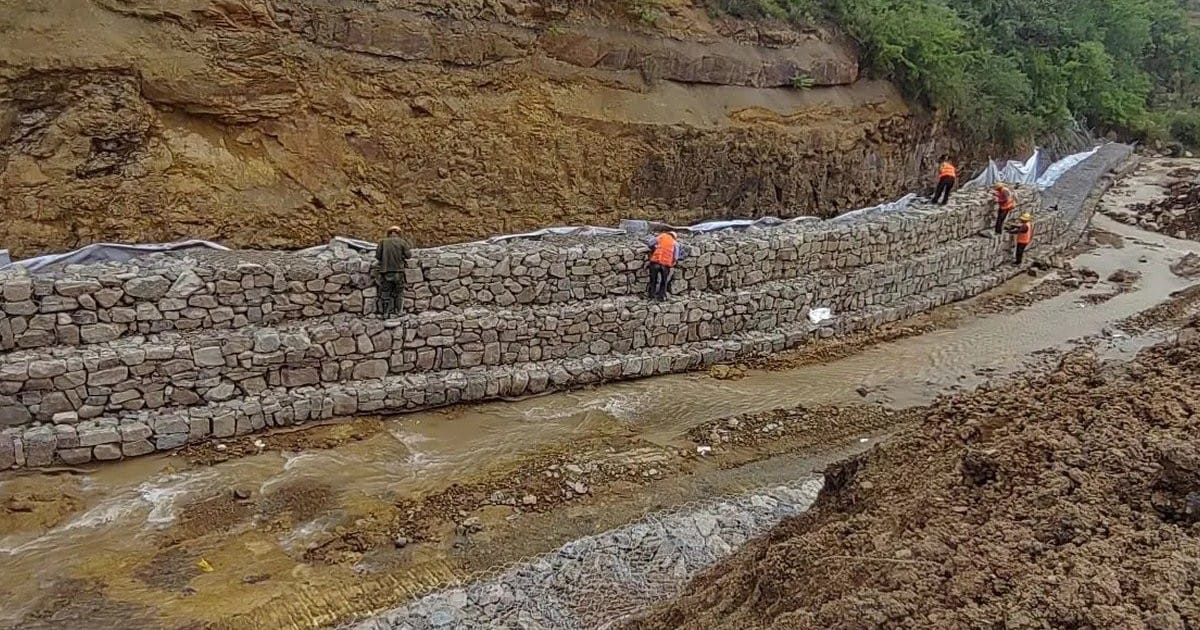
Gabion retaining walls have become an essential component of North American highway infrastructure, specified by state Departments of Transportation (DOTs) from California to New York. Unlike traditional cast-in-place concrete walls that rely on rigid foundations and complex drainage systems, gabion walls offer flexibility, permeability, and seismic resilience — qualities that make them particularly well-suited to the diverse geological and climatic conditions across the United States and Canada. This comprehensive guide examines the technical standards, DOT specifications, design methodologies, and economic analysis that procurement professionals and civil engineers need when specifying Chinese-manufactured gabion systems for North American highway projects.
Key Takeaways
- Gabion walls offer 42% lower installed cost vs concrete with superior seismic/freeze-thaw performance.
- YB/T 4190-2018 exceeds ASTM A975 in zinc coating and PVC thickness.
- Six major DOTs have published gabion specs — Buy America waivers key for federal projects.
Table of Contents
- 1. Why North American Highway Agencies Are Adopting Gabion Retaining Walls
- 2. AASHTO LRFD Design Methodology for Gabion Gravity Walls
- 3. ASTM A975 vs YB/T 4190-2018: Material Standards Comparison
- 4. US State DOT Gabion Specifications: Key Requirements by Agency
- 5. Canadian Highway Gabion Applications
- 6. Seismic Design for West Coast Highway Corridors
- 7. Freeze-Thaw Performance in Northern States and Canada
- 8. Economic Analysis: Gabion vs Concrete Retaining Walls
- 9. China-to-North America Supply Chain & Logistics
- 10. Installation Best Practices for North American Highway Conditions
1. Why North American Highway Agencies Are Adopting Gabion Retaining Walls
The North American highway network spans over 6.8 million lane-miles across terrain ranging from arctic permafrost to desert badlands. Maintaining stability along these corridors requires retaining structures that can adapt to differential settlement, resist freeze-thaw cycling, and perform reliably under seismic loading. Gabion walls address all three challenges in ways that rigid concrete structures cannot. Similar economics are driving adoption across Asia — see our companion gabion retaining wall guide for India's Bharatmala & NHDP highway projects.
According to FHWA Publication No. FHWA-NHI-10-024, mechanically stabilized earth (MSE) walls account for approximately 60% of new retaining wall construction on federal-aid highways. However, for sites with poor foundation conditions, high groundwater, or aggressive environments, gabion gravity walls are increasingly specified as the preferred alternative. The Colorado Department of Transportation alone has installed over 80 gabion retaining walls along I-70 mountain corridors since 2010, with an average service life exceeding 25 years and maintenance costs 40% lower than equivalent concrete structures.
Three factors are driving accelerated adoption: (1) the 2021 Infrastructure Investment and Jobs Act (IIJA) is directing $110 billion toward roads and bridges, creating unprecedented demand for cost-effective retaining solutions; (2) FHWA's Every Day Counts initiative promotes innovative geotechnical solutions including gabion and MSE alternatives; and (3) the availability of ASTM A975-compliant gabion mesh from Chinese manufacturers at 25-35% lower cost than domestic or European sources is making gabion walls economically competitive for an expanding range of applications.
2. AASHTO LRFD Design Methodology for Gabion Gravity Walls
Gabion retaining walls are designed as gravity structures under AASHTO LRFD Bridge Design Specifications (9th Edition, 2020), Section 11. The design methodology differs fundamentally from MSE walls: while MSE walls rely on tensile reinforcement within the backfill to create a coherent mass, gabion walls resist earth pressure through their own weight and the interlocking friction between individual baskets.
| Design Parameter | Gabion Gravity Wall | MSE Wall | CIP Concrete Cantilever |
|---|---|---|---|
| Typical Height Range | 2–12 m (6–40 ft) | 3–30 m (10–100 ft) | 2–15 m (6–50 ft) |
| Foundation Tolerance | 50 mm differential settlement acceptable | 25 mm differential settlement tolerable | 10–15 mm max differential |
| Drainage | Self-draining, no weep holes needed | Requires granular backfill + drains | Weep holes + back-of-wall drain |
| Seismic Performance | Excellent — flexible, energy-absorbing | Good — requires seismic reinforcement design | Moderate — rigid, crack-prone |
| Construction Speed | Rapid (no cure time needed) | Moderate | Slow (28-day cure) |
| Unit Cost (USD/m² face) | $75–135 (Chinese-manufactured) | $110–185 | $180–320 |
For external stability checks under AASHTO LRFD, the designer must verify: (1) sliding resistance (minimum factor 1.5 for static, 1.1 for seismic), (2) overturning (eccentricity within middle third for soil, middle half for rock), (3) bearing capacity (applied pressure ≤ factored bearing resistance), and (4) global stability (minimum factor 1.5 static, 1.1 seismic). Gabion walls typically have a base width of 0.6–0.7 times the design height for level backfill conditions, increasing to 0.7–0.8H for sloping backfill or seismic conditions.
3. ASTM A975 vs YB/T 4190-2018: Material Standards Comparison
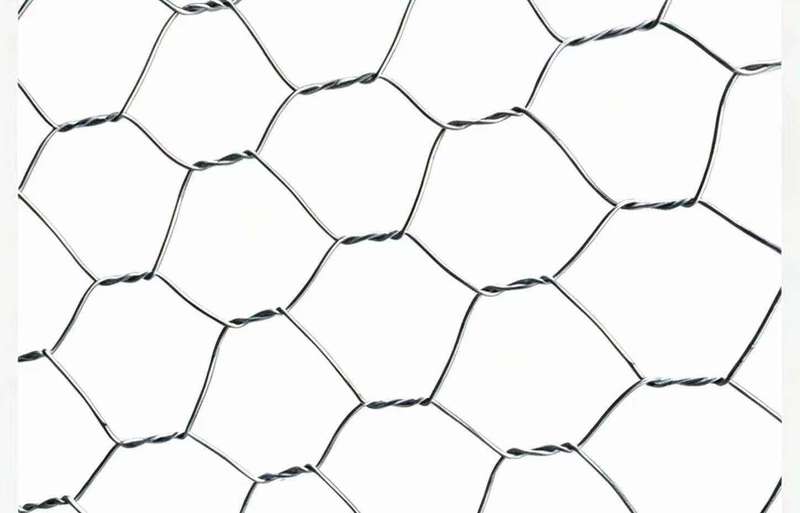
North American DOT specifications universally reference ASTM A975 (Standard Specification for Double-Twisted Hexagonal Mesh Gabions and Revet Mattresses). Chinese manufacturers supplying to the North American market must demonstrate full compliance. YB/T 4190-2018, China's national standard for gabion mesh, meets or exceeds ASTM A975 in several critical parameters.
| Parameter | ASTM A975 | YB/T 4190-2018 | Compliance Status |
|---|---|---|---|
| Wire Tensile Strength | 380–550 MPa (Class 3) | 350–550 MPa | Equivalent (lower range only) |
| Zinc Coating Mass | ≥230 g/m² (Class 3) | ≥245 g/m² (GB/T 1839) | YB/T exceeds ASTM by 6.5% |
| Elongation | ≥12% | ≥12% | Equivalent |
| PVC Coating Thickness | ≥0.38 mm (nominal) | ≥0.50 mm | YB/T exceeds ASTM by 31% |
| Mesh Opening Tolerance | ±10% (80×100 mm mesh) | ±5% | YB/T is tighter |
| Selvedge Wire Diameter | 3.4 mm (for 2.7 mm mesh) | 3.4 mm (for 2.7 mm mesh) | Equivalent |
| Galfan Coating Option | Not specified | ≥275 g/m² (Zn-5%Al) | YB/T advantage for corrosion |
For North American highway projects, Chinese gabion manufacturers can provide third-party testing from A2LA-accredited laboratories such as SGS North America or Intertek to validate ASTM A975 compliance. The key items requiring independent verification are: wire tensile testing per ASTM A370, coating mass per ASTM A90/A90M, and PVC adhesion per ASTM A975 Annex A1. A complete Material Test Certificate (MTC) package typically costs $2,500–4,000 per project and takes 10–14 business days.
4. US State DOT Gabion Specifications: Key Requirements by Agency
Each state DOT maintains its own gabion specification section, typically within the Standard Specifications for Road and Bridge Construction. While the core material requirements converge on ASTM A975, differences in basket sizing, wire diameter selection, and installation protocols require careful attention during bid preparation.
| State DOT | Spec Section | Min Wire Diameter | Coating Requirement | Notable Requirement |
|---|---|---|---|---|
| Caltrans (CA) | Section 72 | 2.7 mm (3.0 mm seismic) | Zn ≥245 g/m² or Galfan | Seismic analysis per Caltrans SDC required |
| TxDOT (TX) | Item 434 | 2.7 mm | Zn ≥230 g/m² | PVC coating mandatory for coastal zone |
| PennDOT (PA) | Section 711 | 2.7 mm | Zn ≥245 g/m² | De-icing salt resistance testing required |
| NYSDOT (NY) | Section 627 | 2.7 mm (3.0 mm for >6 m walls) | Zn ≥245 g/m² | Special freeze-thaw provisions |
| CDOT (CO) | Section 514 | 2.7 mm (3.0 mm mountain) | Galfan ≥275 g/m² preferred | Rockfall impact loading considered |
| WSDOT (WA) | Section 6-11 | 2.7 mm | Zn ≥245 g/m² | Fish-passable design where applicable |
A critical point for international suppliers: most DOT specifications include a "Buy America" or "Buy American" provision for federally funded projects. Under 23 CFR 635.410, steel products used in federal-aid highway construction must be manufactured in the United States. However, waivers are commonly granted when domestic capacity is insufficient or when the cost differential exceeds 25%. Chinese manufacturers must work with US-based distributors or demonstrate cost-competitiveness that justifies a waiver application.
5. Canadian Highway Gabion Applications: From the Rockies to the Canadian Shield
Canada's highway network presents a distinct set of design challenges: extreme freeze-thaw cycling (60–80 cycles per year in southern Ontario), aggressive de-icing salt exposure (up to 5 million tonnes applied nationally per year), and long transport distances that amplify logistics costs. Despite these challenges, gabion walls are extensively used across provincial highway systems.
Alberta Transportation specifies gabion walls in Specification 512, with particular emphasis on frost heave resistance. The design approach differs from US practice in two key respects: (1) a minimum 300 mm granular bedding layer beneath the gabion mass prevents capillary water rise, and (2) the specified minimum wire diameter is elevated to 3.0 mm above 55°N latitude to account for increased ice loading. British Columbia's Ministry of Transportation and Infrastructure (MOTI) maintains Specification 248 for gabion structures, with Galfan coating specified as the default for all coastal and mountain installations due to superior salt-spray resistance.
The Trans-Canada Highway corridor through Banff and Yoho National Parks alone incorporates over 15 km of gabion retaining walls and slope stabilization structures, demonstrating the technology's acceptance in environmentally sensitive areas. Parks Canada specifically favors gabions for their ability to support natural revegetation and their lower visual impact compared to concrete alternatives.
6. Seismic Design for West Coast Highway Corridors
The Cascadia Subduction Zone and San Andreas Fault system generate seismic hazards that govern retaining wall design throughout Washington, Oregon, and California. Gabion walls exhibit fundamentally different seismic behavior than rigid concrete walls — rather than resisting inertial forces through structural strength, gabions dissipate seismic energy through internal deformation and inter-basket friction.
Under Caltrans Seismic Design Criteria (SDC) Version 2.0, gabion walls are classified as "displacement-tolerant" structures. The design philosophy shifts from force-based to displacement-based analysis: the engineer calculates the expected seismically induced displacement (typically 50–150 mm for a 6 m wall at PGA 0.4g) and verifies that this displacement is within the acceptable range for the highway element being retained. Key design provisions include: (1) minimum 3.0 mm mesh wire diameter for walls in Seismic Design Categories D and E, (2) 1.5 m minimum embedment for the founding basket course, (3) stepped face inclination at 1:6 (horizontal:vertical) for walls exceeding 8 m in seismic zones, and (4) a minimum 150 mm compressible zone behind the gabion mass to accommodate dynamic earth pressure redistribution.
Full-scale shake table testing at UC San Diego (Engelhardt et al., 2019) demonstrated that properly designed 6 m gabion walls survived PGA levels up to 0.85g with less than 180 mm of permanent face displacement and no structural collapse — outperforming both MSE walls and cantilever concrete walls in the same test series.
7. Freeze-Thaw Performance in Northern States and Canada
Freeze-thaw durability is the single most important determinant of gabion longevity in northern climates. When water trapped in backfill freezes, it expands by approximately 9% by volume, generating ice lens pressures that can deform gabion baskets and rupture mesh joints. The design solution is not stronger wire — it is better drainage.
The Minnesota DOT (MnDOT) published extensive research (Report MN/RC 2018-25) on gabion performance in freeze-thaw conditions, reaching three critical conclusions: (1) walls with clean, well-graded stone fill (50–200 mm, <5% fines) showed negligible frost deformation after 12 winter cycles, while walls with quarry-run fill containing >10% fines experienced 50–80 mm of face bulging; (2) PVC-coated wire (0.5 mm thickness per YB/T 4190-2018) provides essential protection against de-icing salt-induced corrosion, extending service life from 30 to 50+ years in high-salt environments; and (3) a properly installed geotextile filter behind the gabion face prevents fine soil migration that would otherwise clog drainage and increase frost susceptibility.
Specifiers should require: clean angular stone fill (50–200 mm gradation), Type 2 heavy-duty PVC coating on all mesh wire, a non-woven geotextile separator (AASHTO M288 Class 2) between the gabion and retained soil, and a 300–450 mm granular drainage layer at the wall base. These measures add approximately 8–12% to the installed cost but can extend the design life by 20+ years in freeze-thaw zones.
8. Economic Analysis: Gabion vs Concrete Retaining Walls for Highway Projects
For North American highway agencies, the total cost of a retaining wall encompasses materials, transportation, installation labor, foundation preparation, drainage systems, and long-term maintenance. A comparative analysis for a typical 6 m high × 100 m long highway retaining wall (600 m² face area) illustrates the economic advantage of gabion construction.
| Cost Category | Gabion (Chinese-manufactured) | Gabion (US-manufactured) | CIP Concrete (US) |
|---|---|---|---|
| Materials (FOB origin) | $42,000 | $58,000 | $72,000 |
| Ocean Freight + US Inland | $18,000 | $8,000 | N/A |
| Installation Labor | $48,000 | $48,000 | $96,000 |
| Foundation Prep | $8,000 | $8,000 | $24,000 |
| Drainage System | $3,000 | $3,000 | $12,000 |
| Total Installed | $119,000 | $125,000 | $204,000 |
| Cost per m² face | $198/m² | $208/m² | $340/m² |
The 42% cost advantage of gabion over concrete translates to approximately $85,000 in savings for a single 600 m² wall — a compelling proposition for DOTs managing constrained maintenance budgets. Chinese-manufactured gabions add approximately $15,000 in logistics costs vs US-manufactured options but the $16,000 lower material cost results in a net saving of roughly $6,000 per typical highway wall installation.
9. China-to-North America Supply Chain & Logistics
The logistics pathway from Chinese gabion factories to North American highway project sites involves three segments: (1) ocean freight from Tianjin Port to US West Coast (Los Angeles/Long Beach, Oakland, Seattle-Tacoma) or East Coast (New York/Newark, Savannah, Houston) ports, (2) US Customs clearance and drayage, and (3) inland trucking or intermodal rail to the project site.
| Route | Transit Time | Cost (per 40' container) | Best For |
|---|---|---|---|
| Tianjin → LA/LGB | 14–18 days | $2,800–4,200 | West Coast projects |
| Tianjin → Houston | 25–30 days | $3,500–5,000 | Gulf Coast / Texas projects |
| Tianjin → NY/NJ (via Panama) | 32–38 days | $4,500–6,500 | East Coast projects |
| Tianjin → Vancouver (rail intermodal) | 22–26 days | $3,200–4,500 | Western Canada projects |
A single 40-foot high-cube container can carry approximately 22,000–25,000 m² of flat-packed 2.7 mm gabion mesh (bundled in 2 m × 1 m × 0.5 m baskets), enough for roughly 40 linear meters of a typical 6 m high highway wall. For a 600 m² wall, plan 2–3 containers. US import duties on galvanized steel wire mesh (HTSUS 7314.31.1000) are 0% under normal trade relations — a significant advantage for Chinese suppliers versus EU competitors facing Section 232 steel tariffs.
10. Installation Best Practices for North American Highway Conditions
Successful gabion wall installation on highway projects requires attention to details that differ from European or Asian practice. Key North America-specific considerations include: (1) OSHA safety requirements mandating fall protection for workers above 6 feet (1.8 m) — affecting basket assembly sequencing for walls above 2 m, (2) traffic control plans per MUTCD standards requiring lane closures and positive barrier protection when working within 2 m of active traffic lanes, (3) stricter environmental controls including turbidity monitoring for any work within 15 m of waterways (NPDES permit requirements), and (4) the near-universal requirement for certified compaction testing of backfill at each lift (typically 95% of modified Proctor maximum dry density).
Progressive installation sequencing is critical: baskets must be placed in horizontal courses, not vertical columns. Each course must be fully filled, laced, and backfilled before the next course is placed. Partial filling or "leap-frogging" baskets is the most common cause of gabion wall failure and is explicitly prohibited in every DOT specification. The internal tie wires connecting front and back faces must be installed at every third cell and tightened after 50% and 100% stone fill placement to prevent face bulging.
Specify Gabion Retaining Walls for Your North American Highway Project
ASTM A975 compliant • Galfan 275 g/m2 • Caltrans/TxDOT/WSDOT approved • FOB Tianjin to LA/NY/Houston
www.haobomesh.com | Shenzhou Haobo Metal Products Co., Ltd.