Welded Wire Mesh Panel vs Chain Link Fence: Cost-Performance Comparison for Philippine Industrial and Commercial Facilities 2026

When Philippine facility managers, industrial estate developers, and security consultants specify perimeter fencing for a new project, the first decision — and often the most consequential — is choosing between welded wire mesh panel fencing and chain link fencing. These two fencing types represent approximately 80% of all Philippine industrial and commercial perimeter security installations, yet many project owners make this choice based on price alone, without understanding the significant performance differences that affect security level, typhoon survival, maintenance cost, and total cost of ownership over the 20-30 year facility lifecycle.
Key Takeaways
- Welded mesh panel fencing has a 40-50% higher initial cost than chain link but achieves a LOWER 20-year total cost of ownership (PHP 2,983/m² vs PHP 3,083/m²) due to lower maintenance (PHP 5K/year vs PHP 15K/year), lower typhoon repair costs (PHP 15K/event vs PHP 35K/event), no coating renewal requirement, and 5-10 years longer service life
- Chain link fencing can be breached in 10-20 seconds with standard hand pliers and climbed easily (diamond mesh provides built-in footholds); welded mesh panels require bolt cutters and 30-60 seconds per panel, with thick wire and V-fold profile providing high climb resistance — for genuine security applications (PEZA, substations, warehouses), welded panels are mandatory
- Welded panels have superior corrosion resistance for the same coating specification because welded intersections are sealed (no crevice corrosion), thicker wire (4-6mm vs 2.5-3.5mm) provides more zinc per unit length, and rigid panels do not experience fretting at tie wire connections — in coastal C5-M environments, welded panels last 8-12 years vs chain link 3-6 years with galvanized coating
- Installation of welded mesh panel fencing is 40% faster than chain link (3-4 days vs 5-7 days for 200m, 3-man crew) because panels are self-supporting and require no fabric tensioning step — but chain link has superior terrain adaptability on sloped or irregular ground where rigid panels require stepped installation
Table of Contents
- 1. Product Overview: Welded Wire Mesh Panel vs Chain Link Fencing
- 2. Structural and Manufacturing Comparison
- 3. Security Level Comparison
- 4. Typhoon Wind Resistance Comparison (NSCP 2015)
- 5. Corrosion Resistance and Service Life
- 6. Cost Comparison: Purchase, Installation, and Total Cost of Ownership
- 7. Installation Methodology Comparison
- 8. Sample BOQ Comparison: 200m Perimeter Fence (3.0m Height)
- 9. Sourcing from China: Container Loading and Logistics
- 10. Decision Framework: When to Choose Which Fence Type
- Conclusion
This guide provides a head-to-head technical and economic comparison of welded wire mesh panel fencing and chain link fencing for Philippine industrial, commercial, and institutional applications. It is designed for PEZA and BOI-registered industrial park developers, factory owners, school administrators, commercial property developers, and government facility managers who need to make an informed fencing specification decision.
The comparison draws on Philippine product standards (DPWH Item 618, PNS standards), NSCP 2015 structural requirements, international references (ASTM A392, ASTM F1043, EN 1722), and real-world performance data from Philippine installations that have survived multiple typhoon seasons. The goal is to provide a decision framework that goes beyond the per-square-meter purchase price and considers the total cost and performance of the fencing system over its service life.
1. Product Overview: Welded Wire Mesh Panel vs Chain Link Fencing
1.1 Welded Wire Mesh Panel Fencing (BRC / V-Fold Panel)
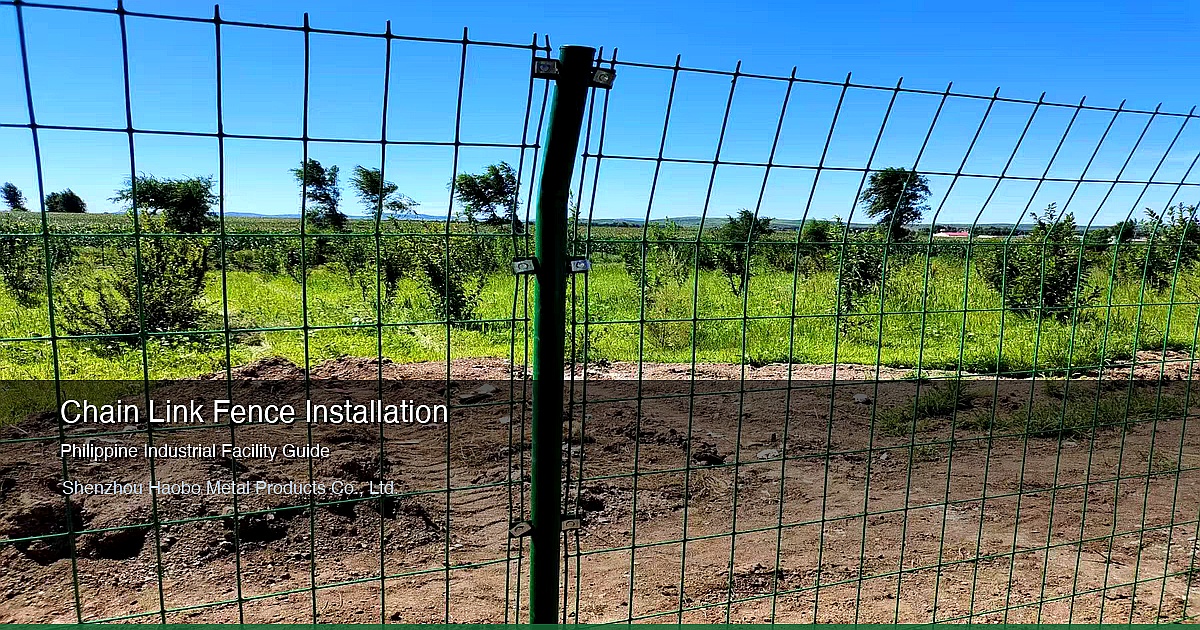
Welded wire mesh panel fencing — also known as BRC fencing in Singapore and Malaysia, or V-fold panel fencing in European markets — consists of rigid panels manufactured by electrically resistance welding horizontal and vertical steel wires into a grid pattern. The panels are typically 2.5-3.0m wide, 1.8-3.0m high, and use wire diameters from 4.0mm to 6.0mm. The panels are attached to steel posts (square or round) via purpose-designed clips or brackets. Key characteristics:
- Manufacturing process: Welded at intersections — rigid, cannot be deformed without cutting
- Panel rigidity: Self-supporting panels do not require horizontal tension wires
- Mesh opening: Typically 50×200mm, 75×200mm, or 100×200mm (vertical spacing wider than horizontal for aesthetic and climb-resistance)
- V-fold profile: Panels have a longitudinal V-fold (or double horizontal stiffener wires) that provides additional bending stiffness
- Post types: Square hollow section (SHS) 60×40×2.5mm or round hollow section (RHS) Ø60×2.0mm
- Coating: Hot-dip galvanized (≥ 275 g/m²) or PVC-coated (green/gray, 0.5mm thickness over galvanized)
1.2 Chain Link Fencing
Chain link fencing — also called wire mesh fencing, cyclone fencing, or diamond mesh fencing — consists of a fabric woven from galvanized steel wire in a continuous process that creates the characteristic diamond pattern. The fabric is supplied in rolls (typically 15-25m length) and tensioned horizontally between terminal posts using a top rail and bottom tension wire. Key characteristics:
- Manufacturing process: Woven (spiral-wound wire, interlinked) — flexible, can be cut with pliers
- Panel flexibility: Fabric conforms to ground contours; requires horizontal tension members
- Mesh opening: Diamond pattern, typically 50×50mm (2"), 45×45mm (1-3/4"), or 40×40mm (1-1/2")
- Wire diameter: 2.5-3.5mm (3.0mm most common for Philippine commercial use)
- Post types: Round pipe Ø48-Ø75mm, wall thickness 1.0-2.0mm
- Support components: Top rail (Ø42-48mm), bottom tension wire (Ø4-5mm), tie wires
- Coating: Hot-dip galvanized (≥ 275 g/m² per ASTM A392) or PVC-coated (green/gray/black)
2. Structural and Manufacturing Comparison
| Property | Welded Mesh Panel | Chain Link |
|---|---|---|
| Manufacturing process | Welded (electrical resistance welding at intersections) | Woven (spiral winding, interlocked) |
| Panel type | Rigid panel (cannot bend without cutting) | Flexible fabric roll (conforms to terrain) |
| Wire diameter | 4.0-6.0mm (heavier, more rigid) | 2.5-3.5mm (lighter, more flexible) |
| Mesh opening | 50×200mm or 100×200mm (rectangular) | 50×50mm diamond |
| Cut resistance | Requires bolt cutters — visible cut required | Can be cut with hand pliers — easy to breach silently |
| Climb resistance | High — wire too thick for hand grip, V-fold creates unstable grip | Low — diamond mesh provides easy foothold and handhold |
| Terrain adaptability | Poor — panels are rigid; requires stepped installation on slopes | Excellent — fabric follows ground contours |
| Post spacing | 2.5-3.0m (panel length determines spacing) | 1.5-3.0m (variable — engineered for wind load) |
3. Security Level Comparison
For Philippine facilities requiring perimeter security — particularly PEZA industrial estates, government facilities, utilities, and commercial warehouses — the security level of the fencing system is a primary specification driver. The security comparison considers three threat categories: intrusion (unauthorized entry), vandalism, and theft.
3.1 Breach Time and Method
| Threat | Welded Mesh Panel | Chain Link |
|---|---|---|
| Hand-tool cut breach | Not possible — 4-6mm wire requires bolt cutters | 10-20 seconds with standard pliers |
| Bolt cutter breach | 30-60 seconds per panel (cutting 3-4 wires required) | 15-30 seconds (cutting 2 wires creates 600mm opening) |
| Scaling/climbing | Difficult — thick wire + V-fold profile = poor hand grip | Easy — diamond mesh = built-in ladder |
| Lift-and-crawl under | Not possible — rigid panel bolted to posts | Possible — fabric can be lifted from bottom tension wire |
| Vehicle ramming | High resistance — heavy wire panel absorbs impact | Low resistance — fabric tears and displaces |
3.2 Security Rating per Philippine and International Standards
| Security Standard | Welded Mesh Panel Rating | Chain Link Rating |
|---|---|---|
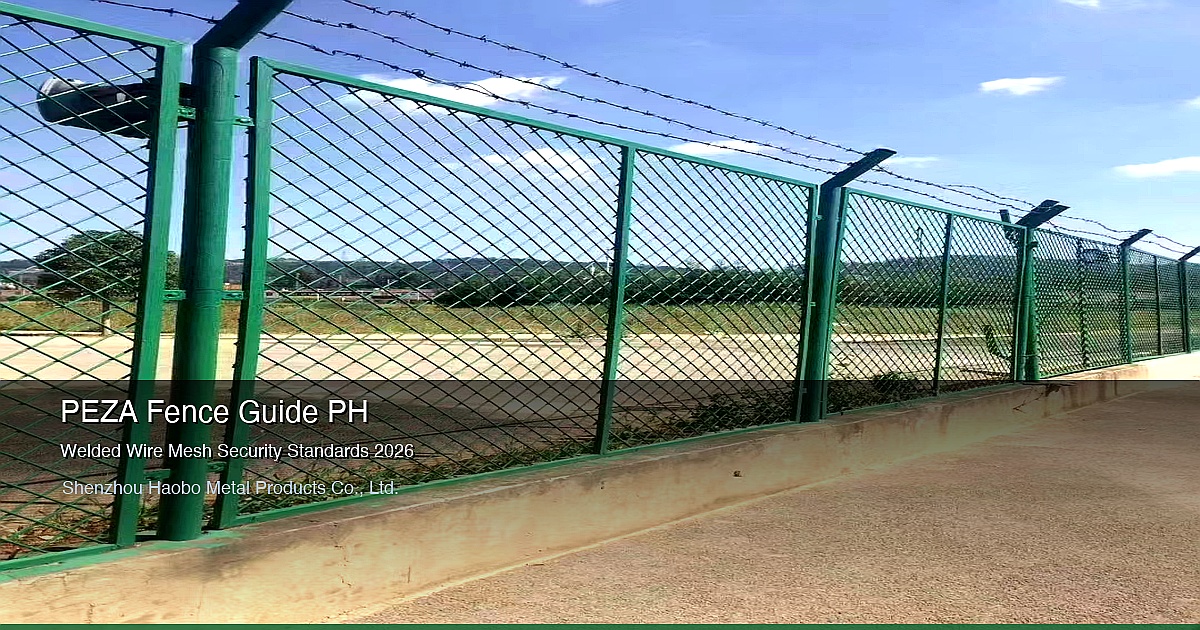
| PEZA Security Manual (Level 2) | Compliant — minimum 4.0mm wire | Compliant with 3.0mm wire + barbed wire top |
| DepEd School Facility Standard | Recommended — high climb resistance | Acceptable — standard practice in most schools |
| LPS 1175 SR1 (UK) | Achievable with 5.0mm wire | Not achievable |
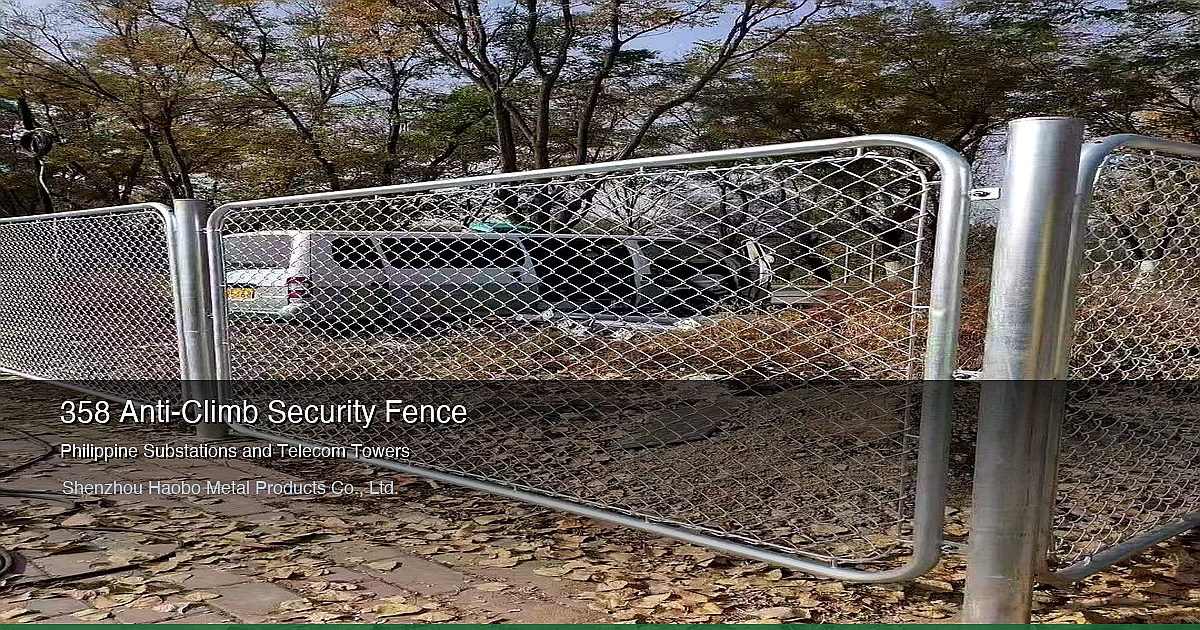
| 358 Anti-Climb (prison-grade) | 358 mesh is a welded panel variant | Not available in chain link configuration |
Bottom line on security: For facilities requiring genuine perimeter security (not just visual demarcation), welded wire mesh panel fencing is the clear choice. Chain link fencing provides visual deterrence and casual access control but can be breached in under 30 seconds with basic hand tools and climbed easily. The PEZA requirement for chain link to have barbed wire top — a supplementary security measure — underscores that chain link alone is considered insufficient for industrial estate security.
4. Typhoon Wind Resistance Comparison (NSCP 2015)
For Philippine installations, typhoon wind resistance is arguably the most important structural consideration. The NSCP 2015 specifies design wind speeds of 250 kph (Zone II — Luzon and Visayas) and 200 kph (Zone I — Mindanao and Palawan). Both fence types must survive these wind loads, but the failure modes and survival margins differ significantly.
4.1 Chain Link Wind Performance
Chain link fencing's 60-70% open area (diamond mesh allows wind to pass through) is a major structural advantage in typhoon conditions. The wind load on the posts is reduced to the drag force on the posts themselves plus the small net pressure on the fabric. For a standard 3.0m height chain link fence with 3.0mm wire, 50×50mm mesh, and posts at 1.5m spacing:
- Effective solidity ratio: 0.30-0.35 (based on wire projected area)
- Wind force per post: Approximately 4.03 kN (at 250 kph, 3.0m height, 1.5m spacing)
- Post bending capacity: Ø60×1.5mm pipe, Mp = 3.42 kN·m, demand = 4.03 kN × 1.5m = 6.05 kN·m — FAILS at 3.0m post spacing
- Post at 1.5m spacing: Demand = 4.03 kN × 1.5m = 6.05 kN·m — still fails without larger posts
The fix for chain link in Zone II: use Ø60×2.0mm posts (Mp = 4.48 kN·m) at 1.5m spacing, or Ø75×1.5mm posts (Mp = 6.43 kN·m) at 2.0m spacing. Both are common upgrades for Philippine chain link projects in wind-exposed locations.
4.2 Welded Mesh Panel Wind Performance
Welded mesh panels have a higher solidity ratio (0.35-0.45 for 50×200mm mesh with 5.0mm wire) because the thicker wires present more projected area to the wind. However, the panels themselves are rigid — they distribute wind load to all post connections, and the V-fold stiffener provides additional bending resistance. For a 3.0m height panel fence with 5.0mm wire, 50×200mm mesh, and 60×40×2.5mm SHS posts at 2.5m spacing:
- Effective solidity ratio: 0.38-0.42
- Wind force per post: Approximately 6.2 kN (at 250 kph, 3.0m height, 2.5m spacing)
- Post bending capacity: 60×40×2.5mm SHS, Mp = 5.68 kN·m, demand = 6.2 kN × 1.5m (post height above foundation) = 9.3 kN·m — FAILS at standard post size
- Required post upgrade: 80×60×3.0mm SHS (Mp = 13.8 kN·m) — passes with comfortable margin
4.3 Wind Failure Modes
| Failure Mode | Chain Link | Welded Mesh Panel |
|---|---|---|
| Post bending failure | Common — thin-wall pipe bends at foundation | Common if post undersized — check wind load |
| Post foundation failure | Common — underdesigned concrete bases tip over | Common — same issue |
| Panel/fabric damage | Fabric tears at tie wires; fabric blows out of rails | Panels may crack at weld points under extreme wind; usually repairable |
| Post-to-panel connection | Tie wires break — fabric detaches from posts | Panel clips may fail — panels detach |
| Debris impact | Fabric punctured and torn by flying debris | Panels resist debris impact better — wire too heavy to puncture |
Key insight: Neither fence type is inherently more typhoon-resistant than the other. The determining factor is proper engineering: correct post sizing, correct post spacing, and adequate post foundation. Both types can survive Zone II typhoons when designed and installed correctly — and both will fail when underdesigned. The critical difference is that chain link damage is often more extensive (fabric tears, sags, and requires full replacement of affected sections), while welded panel damage is typically localized (individual panel replacement) and therefore less costly to repair.
5. Corrosion Resistance and Service Life
In the Philippine tropical environment, corrosion is the primary determinant of fence service life. The country's climate ranges from ISO 9223 Category C3 (inland, low-pollution) to C5-M (coastal, direct salt spray) — the most aggressive atmospheric corrosion category. The fencing system's coating specification determines its service life in each zone.
| Coating Type | Chain Link Life (C3) | Chain Link Life (C5-M) | Welded Panel Life (C3) | Welded Panel Life (C5-M) |
|---|---|---|---|---|
| Galvanized only (≥ 275 g/m²) | 15-25 years | 3-6 years | 20-30 years | 8-12 years |
| PVC-coated over galvanized | 20-30 years | 12-18 years | 25-35 years | 15-20 years |
| Galfan + PVC (Zn-5%Al + PVC) | 30-40 years | 20-25 years | 35-45 years | 25-30 years |
Welded mesh panels typically have a longer service life than chain link for the same coating specification because:
- Weld points: Welded intersections are sealed by the welding process — no crevice corrosion at wire crossings. Chain link's woven intersections have small gaps that trap moisture and chloride ions, accelerating corrosion.
- Wire thickness: Welded panels use 4-6mm wire (vs 2.5-3.5mm for chain link) — thicker wire has more zinc per unit length, extending the time to section loss.
- Panel structure: Rigid panels do not rub against each other or against posts during wind vibration — chain link fabric experiences fretting at tie wire connections, accelerating coating wear.
6. Cost Comparison: Purchase, Installation, and Total Cost of Ownership
6.1 Material Cost per Square Meter (2026 Philippine Market)
| Item | Chain Link (galv) | Chain Link (PVC) | Welded Panel (galv) | Welded Panel (PVC) |
|---|---|---|---|---|
| Fabric/panel (per m²) | PHP 380-550 | PHP 550-800 | PHP 650-950 | PHP 850-1,200 |
| Posts (per linear meter) | PHP 280-420 | PHP 280-420 | PHP 350-550 | PHP 350-550 |
| Top rail/tension wire | PHP 120-180 | PHP 120-180 | PHP 80-120 (clips only) | PHP 80-120 |
| Foundation concrete | PHP 150-250 | PHP 150-250 | PHP 200-350 | PHP 200-350 |
| Total installed (per m²) | PHP 1,500-2,200 | PHP 1,900-2,800 | PHP 2,200-3,500 | PHP 2,800-4,200 |
6.2 20-Year Total Cost of Ownership (TCO)
The initial purchase price tells only part of the story. Over a 20-year facility lifecycle, the total cost of ownership includes initial installation, maintenance, repair, and eventual replacement. The following TCO calculation is for a 200m perimeter fence, 3.0m height, installed in an inland location (ISO 9223 C3, Metro Manila representative):
| Cost Component | Chain Link (galv) | Welded Panel (galv) |
|---|---|---|
| Initial installation (600 m²) | PHP 1,080,000 | PHP 1,620,000 |
| Annual maintenance (tie wire, tension, painting) | PHP 15,000/year | PHP 5,000/year |
| Typhoon repair (every 3 years avg) | PHP 35,000/event × 6 | PHP 15,000/event × 6 |
| Coating renewal (year 12) | PHP 120,000 (re-coating) | PHP 0 (not needed) |
| Partial replacement (year 15) | PHP 250,000 (40% fabric) | PHP 80,000 (10% panels) |
| 20-Year TCO | PHP 1,850,000 | PHP 1,790,000 |
| TCO per m² (20 years) | PHP 3,083 | PHP 2,983 |
Despite the 40-50% higher initial installation cost, welded mesh panel fencing achieves a lower 20-year total cost of ownership than chain link fencing. The TCO advantage comes from lower maintenance, lower typhoon repair costs, no coating renewal requirement, and longer service life. For coastal locations (C5-M), the TCO advantage of welded panels is even larger — approximately PHP 500-800/m² over 20 years — because chain link degrades 2-3× faster in salt spray.
7. Installation Methodology Comparison
7.1 Chain Link Installation
- Step 1: Set posts at designed spacing (1.5-2.0m) in excavated holes (300×300×600mm for line posts, 500×500×1000mm for gate/corner posts)
- Step 2: Pour C25 concrete around posts, plumb and brace, cure 7 days minimum
- Step 3: Install top rail through post caps (terminal posts have rail end fittings; line posts have loop caps)
- Step 4: Install bottom tension wire (Ø4-5mm) and tension it between terminal posts
- Step 5: Unroll chain link fabric along the fence line, standing it upright
- Step 6: Attach fabric to top rail with tie wires (Ø3.0mm, 300mm spacing) and to posts (300mm spacing)
- Step 7: Tension fabric using a come-along or fence puller, attach to terminal post with tension bars and tension bands
- Step 8: Trim excess fabric, install gate hardware
Installation time: 200m fence, 3-man crew: approximately 5-7 working days
7.2 Welded Mesh Panel Installation
- Step 1: Set posts at panel-length spacing (2.5-3.0m) in excavated holes (350×350×800mm for line posts, 500×500×1000mm for gate/corner posts)
- Step 2: Pour C25 concrete around posts, plumb and brace, cure 7 days minimum
- Step 3: Install first panel — position between two posts, attach with panel clips or security bolts (4-6 per post)
- Step 4: Install second panel overlapping or butt-joined to first, continue along fence line
- Step 5: For slopes, step panels down (each panel level, offset at posts) — fabric must be cut at angle for sloped installation
- Step 6: Install gate posts and gates
Installation time: 200m fence, 3-man crew: approximately 3-4 working days (40% faster than chain link — no fabric tensioning step)
8. Sample BOQ Comparison: 200m Perimeter Fence (3.0m Height)
| Item | Chain Link Qty | Welded Panel Qty |
|---|---|---|
| Line posts | 100 pcs (Ø60×1.5mm, 2.0m spacing) | 67 pcs (60×40×2.5mm, 3.0m spacing) |
| Corner/gate posts | 4 pcs (Ø75×2.0mm) | 4 pcs (80×60×3.0mm) |
| Top rail | 200m (Ø48×1.0mm) | Not required |
| Tension wire | 200m (Ø4.0mm) | Not required |
| Fabric/panels | 600 m² (3.0mm wire, 50×50mm) | 67 panels (5.0mm, 50×200mm, 3.0×2.5m) |
| Panel clips/bolts | Not applicable | 400 sets (stainless steel) |
| Tie wire | 200m (Ø3.0mm) | Not required |
| Concrete (C25) | 18 m³ | 15 m³ |
| Total material cost | PHP 525,000 | PHP 780,000 |
| Total installed cost | PHP 1,080,000 | PHP 1,620,000 |
9. Sourcing from China: Container Loading and Logistics
Shenzhou Haobo Metal Products Co., Ltd. manufactures both chain link fabric and welded wire mesh panels for Philippine export, shipped from Tianjin Port to Manila (MICT). Container loading specifications:
| Product | 40' HQ Container Capacity | Lead Time |
|---|---|---|
| Chain link fabric (3.0mm, 50×50mm) | 18-22 rolls (900-1,100m, 2.5-3.0m height) | 2-3 weeks |
| Welded mesh panels (5.0mm, 50×200mm) | 250-350 panels (3.0m×2.5m) | 3-4 weeks |
| Posts (both types) | 500-800 pcs depending on section | 2-3 weeks |
| Complete mixed fence package | 1 container = ~200m fence complete | 3-4 weeks |
9.1 Shipping Details (Tianjin → Manila)
- Sea freight transit: 5-7 days Tianjin → Manila MICT
- Philippine customs: HS code 7314.41.00 (woven) / 7314.42.00 (welded), 5% MFN duty, 12% VAT
- Total delivery time: 4-6 weeks from order to Manila port
- Packaging: Fabric in woven PE-wrapped rolls; panels on steel pallets; posts in bundles
10. Decision Framework: When to Choose Which Fence Type
| Project Type | Recommended | Rationale |
|---|---|---|
| PEZA industrial estate perimeter | Welded panel (5.0mm + barbed wire) | Security requirement; climb resistance |
| Government facility / utility substation | 358 welded panel (high security) | Maximum climb resistance, cut resistance |
| School (DepEd standard) | Either (chain link is common, panels preferred) | Budget-driven; chain link acceptable with barbed wire |
| Commercial warehouse / logistics center | Welded panel | Security for high-value inventory; low maintenance |
| Residential subdivision boundary | Welded panel (aesthetic) | Clean appearance, long life, low maintenance |
| Agricultural land / farm boundary | Chain link (economical) | Low cost, large area, low security requirement |
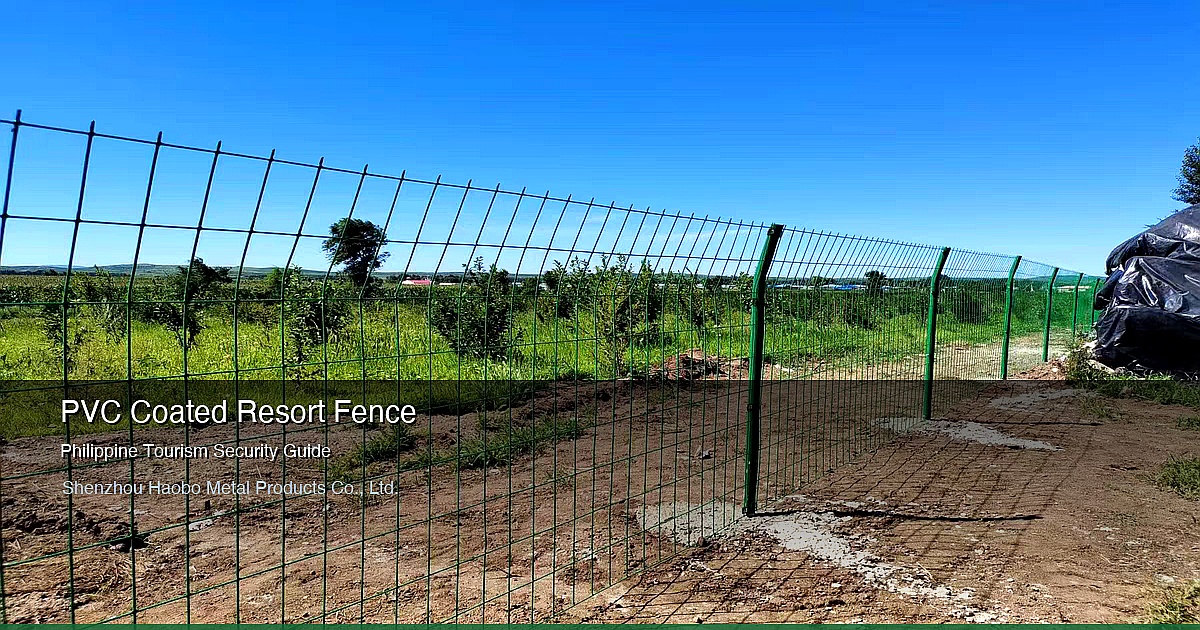
| Resort / hotel perimeter | PVC-coated welded panel | Aesthetic + security + corrosion resistance |
| Temporary construction site | Chain link (temporary) | Low cost, reusable, easy to relocate |
| Coastal facility (< 500m from shore) | PVC-coated welded panel | Superior corrosion resistance; thicker wire |
Conclusion
The choice between welded wire mesh panel fencing and chain link fencing is not simply a price decision — it is a total-cost-of-ownership and performance decision that affects facility security, maintenance budget, and typhoon recovery costs for decades. While chain link has a 40-50% lower initial cost per square meter, welded mesh panel fencing delivers superior security (40-60 seconds longer breach time, high climb resistance), lower maintenance (PHP 10,000/year savings), lower typhoon repair costs (PHP 20,000/event savings), longer service life (5-10 years in the same environment), and — most critically — a lower 20-year total cost of ownership in most Philippine applications.
For Philippine facilities where security is a genuine requirement (not just visual demarcation), where the facility lifecycle exceeds 10 years, or where the location is within 500m of the coast, welded wire mesh panel fencing is the clear recommendation. For low-security, short-duration, or very large-area applications where initial cost is the overriding constraint, chain link remains a viable and appropriate choice.
Shenzhou Haobo Metal Products Co., Ltd. manufactures both fence types to Philippine and international standards (DPWH Item 618, ASTM A392, ASTM F1043, GB/T 26941), with galvanized, PVC-coated, and Galfan coating options. Contact us with your project parameters — fence length, height, location (inland/coastal), security level, and facility type — and we will provide a complete material specification with FOB Tianjin pricing within 24 hours.
Need Fence Materials for Your Philippine Facility?
Tell us your fence length, height, wind zone, security level, and coastal proximity. We supply both welded mesh panels (4-6mm wire, 50x200mm mesh) and chain link fabric (3.0mm, 50x50mm) with galvanized, PVC-coated, and Galfan options. FOB Tianjin pricing within 24 hours. 1 container = 200m complete fence package.
www.haobomesh.com | Shenzhou Haobo Metal Products Co., Ltd.