358 Anti-Climb Security Fence for Philippine Substations and Telecom Towers: MERALCO and NGCP Compliance Guide 2026
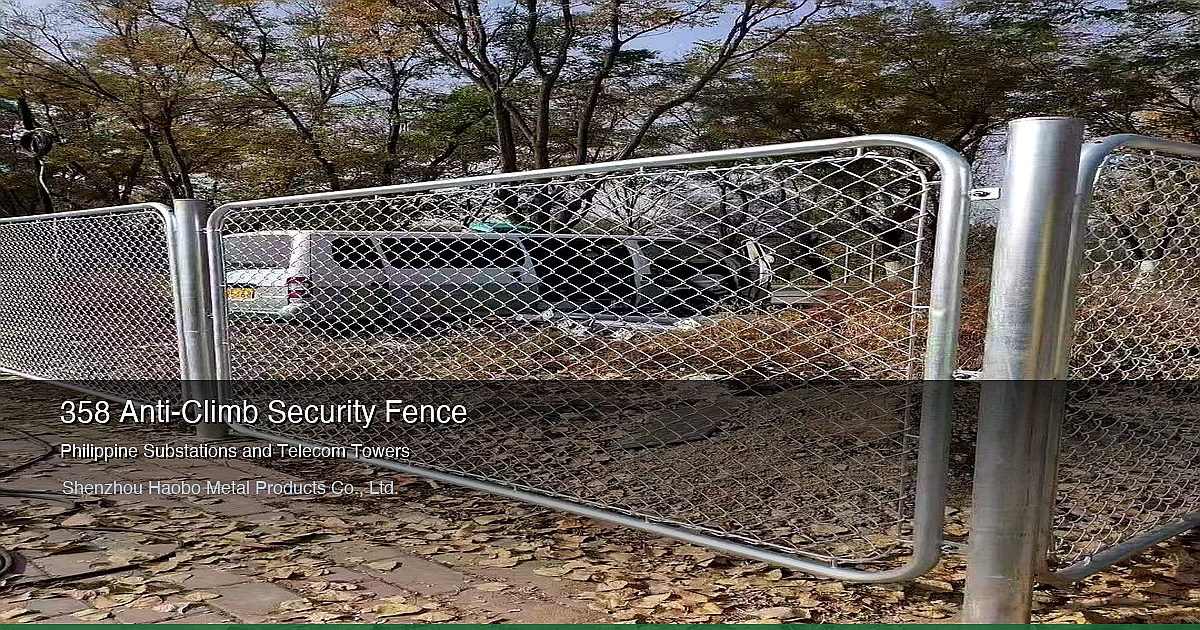
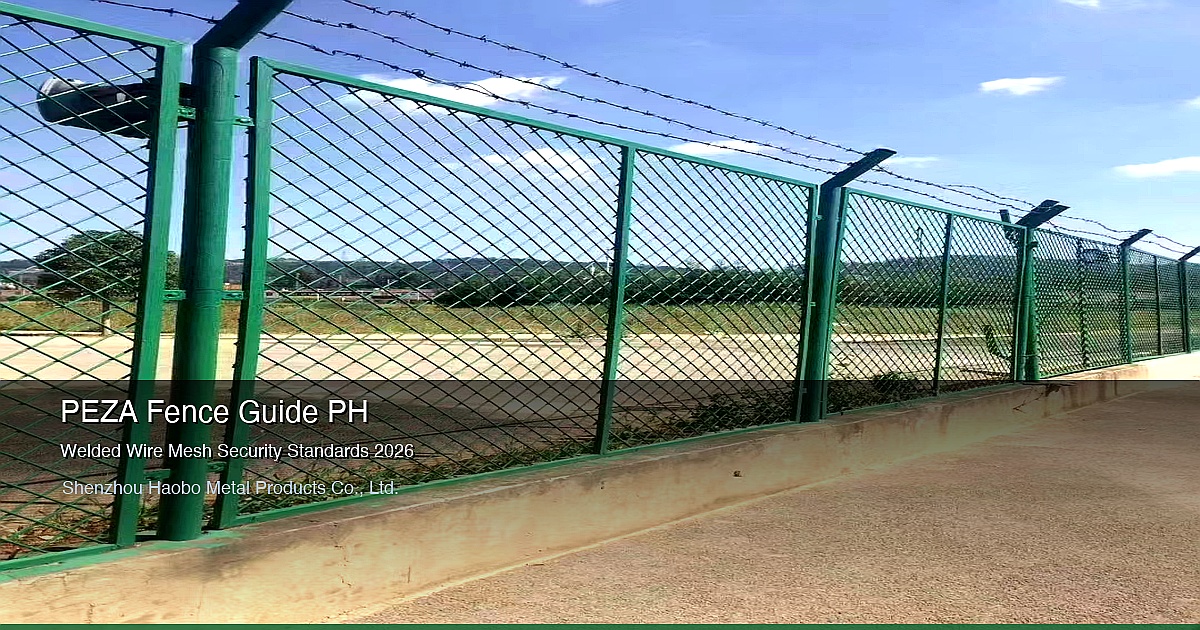
Security fencing around critical infrastructure in the Philippines is not a matter of preference — it is a regulatory mandate. MERALCO (Manila Electric Company) requires anti-climb perimeter fencing for all distribution substations. NGCP (National Grid Corporation of the Philippines) mandates even stricter specifications for transmission substations above 69kV. The National Telecommunications Commission (NTC) requires perimeter security for all telecom tower sites. PEZA (Philippine Economic Zone Authority) requires 358 mesh fencing for industrial park perimeters.
Key Takeaways
- 358 mesh (3in x 0.5in openings, 8 gauge / 4mm wire) is the Philippine utility standard for substation and telecom tower perimeter security
- MERALCO requires minimum 2.4m fence height with 358 mesh for distribution substations; NGCP requires 3.0m for transmission substations above 69kV
- Hot-dip galvanizing per ASTM A123 (minimum 70 microns zinc) provides 25+ years corrosion resistance in tropical coastal environments
- Typhoon-resistant installation: posts at 2.5m spacing with 60x60x2mm steel posts, embedded 600mm in concrete — withstands 250 kph wind loads
- Total installed cost: PHP 2,800-4,200 per linear meter including posts, mesh panels, foundations, gates, and installation labor
Table of Contents
- 1. 358 Mesh Geometry and Wire Specifications
- 2. MERALCO Substation Fencing Requirements
- 3. NGCP Transmission Substation Requirements
- 4. Telecom Tower Site Fencing Requirements
- 5. Typhoon-Resistant Installation Design
- 6. Corrosion Protection for Philippine Tropical Climate
- 7. Installation Guide and Quality Control
- 8. Cost Estimation and BOQ Template
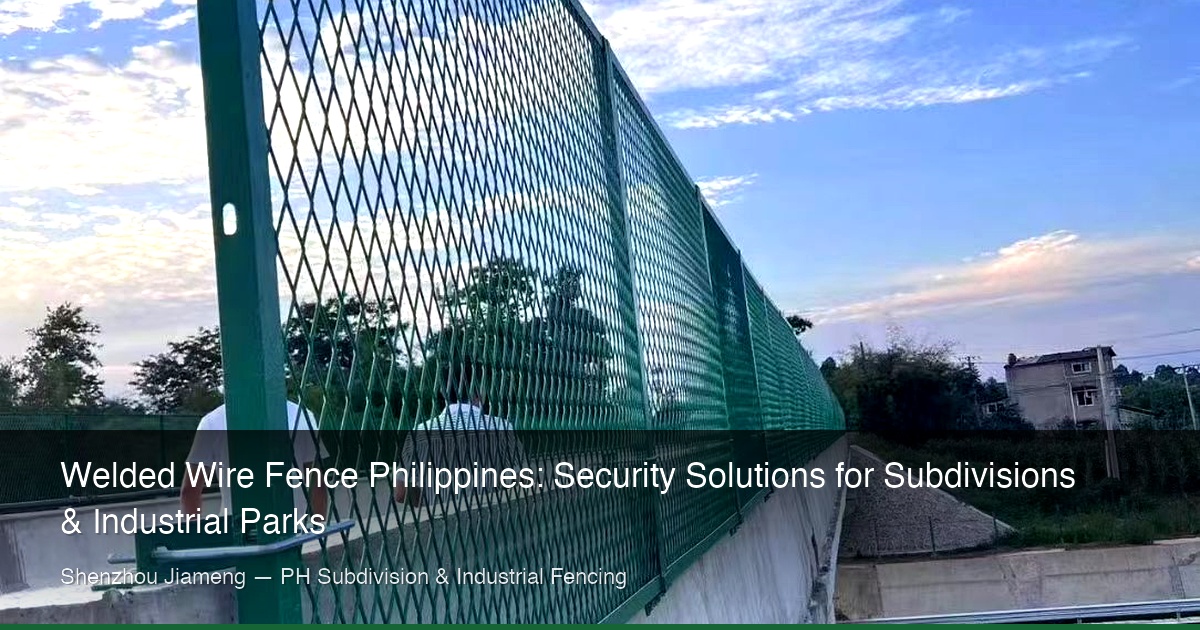
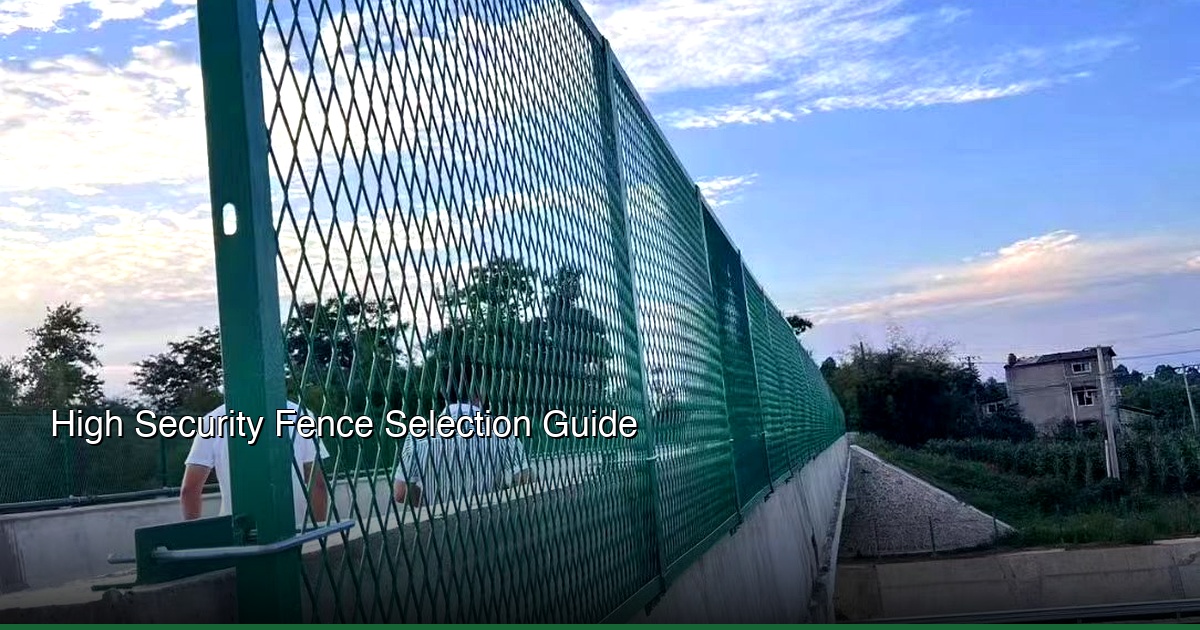
The fencing specification that satisfies all of these requirements is 358 anti-climb welded wire mesh. With its 3-inch by 0.5-inch openings and 8-gauge (4.0mm) wire, 358 mesh is virtually impossible to climb, difficult to cut with hand tools, and provides excellent visibility for CCTV surveillance systems. When manufactured with hot-dip galvanized steel and properly installed to withstand Philippine typhoon conditions, a 358 fence provides 25-30 years of maintenance-free perimeter security.
This guide provides Philippine electrical utilities, telecom companies, and infrastructure contractors with a complete technical reference for 358 anti-climb security fencing — from mesh specifications through MERALCO and NGCP compliance, typhoon-resistant installation design, corrosion protection, and cost estimation. All recommendations align with MERALCO ES-2020-015, NGCP TS-2019-078, and ASTM A123 / ASTM A1064 standards.
1. 358 Mesh Geometry and Wire Specifications
The designation "358" encodes the three key dimensions of the mesh: 3 inches (76.2mm) horizontal spacing, 0.5 inch (12.7mm) vertical spacing, and 8 gauge (4.0mm) wire diameter. This geometry is internationally recognized as the standard for high-security perimeter fencing and is specified by correctional facilities, military installations, airports, and electrical utilities worldwide.
| Parameter | 358 Mesh Specification | Security Rationale |
|---|---|---|
| Horizontal opening | 76.2 mm (3.0 in) | Too narrow for adult head; allows CCTV visibility through mesh |
| Vertical opening | 12.7 mm (0.5 in) | Impossible to insert fingers or toes for climbing |
| Wire diameter | 4.0 mm (8 gauge) | Cannot be cut with standard hand bolt cutters up to 24in |
| Wire tensile strength | 550-850 MPa | High-strength low-alloy steel per ASTM A1064 |
| Weld joint strength | Min 75% of wire tensile | Resistance-welded at every intersection |
| Panel width | 2.5 m (standard) | Matches 2.5m post spacing for optimal wind resistance |
| Panel height options | 1.8 / 2.0 / 2.4 / 3.0 m | 2.4m for MERALCO; 3.0m for NGCP |
| Zinc coating | 70+ microns (ASTM A123) | 25-30 year corrosion resistance in tropical climate |
| PVC coating (optional) | 0.5-0.8mm, green RAL 6005 | Additional 10-15 years life for coastal sites |
The narrow vertical opening is the defining feature that makes 358 mesh truly "anti-climb." Unlike chain-link fence, where the diamond-shaped openings can be used as toe-holds for climbing, the 12.7mm vertical spacing in 358 mesh is too narrow for even a child's fingers or toes. Attempting to climb the fence by gripping the horizontal wires is equally futile — the 4mm wire is too smooth and too thick to maintain a grip, and the 76.2mm horizontal spacing does not provide adequate reach for sequential hand placement.
2. MERALCO Substation Fencing Requirements
MERALCO, the largest electric distribution utility in the Philippines serving over 7 million customers in Metro Manila and surrounding provinces, maintains approximately 200 distribution substations ranging from 13.8kV to 115kV. All MERALCO substations must comply with the utility's internal perimeter security standard, which references the National Electrical Safety Code (NESC) and Philippine Electrical Code (PEC) Part 1.
| MERALCO Requirement | Specification | Reference Standard |
|---|---|---|
| Minimum fence height | 2.4 m (8 ft) | MERALCO ES-2020-015, NESC 110A |
| Mesh type | 358 anti-climb welded wire | MERALCO ES-2020-015 Section 3.2 |
| Wire diameter | 4.0 mm (8 gauge) minimum | ASTM A1064 |
| Corrosion protection | Hot-dip galvanized, 70+ microns zinc | ASTM A123, ASTM A153 |
| Ground clearance | Max 50 mm gap to ground | NESC 110A2 — prevents animal entry and crawling under |
| Post specification | 60x60x2mm square steel tube, galvanized | Posts at 2.5m spacing, embedded 600mm in concrete |
| Gates | Vehicle + personnel, self-closing, lockable | NESC 110A3 |
| Warning signs | "DANGER - HIGH VOLTAGE" every 15m | PEC Part 1, Section 110.20 |
| Barbed wire topping (optional) | 3 strands angled 45 degrees outward | Required for substations >69kV per NESC 110A1 |
MERALCO substations in highly urbanized areas (Makati, Taguig, Quezon City) typically use 2.4m height without barbed wire topping, as the anti-climb mesh itself provides sufficient security and barbed wire is aesthetically undesirable in residential areas. Substations in industrial zones and rural areas may add barbed wire or razor coil topping for additional security.
3. NGCP Transmission Substation Requirements
NGCP operates the Philippine national transmission grid, with over 200 substations at voltage levels from 69kV to 500kV. NGCP's perimeter security requirements are stricter than MERALCO's due to the higher voltage levels, larger equipment, and more remote locations of transmission substations.
The key differences between NGCP and MERALCO requirements are fence height (3.0m vs 2.4m), mandatory barbed wire topping (3-strand outrigger for all substations above 69kV), and more stringent post and foundation specifications to accommodate the taller fence and the addition of barbed wire.
| NGCP Requirement | Specification | Notes |
|---|---|---|
| Minimum fence height | 3.0 m (10 ft) | All substations 69kV and above |
| Barbed wire outrigger | 3 strands, 45-degree V-arm, 600mm projection | Mandatory for all NGCP substations |
| Total barrier height (with outrigger) | 3.6 m | 3.0m mesh + 0.6m barbed wire arm |
| Post specification | 80x80x2.5mm square steel tube, galvanized | Heavier than MERALCO for 3.0m height and barbed wire |
| Post spacing | 2.5 m | Same as MERALCO — controls wind loading |
| Foundation depth | 800 mm in concrete | Deeper than MERALCO (600mm) for taller posts |
| Grounding | Fence bonded to substation ground grid | Critical for electrical safety per NESC Section 9 |
| Gate specification | Sliding vehicle gate (6m width) + personnel gate | Both self-closing, lockable, with same mesh as fence |
Critical safety note: NGCP requires that all perimeter fencing be electrically bonded to the substation ground grid. This prevents dangerous touch potentials during fault conditions. The grounding conductor (typically 70mm2 bare copper) must be exothermically welded to the fence posts at intervals not exceeding 15 meters and connected to the main ground grid at a minimum of two points.
4. Telecom Tower Site Fencing Requirements
The Philippines has over 20,000 telecom tower sites operated by Globe Telecom, Smart Communications (PLDT), and independent tower companies (ITCs) such as EdgePoint, Photon, and ISON. The NTC requires all tower sites to have perimeter fencing to prevent unauthorized access, protect equipment from theft and vandalism, and ensure public safety near RF-emitting antennas.
| Tower Site Parameter | Requirement | Notes |
|---|---|---|
| Minimum fence height | 2.4 m | NTC Memo Circular 02-09-2003 |
| Mesh type | 358 anti-climb or chain-link (min 9 gauge) | 358 preferred for urban sites; chain-link acceptable for rural |
| Gate | 1.2m personnel gate, lockable | Vehicle gate only if site has equipment building |
| Barbed wire | 3 strands on outrigger (optional) | Recommended for sites with theft history |
| RF warning signs | "RF HAZARD" signs at all accessible points | NTC requirement per IRR of RA 7925 |
For telecom tower sites in typhoon-prone areas, the fence design must account for the wind loads on both the fence panels and the posts. The 358 mesh, with its 76.2mm x 12.7mm openings, has very low wind resistance compared to solid fencing — a critical advantage during typhoons. However, the posts must still be designed for the wind uplift on any barbed wire outrigger and for the possibility of debris impacting the fence during a storm.
5. Typhoon-Resistant Installation Design
The Philippines experiences an average of 20 typhoons per year, with wind speeds reaching 250-315 kph in the most severe events (Super Typhoon Yolanda, 2013: 315 kph; Super Typhoon Rolly, 2020: 225 kph). A security fence that collapses during a typhoon not only fails to provide security during the critical post-disaster period but also becomes a projectile hazard itself. Typhoon-resistant design is therefore not optional — it is a fundamental requirement.
| Design Parameter | Specification | Engineering Basis |
|---|---|---|
| Design wind speed | 250 kph (Region A per NSCP 2015) | NSCP 2015 Section 208, Wind Load Zone A (most of PH) |
| Post size (2.4m fence) | 60x60x2mm square tube | Wind load calc: 1.2 kPa on 2.4m x 2.5m panel = 7.2 kN per post |
| Post size (3.0m fence) | 80x80x2.5mm square tube | Wind load calc: 1.2 kPa on 3.0m x 2.5m panel = 9.0 kN per post |
| Post spacing | 2.5 m maximum | Reduces panel wind area and post bending moment |
| Foundation depth | 600mm (2.4m) / 800mm (3.0m) | 300x300mm concrete, 25 MPa, embedded post |
| Horizontal rails | 2 rails (at 1/3 and 2/3 height) | Distributes wind load from panel to posts |
| Panel attachment | Security clips (tamper-resistant) at 400mm spacing | Prevents panel detachment during wind gusts |
The wind load calculation for a 358 mesh fence is lower than for a solid fence of the same height because the mesh openings allow air to pass through. The solidity ratio of 358 mesh (ratio of solid area to total area) is approximately 30%, meaning 70% of the wind passes through. This compares favorably with chain-link fence at approximately 10% solidity (90% open), but both are far better than solid walls which experience full wind loading.
6. Corrosion Protection for Philippine Tropical Climate
The Philippine climate is among the most corrosive environments in the world for steel products. High temperature (average 27 degrees C), high humidity (75-85% year-round), high rainfall (2,000-4,000mm annually), salt-laden air in coastal areas, and industrial pollution in urban centers all accelerate steel corrosion. Unprotected carbon steel in Manila corrodes at 0.05-0.10 mm per year; in coastal areas like Cebu or Davao, the rate can reach 0.15-0.20 mm per year.
For 358 security fence mesh, the standard corrosion protection is hot-dip galvanizing per ASTM A123. This involves immersing the completed welded mesh panels in molten zinc at 450 degrees C, forming a metallurgically bonded zinc-iron alloy coating. The minimum zinc coating thickness specified for 358 mesh wire (4.0mm diameter) is 70 microns (500 g/m2) per ASTM A123 Table 1.
| Coating System | Zinc Thickness | Service Life (PH) | Cost Premium | Best Application |
|---|---|---|---|---|
| Electro-galvanized | 5-15 microns | 3-5 years | Baseline | NOT recommended for PH outdoor use |
| Hot-dip galvanized | 70+ microns | 25-30 years | +25-35% | Standard for inland substations and telecom sites |
| Galvanized + PVC coated | 70+70 microns | 35-40 years | +60-80% | Coastal sites within 1km of shoreline |
| Galfan (Zn-5%Al) | 70+ microns | 40-50 years | +40-50% | Premium choice for corrosive environments |
Specification tip for Philippine procurement: Always specify the zinc coating in terms of both thickness (microns) and mass (g/m2) in bid documents. The ASTM A123 standard specifies coating mass per surface area, which is more precise than thickness. For 4.0mm wire, the minimum coating mass is 500 g/m2, equivalent to approximately 70 microns of pure zinc. Request mill test certificates showing the actual coating mass for each batch.
7. Installation Guide and Quality Control
Even the best 358 mesh panels will fail to provide security if they are poorly installed. The following installation guide covers the critical steps and quality control checkpoints for Philippine substation and telecom tower fence projects.
Step 1: Survey and Layout — Establish the fence line using a total station or GPS survey. Mark post locations at 2.5m intervals. Verify that the fence line does not encroach on setback requirements (minimum 1.5m from property line for substations per NESC). Mark gate locations and verify vehicle turning radius.
Step 2: Post Foundation Excavation — Excavate post holes to the design depth (600mm for 2.4m fence, 800mm for 3.0m fence). Hole diameter should be 300x300mm minimum. In rocky ground, use a pneumatic breaker; in soft soil, use manual augering to avoid over-excavation. Place a 100mm layer of lean concrete (15 MPa) at the bottom of each hole for post bearing.
Step 3: Post Setting — Place galvanized steel posts in the excavated holes. Use a string line and level to ensure posts are plumb and in alignment. Brace posts temporarily with timber or steel angles. Pour concrete (25 MPa, DPWH Class A) around the post, vibrating to eliminate voids. Finish the concrete surface with a slight slope away from the post to prevent water accumulation.
Step 4: Concrete Curing — Allow concrete to cure for a minimum of 7 days before installing fence panels. In hot weather (above 32 degrees C), cover the concrete with wet burlap and keep moist for the curing period. Do not install panels or apply any loads to the posts during curing.
Step 5: Panel Installation — Install 358 mesh panels between posts using tamper-resistant security clips or banding. Install horizontal support rails at one-third and two-thirds of the fence height. Ensure panels overlap posts by at least 50mm on each side. Check that the bottom of each panel is within 50mm of ground level — fill any gaps with concrete curbing if necessary.
Step 6: Gate Installation — Install vehicle and personnel gates according to manufacturer instructions. Verify that gates swing or slide freely without binding. Install self-closing hinges and locking hardware. Test the self-closing mechanism — it must latch automatically from any open position.
Step 7: Barbed Wire and Accessories — If specified, install barbed wire outrigger arms on top of posts. String 3 lines of 12.5 gauge galvanized barbed wire at 150mm spacing. Install warning signs ("DANGER - HIGH VOLTAGE" or "RF HAZARD") at 15m intervals and at all gate locations.
Step 8: Grounding and Bonding — For substation fences, bond all steel posts to the ground grid using 70mm2 bare copper conductor. Use exothermic welding (Cadweld) for connections — mechanical connectors are not acceptable for grounding. Test ground continuity and resistance before energizing the substation.
Step 9: Final Inspection — Conduct a punch-list inspection covering: post alignment (plumb within 1 degree), panel security (all clips installed and tight), gate operation (smooth and self-closing), coating integrity (no scratches or bare spots on galvanizing), warning sign placement, and grounding continuity. Issue an inspection certificate signed by the project engineer.
8. Cost Estimation and BOQ Template
The total installed cost of a 358 anti-climb security fence in the Philippines depends on fence height, coating type, site conditions, and project scale. The following cost breakdown provides budgetary estimates for typical substation and telecom tower fence projects in 2026.
| Cost Item | 2.4m Galvanized | 3.0m Galvanized | 3.0m PVC Coated |
|---|---|---|---|
| 358 mesh panels (FOB Tianjin) | $18-25 / m2 | $18-25 / m2 | $28-38 / m2 |
| Posts (60x60x2mm / 80x80x2.5mm) | $12-16 / linear m | $18-25 / linear m | $18-25 / linear m |
| Hardware + rails + clips | $3-5 / linear m | $4-6 / linear m | $4-6 / linear m |
| Shipping Tianjin to Manila | $2-3 / linear m | $2-4 / linear m | $3-4 / linear m |
| Foundation (concrete + rebar) | PHP 400-600 / linear m | PHP 600-900 / linear m | PHP 600-900 / linear m |
| Installation labor | PHP 800-1,200 / linear m | PHP 1,200-1,800 / linear m | PHP 1,200-1,800 / linear m |
| Gates (vehicle + personnel) | PHP 35,000-55,000 each | PHP 45,000-70,000 each | PHP 55,000-85,000 each |
| Total installed cost | PHP 2,800-4,200 / linear m | PHP 4,200-6,000 / linear m | PHP 5,200-7,500 / linear m |
Example BOQ for a MERALCO distribution substation (100m perimeter, 2.4m height, galvanized):
| BOQ Item | Qty | Unit Cost (PHP) | Total (PHP) |
|---|---|---|---|
| 358 mesh panels, 2.4m x 2.5m, galvanized | 40 panels | 3,500 | 140,000 |
| Steel posts, 60x60x2mm x 3.0m, galvanized | 42 pcs | 1,200 | 50,400 |
| Horizontal rails, 40x40x1.5mm, galvanized | 80 pcs | 350 | 28,000 |
| Concrete foundation, 300x300x600mm | 42 pcs | 500 | 21,000 |
| Vehicle gate, 5.0m wide, sliding | 1 pc | 45,000 | 45,000 |
| Personnel gate, 1.2m wide, swing | 1 pc | 12,000 | 12,000 |
| Hardware, clips, locks, warning signs | 1 lot | 25,000 | 25,000 |
| Installation labor (100m perimeter) | 100 m | 1,000 | 100,000 |
| Project Total | — | — | PHP 421,400 |
Procurement tips for Philippine utility projects:
1. When importing 358 mesh from China, specify ASTM A123 hot-dip galvanizing — not electro-galvanizing. Electro-galvanized mesh looks identical but provides only 3-5 years of corrosion protection in the Philippine climate. The price difference is 25-35%, but the lifespan difference is 20+ years.
2. For FOB Tianjin procurement, allow 20-30 days for manufacturing (358 mesh is made to order based on panel dimensions and coating specifications) plus 15-25 days for ocean freight to Manila. Request packing lists and material test certificates (MTC) with every shipment.
3. For projects requiring NGCP or MERALCO acceptance, include third-party inspection in the contract. The inspector should verify zinc coating thickness (using a magnetic gauge), wire diameter, mesh dimensions, and weld joint strength before shipment from China.
4. Consider stockpiling spare mesh panels (5% of total quantity) for post-typhoon repairs. Having spare panels on-site eliminates the 6-8 week lead time for emergency replacement after a storm.
For project-specific quotations on 358 anti-climb security fence, including custom panel dimensions, coating specifications, and FOB Tianjin pricing, contact Shenzhou Haobo Metal Products Co., Ltd. Our manufacturing team can provide complete material specifications, shop drawings, and quality documentation for your Philippine substation, telecom tower, or critical infrastructure project.
Need Anti-Climb Security Fence for Your Substation?
Tell us your perimeter length, height requirements, security level, and site conditions. We will quote the right 358 mesh fence specification with galvanized coating and delivery to your project site in the Philippines.
www.haobomesh.com | Shenzhou Haobo Metal Products Co., Ltd.