Gabion Prices in South Africa 2026: What Drives the Cost and How to Budget
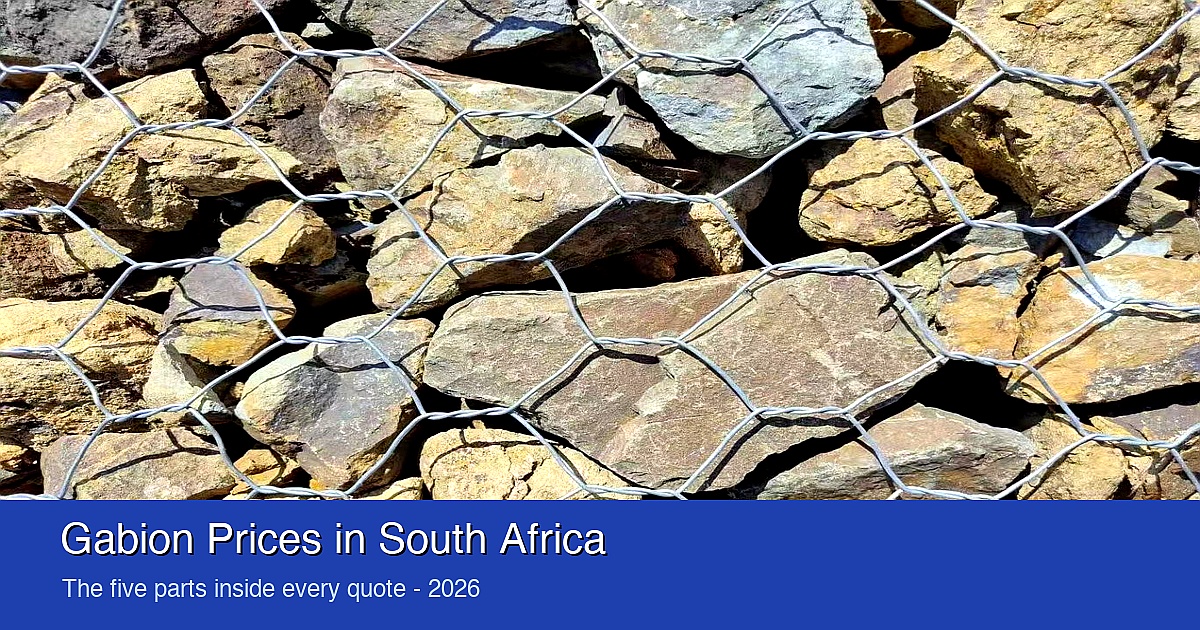
Last month a contractor rebuilding an embankment outside Durban sent me three quotes he had collected for the same 40 metres of gabion wall. The gap between the highest and the lowest was wide enough to buy a second-hand bakkie. His question was simple: "Which number do I trust?" My answer, after fifteen minutes on WhatsApp, was that none of the three numbers told him anything - because a gabion price is not one number. It is five numbers wearing a trench coat.
We weave gabion baskets in Shenzhou, Hebei, and a growing share of our export containers sail to South African ports - Durban mostly, sometimes Cape Town or Gqeberha. Since the 2022 KwaZulu-Natal floods, the rebuild work across the province has kept our production line for 80×100 mm double-twist mesh busy. So we see both sides of the trade: what the baskets cost to make, and what South African buyers actually pay by the time a wall stands up. This guide unpacks the five parts of any gabion price in South Africa, shows you how to calculate your own budget before you phone anyone, and explains honestly where the saving comes from when the baskets come from a Chinese factory - and where it does not.
The short answer
Every gabion wall quote, whether it comes from a Johannesburg merchant or a Hebei factory, is the sum of five parts: the baskets, the stone, the freight, the tax, and the labour. Suppliers who give you one shiny per-metre number have simply hidden their margin in one of the five. Learn the five parts and no quote can bluff you again.
The Five Parts Inside Every Gabion Price
Here is the anatomy of a landed, standing gabion wall in South Africa. The bars are deliberately not to scale - the split shifts with every project - but the order of magnitude is roughly right for a typical retaining or river-protection job.
Notice what this means: the baskets are usually not even the biggest part of the budget. The stone and the people filling them routinely outweigh the wire. That is why two quotes can differ wildly while both are "honest" - one supplier quoted baskets only, the other quoted the wall standing. When you compare gabion basket prices, always ask which of the five parts are inside the number.
Part 1 — The Baskets: Four Dials That Move the Price
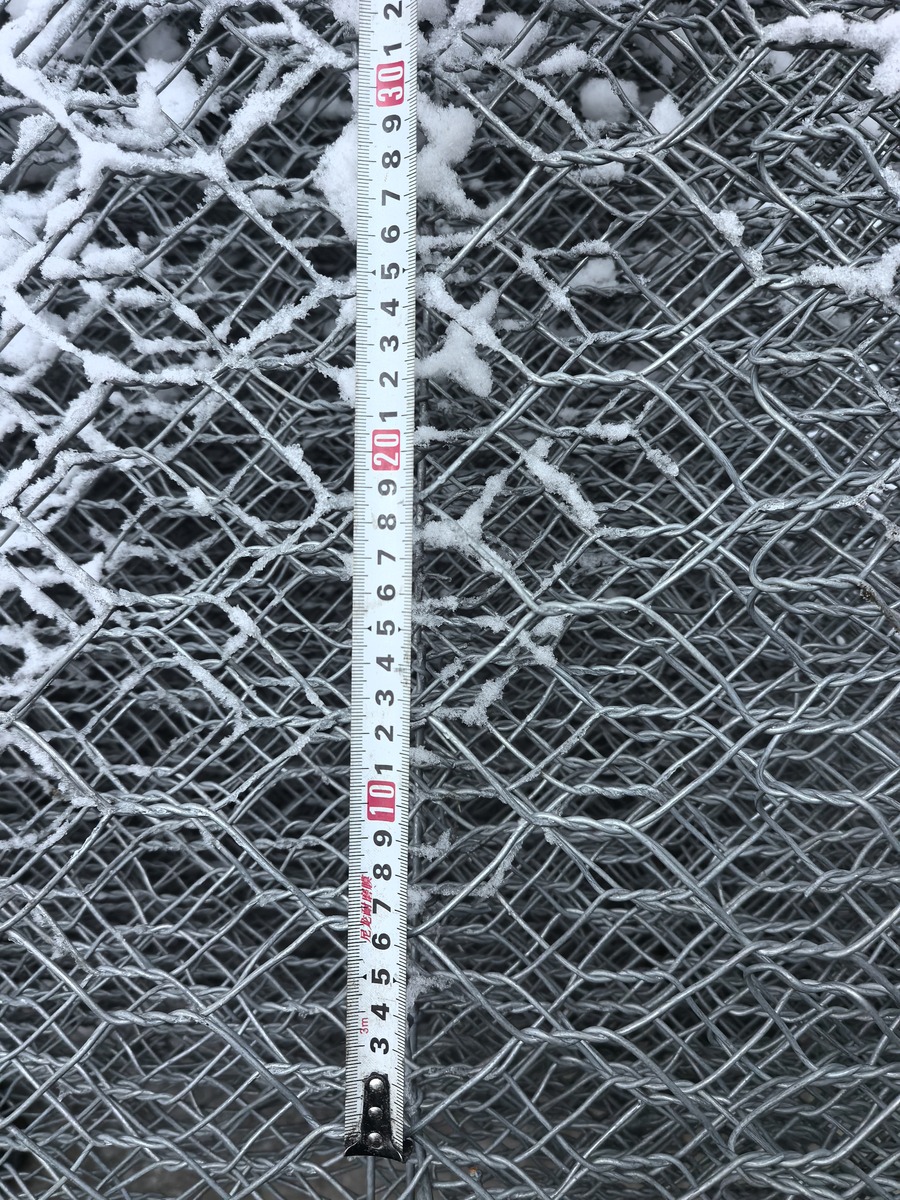
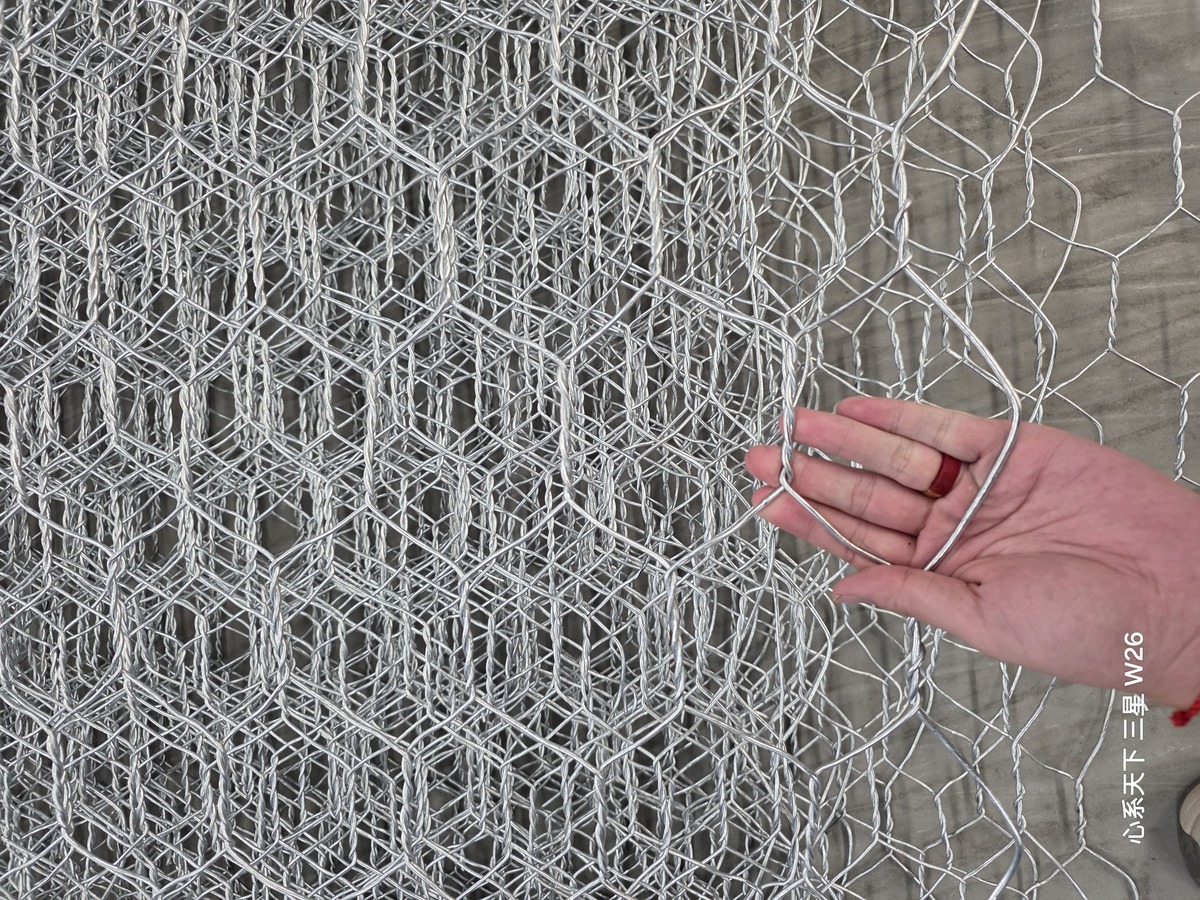
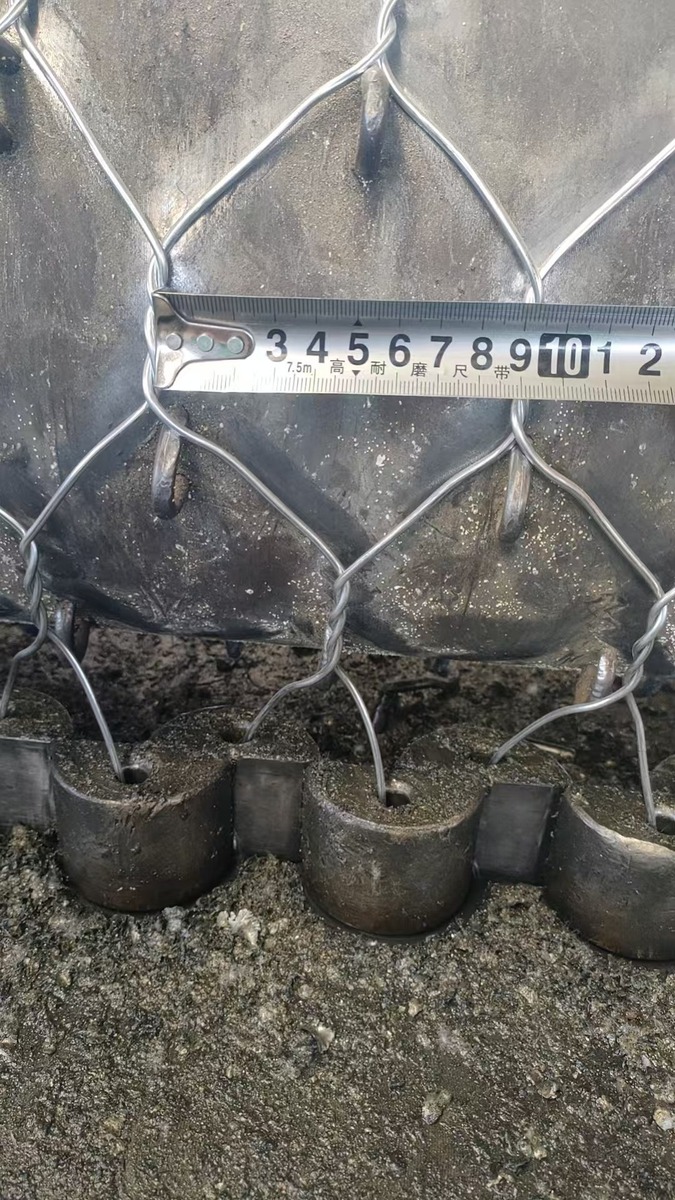
The basket price is set by four specification dials. Each dial you turn up adds wire, adds zinc, or adds weaving time - and adds cost. This table is the one we use internally when a buyer asks "what if I change…"
| Dial | Common options | Effect on basket cost | When to turn it up |
|---|---|---|---|
| Wire diameter | 2.0 / 2.2 / 2.5 / 2.7 mm | Each step up adds steel ↑↑ | Retaining walls, flood works, any civil job |
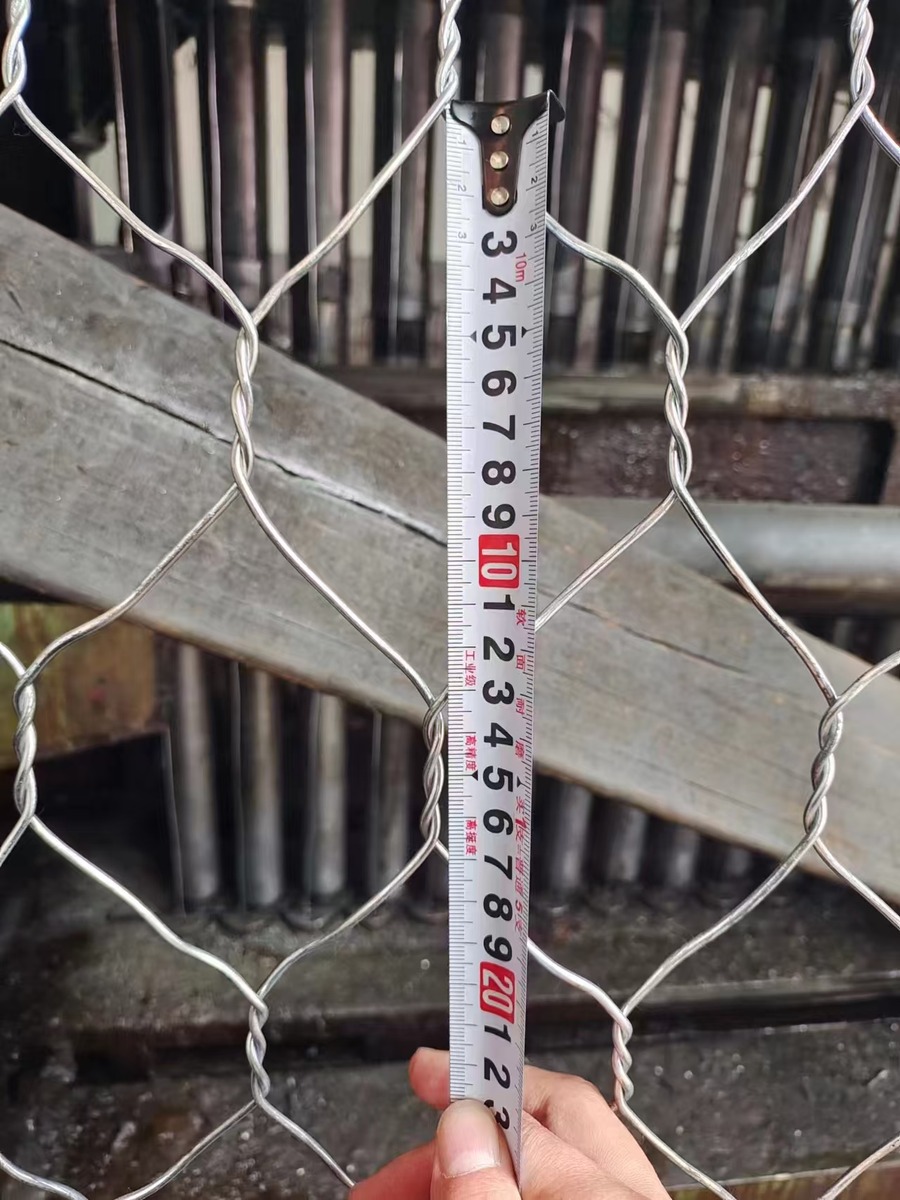
| Mesh opening | 6×8 / 8×10 / 10×12 cm | Tighter mesh uses more wire per m² ↑ | Small stone, fine faces, architectural work |
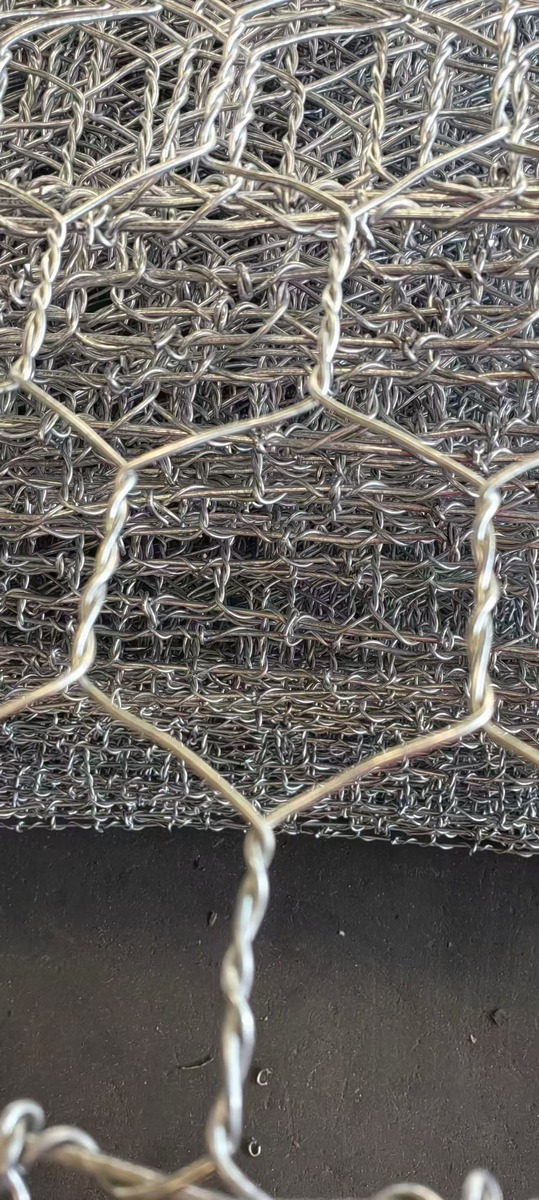
| Coating | 60 g/m² zinc / 245 g/m² heavy zinc / Zn-Al alloy | Heavy zinc ↑, Zn-Al ↑↑ | Coastal KZN air, wet ground, 20-year design life |
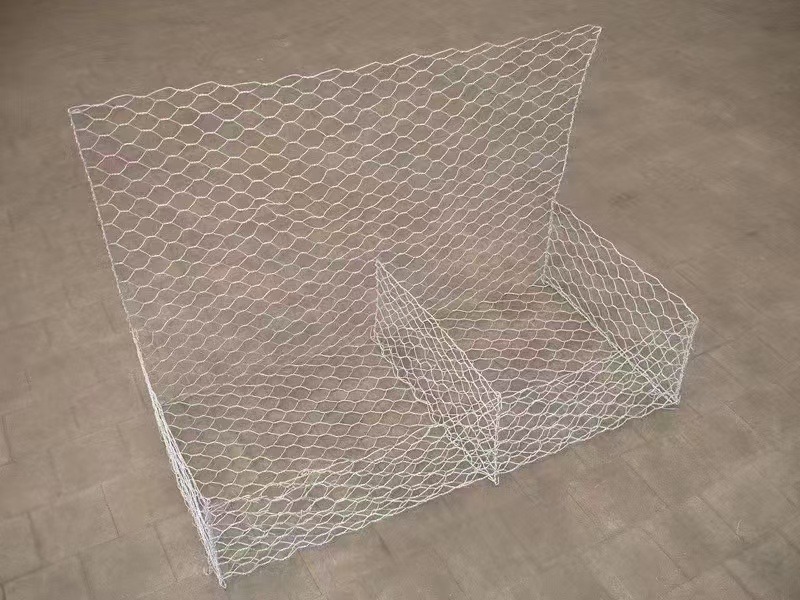
| Box size | 2×1×1 / 2×1×0.5 / 2×1×0.3 m | Bigger box = more m² of mesh, but fewer lids and joints per wall ↓ labour | Match the box to the wall, not the other way round |
Two factory-floor notes on this table. First, the edge (selvedge) wire should always be one size heavier than the mesh wire - we pair 3.4 mm selvedge with 2.7 mm mesh wire as standard, because the edges carry the lacing load. Second, every dial has a floor below which the wall stops being safe: for anything structural our wire runs to YB/T 4190-2018 with tensile strength of 350–550 MPa, and outdoor coating mass is verified to GB/T 1839. A quote that undercuts everyone else has usually turned a dial below the floor - thinner wire, lighter zinc - and you will not see it until the wall is rusting or bulging in year three.
Part 2 — The Stone: The Part You Should Never Import
A filled gabion weighs roughly a tonne and a half per cubic metre. Shipping stone across the ocean is shipping dead weight you can dig out of the ground an hour from your site. South Africa is rich in exactly the hard, angular rock gabions want - dolerite, granite, quartzite from quarries around Johannesburg, Durban and Cape Town. Every rand spent importing stone is a rand set on fire.
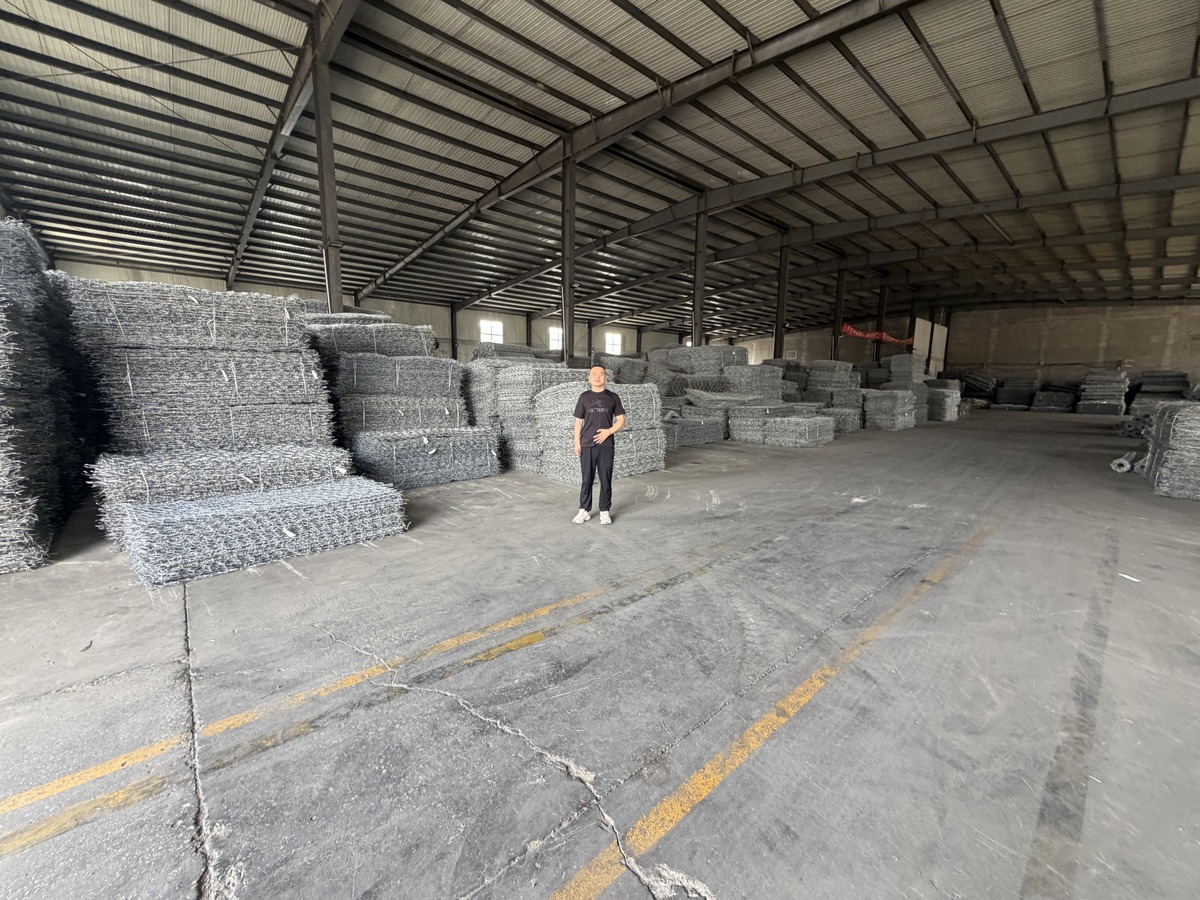
The sizing rule is universal: stone pieces 1.5 to 2 times the mesh opening. For the 80×100 mm mesh we export most, that is roughly 120–200 mm stone - a standard quarry product almost anywhere in the country. Ask your quarry for "gabion stone" or "rock fill" in that band, and ask them what they charge per ton delivered. That delivered price, multiplied by roughly one-and-a-half tons per cubic metre of wall, is Part 2 of your budget. It is often the largest single line - and it is identical no matter where the baskets come from.
Part 3 — Freight and Clearing: Tianjin to Your Site
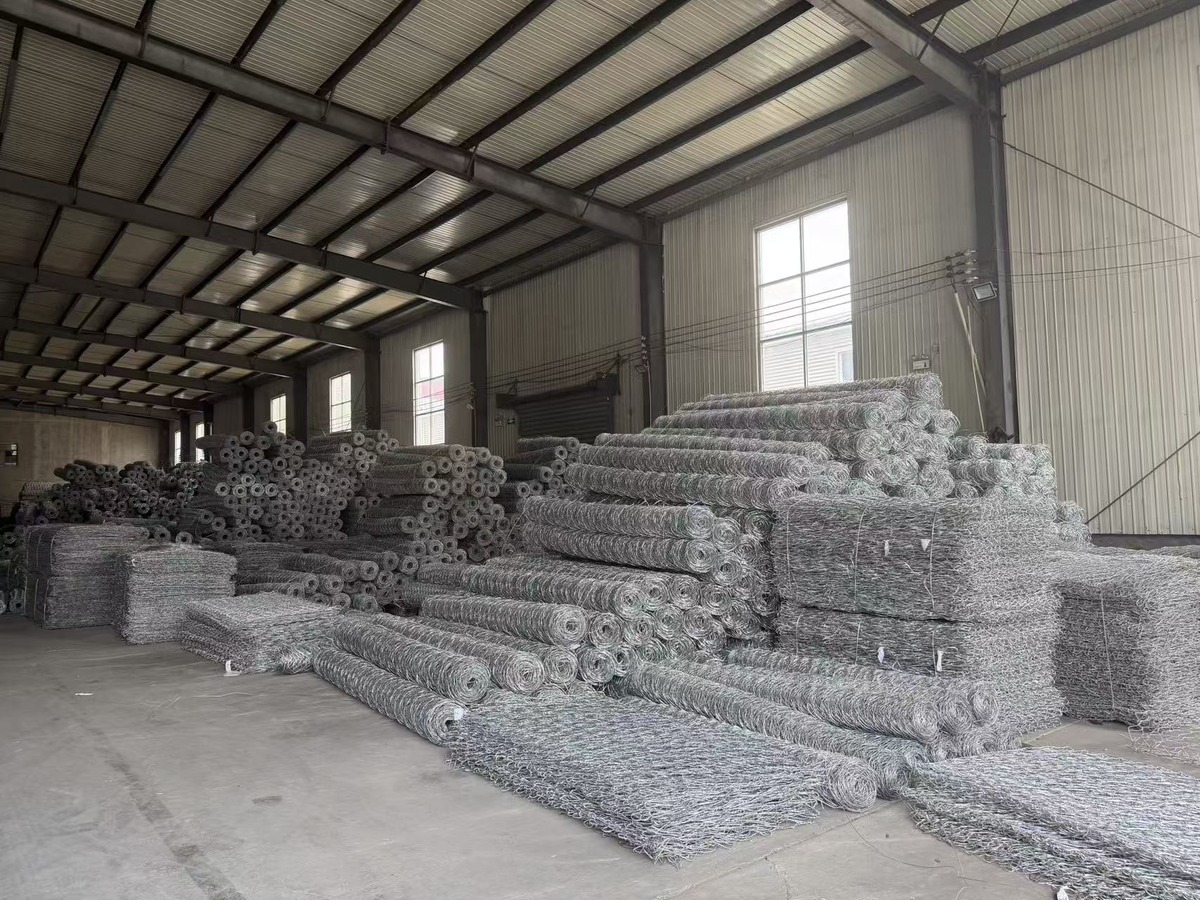
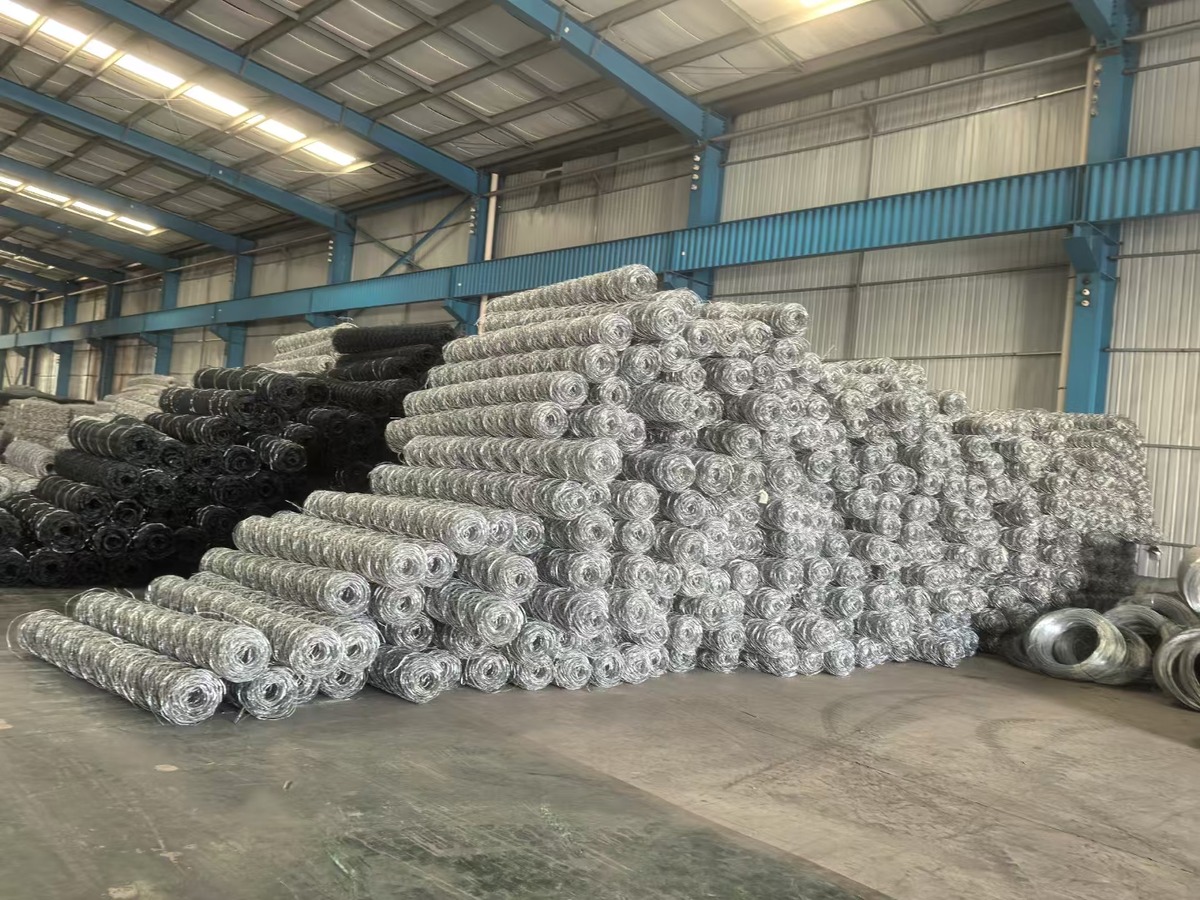
This is the part buyers fear and the part that is actually most predictable. Gabion baskets fold flat - a 2×1×1 m box collapses to a bundle a few centimetres thick - so a 40-foot container carries a surprising amount of wall. The route is a standard one:
| Leg | What happens | Who you pay |
|---|---|---|
| Factory → Tianjin port | Truck haul, about 200 km from our gate | Included in our FOB Tianjin price |
| Ocean: Tianjin → Durban / Cape Town / Gqeberha | Container vessel, a few weeks on the water | Shipping line (your forwarder books it) |
| Port clearing | Customs declaration, port handling, docs | Your clearing agent |
| Port → site | Flatbed haulage, Durban–Johannesburg is the classic run | Local transport company |
None of these legs is mysterious, and your freight forwarder or clearing agent can quote each one in Rand before you commit. The forwarder is your friend here: send them the container plan (we supply exact bundle counts and weights) and the freight line of your budget stops being a guess.
Part 4 — Duty and VAT: The SARS Line
Imported wire mesh products arrive under South Africa's customs tariff like any other steel product, and VAT at the standard rate applies at import. The exact duty percentage depends on the tariff classification your clearing agent uses, so we deliberately do not print a number here - ask your clearing agent to confirm the tariff heading and the duty before you order, and write their figure into the worksheet below. VAT-registered businesses can normally claim the import VAT back as input tax, which softens this line considerably for contractors. Ten minutes on the phone with your agent turns this from an unknown into a known.
Part 5 — Assembly and Filling: Local Labour, Local Choice
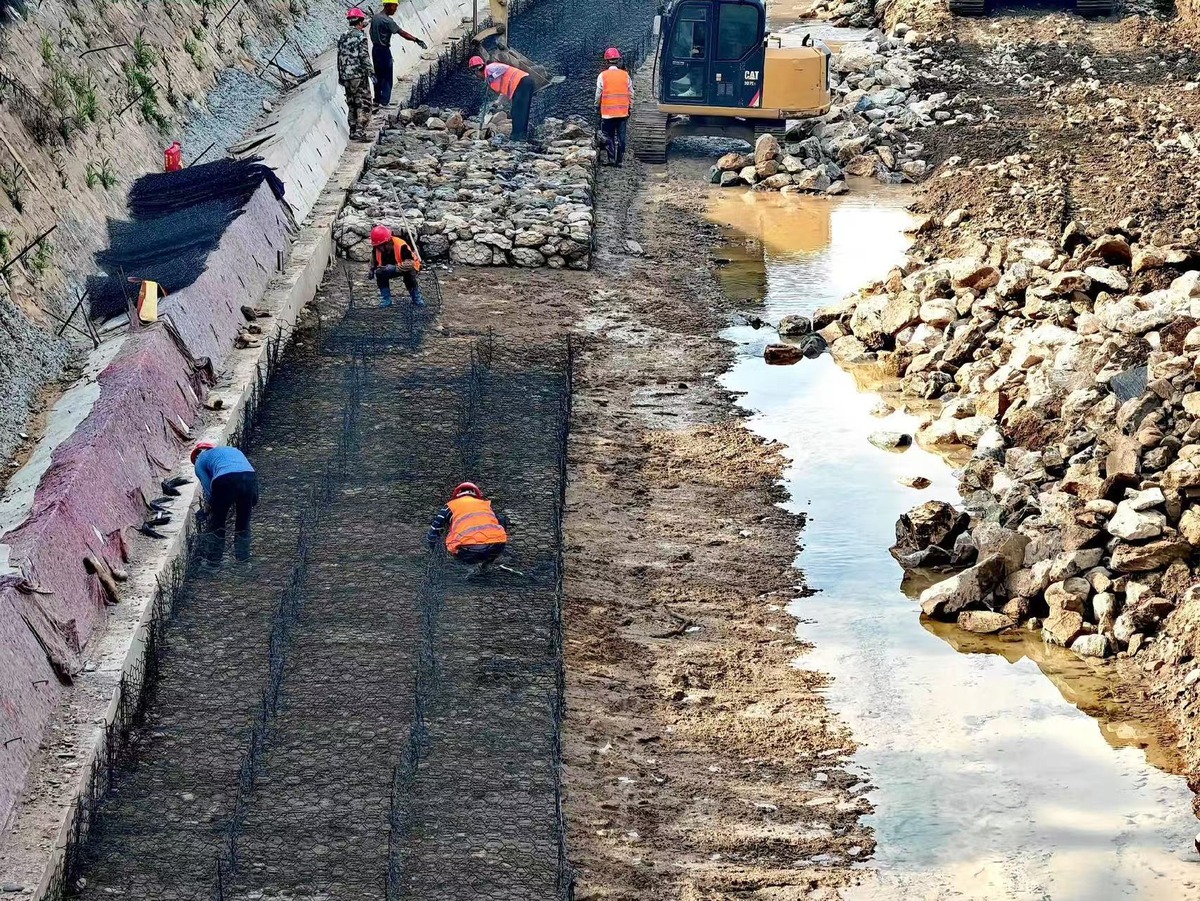
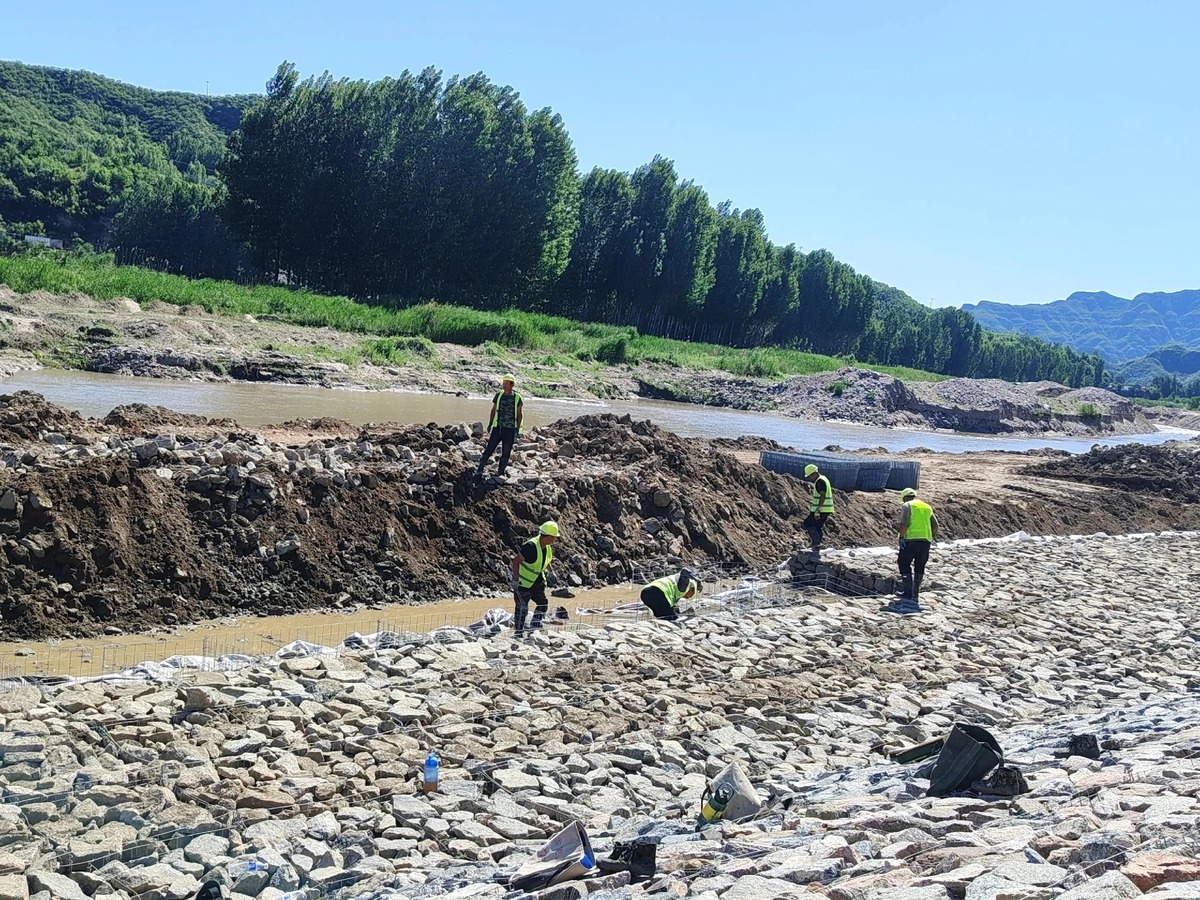
Baskets arrive flat and are erected, laced, braced and filled on site by your crew or a local gabion contractor. This is unskilled-to-semi-skilled work, but it has a craft to it: fill in 300 mm lifts, tie figure-eight wind braces between the faces at every lift, and hand-place the outer layer of stone flat against the mesh. A crew that knows these three rules produces a wall with crisp, flat faces; a crew that skips them produces barrels. If you are hiring the work out, ask to photograph a previous wall the contractor built - the faces tell you everything. Our step-by-step build guide covers the full sequence if your own team is doing it for the first time.
So Where Does the China Saving Actually Come From?
Honesty time, from the factory side. When a South African buyer switches from a local merchant to factory-direct import, the saving does not come from "cheap Chinese steel" - the wire rod market is global and the zinc price is the London Metal Exchange price everywhere. It comes from three structural places:
1. Layers of margin, removed
A local merchant's price contains the factory price plus the importer's margin plus the distributor's margin plus the merchant's own margin, each with rent and salaries inside. Buying a full container direct removes two or three of those layers at once. That is most of the saving.
2. Volume efficiency on our side
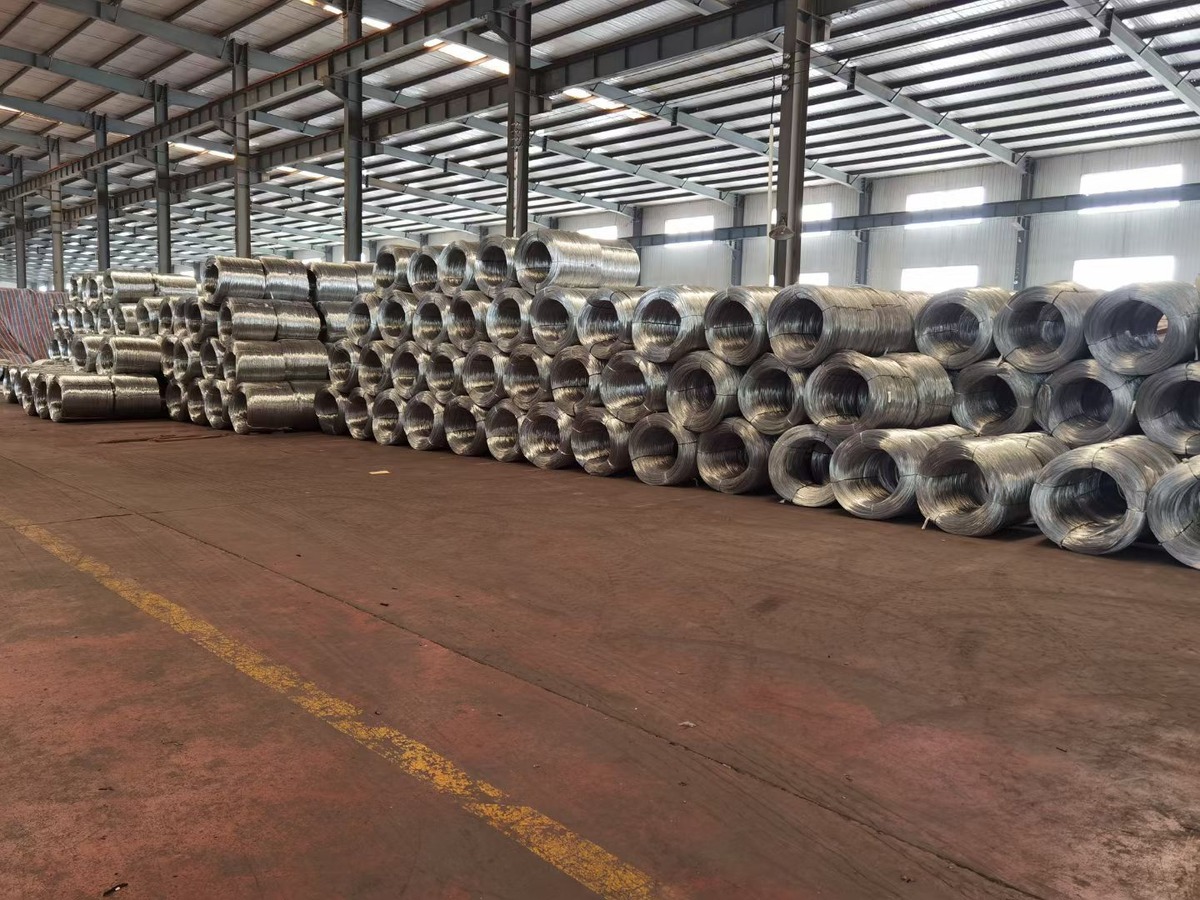
We buy wire rod by the hundred tons and run the weaving looms daily. Ex-works cost at production volume is simply lower than small-batch regional manufacturing. This is the honest, boring part of the difference.
3. Flat-packed logistics
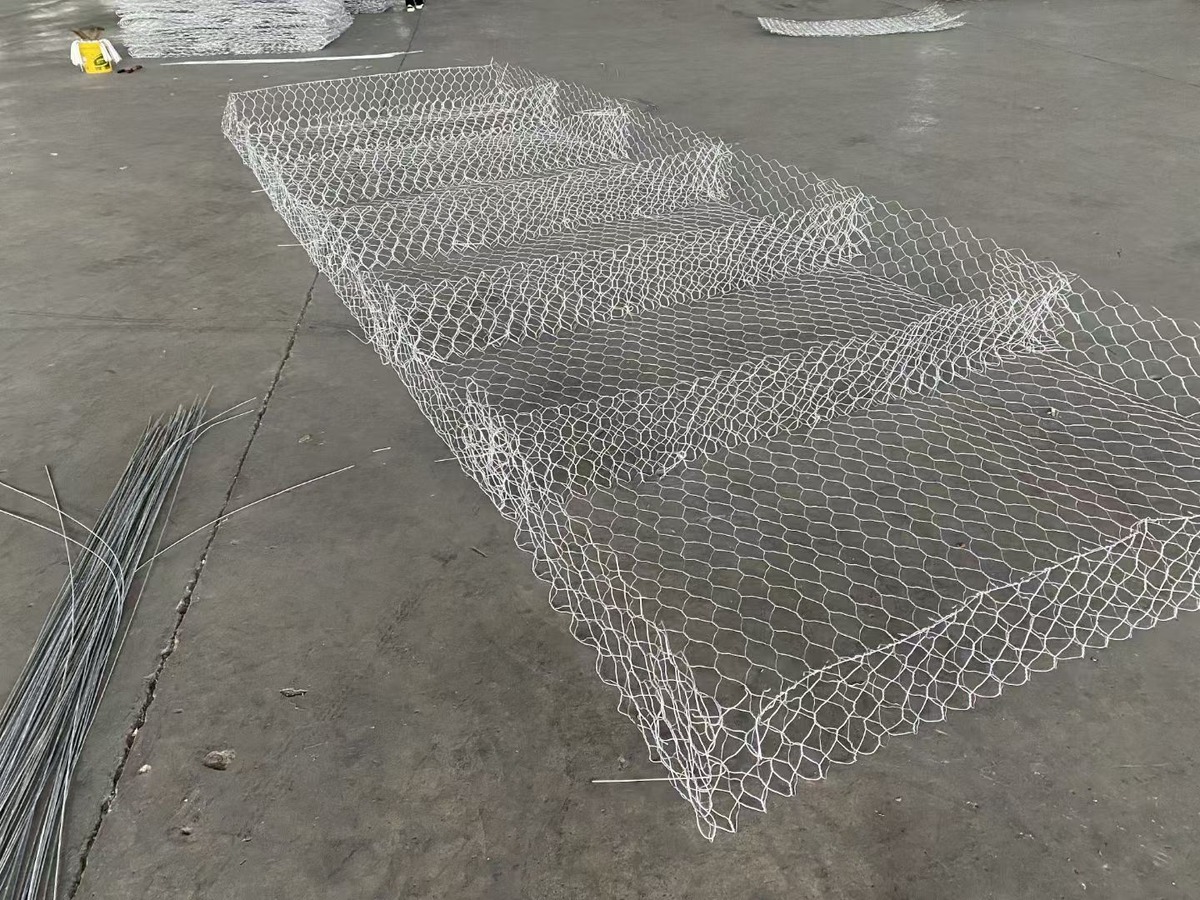
Because baskets fold flat, one container replaces several truckloads of assembled cages. Freight per square metre of wall stays small, which is why the ocean leg does not eat the saving.
And here is what the saving is not: it is not magic, and it shrinks fast if you import the wrong things. Import the baskets; buy the stone locally; hire the labour locally. Buyers who try to import convenience instead of product - small loose orders, pre-assembled cages, stone! - end up paying more than the merchant down the road. The model works at container scale. For a single garden wall, buy locally and use this guide to negotiate. For a 40-metre embankment, a flood-repair programme, or a stockholding merchant, the container maths is worth an hour of your time.
Calculate Your Own Budget: The Blank Worksheet
Before you phone anyone - us included - fill this in. It takes twenty minutes and turns every quote you receive into something you can check. We use exactly this structure when South African buyers send us an enquiry.
| Line | How to get the number | Your figure (R) |
|---|---|---|
| Wall quantity | Length × height = face m². A 2×1×1 m basket covers 2 m² of face and holds 1 m³ of stone | _____ m² / _____ baskets |
| 1. Baskets | Baskets needed × unit price (ask us for a container quote - the spec table above sets the price) | _______ |
| 2. Stone | Wall volume (m³) × ~1.5 t/m³ × quarry's delivered Rand/ton | _______ |
| 3. Freight & clearing | Forwarder's quote: ocean + port + haulage, based on our bundle list | _______ |
| 4. Duty & VAT | Clearing agent confirms tariff heading, duty and import VAT | _______ |
| 5. Assembly & fill | Local crew day-rates, or a gabion contractor's per-m³ rate | _______ |
| Landed total ÷ face m² | This is your true gabion cost per m² - the only number worth comparing between suppliers | R _____ /m² |
Run the worksheet twice - once with a local merchant's basket price, once with a container quote from us - and the comparison makes itself. If the gap does not justify the admin for your project size, we will be the first to tell you to buy locally.
Questions South African Buyers Ask Us
Why do gabion quotes in South Africa vary so much between suppliers?+
Because suppliers bundle the five parts differently. One quotes baskets only, another includes delivery to your province, a third quotes the wall standing with stone and labour. None of them is necessarily dishonest - they are just answering different questions. Always ask which parts are inside the number, then compare like with like using the worksheet above.
What size gabion basket is most common for retaining walls in South Africa?+
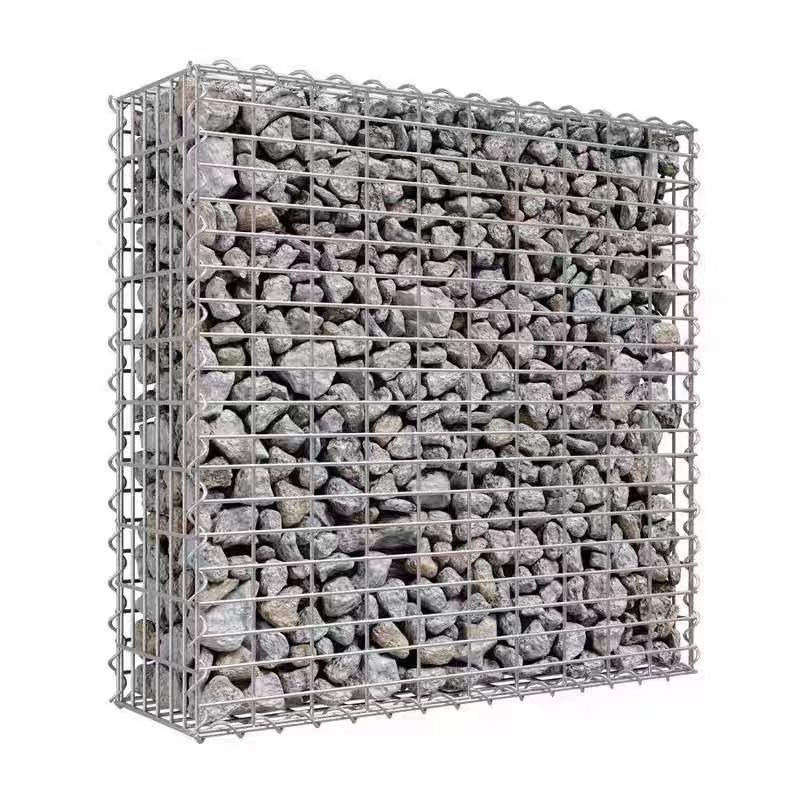
The workhorse is the 2×1×1 m box - it covers 2 m² of wall face and holds a cubic metre of stone, so the site maths stays simple. The 2×1×0.5 m box serves as the base course or for lower walls, and 0.3 m mattresses handle channel and bank aprons. We stock all three in 80×100 mm mesh, 2.7 mm wire, heavy zinc, which is the spec most KZN rebuild work asks for.
Do I need engineering sign-off for a gabion wall in South Africa?+
Garden features under a metre are normally your own business. Once a wall retains significant ground, stands near a boundary, or carries loads behind it, treat it as a structure: South African building regulations and your local authority will want a competent person's design, and your insurer will too. We supply the material test certificates (wire to YB/T 4190-2018, coating mass to GB/T 1839) that your engineer needs for the file.
Is a zinc-aluminium coating worth it for coastal KwaZulu-Natal?+
For walls in salt air within a few kilometres of the coast, yes. Standard 60 g/m² galvanising is inland-and-dry material; 245 g/m² heavy zinc handles most outdoor work; Zn-Al alloy coating buys the longest life where salt is in the air year-round. The coating dial is the cheapest insurance in the whole budget - the stone and labour do not change, only the wire's lifespan.
Can I import a small trial order before committing to a container?+
You can, but the freight maths works against very small orders - a pallet by LCL costs proportionally far more per basket than a full container. A better trial: order a sample box set from us by air freight to check the weave, the wire and the coating with your own hands, then decide on the container with full information. We would rather lose a container order than have you buy one blind.
How long does a container take from your factory to site in South Africa?+
Three stages: production and packing at our gate (typically around a week for a standard container of stock sizes), the ocean leg to Durban or Cape Town (a few weeks on the water), then clearing and haulage to your site (your agent and transporter set this pace). Plan on the order of a month to six weeks end to end, and ask your forwarder for current sailing schedules when you budget.
What stone should I use, and where do I get it?+
Hard, angular, durable rock sized 1.5 to 2 times the mesh opening - for 80×100 mm mesh that is roughly 120–200 mm stone. Dolerite, granite and quartzite from local quarries are all excellent. Ask the quarry for gabion stone or rock fill in that band, delivered. Never import stone: it is the heaviest, cheapest part of the wall and South Africa has plenty of it.
Container quote, worksheet included
Send us your wall dimensions - get the basket line of your budget back within a day
Tell us the length and height of the wall, the province it is going to, and the coating grade you are considering. We reply with basket quantities, a container plan with bundle counts and weights for your forwarder, and an honest word if your project is too small to bother importing. Material certificates to YB/T 4190-2018 and GB/T 1839 ship with every order.
Related reading
→How to Build a Gabion Wall — The 8-step sequence your crew will follow - Part 5 of your budget, step by step.→Gabion Basket Price List Philippines — The same five-part cost anatomy, worked through for Philippine river works.→Gabion Prices in Africa — South Africa, Kenya and Nigeria - the regional picture beyond this guide.Why this guide has no price list: wire and zinc prices move weekly, freight rates move monthly, and any fixed Rand figure printed here would be wrong - or worse, copied - within the quarter. What does not move is the structure: five parts, four spec dials, one worksheet. Get those right and you can audit any quote the market hands you. Material figures quoted are our everyday production specs. Written by the export team at Shenzhou Haobo Metal Products Co., Ltd, Shenzhou, Hebei.