Gabion Channel Lining & Erosion Control for Central Asian Irrigation Canals: Kazakhstan, Uzbekistan, Tajikistan Water Infrastructure Rehabilitation
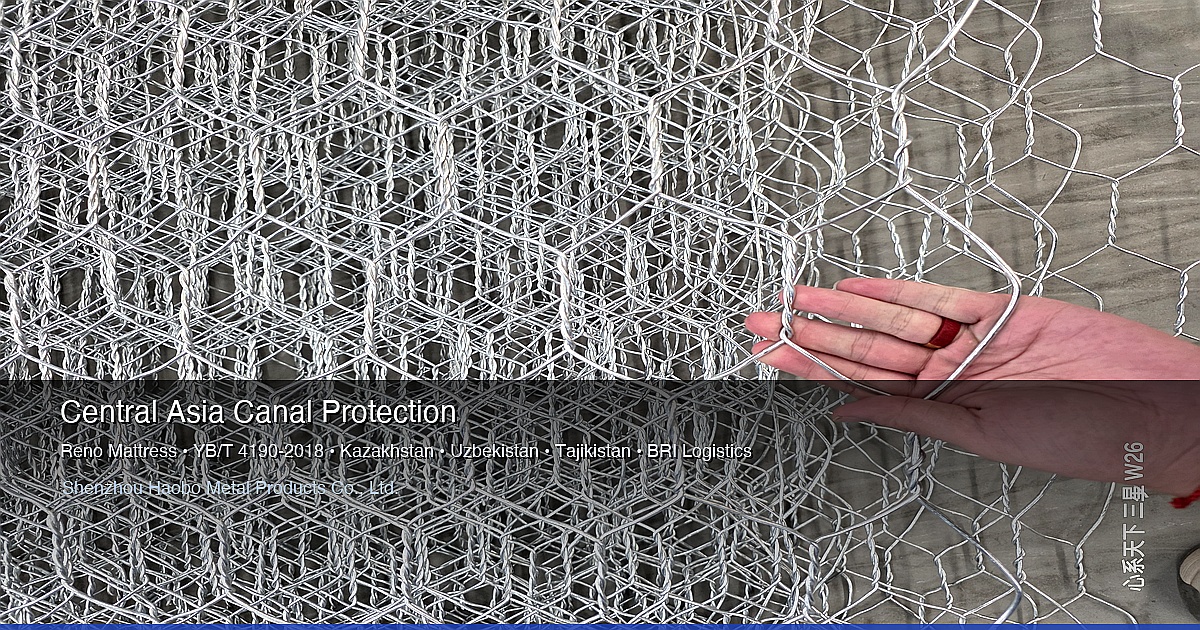
The irrigation networks of Central Asia — the world's largest contiguous irrigated zone outside South Asia — sustain the livelihoods of 60 million people across Kazakhstan, Uzbekistan, Tajikistan, Kyrgyzstan, and Turkmenistan. The Amu Darya and Syr Darya river basins, feeding canals that stretch over 40,000 km, are deteriorating at an alarming rate. The World Bank estimates that 50–60% of irrigation water is lost between intake and field due to seepage through unlined earthen canals, while siltation reduces conveyance capacity by 2–5% annually. Gabion channel lining, combining the structural flexibility required for expansive clay soils with the permeability that prevents hydrostatic uplift failure, is emerging as a cost-effective alternative to concrete lining for the rehabilitation of Central Asia's aging water infrastructure. This technical guide examines the application of Chinese-manufactured gabion systems — compliant with YB/T 4190-2018 and optimized for the region's extreme continental climate — in the rehabilitation of irrigation canals across Kazakhstan, Uzbekistan, and Tajikistan.
Key Takeaways
- Central Asia 40,000 km irrigation loses 50-60% water — gabion lining reduces to 10-15%, 23% cheaper than concrete.
- YB/T 4190-2018 handles -35C to +45C and saline Aral soils.
- BRI rail: 8-16 day transit at $2,500-4,500/container.
- World Bank/ADB projects specifying gabion — Chinese manufacturers supply 60% of materials.
Table of Contents
- 1. Central Asia Irrigation Crisis: Scale, Causes, and Economic Impact
- 2. Gabion Canal Lining Technology: Principles and Advantages
- 3. YB/T 4190-2018 Material Standards for Central Asian Conditions
- 4. Case Study: Kazakhstan — Syr Darya Basin
- 5. Case Study: Uzbekistan — Amu Darya Delta
- 6. Case Study: Tajikistan — Mountain Canal Protection
- 7. Frost Heave and Thermal Expansion Design
- 8. China-Central Asia Logistics & BRI Advantages
- 9. Total Installed Cost: Gabion vs Concrete Canal Lining
- 10. Installation Best Practices for Remote Canal Sites
1. Central Asia's Irrigation Crisis: Scale, Causes, and Economic Impact
The irrigation infrastructure of Central Asia is a legacy of the Soviet era, constructed primarily between 1950 and 1985. The total irrigated area exceeds 7.9 million hectares, with Uzbekistan alone accounting for 4.3 million hectares — the eighth-largest irrigated area of any country in the world. This infrastructure supports cotton production (Uzbekistan is the world's sixth-largest producer), wheat, rice, and an expanding horticultural sector. However, the physical condition of the canal network has deteriorated dramatically since the dissolution of the Soviet Union in 1991.
Three interconnected problems drive the crisis. First, earthen canals — which constitute approximately 70% of the distribution network — lose 30–60% of conveyed water to seepage, with efficiency rates as low as 35–40% in some Uzbek inter-farm canals (World Bank, 2023). Second, the region's expansive clay soils (montmorillonite-rich, with linear shrinkage of 10–18%) subject concrete canal linings to differential heave and cracking, with typical concrete lining service lives of only 8–15 years before requiring major rehabilitation. Third, the institutional fragmentation following independence created a maintenance funding gap: Uzbekistan allocates approximately $12–15 per hectare annually for irrigation maintenance, compared to the estimated $45–60 per hectare required for sustainable operation.
The Aral Sea catastrophe — the world's most dramatic example of irrigation-induced environmental collapse — adds urgency. Rehabilitation of the Amu Darya delta irrigation system, which once supported 450,000 hectares of productive land (now reduced to 200,000 hectares), is a priority for both the Government of Uzbekistan and international donors including the World Bank, Asian Development Bank (ADB), and Islamic Development Bank.
2. Gabion Canal Lining Technology: Principles and Advantages
Gabion canal lining represents a fundamentally different engineering approach compared to conventional concrete lining. Rather than attempting to create an impermeable barrier, gabion lining works through three mechanisms: (1) armoring the canal bed and banks against erosion by water flow, (2) reducing seepage velocity sufficiently that water loss becomes acceptable (typically 10–15% residual seepage vs 30–60% for unlined canals), and (3) providing structural flexibility that accommodates the differential soil movement that destroys rigid concrete linings.
| Parameter | Gabion Lining (Reno Mattress) | Concrete Lining | Unlined Earthen Canal |
|---|---|---|---|
| Seepage Loss (%) | 10–15% | 3–8% | 30–60% |
| Service Life (years) | 30–50 | 8–15 (expansive soils) | Indefinite (with maintenance) |
| Frost Heave Tolerance | Excellent — flexible structure | Poor — rigid, crack-prone | N/A |
| Installation Speed (m/day, 5 m wide canal) | 30–50 m | 15–25 m | N/A |
| Installed Cost (USD/m²) | $18–32 | $28–55 | $5–10 (annual maintenance) |
| Embodied Carbon (kg CO₂e/m²) | 15–25 | 45–80 | <5 |
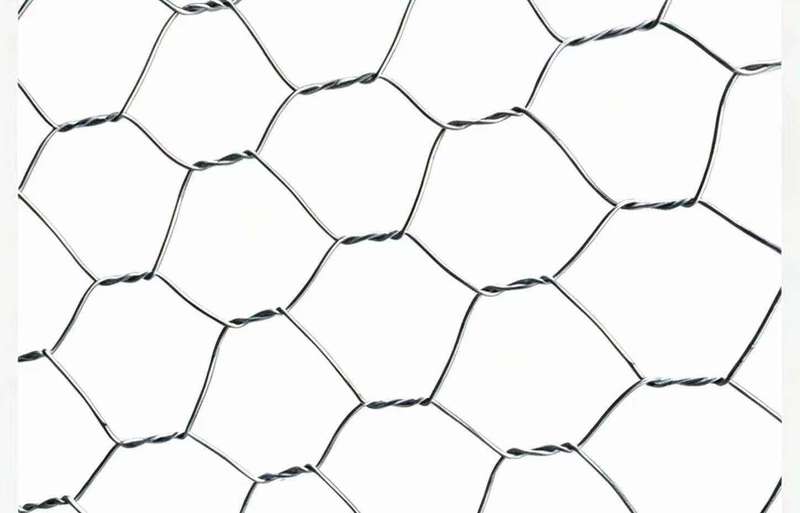
Reno mattresses — thin, flat gabion structures typically 0.17–0.30 m thick — are the standard product for canal lining applications. Mesh opening of 60 × 80 mm (YB/T 4190-2018) with 2.2 mm Galfan-coated wire provides the optimal balance of stone retention, flexibility, and cost. The thin profile minimizes the canal cross-section reduction that can otherwise reduce conveyance capacity.
3. YB/T 4190-2018 Material Standards for Central Asian Conditions
Central Asia's continental climate imposes material performance requirements that exceed temperate-zone standards. Diurnal temperature ranges of 20–30°C, winter lows of −35°C (northern Kazakhstan) to −15°C (southern Uzbekistan), and summer highs of +45°C create thermal cycling that accelerates coating degradation and promotes micro-cracking in rigid materials. YB/T 4190-2018, with its higher minimum coating mass and elongation values compared to EN 10223-3, is well-suited to these conditions.
| Material Property | YB/T 4190-2018 (Reno Mattress Grade) | Central Asia Requirement | Justification |
|---|---|---|---|
| Wire Diameter | 2.2 mm (mattress mesh) | 2.2 mm minimum | Sufficient for flow velocities up to 3 m/s |
| Zinc Coating Mass | ≥245 g/m² (GB/T 1839) | ≥245 g/m² typical; ≥275 g/m² (Galfan) for saline soils | Aral Sea basin soils are saline (EC 4–15 dS/m) |
| Tensile Strength | 350–550 MPa | ≥380 MPa | Impact resistance for ice/debris loading |
| Elongation | ≥12% | ≥12% | Thermal expansion accommodation |
| PVC Coating (optional) | ≥0.5 mm | ≥0.5 mm for saline/industrial areas | PVC provides additional chemical barrier |
For the most aggressive environments — the Amu Darya lower reaches and Karakalpakstan region where soil salinity exceeds 10 dS/m — Galfan (Zn-5%Al) coating at ≥275 g/m² with PVC overcoating is the recommended specification. Chinese manufacturers serving Central Asian markets have developed "Aral-grade" coating packages specifically for these high-salinity applications, with independent salt-spray testing exceeding 3,000 hours to first red rust (ISO 9227, neutral salt spray).
4. Case Study: Kazakhstan — Syr Darya Basin Canal Rehabilitation
Kazakhstan's irrigated area of 1.4 million hectares is concentrated in the southern provinces of Turkistan and Kyzylorda, fed by the Syr Darya River. The Kyzylorda Right Bank Canal — a 450 km main canal serving 140,000 hectares — loses an estimated 55–60% of diverted water to seepage before reaching downstream farms. Rehabilitation of this canal is the single largest irrigation infrastructure project in Kazakhstan, with the World Bank committing $103 million under the Second Irrigation and Drainage Improvement Project (IDIP-2).
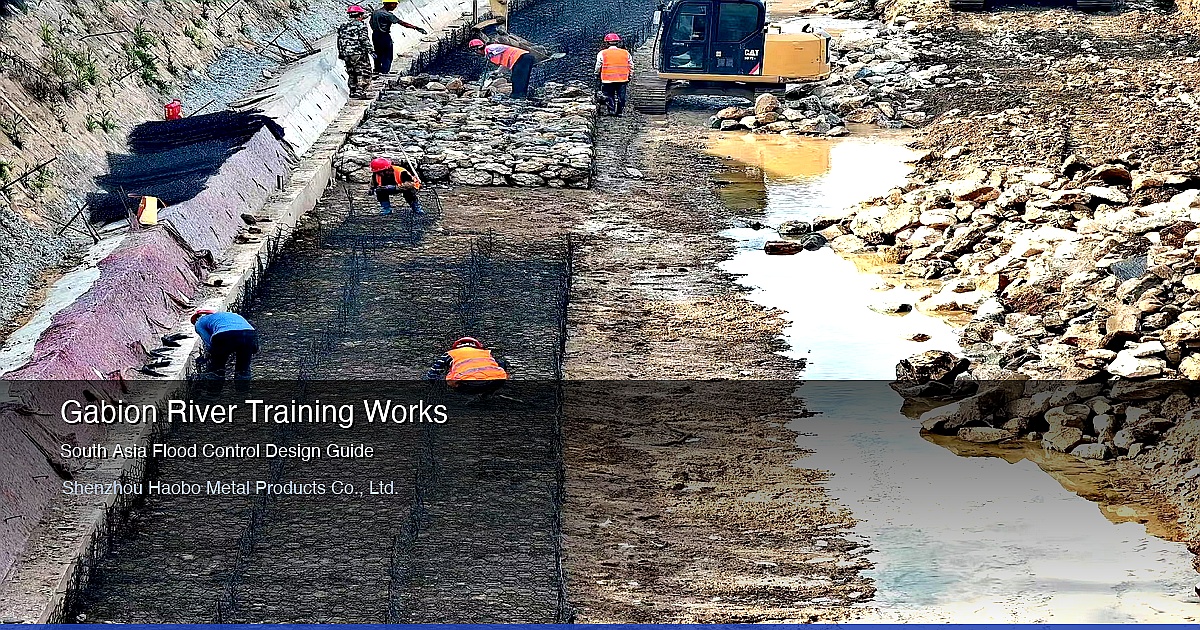
The project's engineering design incorporates gabion-lined sections on 28 km of canal where expansive clay soils (plasticity index 25–40%) have caused repeated concrete lining failures. The design specification calls for 0.23 m thick Reno mattresses (6 × 2 × 0.23 m units) with 60 × 80 mm hexagonal mesh openings, 2.2 mm Galfan-coated wire (≥275 g/m²), placed on a non-woven geotextile separator (300 g/m² PET) to prevent subgrade soil migration into the stone fill. The stone fill specification requires 50–100 mm angular crushed rock, limestone or granite, with Los Angeles Abrasion value below 35% and sulfate soundness loss below 12% (ASTM C88).
Total installed cost for gabion-lined sections is estimated at $28/m², compared to $42/m² for the concrete alternative originally proposed. The 33% cost saving, combined with the expectation of 3–4× longer service life (40–50 years vs 10–15 years for concrete in these soil conditions), made the gabion option the clear choice in the project's economic analysis.
5. Case Study: Uzbekistan — Amu Darya Delta Water Management
Uzbekistan faces the dual challenge of rehabilitating irrigation infrastructure while managing the environmental legacy of the Aral Sea desiccation. The Amu-Bukhara Canal system, constructed in the 1970s and serving 250,000 hectares in Bukhara and Navoi provinces, has canal lining failure rates exceeding 40% across its 300 km length. Groundwater levels have risen 3–8 m in some areas due to canal seepage, causing secondary salinization that affects 60% of the irrigated land in the lower reaches.
The Government of Uzbekistan, with financing from the Asian Development Bank ($187 million, 2022–2028), is implementing a canal rehabilitation program that includes 45 km of gabion-lined sections in areas with the most problematic soil conditions. The ADB's technical assessment specifically cited gabion lining's suitability for: (1) sections crossing active tectonic faults (the Amu Darya basin has 8 known active fault lines), (2) canal reaches with groundwater within 1.5 m of the surface where concrete lining is prone to hydrostatic uplift, and (3) sections serving as emergency flood conveyance during the March–April snowmelt season when canals must carry 2–3× their design flow.
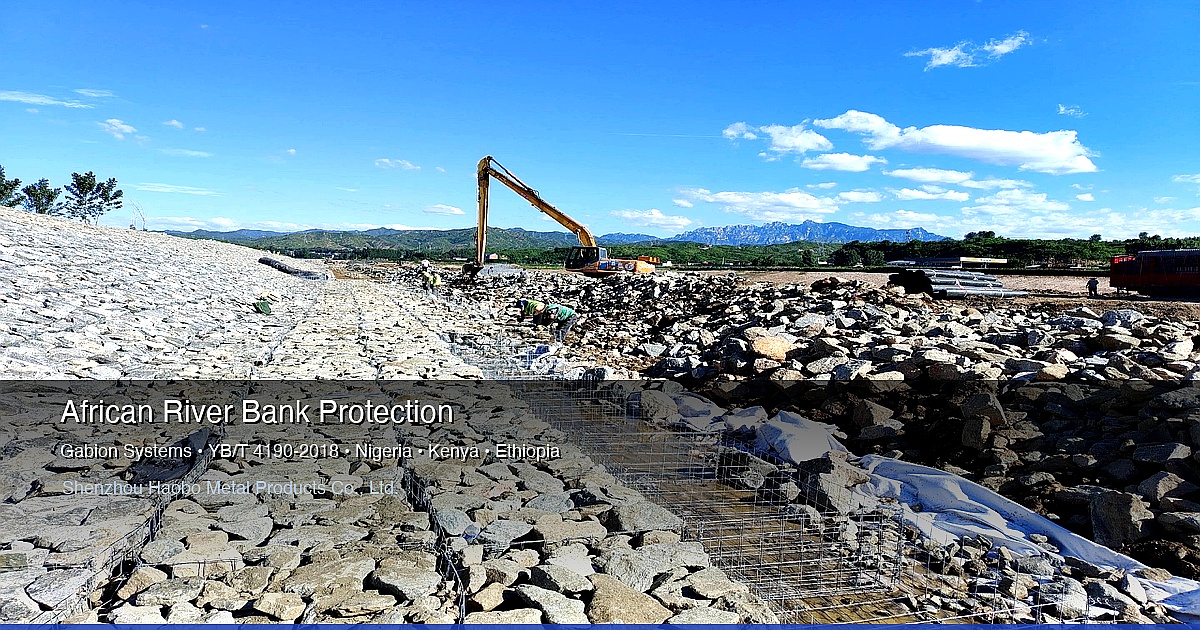
Chinese gabion manufacturers have supplied approximately 60% of the gabion and Reno mattress materials for the ADB-funded rehabilitation program, with deliveries coordinated through the China-Kyrgyzstan-Uzbekistan railway corridor and onward trucking to Bukhara province.
6. Case Study: Tajikistan — Mountain Canal Protection
Tajikistan's irrigation infrastructure serves 740,000 hectares, primarily in the Vakhsh River valley and Fergana Valley regions, with 95% of agricultural production dependent on irrigation. The country's mountainous terrain (93% of land area is mountainous) creates two unique canal protection challenges: (1) steep canal gradients (0.5–3.0%) that generate flow velocities up to 4–5 m/s during peak irrigation demand in July–August, and (2) proximity to active landslides and debris flows that deposit sediment loads of 5–15 kg/m³ into canal intakes during spring snowmelt.
The Nurek Reservoir right-bank canal system, serving 120,000 hectares, incorporates gabion-lined sections on 18 km of canal reaches where flow velocities exceed 3.5 m/s — the practical upper limit for unprotected earthen canals. The design uses double-twisted 80 × 100 mm hexagonal mesh with 2.7 mm Galfan-coated wire (≥275 g/m²) in 0.30 m thick Reno mattresses, with the stone fill consisting of 100–150 mm angular rock to resist displacement at high flow velocities. The thicker mattress profile (0.30 m vs the standard 0.23 m) and larger stone fill specification add approximately 25% to the material cost but provide the armor stability needed for the high-velocity mountain canal environment.
Installation logistics in Tajikistan's mountainous terrain present unique challenges. Gabion materials are delivered in flat-packed bundles by truck to the nearest road access point, then transported by tractor-trailer or cable system to the canal alignment — adding approximately $3–5/m² to the total installed cost compared to flat-terrain canal projects.
7. Frost Heave and Thermal Expansion Design for Continental Climate
Central Asia's continental climate, with 90–140 days of sub-zero temperatures annually in the northern irrigation zones, creates frost heave conditions that are the primary cause of rigid canal lining failure. The frost penetration depth ranges from 0.8 m in southern Uzbekistan to 2.5 m in northern Kazakhstan, exceeding the thickness of both concrete and gabion linings — meaning that the underlying subgrade will freeze regardless of the surface lining material.
Gabion lining's frost resistance derives from three design features: (1) the free-draining stone fill prevents water accumulation within the lining itself, eliminating the potential for internal ice lens formation, (2) the geotextile separator allows subgrade moisture to migrate downward during freezing (rather than being trapped at the lining-subgrade interface where it would generate heave pressure), and (3) the flexible mesh structure can accommodate 20–40 mm of differential heave displacement without structural damage — whereas concrete cracks at 0.5–2.0 mm of differential displacement.
For northern Kazakhstan (Kostanay, North Kazakhstan, and Pavlodar provinces), additional frost protection measures include: a 150–200 mm sand drainage layer beneath the geotextile separator to provide a capillary break, and 1.5 m deep cutoff walls at 200 m intervals to prevent longitudinal water migration beneath the lining during spring thaw. These provisions add approximately 15–20% to the installed cost but are essential for achieving the 40–50 year design life target.
8. China-Central Asia Logistics & Belt and Road Initiative Advantages
The Belt and Road Initiative (BRI) has transformed logistics between Chinese manufacturing centers and Central Asian project sites. The China-Kyrgyzstan-Uzbekistan railway corridor and the Western China-Western Europe highway provide direct, reliable freight routes that eliminate the need for ocean freight and transshipment.
| Route | Mode | Transit Time | Cost (per 40' container) |
|---|---|---|---|
| Tianjin → Almaty (Kazakhstan) | Rail (via Urumqi) | 8–12 days | $2,500–3,800 |
| Tianjin → Tashkent (Uzbekistan) | Rail (via Khorgos) | 12–16 days | $3,200–4,500 |
| Urumqi → Dushanbe (Tajikistan) | Truck (via Karasu Pass) | 7–10 days | $4,000–6,000 |
| Tianjin → Astana (Kazakhstan) | Rail (direct) | 10–14 days | $2,800–4,200 |
Kazakhstan and Uzbekistan are members of the Eurasian Economic Union (EAEU) and Shanghai Cooperation Organization (SCO), respectively, providing preferential tariff treatment for Chinese steel products originating under BRI framework agreements. Import duties on galvanized wire mesh (HS 7314.31) range from 0–5% depending on the specific bilateral agreement, compared to 10–15% for products from non-BRI countries. China's Xinjiang Uygur Autonomous Region — which shares borders with Kazakhstan, Kyrgyzstan, and Tajikistan — serves as the primary logistics hub, with dedicated rail freight terminals in Urumqi and Khorgos capable of handling 500,000 TEU annually for Central Asian trade.
9. Total Installed Cost Analysis: Gabion vs Concrete Canal Lining
A comparative economic analysis for a typical 5 m wide × 10 km irrigation canal in the Syr Darya basin (southern Kazakhstan) illustrates the financial case for gabion lining rehabilitation.
| Cost Category | Gabion Lining (Chinese-manufactured) | Cast-in-Place Concrete Lining |
|---|---|---|
| Materials (FOB Tianjin) | $180,000 | $210,000 (cement, rebar, aggregate) |
| Transport (rail to site) | $42,000 | $55,000 |
| Stone Fill (local quarry) | $65,000 | N/A |
| Installation Labor | $285,000 | $480,000 |
| Geotextile & Ancillaries | $28,000 | $38,000 (waterstop, joint filler, curing compound) |
| Total Installed | $600,000 | $783,000 |
| Cost per m² of lined surface | $24/m² | $31/m² |
The 23% upfront cost savings ($183,000 for a 10 km canal) is amplified by the 3–4× difference in expected service life: the gabion lining is expected to require major rehabilitation at 40–50 years, while the concrete lining alternative would require rehabilitation at 10–15 years — resulting in 2–3 additional rehabilitation cycles over a 50-year analysis period. The net present value advantage of gabion lining over a 50-year life cycle (5% discount rate) is approximately $450,000 per 10 km canal — a compelling economic case for irrigation agencies operating under severe budget constraints.
10. Installation Best Practices for Remote Central Asian Canal Sites
Canal rehabilitation in Central Asia frequently occurs in remote areas with limited access to skilled labor, heavy equipment, and construction materials. Gabion lining offers distinct advantages in this context: (1) the labor skill requirements are modest — workers can be trained in gabion assembly and stone placement within 2–3 days, (2) stone fill can be sourced from local quarries (typically within 15–50 km of any canal site in Central Asia), reducing transport costs and creating local employment, and (3) installation can proceed during the non-irrigation season (November–March) when canals are dry, without requiring concrete curing in sub-zero temperatures.
Critical quality control measures for remote installations include: (1) mandatory geotextile overlap of minimum 300 mm at all joints, secured with UV-resistant tying at 500 mm intervals, (2) stone fill placement in two lifts with intermediate lacing tensioning — the first lift to 50% of the mattress thickness followed by internal tie wire tightening, then the second lift to full thickness with final lacing, (3) field testing of mesh wire tensile strength using a portable tensile tester (minimum 5 tests per 1,000 m² of mesh), and (4) canal flow testing at 50%, 75%, and 100% of design discharge before handover, with visual inspection for stone displacement or scour at the lining edges.
For ADB and World Bank-funded projects, independent supervision consultants verify compliance with the project's Environmental and Social Management Plan (ESMP), including: dust suppression during stone crushing, reinstatement of borrow areas, and community consultation on any temporary canal closures. Chinese gabion manufacturers supporting these projects routinely provide on-site technical advisors for the first 2–4 weeks of installation to ensure correct assembly procedures and lacing techniques are established with the local workforce.
Rehabilitate Central Asian Irrigation Canals with Gabion Lining
YB/T 4190-2018 certified • Galfan 275 g/m2 Aral-grade coating • BRI rail logistics • ADB/World Bank compliant
www.haobomesh.com | Shenzhou Haobo Metal Products Co., Ltd.