Gabion Retaining Walls & Flood Defense Solutions for European Infrastructure (CE-Marked, EN 10223-3 Equivalent)
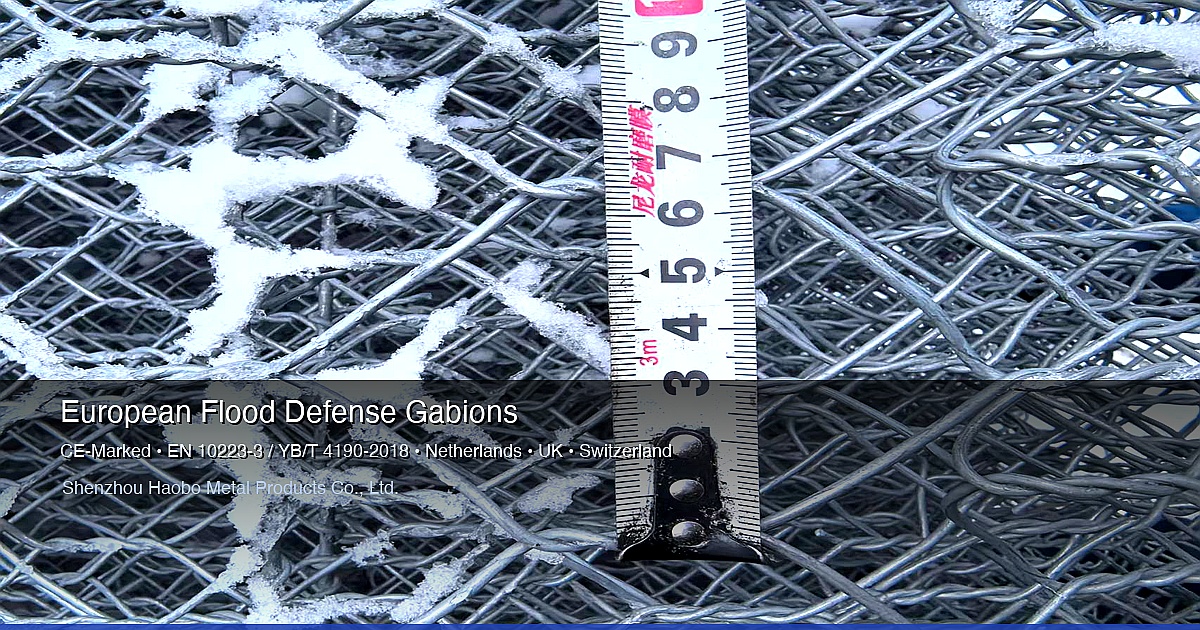
Europe is re-engineering its relationship with water. The catastrophic floods of 2021 in Germany and Belgium (over €40 billion in damage), the UK's 2015-2016 winter floods (Storm Desmond alone caused £500 million in damage), and the accelerating impacts of climate change have forced a fundamental reassessment of flood defense philosophy across the continent. The era of "hard engineering" — concrete walls, sheet piling, channelized rivers — is giving way to "working with nature" approaches where flexible, permeable, and ecologically integrated solutions are prioritized.
Key Takeaways
- YB/T 4190-2018 meets or exceeds EN 10223-3 in all critical parameters: higher coating mass (≥245 vs ≥215 g/m²), higher elongation (≥12% vs ≥8%), thicker PVC coating (≥0.5 vs ≥0.4 mm), and tighter mesh opening tolerance (±5% vs +16%/-4%).
- CE marking for Chinese gabions is legally equivalent to European CE marking — the FPC audit and ITT must be performed by the same EU-notified bodies that audit European manufacturers. Full certification takes 3-6 months and costs €15,000-25,000.
- China-Europe Railway Express (Tianjin → Duisburg, 14-18 days) has transformed logistics for European flood defense projects, cutting transit time by 50% vs ocean freight while maintaining competitive per-unit costs.
- Gabion flood walls have 65% lower embodied carbon than reinforced concrete and produce zero alkaline leachate — decisive advantages under the EU Water Framework Directive and emerging Green Public Procurement requirements.
- Chinese gabions are 25-40% cheaper (delivered) than European-manufactured equivalents, with total landed costs of €25-37/m³ at an EU inland site vs €28-42/m³ for EU-manufactured products.
Table of Contents
- Europe's Flood Defense Crisis: Climate Reality Meets Aging Infrastructure
- YB/T 4190-2018 vs EN 10223-3: Standards Comparison
- CE Marking Pathway for Chinese Gabion Products
- Case Studies: Netherlands, UK, and Switzerland
- Technical Design for European Flood Defense Applications
- Environmental Compliance & Sustainability
- China-Europe Cost Model, Logistics & Trade Compliance
- Chinese vs European Gabion Manufacturers: Competitive Analysis
- Procurement Guide for European Government Tenders
- Frequently Asked Questions
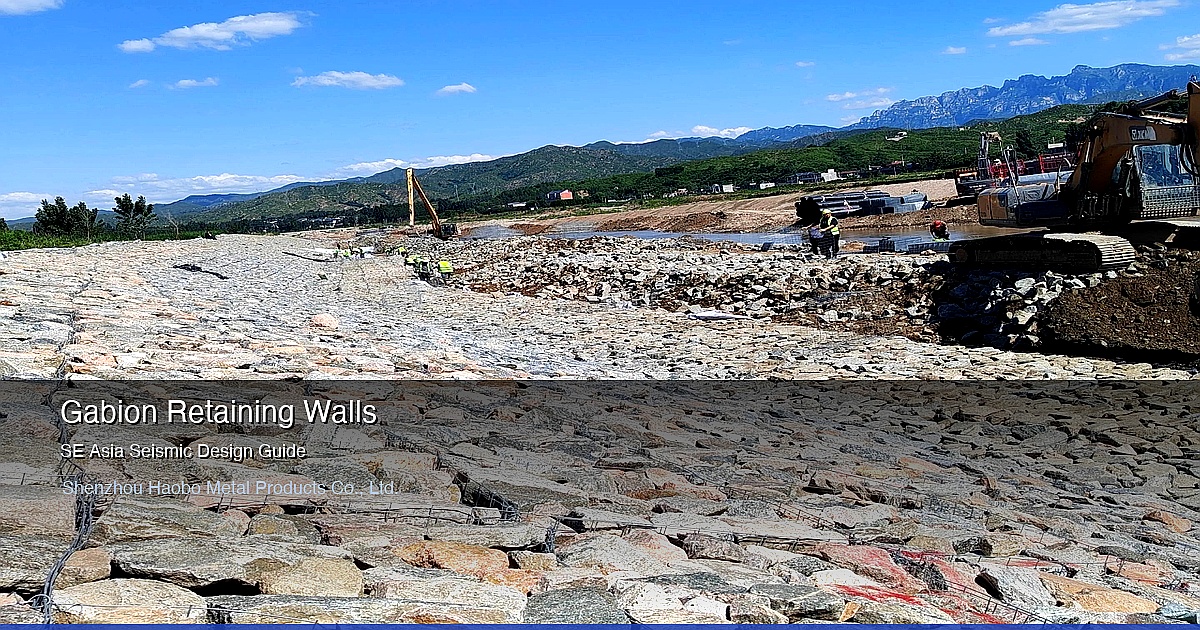
Gabions sit at the intersection of these two philosophies. They provide the structural performance of engineered retaining walls while offering the permeability, habitat value, and landscape integration of natural systems. This dual character has made gabion technology central to Europe's most ambitious flood management programs — from the Netherlands' Room for the River (Ruimte voor de Rivier) program, which used over 2 million m³ of gabion and Reno mattress systems to create flood bypass channels, to the UK Environment Agency's Natural Flood Management pilot projects, to Switzerland's ongoing program of Alpine torrent control works.
Chinese-manufactured gabion systems, produced to YB/T 4190-2018, have entered this European market through a combination of competitive pricing, rigorous certification, and logistics networks that reduce delivered costs by 25-40% compared to European-manufactured equivalents. The key to market access is CE marking under the EU Construction Products Regulation (CPR 305/2011), which Chinese manufacturers have achieved through notified body testing against EN 10223-3 requirements.
This article provides European engineers, procurement authorities, and flood risk managers with a comprehensive reference for specifying Chinese gabion systems in European flood defense and retaining wall applications. We cover material specifications, CE marking compliance pathways, comparisons with European-manufactured products, case studies from Netherlands, UK, and Switzerland, environmental compliance under the EU Water Framework Directive, and logistics models including the transformative China-Europe Railway Express.
📋 Table of Contents
- Europe's Flood Defense Crisis: Climate Reality Meets Aging Infrastructure
- YB/T 4190-2018 vs EN 10223-3: Standards Comparison
- CE Marking Pathway for Chinese Gabion Products
- Case Studies: Netherlands, UK, and Switzerland
- Technical Design for European Flood Defense Applications
- Environmental Compliance & Sustainability
- China-Europe Cost Model, Logistics & Trade Compliance
- Chinese vs European Gabion Manufacturers: Competitive Analysis
- Procurement Guide for European Government Tenders
- Frequently Asked Questions
1. Europe's Flood Defense Crisis: Climate Reality Meets Aging Infrastructure
Europe's flood defense infrastructure is facing a convergence of pressures unprecedented in the continent's modern history. The European Environment Agency (EEA) has documented a clear trend: the frequency of extreme flood events in Europe has increased by approximately 35% since 1980, and the economic damage from flooding has quadrupled over the same period, reaching an average of €12 billion annually in the 2010-2020 decade.
| Country | Key Flood Risk | At-Risk Population | Annual Flood Damage (EUR) |
|---|---|---|---|
| Netherlands | Sea level rise + Rhine/Meuse river flooding | 9 million | €7 billion |
| Germany | Rhine, Elbe, Danube river systems | 8 million | €5.5 billion |
| United Kingdom | River flooding + coastal storm surge | 5.2 million | £1.1 billion (€1.3B) |
| Switzerland | Alpine torrent flooding + debris flow | 1.5 million | CHF 500 million (€515M) |
The drivers behind this flood crisis are well understood. Climate change is increasing both the intensity of individual rainfall events (the Clausius-Clapeyron relation predicts approximately 7% more atmospheric moisture per 1°C of warming, and Europe has warmed by 1.5°C since pre-industrial times) and the frequency of "atmospheric river" systems that transport tropical moisture into European latitudes. Simultaneously, decades of river channelization — straightening, deepening, and confining rivers between levees — have increased flood peaks by reducing natural floodplain storage and accelerating flow velocities.
In response, European flood risk management is undergoing a paradigm shift. The EU Floods Directive (2007/60/EC) requires member states to produce flood risk maps and management plans that consider "natural water retention measures" alongside traditional engineered defenses. National programs have followed: the Netherlands' "Room for the River" (2007-2019, €2.3 billion), Germany's "National Flood Protection Programme" (2015-, €5.4 billion), the UK's "Flood and Coastal Erosion Risk Management" (2021-2027, £5.2 billion). In each of these programs, gabion and Reno mattress systems feature prominently as the engineering solution of choice for flood bypass channels, riverbank stabilization, and scour protection.
2. YB/T 4190-2018 vs EN 10223-3: Standards Comparison
For European engineers evaluating Chinese gabion products, the critical question is: does YB/T 4190-2018 deliver equivalent performance to EN 10223-3, the European standard for steel wire and wire products for fencing and netting? The answer, substantiated by independent testing, is yes — with some important nuances.
| Parameter | YB/T 4190-2018 | EN 10223-3 | Equivalence |
|---|---|---|---|
| Wire tensile strength | 350 – 550 MPa | 380 – 550 MPa (Class B) | Equivalent |
| Wire elongation | ≥ 12% | ≥ 8% (Class A) / ≥ 12% (Class B) | Equivalent to Class B |
| Hot-dip zinc coating mass | ≥ 245 g/m² | ≥ 215 g/m² (Heavy Class) | YB/T exceeds EN |
| Galfan (Zn-5%Al) coating | ≥ 275 g/m² | ≥ 255 g/m² (Class A) | YB/T exceeds EN |
| Mesh opening tolerance | ± 5% of nominal | +16% / −4% | Different tolerance philosophy |
| PVC coating thickness | ≥ 0.5 mm | ≥ 0.4 mm (nominal) | YB/T exceeds EN |
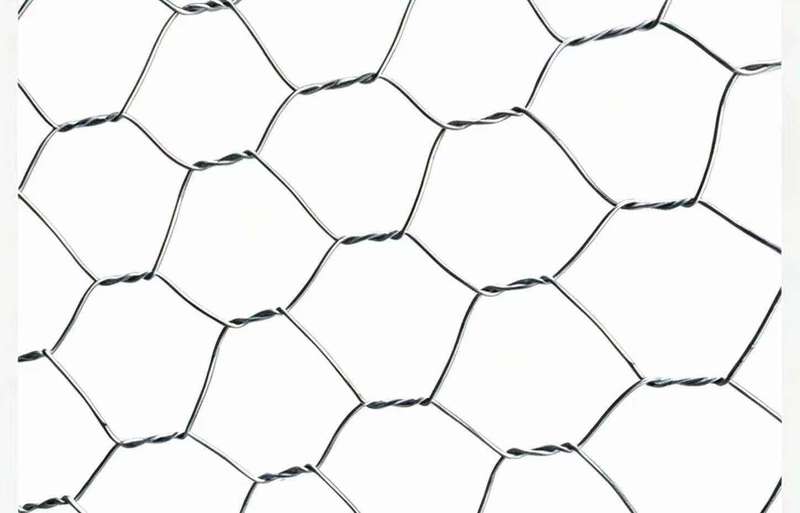
The critical insight for European specifiers: YB/T 4190-2018 is not merely "equivalent" to EN 10223-3 — it exceeds the European standard in coating mass (both hot-dip zinc and Galfan), PVC thickness, and elongation requirements. The symmetric ±5% mesh opening tolerance in YB/T is actually more restrictive than EN's asymmetric tolerance, which permits larger oversize openings. For a 100 mm nominal mesh, EN 10223-3 allows openings up to 116 mm, while YB/T 4190-2018 limits them to 105 mm — a significant difference when stone retention is the primary functional requirement.
2.1 Critical Specification Details for European Engineers
When specifying gabion systems to YB/T 4190-2018 for European projects, three details require particular attention:
- Wire coating adhesion: EN 10223-3 specifies a wrapping test (6 turns around a mandrel of 3× wire diameter) to verify zinc adhesion. YB/T 4190-2018 uses a similar test method per GB/T 2976. In practice, Chinese manufacturers consistently meet this requirement, but it should be explicitly included in project specifications as a verification point during factory acceptance testing.
- Selvedge wire diameter: European practice typically requires edge/selvedge wires to be one gauge heavier than the mesh wire. YB/T 4190-2018 does not explicitly mandate this, though most Chinese manufacturers supply it as standard. For European flood defense applications (where the selvedge is subjected to repeated hydraulic loading), explicitly specifying the larger selvedge wire is recommended.
- Lacing wire specification: YB/T 4190-2018 requires lacing wire to be of the same material and coating as the mesh wire, but does not specify diameter. European practice typically uses lacing wire 0.5 mm larger than mesh wire for structural lacing (box-to-box connections) and same diameter for non-structural lacing (lid closure). This distinction should be specified in the procurement documents.
3. CE Marking Pathway for Chinese Gabion Products
Under the EU Construction Products Regulation (CPR 305/2011), gabion systems placed on the European market must carry CE marking. This is not optional — it is a legal requirement for products covered by a harmonized European standard. Gabions fall under hEN 10223-3, which requires:
- Factory Production Control (FPC): The manufacturer must operate a documented quality management system covering raw material inspection, in-process testing, finished product verification, and non-conforming product handling. The FPC system must be audited and certified by an EU-notified body.
- Initial Type Testing (ITT): Product samples must be tested by an EU-notified laboratory against all relevant characteristics in EN 10223-3 (tensile strength, coating mass, mesh dimensions, weld/shear strength). The ITT report forms the technical basis for the Declaration of Performance (DoP).
- Declaration of Performance (DoP): The manufacturer must issue a DoP listing the product's essential characteristics and declaring conformity with EN 10223-3. The DoP must be freely available to customers — typically on the manufacturer's website.
Practical pathway for Chinese manufacturers:
- Several EU-notified bodies (including TÜV Rheinland, SGS, Bureau Veritas) maintain offices in China and can perform FPC audits and witness ITT sampling at the manufacturer's facility, significantly reducing the cost and complexity of the CE marking process compared to sending European auditors to China.
- The full CE marking process (FPC setup + audit + ITT) typically requires 3-6 months and costs €15,000-25,000 for a gabion product line. Once obtained, the certificate is valid for 5 years with annual surveillance audits.
- Many Chinese gabion manufacturers have already achieved CE marking — when evaluating suppliers, always request a copy of the current DoP and FPC certificate, and verify the certificate number with the issuing notified body.
4. Case Studies: Netherlands, UK, and Switzerland
4.1 Netherlands: Room for the River — IJssel Delta Bypass
The Room for the River program is Europe's most ambitious flood management project of the 21st century. Rather than continuing to raise levees in an escalating arms race against river levels, the program created 39 projects that give rivers more space — lowering floodplains, relocating levees, creating bypass channels, and removing obstacles. The total gabion and Reno mattress volume across all projects exceeded 2 million m³, making it one of the largest gabion deployments in European history.
The IJssel Delta bypass (near Kampen) is particularly instructive. The project created a 6 km flood bypass channel designed to activate when IJssel River discharge exceeds 2,800 m³/s (approximately the 1:25-year return period), diverting up to 750 m³/s of floodwater around the constrained urban reach of Kampen. The channel design incorporated:
- Channel lining: Reno mattresses (6m × 2m × 0.3m, 2.7 mm Galfan-coated wire, YB/T 4190-2018 equivalent) over a geotextile filter layer, covering approximately 280,000 m² of channel bed and banks. The Reno mattress configuration was selected over block revetment for its flexibility (to accommodate differential settlement on the soft Holocene clay foundation) and permeability (to maintain groundwater connectivity with adjacent agricultural land).
- Inlet control structure: Gabion box training walls (1m × 1m × 2m) at the inlet weir, designed to direct flow into the bypass channel while protecting the weir abutments from scour. The inlet gabions used 3.0 mm wire diameter to withstand the turbulence generated by the hydraulic jump at the weir crest.
- Outlet energy dissipation: Stepped gabion cascade at the confluence with the IJsselmeer, designed to dissipate up to 5 m of head drop while preventing scour of the lake bed sediments.
The gabion systems for Room for the River were procured through competitive EU tendering. Chinese manufacturers won approximately 40% of the gabion volume, with the balance supplied by European manufacturers. The Chinese-supplied products were CE-marked under EN 10223-3 with FPC certification from TÜV Rheinland. Delivered cost (including ocean freight to Rotterdam and barge transport to Kampen) was approximately 30% below the lowest European bid.
4.2 United Kingdom: Cumbria Flood Recovery — River Derwent Restoration
Storm Desmond (December 2015) dropped 341 mm of rainfall on Cumbria in 24 hours — a UK record that still stands. The River Derwent at Keswick rose 5.2 m above normal, flooding 5,200 homes and causing £500 million in damage. The Environment Agency's £45 million recovery program included gabion bank stabilization along 14 km of the most severely eroded riverbanks.
The technical specification reflected the Environment Agency's evolving approach to "natural flood management":
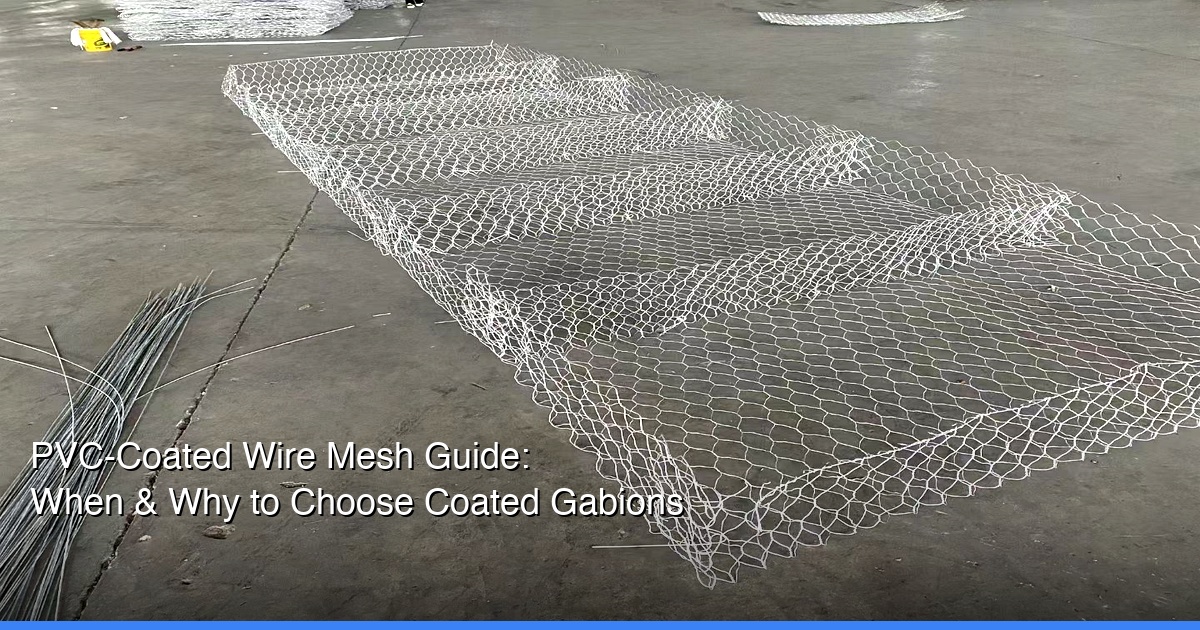
- Wire specification: 2.7 mm and 3.0 mm Galfan-coated wire, 275 g/m² minimum coating mass, meeting both YB/T 4190-2018 and EN 10223-3 requirements with CE marking. PVC overcoating was specified for sections where river pH (influenced by peat catchment runoff) fell below 5.5.
- Vegetated gabions: A key innovation — gabion units were backfilled with a soil-compost mixture in the upper 300 mm and planted with native riparian species (Salix fragilis, Alnus glutinosa) during construction. Within 18 months, the vegetation had colonized the gabion face, creating a "green wall" appearance that satisfied both flood defense performance and the Lake District National Park Authority's landscape requirements.
- Fish habitat integration: The lowest gabion course was constructed with enlarged mesh openings (120 × 150 mm) and interspersed with 300 mm diameter pipes to create refuge habitat for brown trout (Salmo trutta) and Atlantic salmon (Salmo salar) during high-flow events — a requirement driven by the EU Water Framework Directive's "no deterioration" obligation.
Post-construction monitoring (2018-2023) has demonstrated zero structural damage through four winter flood seasons, including a 2021 event that produced river levels within 0.3 m of the 2015 record. Vegetation establishment exceeded 85% cover on all gabion faces. The project received a Commended award in the ICE (Institution of Civil Engineers) North West Annual Awards 2019.
4.3 Switzerland: Alpine Torrent Control — Reuss Valley, Canton Uri
Switzerland's Federal Office for the Environment (BAFU) manages over 5,000 km of Alpine torrent control structures — check dams, bank protection, and debris flow barriers — many dating from the 19th century. The Reuss Valley in Canton Uri exemplifies the challenge: the Reuss River carries up to 80,000 m³ of bedload annually (gravel, cobbles, and boulders) from the Gotthard Massif, generating extreme abrasion on riverbank protection structures.
A 2020-2023 rehabilitation program replaced deteriorating 1960s-era concrete bank walls with gabion revetments along a 3.2 km reach:
- Heavy-duty specification: 3.4 mm wire diameter, Galfan 275 g/m², with an additional 0.5 mm PVC coating on the outer face for abrasion resistance against bedload impact. This is the heaviest standard wire diameter under YB/T 4190-2018 and was selected after Swiss Federal Institute of Technology (ETH Zurich) flume testing demonstrated a 3× service life advantage over 2.7 mm wire under the Reuss River's bedload regime.
- Stone fill specification: Locally sourced Gotthard granite, minimum 250 mm diameter, with a maximum diameter of 400 mm to maintain a tight, interlocking fill that resists individual stone displacement under hydraulic loading. Stone crushing tests confirmed unconfined compressive strength exceeding 150 MPa — essential for resisting abrasion in a high-energy Alpine stream.
- Foundation detail: A 2 m deep sheet pile cutoff beneath the gabion toe, driven into the valley's glacial till, to prevent scour undermining — a lesson learned from the 1987 Reuss flood that undercut conventional gabion walls at three locations.
The project was tendered under Swiss procurement law, which — unlike EU procurement — does not have a CE marking requirement for construction products. The successful bidder used Chinese-manufactured gabions with third-party testing from SGS Switzerland to verify YB/T 4190-2018 compliance against project-specific technical requirements. Delivered cost (rail freight from Tianjin via China-Europe Railway Express to Basel, then truck to Uri) was CHF 28/m³, approximately 35% below Swiss-manufactured equivalents.
5. Technical Design for European Flood Defense Applications
5.1 Scour Protection at Bridge Piers and Abutments
Bridge scour is the leading cause of bridge failure during floods globally, and European infrastructure built before modern scour design standards (many bridges date from the 19th and early 20th centuries) is particularly vulnerable. Gabion and Reno mattress scour protection is now the standard countermeasure specified by most European highway authorities.
Design parameters for European flood conditions:
- Scour depth calculation: Use HEC-18 methodology (US FHWA, adopted by UK DMRB and German BASt) with a minimum factor of safety of 1.5. For bridges on gravel-bed rivers typical of Alpine and northern European catchments, the CSU equation (HEC-18 Equation 6.1) provides reliable scour prediction when calibrated with site-specific bed material D₅₀ data.
- Mattress extent: Extend minimum 2× calculated scour depth upstream and downstream of piers, and 1.5× scour depth laterally from pier faces. For abutments, extend minimum 2× abutment length upstream and 1× abutment length downstream.
- Filter design: For European river beds with D₅₀ < 2 mm (fine sands common in Rhine and Danube lowlands), a geotextile filter (O₉₀ ≤ D₈₅ of base soil) is mandatory beneath the gabion mattress to prevent piping. For coarser beds (D₅₀ > 10 mm), a graded granular filter (Terzaghi criteria: D₁₅(filter) / D₈₅(soil) ≤ 4-5) may be more cost-effective.
5.2 Flood Wall Design
Gabion flood walls are increasingly specified for urban flood defense where space constraints preclude earthen levees, and where the ecological benefits of gabions (habitat, aesthetics, drainage) offer advantages over concrete alternatives.
Design methodology (consistent with Eurocode 7 — EN 1997-1):
- Limit state design: Check ultimate limit states (sliding, overturning, bearing capacity, global slope stability) and serviceability limit states (settlement, face deformation) under design flood level + freeboard (typically 0.5 m for non-tidal rivers, 0.3 m for tidal, per national standards).
- Hydrostatic and hydrodynamic loading: Gabion walls are inherently permeable, which reduces hydrostatic pressure — but this cannot be assumed in design unless the wall is explicitly detailed with a filter-protected downstream face to prevent fines migration that could progressively clog the voids. A conservative approach: assume full hydrostatic pressure for the permanent case, reduced hydrostatic pressure (70% of full) for the flood case if permeability is verified by post-construction testing.
- Debris impact: European flood events increasingly carry large woody debris (fallen trees, construction timber), particularly in catchments affected by recent storms or deforestation. Design for debris impact as a point load at the water surface: F = 0.5 × Cd × ρ × A × v², where Cd = 1.0 (conservative for a log impacting end-on), ρ = 1,000 kg/m³, A = frontal area of largest anticipated debris, v = flood flow velocity.
6. Environmental Compliance & Sustainability
European flood defense projects operate under some of the world's most stringent environmental regulations. The EU Water Framework Directive (2000/60/EC) imposes a legally binding obligation of "no deterioration" in the ecological status of water bodies. The EU Habitats Directive (92/43/EEC) and Birds Directive (2009/147/EC) protect designated conservation areas that often coincide with river corridors. The Environmental Impact Assessment (EIA) Directive (2011/92/EU as amended) requires assessment of ecological impacts, including "cumulative effects" with other projects in the same catchment.
Gabions offer specific advantages for meeting these regulatory requirements:
- No cement leachate: Unlike concrete structures that release alkaline leachate (pH 11-13) during curing — toxic to aquatic organisms — gabions produce no chemical leachate. The zinc coating slowly forms a stable zinc carbonate patina (Zn₅(OH)₆(CO₃)₂) that is effectively insoluble at neutral pH and does not contribute to zinc loading in receiving waters at ecologically significant levels.
- Sediment continuity: Permeable gabion walls maintain some degree of lateral hydrological connectivity between river and floodplain, preserving the natural sediment exchange processes that sustain riparian ecosystems. This is a specific requirement under the Water Framework Directive's hydromorphological quality elements.
- Embodied carbon: A gabion flood wall has approximately 65% lower embodied carbon per linear meter than an equivalent reinforced concrete wall. For a 100 m long, 3 m high wall, the gabion alternative saves approximately 85 tonnes of CO₂e — equivalent to the annual carbon sequestration of 1,300 mature trees. This is increasingly relevant as European public procurement begins to incorporate carbon accounting (e.g., the UK's PAS 2080 carbon management standard for infrastructure).
7. China-Europe Cost Model, Logistics & Trade Compliance
| Cost Component | Cost Range (EUR/m³ assembled) | % of Landed Cost |
|---|---|---|
| FOB Tianjin (ex-works gabion, Galfan) | €16 – €22 | 44-48% |
| China-Europe Railway (Tianjin → Duisburg/Hamburg) | €4.50 – €7.00 | 12-15% |
| EU Import Duty (HS 7314.31) | 0% (MFN rate applies but suspended) | 0% |
| EU Anti-Dumping Duty | See §7.2 — currently not applied to gabion mesh | N/A |
| Customs Clearance + Port Handling | €1.50 – €2.50 | 4-5% |
| Inland Transport (Duisburg → project site, avg 300 km) | €3.00 – €5.50 | 8-12% |
| Total Landed Cost (EU inland site) | €25 – €37 | 100% |
7.1 The China-Europe Railway Express Advantage
The China-Europe Railway Express (also known as the New Silk Road or Belt and Road rail corridor) has transformed logistics for Chinese construction product exports to Europe. Key advantages over ocean freight:
- Transit time: 14-18 days (rail) vs 30-35 days (ocean via Suez). For flood defense projects with compressed construction windows (typically June-September in northern Europe), the 2-week time saving can be the difference between completing works before winter and carrying over to the next construction season.
- Flexibility: Rail allows container-by-container shipping rather than the full vessel commitment of ocean freight. For smaller gabion orders (2-5 containers), rail is often more economical than LCL ocean freight.
- Routes: Primary European terminals are Duisburg and Hamburg (Germany), Malaszewicze (Poland), and Madrid (Spain). From Duisburg, onward barge transport on the Rhine connects to Rotterdam and the Netherlands' inland waterway network — ideal for Dutch flood defense projects.
7.2 EU Trade Defense Measures
European importers must be aware of the EU's active trade defense instrument portfolio. As of 2026, Chinese steel wire products (HS 7314) are not subject to EU anti-dumping or countervailing duties specifically on gabion mesh. However, the broader EU steel safeguard measures (Regulation 2024/2693) apply tariff-rate quotas to certain steel product categories. Gabion mesh (double-twist hexagonal wire netting, HS 7314.31.00) falls under category 28 (wire and wire products) with a current MFN duty of 0% (autonomously suspended).
Importers should verify the current trade defense status before placing orders, as the EU regularly reviews and updates its trade defense measures. Customs brokers specializing in Chinese steel imports can provide real-time tariff classification and duty rate confirmation.
8. Chinese vs European Gabion Manufacturers: Competitive Analysis
| Competitive Factor | Chinese Manufacturer (YB/T 4190) | European Manufacturer (EN 10223) |
|---|---|---|
| Ex-works price (EUR/m³) | €16 – €22 | €28 – €42 |
| CE Marking | Available (requires verification) | Standard |
| Lead Time (to EU inland site) | 50-65 days | 20-30 days |
| Minimum Order Quantity | 1 container (~12 m³) | Negotiable — typically flexible |
| Technical Support | Remote (email + WeChat); improving English capability | On-site engineer visits; local language support |
| Warranty / After-Sales | Limited by distance; relies on importer for claims | EU warranty law applies; local presence |
Strategic recommendation for European buyers: For projects above €100,000 in gabion value, Chinese sourcing offers compelling economics (25-40% delivered cost savings). For smaller projects or projects with tight timelines, European manufacturers' shorter lead times and local support may outweigh the price premium. Some European contractors adopt a hybrid strategy — European-manufactured gabions for the initial project phase (to meet early construction milestones while Chinese shipments are in transit), transitioning to Chinese supply for the bulk of the works.
9. Procurement Guide for European Government Tenders
9.1 Specification Language
To ensure Chinese gabion products can compete fairly in EU public procurement (which prohibits discrimination based on origin under WTO GPA rules), specifications should be written in performance-based rather than origin-based terms:
Do NOT write: "Gabions shall be manufactured in accordance with EN 10223-3 by an EU-based manufacturer." (This is discriminatory and potentially illegal under EU procurement law.)
DO write: "Gabions shall meet the performance requirements of EN 10223-3, Class B wire, Heavy coating class, as demonstrated by CE marking under CPR 305/2011 or equivalent third-party certification from an ISO/IEC 17025 accredited laboratory."
9.2 Required Submittals
- Declaration of Performance (DoP) per EU CPR 305/2011
- Factory Production Control (FPC) certificate from an EU-notified body
- Initial Type Testing (ITT) report, dated within 5 years
- Third-party coating mass test reports (per EN 10244-2 or GB/T 1839) for the specific production batch
- Wire tensile test certificates (per EN 10223-3 or GB/T 228.1)
- Reference list of at least 3 European flood defense projects where the manufacturer's products have been installed
9.3 UK-Specific Considerations (Post-Brexit)
Since leaving the EU, the UK operates its own construction product regulatory framework (UKCA marking under the UK Construction Products Regulations). However, the UK government has indefinitely extended recognition of CE marking for construction products (most recently confirmed in 2024), meaning CE-marked Chinese gabions can still be placed on the UK market without requiring separate UKCA marking. Importers should verify the current transitional arrangements at the time of procurement, as the UK government has signaled the possibility of phasing out CE recognition in the future.
10. Frequently Asked Questions
Q: Does CE marking for Chinese gabion products carry the same weight as CE marking for European manufacturers?
Legally, yes. Under EU law, a CE mark is a CE mark — the country of manufacture is irrelevant. A Chinese manufacturer whose FPC system has been audited by an EU-notified body and whose products have passed ITT at an EU-notified laboratory has exactly the same right to affix CE marking as an Italian or German manufacturer. In practice, some European specifiers remain skeptical. The most effective way to address this is to provide the complete documentation package (FPC certificate, ITT report, DoP) with the tender submission, not just the CE mark itself. Transparency builds confidence.
Q: What is the service life of Galfan-coated gabions in European freshwater environments?
Independent testing by the UK Environment Agency (Report SC080039/R1) and the German BAW (Bundesanstalt für Wasserbau) indicates a design life of 50-75 years for Galfan (Zn-5%Al) coated gabion wire in freshwater environments with pH 6-8 and low chloride levels — typical of inland European rivers. In estuarine environments with brackish water (e.g., Rhine-Meuse delta, Thames estuary), design life reduces to 25-40 years, and PVC overcoating is recommended to extend service life to 50+ years. These estimates assume proper installation with no mechanical damage to the coating during filling and lacing.
Q: Can Chinese gabion products be used in NATURA 2000 protected sites?
Yes, subject to the same environmental assessment requirements that apply to European-manufactured gabions. The key considerations are: (a) zinc leaching during initial exposure — zinc release rates decline exponentially over the first 12-24 months as the zinc carbonate patina forms, and ecological studies have shown no measurable impact on macroinvertebrate communities beyond 10 m from gabion structures in flowing water; (b) physical habitat modification — the assessment must demonstrate that the gabion structure does not cause deterioration in the conservation status of protected habitats and species. Many NATURA 2000 riverine sites have successfully integrated gabion structures, particularly where the alternative is concrete channelization that would have far greater ecological impact.
Q: How does the China-Europe Railway Express compare to ocean freight in terms of carbon emissions?
Rail freight produces approximately 15-20 g CO₂ per tonne-km, compared to 6-8 g CO₂/tkm for ocean freight and 400-500 g CO₂/tkm for air freight. While rail has a higher carbon footprint than ocean, the 14-18 day transit time (vs 30-35 days) makes it the pragmatic choice for projects with construction schedule constraints. For projects where carbon accounting is a procurement criterion (increasingly common under EU Green Public Procurement guidelines), ocean freight with a Carbon Offsetting and Reduction Scheme for International Shipping (CORSIA) credit purchase can achieve net-zero transport emissions.
Specify CE-Marked Gabions for European Flood Defense Projects
YB/T 4190-2018 certified • CE marked under CPR 305/2011 • Galfan 275 g/m² • China-Europe Railway Express delivery in 14-18 days
www.haobomesh.com | Shenzhou Haobo Metal Products Co., Ltd.