Reno Mattress Philippines: NIA Canal Lining & River Scour Protection Guide 2026
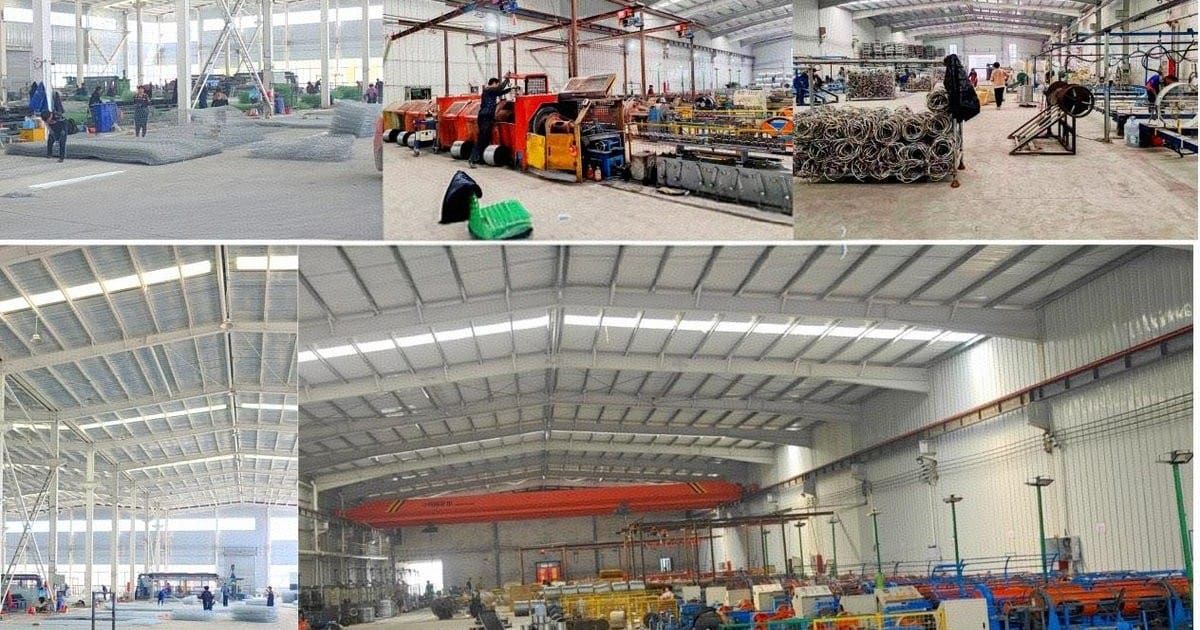
From Our Factory Floor: As a direct manufacturer, Haobo Metal shares real-world insights from thousands of completed projects across 30+ countries. This guide combines field data with international engineering standards.
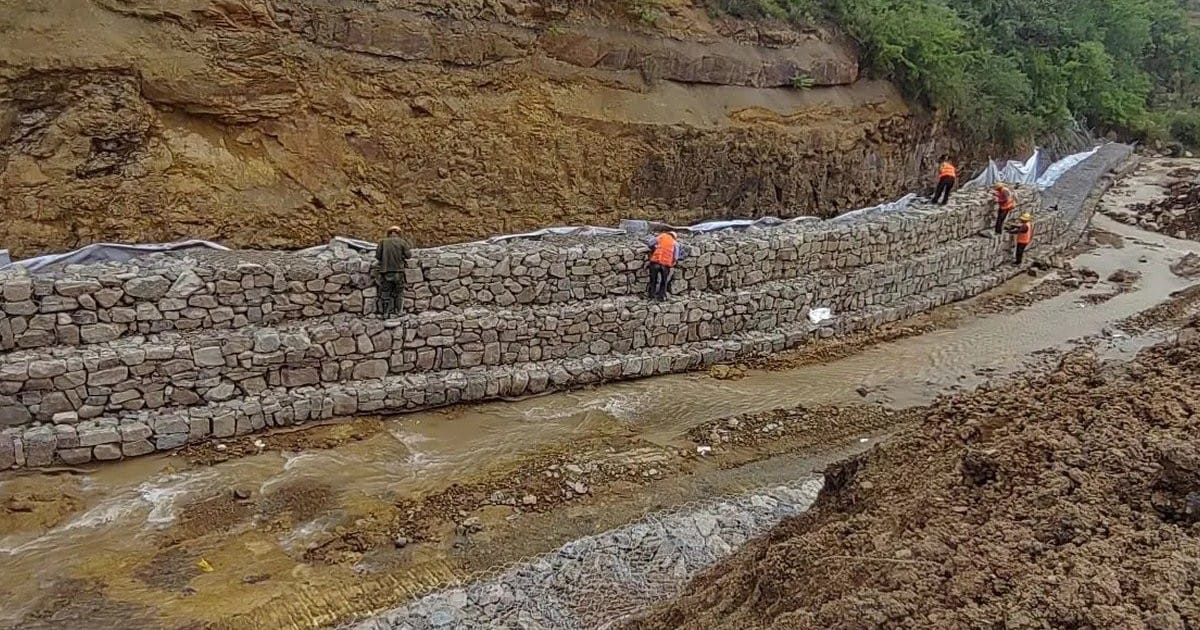
A Reno mattress is a flat, compartmentalized gabion structure — typically 0.17m to 0.50m thick — designed for riverbed scour protection, canal lining, and coastal erosion control. In the Philippines, where an average of 20 tropical cyclones cross the archipelago each year and major river systems like the Cagayan, Agusan, and Pampanga experience severe scouring during typhoon season, Reno mattresses are a frontline defense in the National Irrigation Administration (NIA) and DPWH infrastructure playbook.
This guide covers everything Philippine contractors, procurement officers, and consulting engineers need to know about sourcing, specifying, and installing Reno mattresses — from DPWH Item 506 compliance to landed Manila pricing.
📋 Table of Contents
- What Is a Reno Mattress?
- Reno Mattress vs Gabion Box vs Gabion Mattress
- Philippine Applications: NIA, DPWH & DENR
- Standard Specifications for Philippine Projects
- Sizing & Design Guide for Philippine Rivers
- Stone Fill Requirements for Philippine Projects
- Installation Best Practices for Tropical Conditions
- Cost Breakdown: FOB Tianjin to Manila
- Durability & Maintenance for Philippine Climate
- How to Order from China for Philippine Projects
1. What Is a Reno Mattress? Definition & Engineering Context
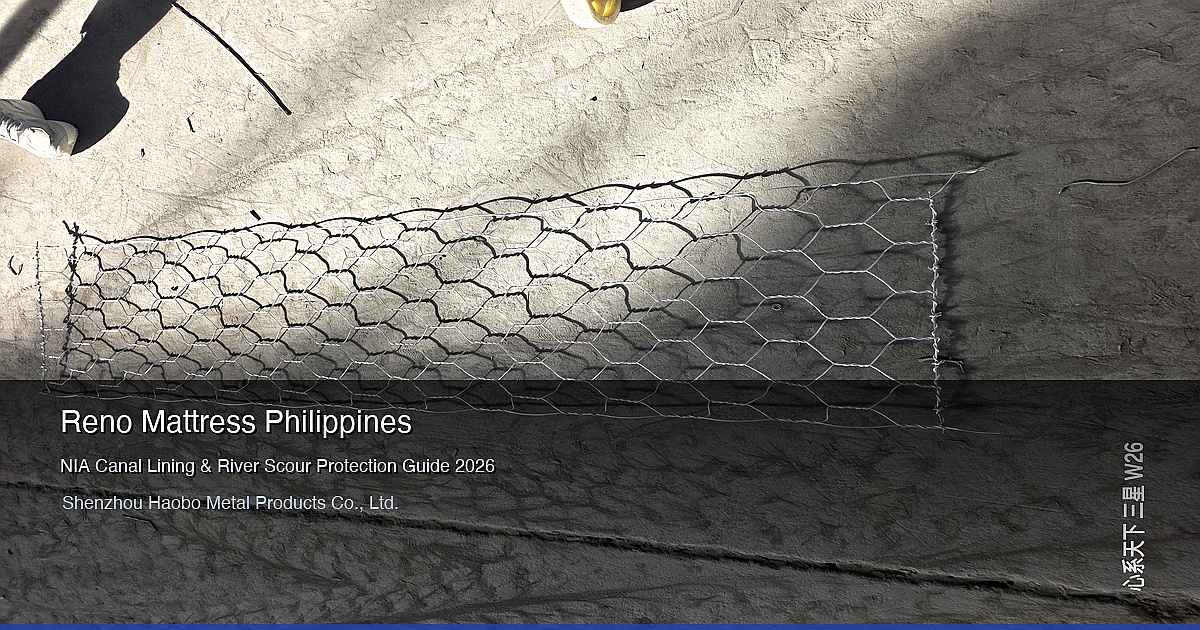
A Reno mattress (also called a gabion mattress or reno mattress) is a low-profile, compartmentalized wire mesh container filled with stone or rock. Unlike standard gabion boxes — which have equal or near-equal height, width, and length — a Reno mattress is deliberately shallow. Typical thicknesses range from 0.17m to 0.50m, while length and width can extend to 3m × 2m or 6m × 2m in a single unit.
The key design principle is surface-area-to-thickness ratio: by spreading the stone fill over a wide, flat area, a Reno mattress distributes hydraulic forces, resists scouring, and creates a permeable, flexible armor layer that conforms to the underlying soil or riverbed geometry.
In Philippine water resources engineering, Reno mattresses are specified for:
- Riverbank toe protection and scour aprons downstream of bridges and culverts
- NIA canal lining — preventing erosion of earth-lined irrigation canals
- Coastal revetment toe protection against wave undercutting
- Drop structure and weir stilling basin energy dissipation
- Dam spillway and outlet channel erosion protection
2. Reno Mattress vs Gabion Box vs Gabion Mattress: Key Differences
In Philippine bidding documents, these three terms are often used interchangeably — but they refer to different products with distinct engineering functions. Getting this wrong in a BOQ submission can disqualify your bid.
| Parameter | Reno Mattress | Gabion Box | Gabion Mattress (Terramesh) |
|---|---|---|---|
| Typical Thickness | 0.17m – 0.50m | 0.50m – 1.00m | 0.30m – 1.00m (facing + mattress) |
| Primary Function | Scour protection, canal lining | Retaining walls, gravity structures | Reinforced soil slopes, MSE walls |
| DPWH Item | Item 506 (Stone Masonry / Riprap section) | Item 530 (Gabions and Mattresses) | Item 530 / Special Provision |
| Mesh Type | Double-twist hexagonal, 80×100mm | Double-twist hexagonal, 80×100mm | Double-twist hexagonal + welded facing |
| Wire Diameter (body) | 2.2mm – 2.7mm | 2.7mm – 3.4mm | 2.7mm – 4.0mm (facing wire) |
| Typical NIA Use | Canal lining, diversion channel | Headworks, drop structures | Elevated canal embankments |
Bottom line for Philippine bidders: If the BOQ says "gabion mattress 0.3m thick for river scour protection," order a Reno mattress. If it says "gabion box 1.0m × 1.0m × 1.5m for retaining wall," order a standard gabion box. Know the difference — it is the most common cause of rejected material submissions.
3. Philippine Applications: NIA, DPWH & DENR Projects
Reno mattresses serve three major government agencies in the Philippines, each with distinct engineering requirements:
3.1 NIA — National Irrigation Administration
NIA is the single largest consumer of Reno mattresses in the country. Primary applications include:
- Main canal lining: Unlined earth canals lose 30-50% of water to seepage. A 0.23m thick Reno mattress with geotextile underlay reduces seepage by 70-90% at 1/3 the cost of concrete lining.
- Lateral and sublateral canals: Smaller cross-sections typically use 0.17m thick mattresses with 2.2mm wire.
- Diversion weir scour aprons: Downstream energy dissipation zones require 0.30-0.50m thick mattresses with 2.7mm wire to withstand hydraulic jump turbulence.
3.2 DPWH — Department of Public Works and Highways
DPWH specifies Reno mattresses under Item 530 and Item 506 for:
- Bridge pier scour protection: Mandatory for all new bridges crossing rivers with bed material finer than coarse gravel. Typical configuration: 6m × 3m × 0.30m mattresses laid in a 2-layer staggered pattern around piers.
- Roadside drainage channels: National highway drainage ditches in flood-prone areas (Region II Cagayan, Region V Bicol, Region VIII Eastern Visayas) increasingly use Reno mattress lining instead of concrete U-drains for lower cost and better hydraulic performance.
- Culvert inlet/outlet protection: Required for culverts with design flows exceeding 2.0 m³/s per DPWH Design Guidelines for Bridges.
3.3 DENR & LGUs — Coastal & Environmental
- Mangrove restoration revetments: 0.17m thick mattresses used as substrate stabilization for mangrove replanting programs in areas like Bataan, Guimaras, and Palawan.
- Shoreline erosion control: Beachfront properties and coastal barangays use 0.30m mattresses with geotextile filter to arrest wave-induced erosion without the environmental impact of concrete seawalls.
- Mine tailings dam toe protection: Large-scale mining operations in Surigao, Benguet, and Masbate use 0.50m thick heavy-duty mattresses (3.0mm wire) at tailings storage facility toes.
4. Standard Specifications for Philippine Projects
Philippine Reno mattress procurement typically references three overlapping standards:
| Standard | Scope | Key Specification for PH Projects |
|---|---|---|
| ASTM A975 | Double-twist hexagonal mesh gabions and mattresses | Wire tensile 400-550 N/mm², zinc coating ≥ 245 g/m² (Class 3), PVC coating thickness 0.4-0.6mm |
| EN 10223-3 | European standard for gabions — hexagonal mesh | Mesh opening tolerance ±10%, selvedge wire ≥ 3.4mm, lacing wire ≥ 2.2mm |
| DPWH Standard Specs (Blue Book) Item 530 | Philippines-specific gabion and mattress requirements | Stone fill 100-200mm clean durable rock, field density testing after placement, geotextile filter per Item 716 |
4.1 Recommended Specification Summary
| Specification | Standard Duty (NIA Canals) | Heavy Duty (DPWH Rivers) | Coastal / Marine |
|---|---|---|---|
| Mattress Thickness | 0.23m | 0.30m | 0.30m – 0.50m |
| Body Wire Ø | 2.2mm | 2.7mm | 3.0mm (Galfan/PVC) |
| Selvedge Wire Ø | 2.7mm | 3.4mm | 4.0mm |
| Mesh Opening | 80 × 100mm | 80 × 100mm | 60 × 80mm (PVC coated) |
| Zinc Coating | 245 g/m² HDG | 275 g/m² HDG | Galfan 400+ g/m² |
| Stone Fill Size | 75–150mm | 100–200mm | 125–250mm |
| Geotextile | Non-woven 200 g/m² | Non-woven 300 g/m² | Non-woven 400 g/m² + sand filter |
5. Reno Mattress Sizing & Design Guide for Philippine Rivers
Proper sizing of Reno mattresses for Philippine river conditions requires consideration of three environmental factors unique to the archipelago:
5.1 Hydraulic Design Parameters
Reno mattress thickness and stone fill size must resist the design flood velocity. For Philippine rivers, DPWH typically uses the 50-year or 100-year flood as the design event.
| Flow Velocity (m/s) | Minimum Mattress Thickness | Stone Fill Size | Typical PH River |
|---|---|---|---|
| < 3.0 m/s | 0.23m | 75–125mm | NIA irrigation canals, lowland tributaries |
| 3.0 – 4.5 m/s | 0.30m | 100–200mm | Agusan River, Pampanga River (non-typhoon) |
| 4.5 – 6.0 m/s | 0.50m | 150–250mm | Cagayan River (typhoon flood), mountain streams |
5.2 Bed Scour Depth Estimation
For bridge pier and abutment scour, follow the DPWH-recommended HEC-18 methodology with the following Philippine-specific adjustments:
- Add 20% to computed scour depth for tropical cyclone frequency (PAGASA Zone I-III)
- Use local D50 bed material values from DPWH Bureau of Design borehole data
- Extend mattress protection to at least 2.5× pier width upstream and downstream
6. Stone Fill Requirements for Philippine Projects
Stone fill is 60-70% of the installed cost of a Reno mattress system in the Philippines. Getting this wrong is the most common cause of DPWH inspection failure.
6.1 Stone Quality per DPWH Blue Book
- Material: Clean, hard, durable, angular rock — not rounded river cobbles
- Minimum compressive strength: 25 MPa (unconfined)
- Specific gravity: ≥ 2.5
- Maximum water absorption: ≤ 2%
- Free of: soil, organic matter, weathered material, clay lumps
6.2 Philippine Quarry Sources
Acceptable stone for DPWH projects typically comes from:
- Luzon: Angono (Rizal) — basalt/andesite; Rodriguez (Rizal) — limestone; Bulacan — aggregates
- Visayas: Mactan (Cebu) — limestone; Naga (Cebu) — basalt
- Mindanao: Davao del Norte — basalt; Iligan — limestone
If the quarry is more than 50km from the project site, transportation cost can exceed the stone cost — factor this into BOQ pricing.
6.3 Fill Placement QC
- Stone must be hand-placed or carefully machine-placed to minimize voids (< 30% void ratio)
- Overfill mattresses by 25-30mm to allow for settlement
- After filling, close lid with lacing wire at 150mm centers — loose closures are a DPWH defect item
- Field density: random checks with sand-cone or nuclear gauge if specified
7. Installation Best Practices for Philippine Tropical Conditions
Installing Reno mattresses during the Philippine wet season (June–November) adds complexity. Here is a field-proven workflow developed from multiple DPWH river protection projects:
7.1 Pre-Installation Checklist
- Site preparation: Grade the riverbank or canal bed to design slope (typically 1V:1.5H to 1V:3H). Remove all vegetation, debris, and soft soil.
- Geotextile placement: Lay non-woven geotextile (minimum 200 g/m²) with 300mm overlap at seams. Pin at 1m centers.
- Temporary dewatering: For rivers with baseflow, use sandbags or sheet piles to create a dry working area. Plan installation for dry season (December–May) if possible.
- Anchor trench: Excavate a 0.5m deep anchor trench at the upstream and downstream edges to prevent mattress undermining.
7.2 Mattress Assembly & Placement
- Unfold mattress on flat ground adjacent to installation location.
- Lift diaphragms to vertical position and lace to side panels with lacing wire.
- Lift side panels and lace corners. Each corner requires diagonal lacing in both directions.
- Place assembled mattress in final position using excavator with lifting beam — do NOT drag mattresses across geotextile.
- Lace adjacent mattresses together along all contact edges using lacing wire at 100mm spacing.
7.3 Wet Season Contingencies
- Have dewatering pumps (minimum 2, one standby) on site before starting
- Pre-assemble mattresses under shelter to reduce on-site assembly time
- Pour stone fill immediately after placement — do not leave empty mattresses overnight during monsoon season
- Allow 30% extra stone on order for washout losses during placement
8. Cost Breakdown: FOB Tianjin to Manila Landed
Understanding the total landed cost per square meter is essential for accurate BOQ pricing. Below is a representative cost model for a 0.30m thick, 2.7mm wire Reno mattress shipped to Manila.
| Cost Component | Unit Cost (USD) | Per m² (3m×2m mattress) |
|---|---|---|
| Reno mattress (0.30m, 2.7mm wire, 245g HDG) | FOB $30-38 / pc | $5.00 – $6.33 / m² |
| Ocean freight Tianjin → Manila (40HQ) | $2,500–3,200 / container | $1.80 – $2.30 / m² |
| Import duty (HS 7314.49 — 5%) | — | $0.34 – $0.43 / m² |
| VAT (12%) | — | $0.86 – $1.08 / m² |
| Port handling + trucking (Manila) | PHP 25,000–40,000 / container | $0.75 – $1.20 / m² |
| Total Landed Manila | — | $8.75 – $11.34 / m² |
Note: Stone fill, geotextile, and installation labor are additional costs borne by the contractor. In the Philippines, installed cost including stone and labor typically adds PHP 800–1,500/m² ($14-27/m²) to the landed mattress cost, bringing the total installed system cost to approximately $23-38/m² installed.
Payment terms: T/T 30% deposit, 70% before shipment. L/C at sight accepted for orders over $50,000.
9. Durability & Maintenance for Philippine Climate
The Philippine tropical marine environment is one of the most corrosive on Earth for galvanized steel. A properly specified Reno mattress should achieve a 25-50 year service life with these adaptations:
| Environment | Coating Recommendation | Expected Service Life | PH Example |
|---|---|---|---|
| Inland freshwater (canals, rivers) | 245 g/m² HDG | 25-35 years | NIA Magat RIS main canal |
| Coastal (500m–2km from sea) | Galfan 400+ g/m² or PVC coated | 30-50 years | Manila Bay reclamation revetments |
| Splash zone (tidal) | PVC-coated 0.5mm + Galfan core | 20-30 years | Lapu-Lapu coastal protection, Cebu |
| Mining/acidic water (pH < 5.5) | PVC-coated 0.6mm + stainless lacing | 15-25 years | Surigao mining runoff channels |
9.1 Maintenance Program
- Annual inspection: Before rainy season (May), inspect all mattresses for bulging, torn mesh, or stone loss
- After major typhoon events: Inspect within 7 days for scour damage at mattress edges
- Repair protocol: Cut out damaged section, lace in replacement panel using 3.4mm lacing wire, refill with matching stone
- Vegetation management: Allow grass and shrubs to colonize the mattress surface — root systems enhance stability. Remove trees (roots >50mm diameter) that can displace wire mesh
10. How to Order Reno Mattresses from China for Philippine Projects
Step 1: Prepare Your Technical Specification
Send us your DPWH/NIA project specifications, including: mattress thickness, body wire diameter, mesh opening, zinc coating grade, and total surface area (m²). If available, share the BOQ item description for exact compliance matching.
Step 2: Receive Quotation within 24 Hours
We provide a detailed quotation including: FOB unit price, recommended container loading plan (20GP: ~1,200m² folded; 40HQ: ~2,800m² folded), shipping schedule to Manila/Cebu/Davao, and payment terms.
Step 3: Sample Approval (if required)
For projects with DPWH Materials Engineer sign-off, we ship A4-size mesh samples within 5 working days via DHL for zinc coating thickness testing and tensile strength verification.
Step 4: Production & Shipment
Standard production lead time 15-25 days for orders up to 10,000m². Container loading photos and shipping documents (Bill of Lading, Commercial Invoice, Packing List, Certificate of Origin, Mill Test Certificate) provided before vessel departure.
Contact us on WhatsApp or email for a fast Reno mattress quotation tailored to your Philippine project specifications.
Get Your Reno Mattress Quotation for Philippine Projects
FOB Tianjin to Manila in 15-25 days. DPWH, NIA & DENR compliant specifications. Custom sizes and coatings available.
www.haobomesh.com | Shenzhou Haobo Metal Products Co., Ltd.