Reno Mattress vs Gabion Mattress: Key Differences for Erosion Control Projects

In the world of erosion control and hydraulic engineering, reno mattresses and gabion mattresses are two commonly specified products that are often confused with one another. While both serve as flexible, permeable structures for channel lining and riverbank protection, they differ in construction, application suitability, and cost-effectiveness for different project types. Understanding these differences is essential for engineers and procurement managers making specification decisions.
📋 Table of Contents
This article provides a detailed comparison between reno mattresses and gabion mattresses — covering definitions, structural differences, material specifications, installation methods, hydraulic performance, and how to choose the right product for your project.
1. What Is a Reno Mattress?
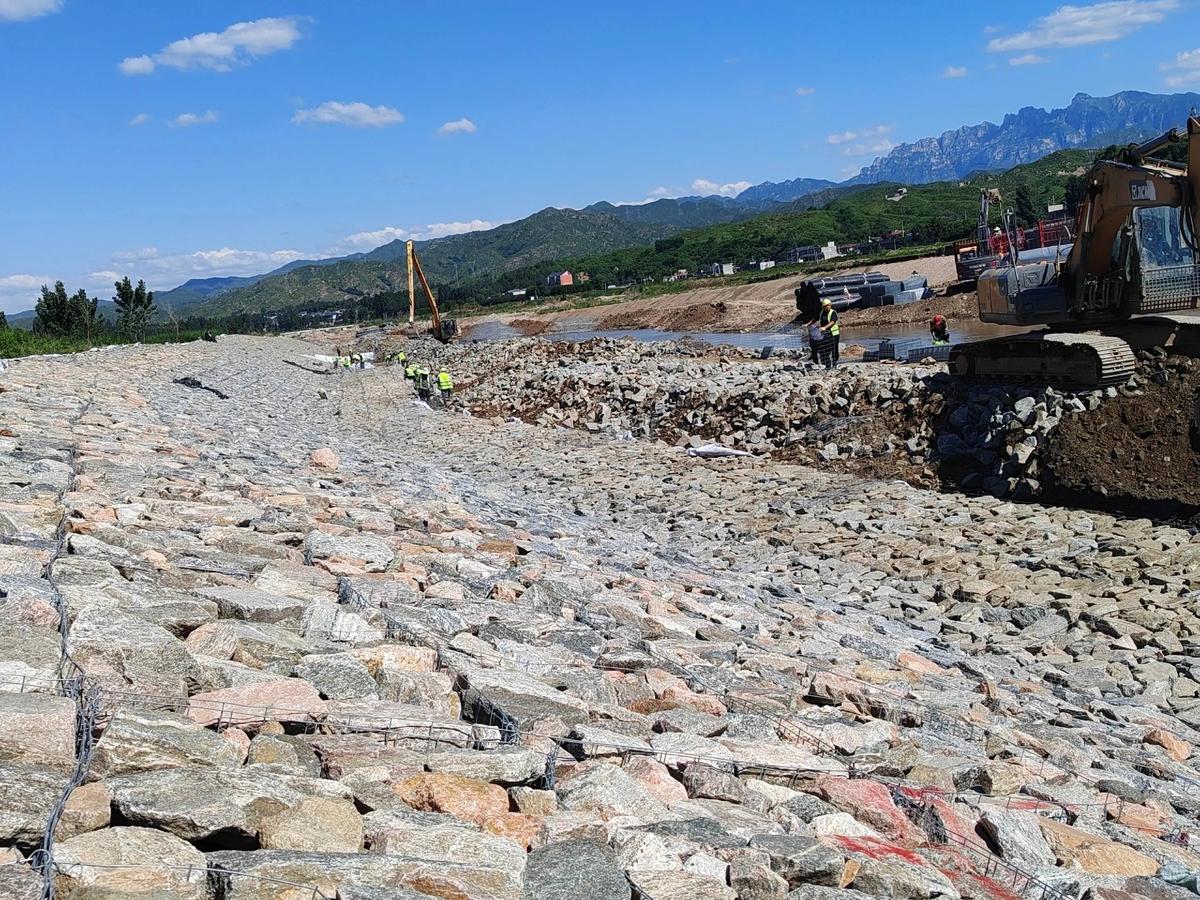
A reno mattress is a relatively thin, flat gabion structure typically used for riverbank lining, channel protection, and scour prevention. The name "reno" derives from "renovation" — reflecting its primary purpose of renovating and protecting eroded riverbanks and waterways.
Reno mattresses are characterized by their low height-to-width ratio. Standard thicknesses range from 0.17m to 0.30m, while widths and lengths can vary from 2m×3m to 2m×6m. The internal structure includes diaphragms (partition panels) spaced at 1-meter intervals to prevent stone movement and maintain uniform thickness after filling.
The mesh used for reno mattresses is typically double-twist hexagonal wire mesh with PVC coating over galvanized wire, providing excellent corrosion resistance in freshwater environments. The PVC coating also offers additional abrasion resistance against sediment-laden water flow.
2. What Is a Gabion Mattress?
A gabion mattress is essentially a thinner version of a standard gabion basket, designed specifically for surface protection applications. While the terms "reno mattress" and "gabion mattress" are sometimes used interchangeably, there are important technical distinctions.
Gabion mattresses typically have a slightly greater thickness range (0.23m to 0.50m) compared to reno mattresses, and they may use different mesh types including welded wire mesh panels in addition to double-twist hexagonal mesh. The internal cell structure also differs — gabion mattresses often use welded diaphragm panels rather than the flexible wire diaphragms found in reno mattresses.
The wire diameter for gabion mattresses is generally 2.2mm to 2.7mm for the mesh body and 2.7mm to 3.4mm for edge reinforcement and lacing wire, depending on the application's hydraulic loading conditions.
3. Key Structural Differences
Understanding the structural distinctions between reno and gabion mattresses helps in making the right specification choice:
Mesh Type: Reno mattresses almost exclusively use double-twist hexagonal mesh (as per EN 10223-3), which provides flexibility and the ability to conform to uneven ground surfaces. Gabion mattresses may use either hexagonal or welded mesh, with the latter offering greater rigidity for applications requiring a flatter finished surface.
Diaphragm Design: Reno mattresses use wire diaphragms formed from the same continuous mesh as the base and lid, creating a fully integrated structure. Gabion mattresses often use separate diaphragm panels that are mechanically connected, providing more defined cell separation.
Edge Treatment: Reno mattresses have selvedge (reinforced edge) wire along all exposed edges to prevent unraveling. Gabion mattresses may use thicker edge wires or additional reinforcement, particularly for welded mesh variants where cut edges require protection against corrosion.
Lid Design: Reno mattress lids are typically an extension of the base mesh, folded over and laced in place after stone filling. Gabion mattresses may have separate lid panels that are secured with spiral binders or C-rings for faster installation.
4. Hydraulic Performance Comparison
The hydraulic performance of mattress systems depends on several factors beyond just the product type:
Permeability: Both reno and gabion mattresses are highly permeable, allowing water to flow through the stone fill while preventing soil erosion underneath. This permeability reduces hydrostatic pressure buildup, a key advantage over impermeable concrete linings.
Flow Velocity Resistance: Reno mattresses with PVC-coated wire have demonstrated excellent resistance to flow velocities up to 6 m/s in laboratory testing. Gabion mattresses with welded mesh can handle similar velocities but may experience more localized wear at wire intersections under high sediment loads.
Scour Protection: The flexible nature of reno mattresses allows them to settle into scour holes without losing structural integrity, making them particularly effective for bridge pier and abutment protection. Gabion mattresses with welded mesh are less flexible and may require underpinning if significant scour occurs.
Vegetation Integration: Both systems support vegetation growth through the stone fill, which enhances long-term stability through root reinforcement. Reno mattresses, with their thinner profile and hexagonal mesh, tend to support better vegetation establishment.
5. Installation Methods and Considerations
Proper installation is critical for mattress performance. Key steps include:
Subgrade Preparation: The foundation surface must be graded to the design profile and compacted. A geotextile filter layer is typically placed beneath the mattress to prevent soil migration through the stone fill while maintaining permeability.
Mattress Assembly: Reno mattresses are supplied flat-packed and must be assembled on-site. The base, sides, and diaphragms are lifted into position and temporarily braced before stone filling begins.
Stone Filling: Stone fill should be hard, durable, and properly graded — typically 100-200mm for standard applications. Overfilling by approximately 25-30mm compensates for settlement. Stones must be placed carefully to avoid damaging the PVC coating.
Lid Closure: After filling, the lid is folded over and securely laced to the sides and diaphragms using lacing wire or C-rings at 150-200mm intervals. Proper lacing is essential for structural integrity.
Adjacent Unit Connection: Adjacent mattresses are laced together along their common edges to create a continuous protective surface without weak points at joints.
6. Cost Comparison and Economic Analysis
When comparing costs between reno and gabion mattresses, consider the full installed cost rather than just material prices:
Material Cost: Reno mattresses with PVC-coated double-twist mesh typically cost 15-25% more than standard galvanized gabion mattresses of equivalent area. However, PVC coating provides superior long-term durability that can justify the premium.
Installation Cost: Reno mattresses generally install faster due to the integrated lid design, saving 10-15% on labor compared to gabion mattresses with separate lid panels.
Lifecycle Cost: When factoring in the 50+ year design life of PVC-coated reno mattresses versus 30-40 years for standard galvanized gabion mattresses in freshwater environments, the lifecycle cost advantage often favors reno mattresses for permanent installations.
Maintenance Cost: Both systems require minimal maintenance, but PVC-coated reno mattresses are more resistant to vandalism and accidental damage, reducing repair frequency in publicly accessible areas.
7. Application Guidelines: When to Use Which
Use Reno Mattresses When:
- Riverbank and channel lining where flexibility and scour adaptation are priorities
- Projects requiring long design life (50+ years) in freshwater environments
- Bridge pier and abutment scour protection where differential settlement is expected
- Environmentally sensitive areas where vegetation integration is desired
- Projects following European standards (EN 10223-3)
Use Gabion Mattresses When:
- Flat surface protection is the primary requirement with minimal expected settlement
- Budget constraints favor lower initial material cost
- Welded mesh panels are preferred for aesthetic or structural reasons
- Projects in non-corrosive environments where PVC coating is unnecessary
- Applications requiring precise dimensional control (welded mesh variants)
8. Quality Standards and Specifications
When procuring either product type, reference the appropriate international standards:
EN 10223-3: European standard for steel wire mesh products for gabion applications, covering double-twist hexagonal mesh specifications for reno mattresses.
ASTM A975: American standard for double-twist hexagonal gabion mesh, applicable to both reno and gabion mattresses in North American projects.
BS 8002: British standard code of practice for earth retaining structures, including guidance on gabion mattress applications.
Always request material test certificates (MTC) confirming wire tensile strength, coating weight, and PVC adhesion test results. For critical hydraulic applications, specify third-party testing of the complete mattress assembly under simulated flow conditions.
Need Gabion Mesh for Your Project?
Send us your specifications — mesh size, wire diameter, coating type, and quantity. Our engineers will provide a customized quotation and technical proposal within 24 hours.
📱 WhatsApp Inquiry 📧 Send Email