Riverbank Erosion Control with Gabion Mattresses: Design and Application
The Growing Challenge of Riverbank Erosion
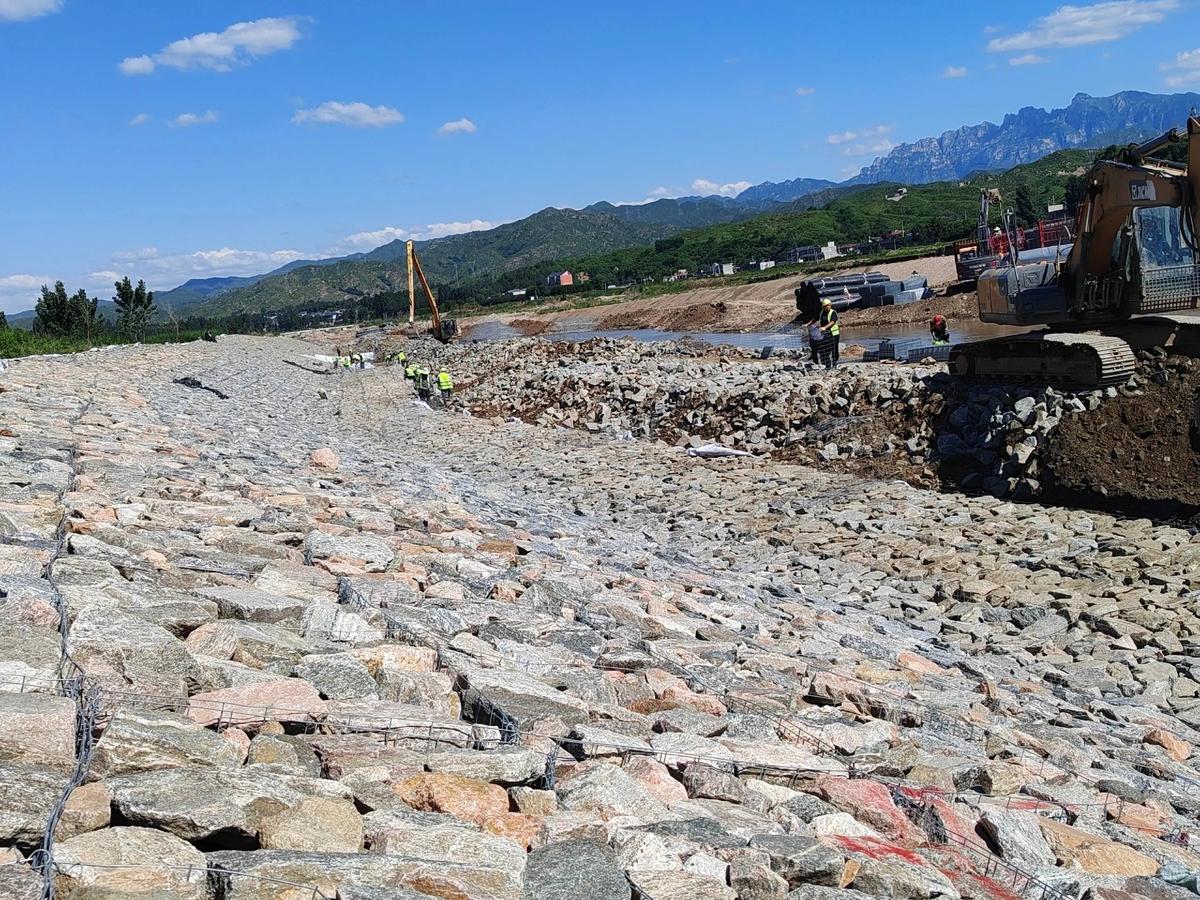
Riverbank erosion is one of the most destructive natural processes affecting infrastructure, agriculture, and communities worldwide. According to the World Bank, riverbank erosion displaces millions of people annually and causes billions of dollars in damage to roads, bridges, pipelines, and farmland.
Traditional hard engineering solutions — concrete revetments, sheet piling, and riprap — are expensive, environmentally disruptive, and often fail when the riverbed scours beneath them. Gabion mattresses (Reno mattresses) offer a fundamentally different approach: flexible, permeable, and self-adapting protection that works with the river's natural dynamics rather than against them.
What Is a Gabion Mattress?
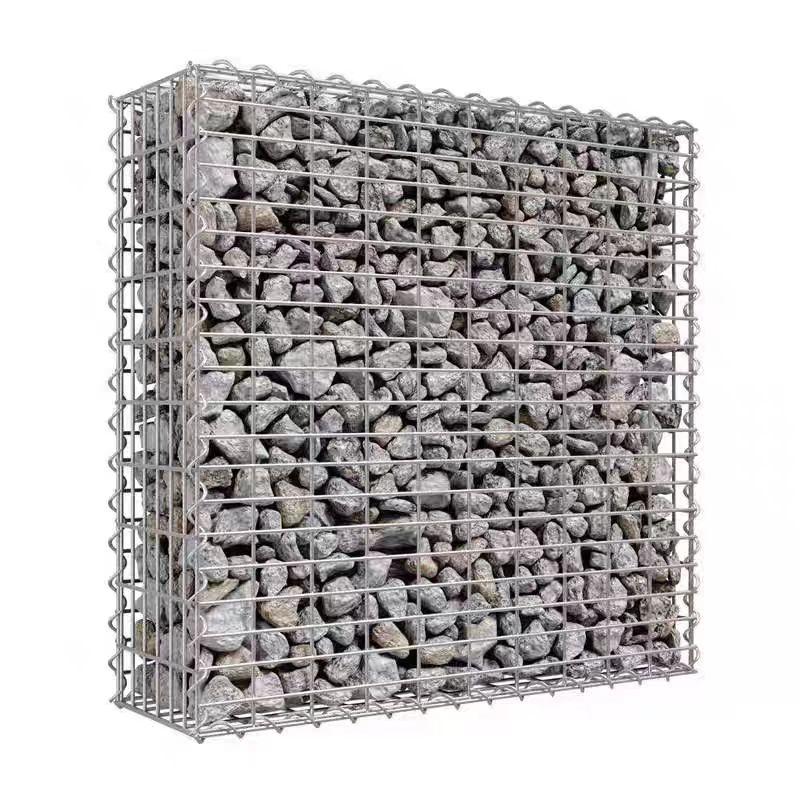
A gabion mattress is a shallow, wide wire mesh container (typically 0.15m to 0.50m thick) filled with stones and laid flat on riverbanks, riverbeds, canal slopes, or coastal areas. Unlike gabion boxes (which are deep and structural), mattresses are designed for surface protection and scour prevention.
Standard specifications:
- Thickness: 0.17m, 0.23m, 0.30m (most common)
- Standard sizes: 3m x 2m, 4m x 2m, 5m x 2m, 6m x 2m
- Mesh type: Double-twisted hexagonal woven wire
- Wire diameter: 2.0mm - 2.7mm (mesh), 2.7mm - 3.4mm (selvedge/edge)
- Coating: Hot-dip galvanized (≥245g/m²) or Galfan (Zn-5%Al)
- PVC coating: Optional, 0.4-0.6mm thickness for aggressive environments
How Gabion Mattresses Control Erosion
Gabion mattresses work through five mechanisms:
1. Surface Armoring
The stone-filled mesh creates a flexible armor layer that absorbs and dissipates flow energy. Unlike rigid concrete, the mattress can flex slightly with ground movement without cracking.
2. Permeability
Water can flow through the mattress (void ratio 30-35%), reducing uplift pressure that would lift a solid concrete slab. This permeability also allows groundwater to drain naturally, preventing saturation-related slope failures.
3. Scour Resistance
The mattress's flexibility allows it to settle into scour holes as they develop, maintaining protection even as the riverbed changes. Rigid protection fails when undermined; gabion mattresses adapt.
4. Vegetation Integration
Over time, silt accumulates in the voids between stones, allowing vegetation to grow through the mattress. This creates a self-reinforcing system where plant roots add mechanical strength to the protection.
5. Edge Protection
Mattresses can be extended into the riverbed (toe protection) to prevent undermining at the edge of the protected area.
Design Considerations
Hydraulic Design Parameters
| Parameter | Value | Note |
|---|---|---|
| Maximum flow velocity | 5-6 m/s | For 0.30m thick mattress with 100-150mm stone |
| Shear stress resistance | Up to 300 N/m² | Design limit for standard mattress |
| Slope angle | Max 1:1.5 (V:H) | Steeper slopes need anchoring |
| Toe depth | 1.5x expected scour depth | Minimum 1.0m below bed level |
Filter Layer Requirement
A geotextile filter layer must be installed beneath the mattress to prevent fine soil particles from being washed out through the stone voids. Without this filter, the underlying soil erodes, creating voids and eventually causing the mattress to collapse.
Installation Process
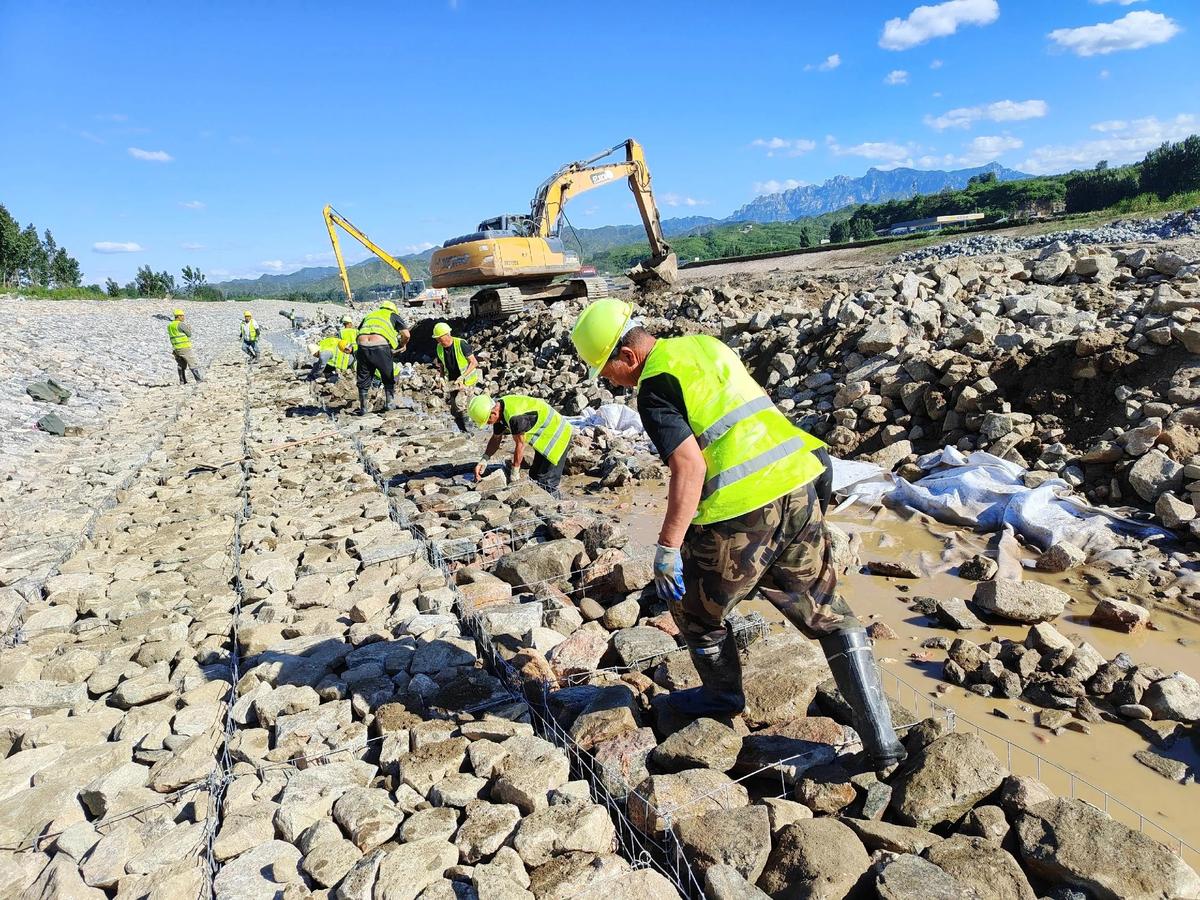
- Slope preparation: Grade the slope to design profile, remove vegetation and loose material
- Geotextile placement: Lay filter fabric with 300mm overlaps at joints
- Mattress unfolding: Unfold the collapsed mattress on the prepared slope
- Edge connection: Connect adjacent mattresses along all edges with lacing wire
- Stone filling: Fill evenly, starting from the toe and working upward
- Lid closing: Close and secure the lid with lacing wire at 100mm intervals
- Toe anchoring: Anchor the toe of the mattress into a trench below riverbed level
Case Study: River Protection in Southeast Asia
A 3.2km section of riverbank along a major river in the Philippines was experiencing erosion rates of 2-3 meters per year, threatening a national highway and agricultural land. The project installed 0.30m thick gabion mattresses with the following results after 5 years:
- Zero erosion on the protected section
- Natural vegetation established through 70% of the mattress surface
- No maintenance required during the 5-year period
- Total cost: $85/m² installed (vs. $180/m² for concrete revetment)
Conclusion
Gabion mattresses are the preferred solution for riverbank erosion control where flexibility, permeability, and environmental integration are valued. They outperform rigid solutions in dynamic river environments and provide long-term protection at lower cost.
Planning a riverbank protection project? Contact Haobo Metal's engineering team for design support, quantity calculations, and a competitive quotation.