Rockfall Protection Netting: Active and Passive Systems for Infrastructure Safety

Rockfall protection netting is a critical safety component for highways, railways, mining operations, and mountainous infrastructure projects worldwide. Unlike general-purpose wire mesh products, rockfall nets must withstand high-energy impacts from falling rocks weighing hundreds of kilograms while maintaining structural integrity under extreme weather conditions. At Haobo Metal, we manufacture rockfall protection systems that meet international safety standards, including ETAG 027 guidelines for European markets and ASTM specifications for North American projects.
📋 Table of Contents
- 1. Types of Rockfall Protection Netting Systems
- 2. Material Specifications and Standards
- 3. Energy Absorption Ratings and Selection
- 4. Installation Best Practices
- 5. Maintenance and Inspection Protocols
- 6. Cost Factors and Budget Planning
- 7. Application Case Studies
- 8. How to Choose a Rockfall Netting Supplier
This article provides a comprehensive guide to rockfall protection netting — covering system types, material specifications, installation best practices, and how to select the right solution for your specific slope conditions.
1. Types of Rockfall Protection Netting Systems
Rockfall protection systems are classified into two main categories: active systems that prevent rock detachment, and passive systems that intercept falling rocks before they reach vulnerable areas.
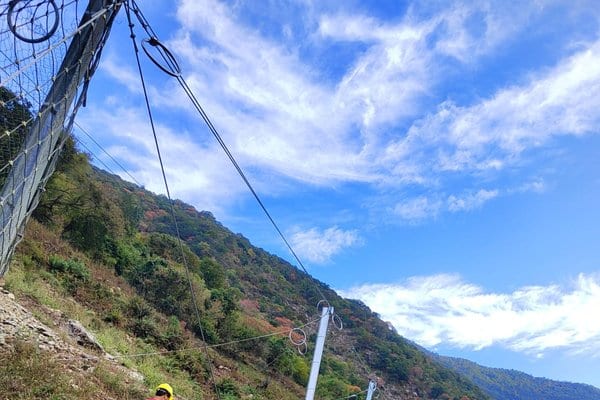
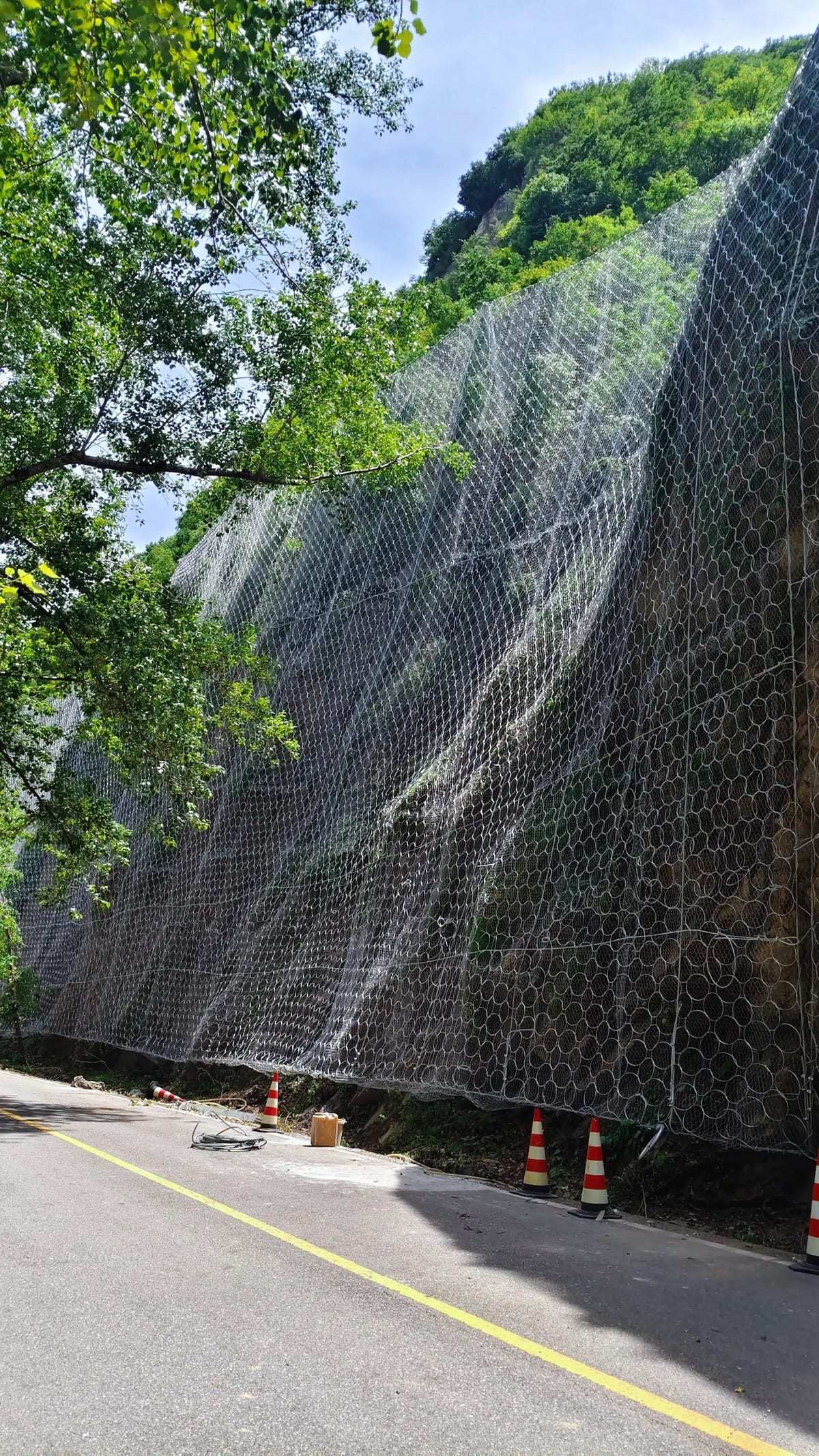
Active Protection Systems are installed directly on the slope face to stabilize loose rock formations. These systems typically use high-tensile steel wire mesh combined with soil nails or rock bolts to anchor the mesh to the slope. The mesh prevents small to medium-sized rocks from detaching while allowing water drainage to prevent pressure buildup behind the installation.
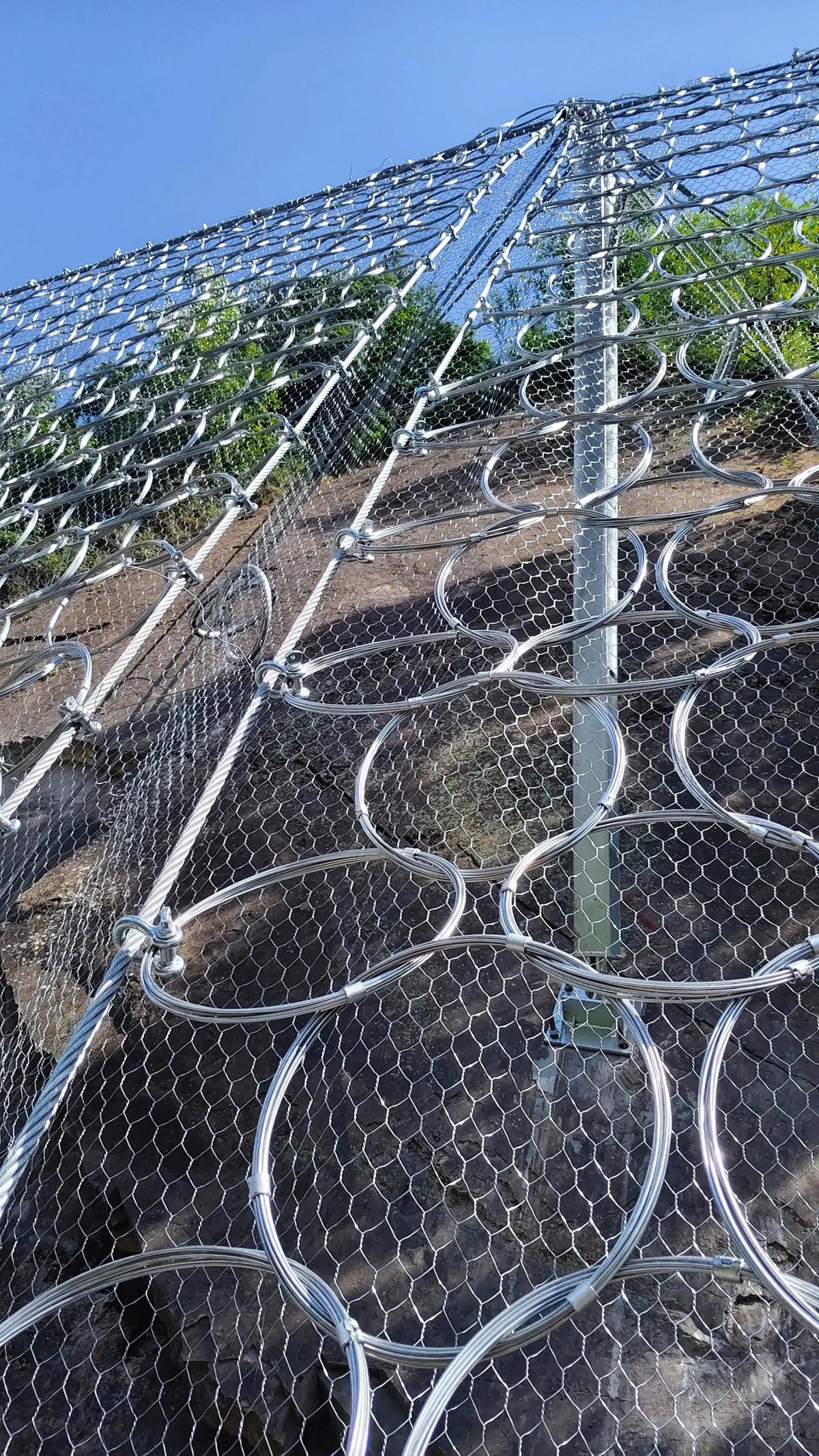
Passive Protection Systems, including ring net barriers and drape mesh systems, are positioned below the rockfall source zone. Ring net systems use interlinked steel rings that deform upon impact, absorbing kinetic energy through elastic and plastic deformation. These systems can be rated for energy absorption levels from 500 kJ to over 8,000 kJ, making them suitable for everything from small rockfalls to massive boulder impacts.
Hybrid Systems combine elements of both active and passive protection. For example, a slope may be covered with active mesh in the upper sections while ring net barriers are installed at the base to catch any rocks that escape the active system.
2. Material Specifications and Standards
The performance of rockfall protection netting depends heavily on material quality and manufacturing precision. Key specifications include:
Wire Tensile Strength: Rockfall netting wire must have a minimum tensile strength of 1,770 N/mm², significantly higher than standard gabion mesh (typically 380-550 N/mm²). This high-strength steel allows the net to absorb substantial impact energy without breaking.
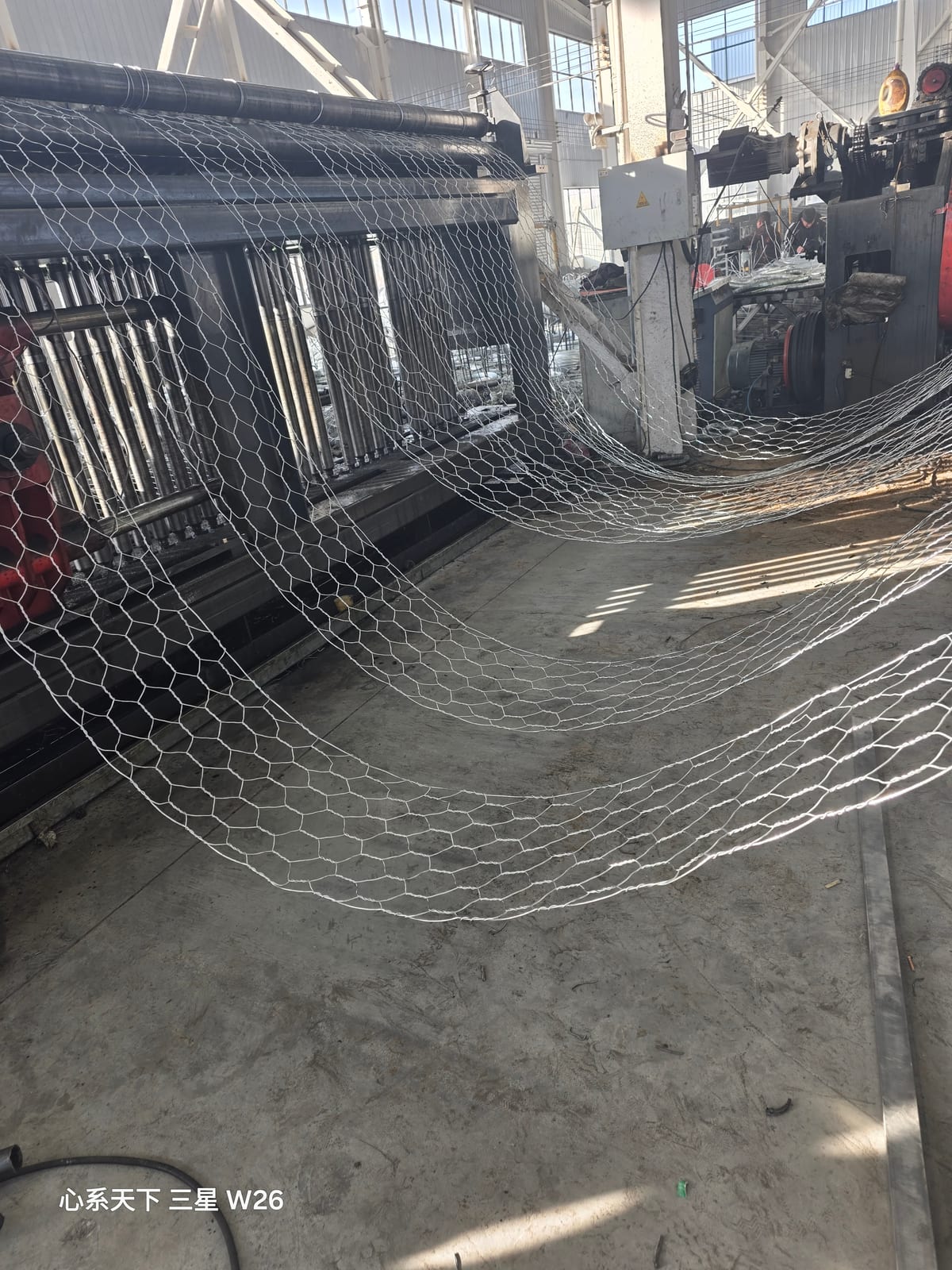
Mesh Configuration: Common mesh types include double-twist hexagonal mesh (similar to gabion mesh but with heavier wire), chain-link mesh, and TECCO-style high-tensile steel wire mesh. TECCO mesh, with its distinctive diamond pattern and 83×143mm openings, is widely specified for active slope stabilization in Europe and Asia.
Corrosion Protection: All rockfall netting components require superior corrosion protection. Hot-dip galvanizing to EN ISO 1461 standards (minimum coating weight 350 g/m² for wires ≥6mm) is the baseline. For coastal or chemically aggressive environments, Galfan (Zn-5%Al) coating or stainless steel (AISI 304 or 316) should be specified.
3. Energy Absorption Ratings and Selection
Energy absorption capacity is the most critical parameter when selecting a rockfall protection system. The rating, measured in kilojoules (kJ), represents the maximum kinetic energy the system can absorb during a rock impact event.
Low Energy (100-500 kJ): Suitable for small rocks (< 0.5 m³) and low slope heights. Simple drape mesh or light ring net barriers typically suffice.
Medium Energy (500-2,000 kJ): Required for moderate rockfalls on slopes up to 30 meters. Multi-ring net barriers with energy dissipation devices are standard.
High Energy (2,000-5,000 kJ): Designed for large boulder impacts and high-traffic infrastructure protection. These systems use multiple ring layers, brake rings, and reinforced post structures.
Very High Energy (5,000+ kJ): Custom-engineered solutions for extreme rockfall hazards, often combining ring nets with embankments or reinforced concrete structures.
To determine the required energy rating, engineers perform rockfall trajectory analysis using software like RocFall, considering slope geometry, rock size distribution, and bounce height calculations.
4. Installation Best Practices
Proper installation is essential for rockfall protection systems to perform as designed. Key considerations include:
Site Preparation: Remove loose debris and unstable rock from the installation area. For active systems, scale the slope face to eliminate overhangs that could trap falling rocks behind the mesh.
Anchor Installation: Soil nails and rock bolts must be installed to the specified embedment depth, typically 3-6 meters depending on ground conditions. Pull-out tests should be conducted on a sample of anchors to verify holding capacity before full installation.
Mesh Tensioning: Active mesh systems require proper tensioning to maintain contact with the slope surface. Under-tensioned mesh allows rocks to gain momentum before hitting the net, reducing effectiveness. Over-tensioning can cause premature anchor failure.
Post Installation for Barriers: Ring net barrier posts must be set in concrete foundations designed for the expected impact loads. Post spacing typically ranges from 8 to 12 meters, with intermediate posts providing additional support.
Quality Control: Each installation should include documentation of anchor pull-out tests, mesh tension measurements, and photographic records of all connections and critical components.
5. Maintenance and Inspection Protocols
Rockfall protection systems require regular inspection and maintenance to ensure continued performance. A structured inspection program should include:
Post-Event Inspections: After any significant rockfall event, storm, or seismic activity, inspect the system for damage, displaced mesh, loose anchors, and accumulated debris. Remove debris buildup promptly, as it can overload the system and reduce future energy absorption capacity.
Annual Inspections: Conduct comprehensive annual inspections covering all system components. Check for corrosion, wire breakage, loose connections, anchor displacement, and vegetation growth that could affect performance.
Five-Year Major Inspection: Every five years, perform a detailed structural assessment including anchor pull-out testing on a representative sample, mesh tension verification, and corrosion thickness measurements using ultrasonic testing equipment.
Documentation: Maintain detailed inspection records with dated photographs, measurement data, and repair logs. This documentation is often required for infrastructure insurance and regulatory compliance.
6. Cost Factors and Budget Planning
Rockfall protection system costs vary significantly based on site conditions and performance requirements. Key cost drivers include:
System Type: Active mesh systems typically cost $25-60 per square meter installed. Passive ring net barriers range from $500-2,000 per linear meter depending on energy rating and height.
Access and Logistics: Remote or steep slope sites increase installation costs by 30-100% due to rope access requirements, helicopter transport, and specialized equipment needs.
Ground Conditions: Hard rock drilling for anchor installation is more expensive than soil nailing. Unstable ground may require additional stabilization measures before net installation.
Regulatory Requirements: Projects in environmentally sensitive areas may require additional impact assessments, monitoring programs, and specialized installation methods that increase costs.
7. Application Case Studies
Rockfall protection netting has been successfully deployed across diverse environments:
Highway Protection: On a major mountain highway in Southeast Asia, a 2,000-meter stretch was protected using a combination of active TECCO mesh (upper slopes) and 3,000 kJ ring net barriers (roadside). The system has successfully intercepted over 50 recorded rockfall events in its first three years of operation.
Mining Operations: An open-pit copper mine installed 5,000 kJ ring net barriers above critical access roads and processing facilities. The system was designed to handle boulders up to 2.5 meters in diameter falling from heights of 40 meters.
Railway Protection: A high-speed rail line through mountainous terrain used active slope mesh combined with rockfall detection sensors that automatically trigger train speed reductions when impacts are detected.
8. How to Choose a Rockfall Netting Supplier
Selecting the right supplier is crucial for project success. Evaluate potential suppliers on these criteria:
Manufacturing Certification: Verify that the manufacturer holds ISO 9001 quality management certification and that products are tested to relevant standards (ETAG 027, ASTM, or local equivalents).
Testing Documentation: Request full-scale impact test reports from accredited laboratories. Field performance data from similar projects provides additional confidence.
Engineering Support: The supplier should offer technical design assistance, including rockfall trajectory analysis and system sizing calculations based on your site-specific parameters.
Installation Training: Verify that the supplier provides installation training and on-site supervision to ensure proper system deployment.
Warranty and After-Sales: Confirm warranty terms for material defects and corrosion performance, and ensure the supplier maintains spare parts availability for system repairs.
Secure Your Slope — Get a Custom Protection Plan
Describe your slope conditions — height, angle, rock type, and risk level. Our engineering team will design a tailored rockfall protection solution with detailed specifications and pricing.
📱 Get Slope Solution 📧 Send Email