Passive Ring Net Systems for Mining Slope Protection: A Complete Guide
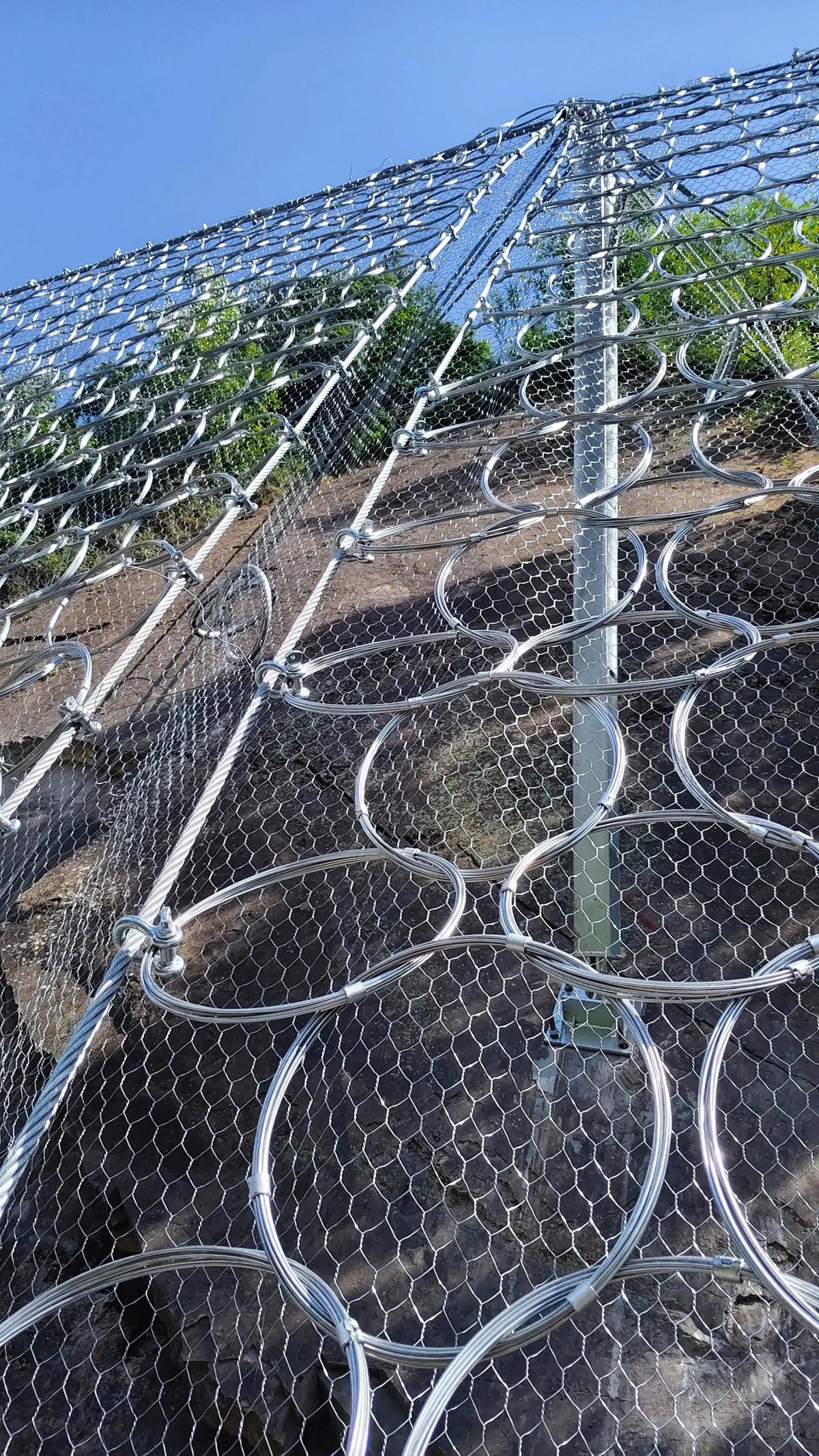
The Rockfall Challenge in Mining Operations
Mining operations worldwide — particularly in Africa, South America, and Southeast Asia — face a constant threat from rockfall and slope instability. Open-pit mines, waste dumps, and access roads cut into steep terrain create conditions where loose rock can detach without warning, endangering workers, equipment, and production schedules.
Traditional solutions like concrete retaining walls or active rock bolting are expensive, slow to install, and often impractical in remote mining locations. This is where passive ring net systems (also called ring mesh barriers or passive rockfall protection nets) offer a superior alternative.
What Is a Passive Ring Net System?
A passive ring net system is a flexible barrier installed at the base of a slope or cliff to intercept and absorb falling rocks. Unlike active systems (which prevent rock detachment), passive systems allow rocks to fall but catch them before they reach critical areas.
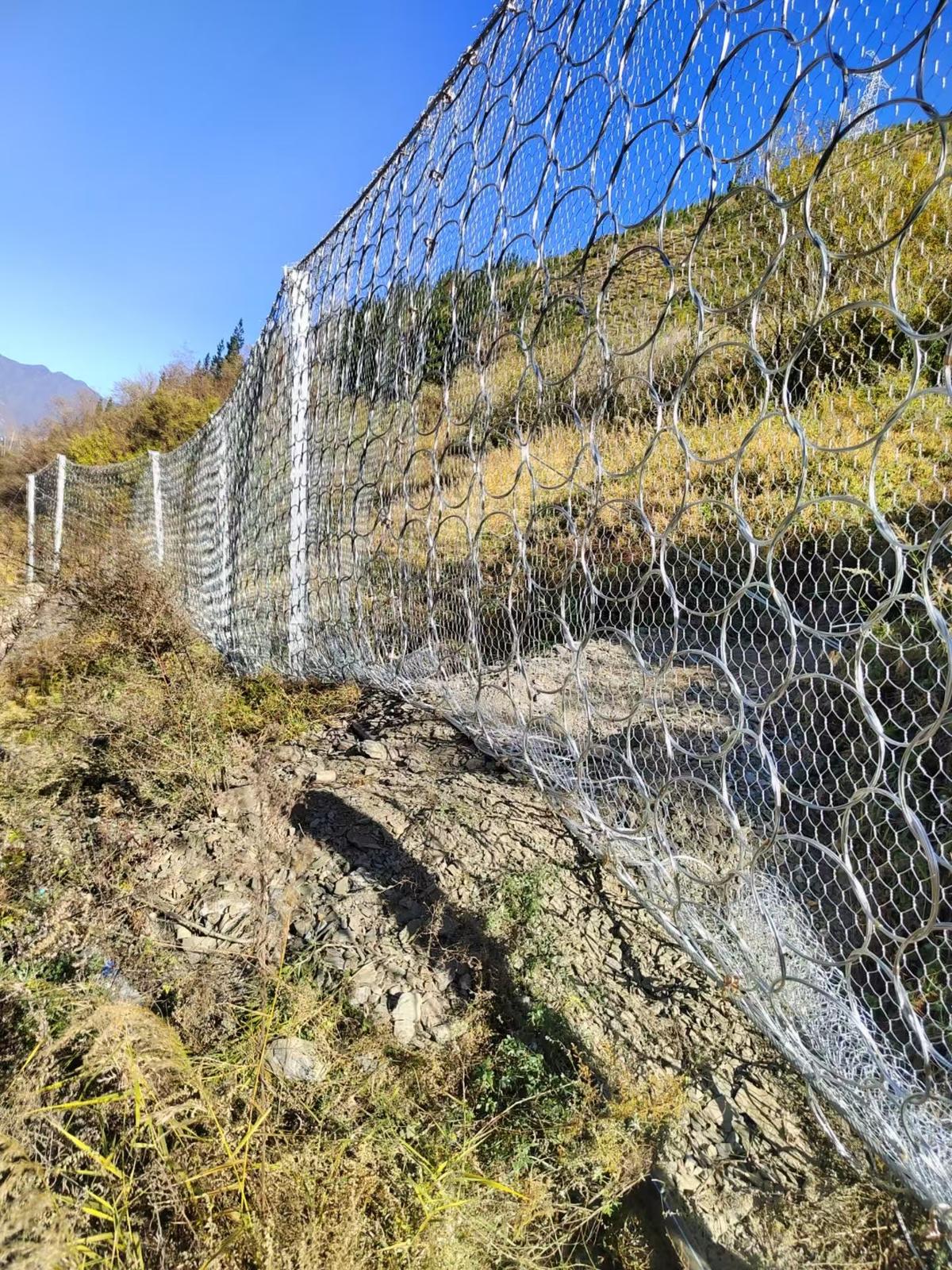
Key components of a passive ring net system:
- Ring mesh: Interlocking steel rings (typically 300mm diameter) made from high-tensile wire (≥1770 MPa)
- Support ropes: Anchor cables and lateral ropes that transfer impact loads to the ground
- Steel posts: H-beam or tubular steel posts spaced 5-10m apart
- Foundation anchors: Concrete or rock anchors securing the posts
- Braking elements: Energy-absorbing components that dissipate impact force
Why Mines Choose Passive Ring Nets
1. High Energy Absorption
Ring net barriers can absorb impact energies from 500 kJ to over 10,000 kJ, depending on the design. A single properly designed barrier can stop a 2-ton boulder traveling at 25 m/s — equivalent to the energy of a small car crash.
2. Low Maintenance
Once installed, passive ring nets require minimal inspection and maintenance. Unlike active systems that need constant monitoring, a passive barrier simply sits there until it's needed. Annual visual inspections are usually sufficient.
3. Fast Installation
Experienced crews can install 100-200 meters of barrier per day. This is critical for mining operations where downtime costs thousands of dollars per hour.
4. Cost-Effective
Compared to concrete walls or tunneling, ring net barriers cost 50-70% less per meter of protection while providing comparable or superior protection.
Design Considerations for Mining Applications
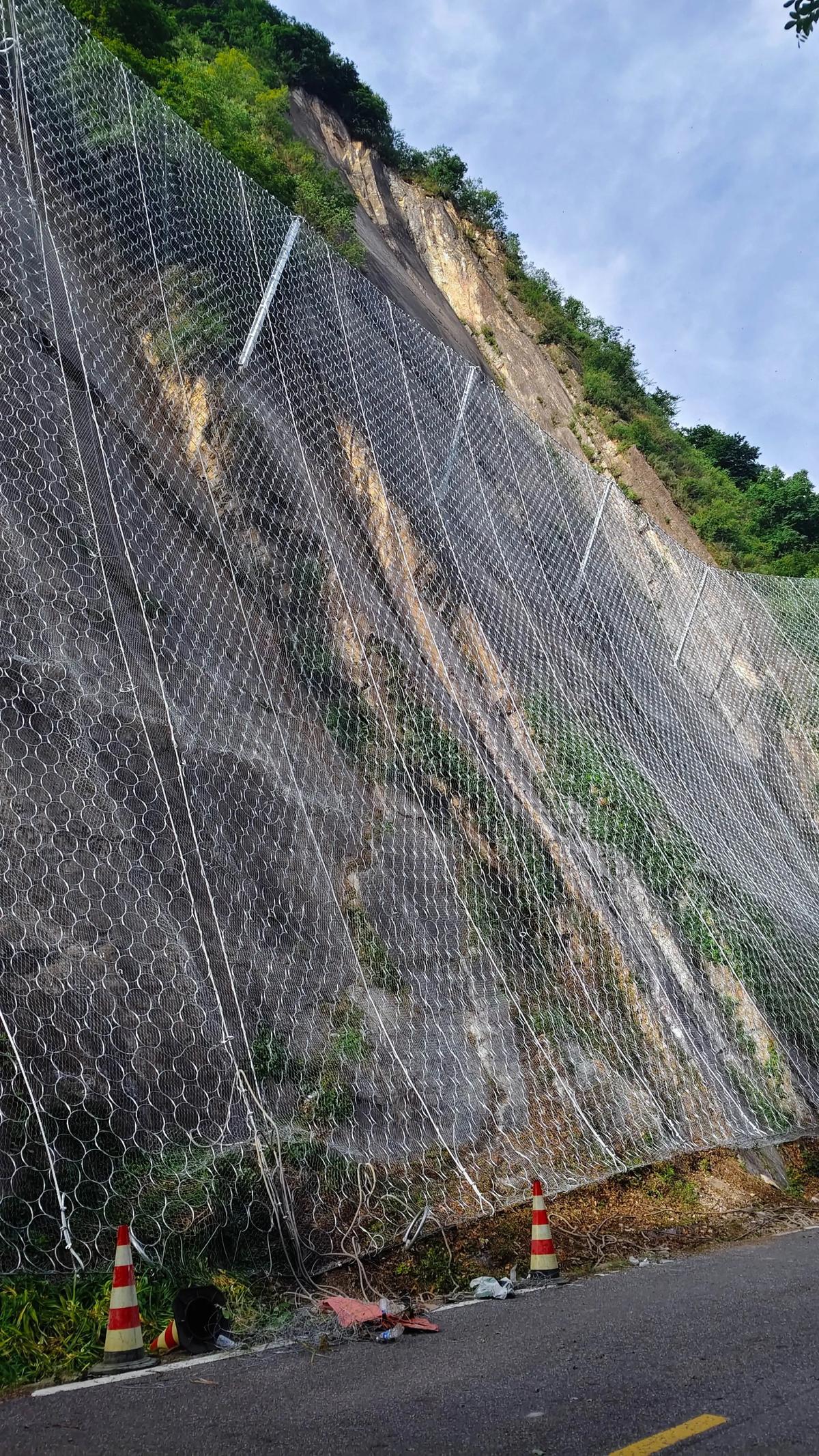
Designing an effective passive ring net system for a mine requires careful analysis:
Slope Geometry Analysis
- Slope angle and height
- Rock block size distribution
- Expected fall trajectory
- Runout zone calculation
Barrier Classification (ETAG 027)
| Class | Energy Capacity | Typical Application |
|---|---|---|
| A | ≤ 500 kJ | Small rock fragments, low slopes |
| B | 500 - 3,000 kJ | Medium rockfall, typical mine slopes |
| C | 3,000 - 10,000 kJ | Large boulders, high-risk areas |
Installation Best Practices
1. Site Survey: Conduct a thorough geotechnical survey before design. Rockfall frequency, block size, and slope conditions vary dramatically between sites.
2. Foundation Design: Post foundations must be designed for the specific soil or rock conditions. In mining areas, weathered rock or loose overburden may require deep foundations or ground anchors.
3. Drainage: Ensure the barrier design includes drainage to prevent water accumulation behind the net, which can increase loading and cause corrosion.
4. Access for Maintenance: Design the barrier layout so that maintenance crews can access all components safely, especially after a rockfall event.
Case Study: African Copper Mine
A major copper mine in Zambia installed 2,400 meters of Class B passive ring net barriers along its main haul road. Before installation, the mine experienced an average of 3 rockfall incidents per year, causing road closures and equipment damage. After three years of operation with the ring net system:
- Zero rockfall-related incidents on the protected road
- 100% barrier availability (no maintenance shutdowns)
- Installation completed in 18 working days
- Total project cost: $180,000 (vs. $450,000 estimated for concrete wall alternative)
Haobo Metal's Ring Net Solutions
At Haobo Metal Products Co., Ltd., we manufacture passive ring net systems with:
- High-tensile steel wire (≥1770 MPa tensile strength)
- Hot-dip galvanizing (≥245g/m²) for corrosion resistance
- Custom designs tailored to your slope geometry and rockfall risk
- Full installation support including design calculations and on-site guidance
- ETAG 027 compliant testing and certification
We have supplied ring net systems to mining projects in Zambia, Peru, Chile, Indonesia, and the Philippines, with a proven track record of performance in harsh tropical and high-altitude environments.
Conclusion
Passive ring net systems are the most cost-effective and reliable solution for rockfall protection in mining operations. With high energy absorption, low maintenance requirements, and fast installation, they protect your people, equipment, and production schedule at a fraction of the cost of traditional alternatives.
Planning a mining slope protection project? Contact our engineering team for a free site assessment and barrier design proposal.