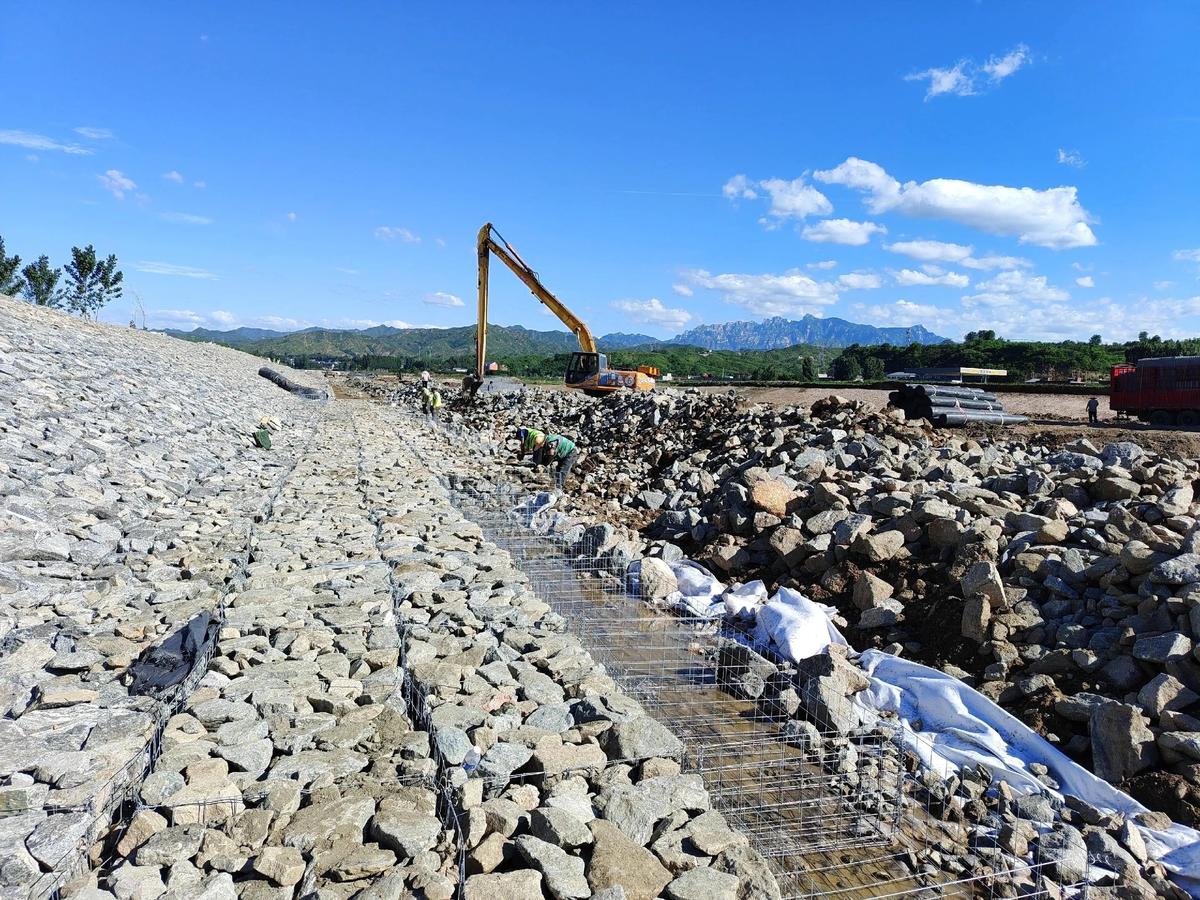
Wire Mesh Manufacturing Process: From Steel Wire to Finished Gabion and Fence Products

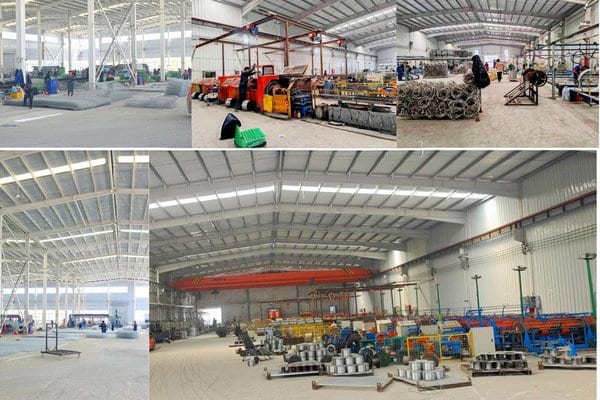
Behind every gabion basket, rockfall net, and industrial fence panel lies a sophisticated manufacturing process that transforms raw steel wire into engineered mesh products capable of withstanding decades of environmental exposure. At Haobo Metal's ISO 9001-certified facility in China, we operate an integrated production line that controls quality at every stage — from raw material inspection to finished product testing.
📋 Table of Contents
This article takes you inside the wire mesh manufacturing process, explaining each production stage, the quality control measures involved, and what to look for when evaluating a wire mesh supplier's manufacturing capabilities.
1. Raw Material Selection and Inspection
The quality of any wire mesh product begins with the quality of its raw material. At Haobo Metal, we source high-carbon steel wire rod from certified steel mills, primarily using SAE 1006 to 1008 grades for gabion mesh and SAE 1060 to 1070 for high-tensile rockfall netting applications.
Every batch of incoming wire rod undergoes a comprehensive inspection protocol:
Chemical Composition Analysis: Using optical emission spectrometry (OES), we verify the exact chemical composition of each heat of steel. Carbon, manganese, silicon, sulfur, and phosphorus levels must fall within specified ranges to ensure consistent mechanical properties in the finished wire.
Mechanical Testing: Tensile testing per ISO 6892-1 confirms that the wire rod meets the specified tensile strength and elongation requirements. Bend testing verifies ductility, ensuring the wire can be formed into the required mesh patterns without cracking.
Surface Quality Inspection: Visual inspection and eddy current testing detect surface defects such as cracks, laps, and seams that could compromise the finished product's corrosion resistance or mechanical performance.
2. Wire Drawing Process
Wire drawing reduces the wire rod diameter to the specified finished wire size through a series of progressively smaller dies. This cold-working process not only reduces diameter but also increases tensile strength through work hardening.
Drawing Sequence: Starting from 5.5mm or 6.5mm wire rod, the wire passes through 6-10 drawing dies, each reducing the diameter by approximately 15-25%. The total reduction ratio for gabion wire (typically 2.2-3.4mm finished diameter) is approximately 65-85%.
Lubrication: Dry drawing lubricants (calcium or sodium-based soaps) are applied at each die to reduce friction and prevent wire surface damage. Proper lubrication management is critical — inadequate lubrication causes die wear and wire surface scoring that can become corrosion initiation points.
Intermediate Annealing: For wire that requires high total reduction or specific ductility requirements, intermediate annealing (heating to 650-750°C in a protective atmosphere) relieves work hardening and restores ductility before final drawing passes.
Die Maintenance: Tungsten carbide drawing dies are inspected and measured after each production run. Dies approaching their wear limit are replaced to maintain consistent wire diameter tolerance, typically ±0.03mm for gabion wire.
3. Galvanizing and Coating Processes
Corrosion protection is applied to the drawn wire through hot-dip galvanizing or advanced alloy coating processes. This is arguably the most critical stage in determining the product's service life.
Surface Preparation: Before galvanizing, the wire undergoes a multi-stage cleaning process: degreasing to remove drawing lubricants, pickling in hydrochloric acid to remove surface oxides, and fluxing in zinc ammonium chloride solution to promote zinc-iron alloy formation.
Hot-Dip Galvanizing: The cleaned wire is immersed in molten zinc at 440-460°C. The immersion time (typically 15-60 seconds depending on wire diameter) determines the coating thickness. As the wire exits the zinc bath, nitrogen wiping removes excess zinc to achieve a uniform coating.
Coating Specifications: For gabion mesh, the minimum coating weight per EN 10244-2 is 260 g/m² for wire diameters above 2.2mm. For heavy-duty applications, we apply 275-350 g/m². Galfan (Zn-5%Al) coating provides 2-3 times the corrosion resistance of pure zinc at the same coating weight.
PVC Coating (Optional): For additional protection, galvanized wire can be extruded with a PVC coating layer, typically 0.4-0.6mm thick. The PVC is bonded to the wire through an adhesive primer layer. Quality PVC coating must pass adhesion tests (no peeling after 360° wrapping around a mandrel) and UV resistance testing.
4. Mesh Weaving and Forming
The coated wire is converted into mesh products through various forming processes depending on the product type:
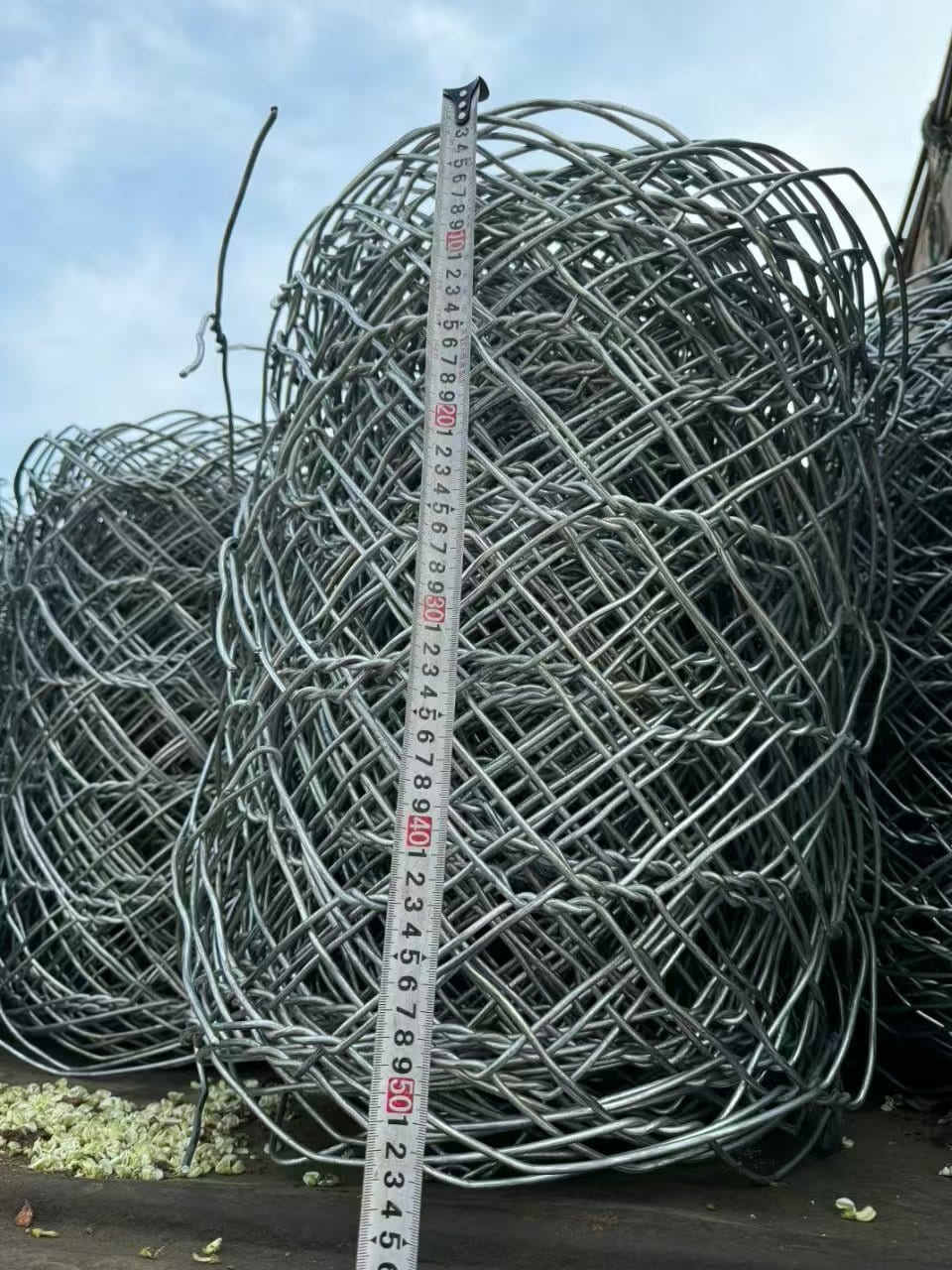
Double-Twist Hexagonal Mesh (Gabion): Automated weaving machines interlock pairs of wires in a continuous double-twist pattern. The machine feeds wire from multiple spools simultaneously, twisting adjacent wire pairs to form the characteristic hexagonal openings. Modern CNC-controlled machines produce mesh at speeds of 60-80 m² per hour with consistent opening dimensions.
Welded Wire Mesh (Fence Panels): Pre-cut longitudinal and transverse wires are arranged in a grid pattern and resistance-welded at each intersection. Multi-point welding machines can weld up to 24 intersections simultaneously, producing panels at rates of 200-300 m² per hour. Weld strength is verified through shear testing of sample intersections.
Chain-Link Mesh (Fence): A single continuous wire is spiraled and interlinked with adjacent spirals to form the diamond pattern. The weaving machine feeds and bends the wire automatically, with tension control ensuring uniform mesh opening dimensions.
High-Tensile Rockfall Mesh: Single wire is woven into a diamond pattern using specialized looms. The high-tensile wire requires greater forming forces, and the mesh is produced in specific panel widths (typically 3.5m) to match standard slope coverage patterns.
5. Assembly, Cutting, and Finishing
After mesh forming, products undergo assembly and finishing operations tailored to their final application:
Gabion Basket Assembly: Mesh panels are cut to size using hydraulic shears. The base, sides, ends, and lid are assembled using lacing wire or C-rings. Diaphragms are installed at specified intervals. All cut edges receive edge wire reinforcement (selvedge) to prevent unraveling.
Fence Panel Fabrication: Welded mesh panels are cut to standard dimensions (typically 2.0m × 2.5m or 2.5m × 2.5m). Edge wires are welded along the perimeter for rigidity. Post brackets and mounting hardware are attached according to customer specifications.
Ring Net Assembly: Individual steel rings are interlinked in a specific pattern, with each ring connecting to four or six adjacent rings. The number of ring layers and ring wire diameter determines the energy absorption capacity.
Packaging: Finished products are bundled and packaged for shipment. Gabion mesh is typically folded and bundled in 25-50 unit packs. Welded panels are stacked with protective separators. All packaging includes product identification labels with heat numbers for traceability.
6. Quality Control and Testing
Quality control is integrated throughout the manufacturing process, not just at the final inspection stage:
In-Process Inspection: Wire diameter is continuously monitored during drawing using laser micrometers. Mesh opening dimensions are checked every 30 minutes during weaving using calibrated go/no-go gauges. Coating thickness is measured hourly during galvanizing using magnetic induction gauges.
Final Product Testing: Each production batch undergoes a standardized test program:
- Tensile testing of wire samples (ISO 6892-1)
- Coating weight determination (gravimetric method per ISO 1460)
- Coating adhesion testing (wrapping test per EN 10244-2)
- Mesh opening dimension verification (10 measurements per batch)
- Weld shear testing for welded products
- PVC adhesion testing for coated products
Third-Party Testing: For critical projects, we arrange independent testing at ISO 17025-accredited laboratories. Test reports are included with the shipment documentation.
7. What to Look for in a Manufacturing Facility
When evaluating wire mesh suppliers, a factory visit or detailed capability assessment reveals more than any sales brochure. Key indicators of manufacturing quality include:
Certifications: ISO 9001 quality management certification is the minimum requirement. Look for additional certifications such as CE marking (for European markets), and product-specific certifications like EN 10223-3 compliance.
Production Equipment: Modern CNC-controlled machinery produces more consistent products than manual or semi-automated equipment. Check the age and maintenance condition of drawing machines, weaving looms, and galvanizing lines.
Testing Laboratory: An in-house testing laboratory with calibrated equipment demonstrates commitment to quality. Ask to see recent calibration certificates for tensile testing machines, coating thickness gauges, and dimensional measurement tools.
Traceability Systems: The ability to trace any finished product back to its raw material heat number is essential for quality assurance and problem investigation. Check whether the factory maintains digital production records with full traceability.
Production Capacity: Verify that the factory's monthly output capacity matches your project requirements. A factory operating near maximum capacity may struggle with quality consistency or delivery timelines.
8. Supply Chain and Delivery Management
Manufacturing quality means nothing if products don't arrive on time and in good condition:
Production Scheduling: A professional manufacturer should provide a detailed production schedule with milestone dates for raw material procurement, production start, inspection, and ready-for-shipment status.
Export Packaging: Ocean freight requires specialized packaging. Gabion bundles should be steel-strapped on treated wooden pallets with waterproof wrapping. Container loading plans should maximize space utilization while preventing product damage during transit.
Documentation: Complete export documentation includes commercial invoice, packing list, bill of lading, certificate of origin, material test certificates, and any market-specific compliance documents (CE declaration, etc.).
After-Sales Support: A reliable manufacturer provides technical support after delivery, including installation guidance, spare parts availability, and warranty claim processing. Ask about the warranty terms and claims procedure before placing an order.
Source Certified Wire Mesh Direct from Factory
Skip the middlemen. Get factory-direct pricing with full material test certificates (MTC), third-party lab reports, and compliance documentation for ASTM, EN, and ISO standards.
📱 Contact Factory 📧 Send Email