Welded Wire Mesh Fence Panels for Industrial Security Applications

Welded wire mesh fence panels are the backbone of industrial perimeter security worldwide. Unlike chain link fencing which can be cut through with simple hand tools, welded mesh panels provide a rigid, anti-climb, and highly durable barrier that meets the strict security requirements of factories, warehouses, power plants, data centers, and transportation hubs.
At Haobo Metal, we manufacture welded wire mesh fence panels that comply with international security standards including ASTM F1043 (US), BS 1722 Part 14 (UK), and EN 10244-2 (EU). Whether you're securing a 500-meter warehouse compound or a 5-kilometer airport perimeter, understanding the specifications, installation methods, and compliance requirements will help you make the right procurement decision.
1. What Are Welded Wire Mesh Fence Panels?
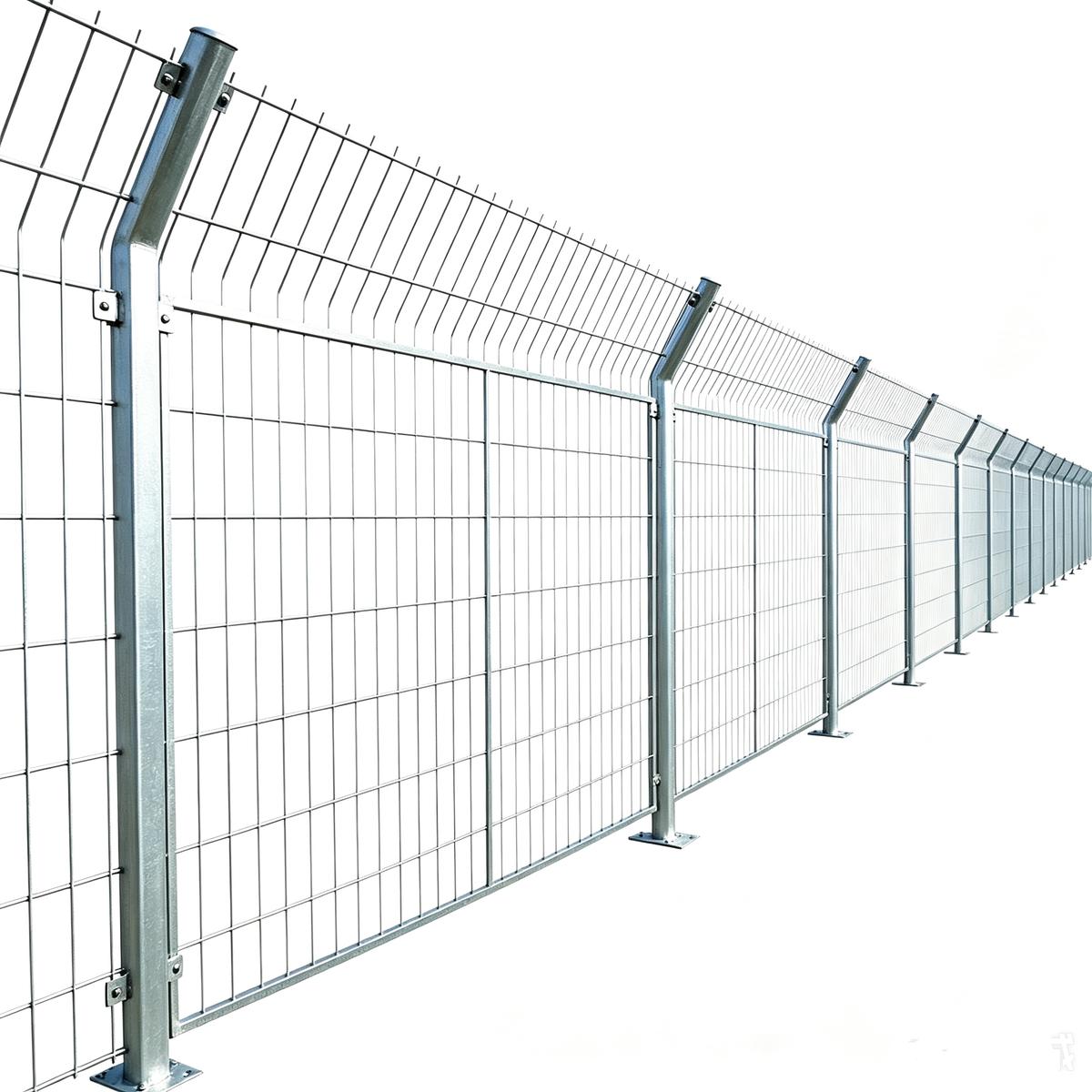
Welded wire mesh fence panels (also called welded fence panels or welded mesh security panels) consist of vertical and horizontal steel wires that are electrically welded at every intersection to form a rigid grid. The panels are typically hot-dip galvanized for corrosion resistance, and can be further enhanced with PVC powder coating for additional durability and color options.
Key characteristics of welded mesh fence panels:
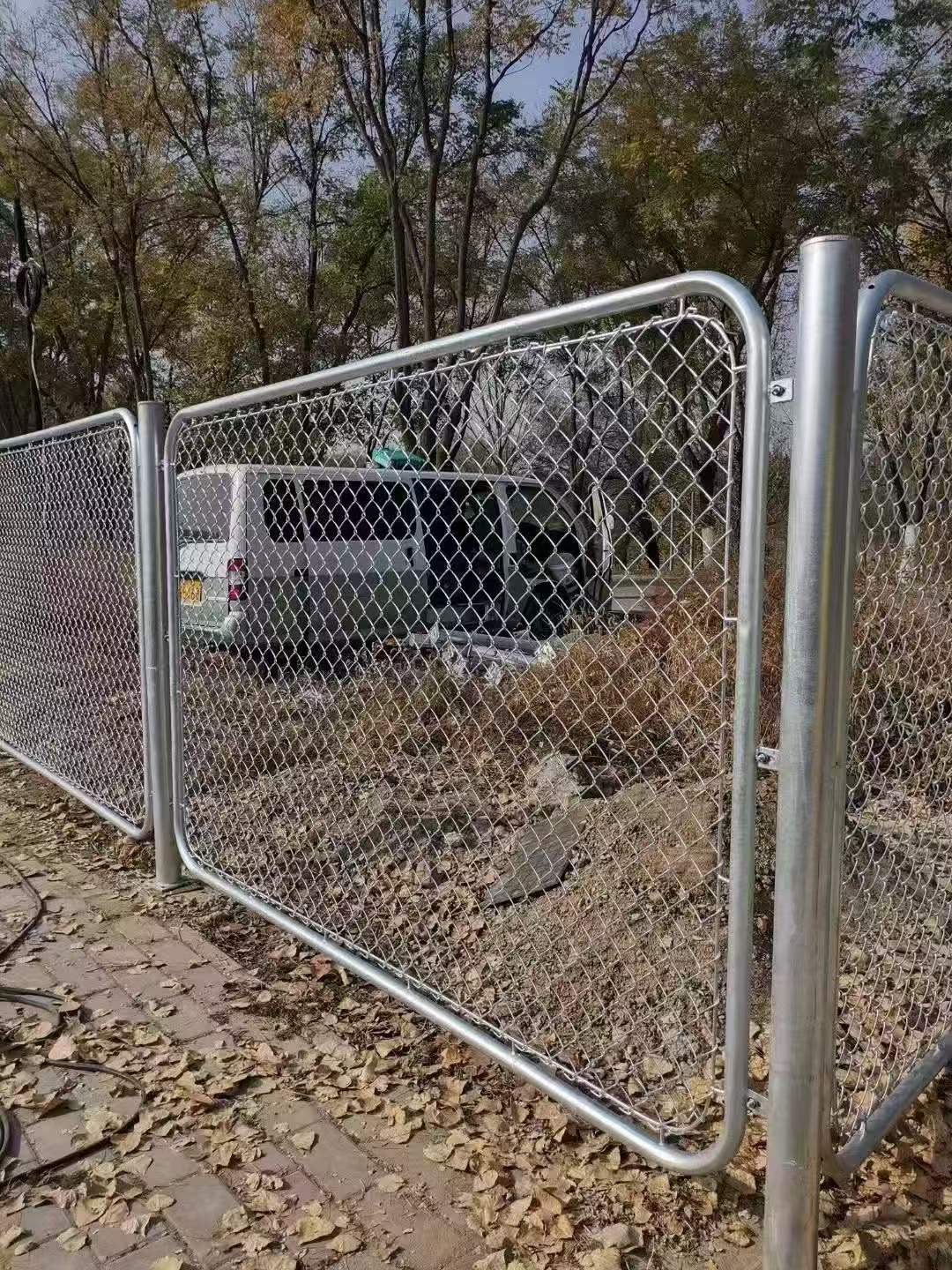
- Rigid structure: Unlike chain link fabric which flexes and sags, welded panels maintain their shape and cannot be easily climbed or cut
- Anti-climb design: Tight mesh spacing (typically 50×100mm or 50×200mm) prevents finger and toe holds
- Corrosion resistance: Hot-dip galvanizing to 275 g/m² minimum, with optional PVC coating for coastal and industrial environments
- Standard panel sizes: 2.0m to 2.5m wide × 1.0m to 3.0m high
- Wire diameter: 3.0mm to 6.0mm depending on security level requirements
- Post system: Square or rectangular hollow section posts (60×60mm to 80×80mm) with base plates or embedded footings
Welded mesh panels are classified by security grade, from lightweight boundary demarcation (Grade A) to high-security anti-cut and anti-ram applications (Grade C).
2. Security Grades and Technical Specifications
Industrial welded mesh fence panels are categorized into three primary security grades based on wire diameter, mesh spacing, and cut-resistance rating:
| Specification | Grade A (Standard) | Grade B (Enhanced) | Grade C (High Security) |
|---|---|---|---|
| Wire Diameter | 3.0–4.0mm | 4.0–5.0mm | 5.0–6.0mm |
| Mesh Opening | 50×200mm | 50×100mm | 50×50mm or 25×100mm |
| Cut Resistance | Basic (bolt cutters) | Moderate (electric shears) | High (requires power tools) |
| Post Size | 60×60×2.0mm | 60×60×3.0mm | 80×80×3.0mm |
| Panel Height | 1.0–2.0m | 2.0–2.5m | 2.5–3.0m |
| Typical Application | Factories, warehouses, schools | Transport hubs, commercial compounds | Prisons, military, data centers, power plants |
| Approx. Cost per Meter | $15–25 | $25–40 | $40–70 |
3. Coating Systems and Corrosion Protection
The longevity of an industrial welded mesh fence depends critically on its corrosion protection system. Three coating options are standard in the industry:
- Hot-dip galvanized (HDG): The entire panel — including all weld points — is immersed in molten zinc at 450°C. Minimum coating weight 275 g/m² per EN ISO 1461. Provides 30-50 years of protection in normal environments. This is the baseline specification for outdoor industrial fencing.
- HDG + PVC powder coating: After galvanizing, a polyester powder coating is electrostatically applied and heat-cured. Available in RAL colors (RAL 6005 green, RAL 9005 black, RAL 7016 gray are most common). The dual-layer protection extends service life in coastal and chemical-industrial environments by 15-20 years.
- Galfan (Zn-5%Al-RE) + PVC: Premium option for extreme environments. The Galfan alloy provides 2-3× the corrosion resistance of standard zinc, and the PVC topcoat adds UV stability and color retention. Recommended for offshore platforms, coastal installations, and chemical processing plants.
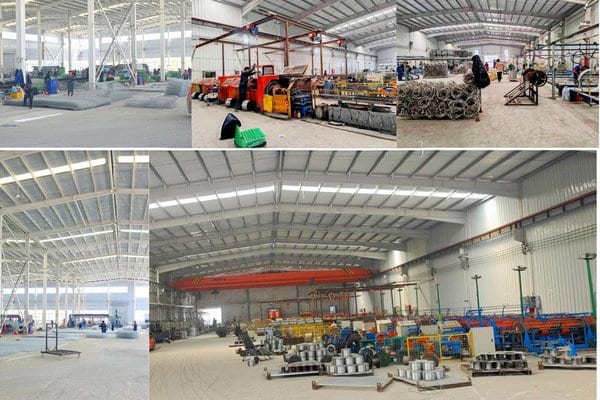
Critical quality check: At every weld point, the galvanizing process must form a complete zinc layer. Poor welding technique can create micro-cracks that become rust initiation points. At Haobo Metal, each panel undergoes post-weld zinc touch-up and visual inspection before leaving the factory.
4. Post Systems and Foundation Options
The fence panel is only as strong as its support structure. Three post and foundation configurations cover most industrial applications:
| Foundation Type | Method | Best For | Cost (per post) |
|---|---|---|---|
| Embedded (Concrete-in-Ground) | Post set 400-600mm into concrete footing (300×300mm) | High-security, permanent installations | $12–18 |
| Base Plate (Bolt-Down) | Post welded to 200×200mm base plate, bolted to concrete slab | Existing concrete surfaces, temporary fencing | $8–12 |
| Spigot (Sleeved) | Sleeve cast into concrete, post inserted and grouted | Post-replacement access, high-traffic areas | $15–22 |
Post spacing is typically 2.0m to 2.5m center-to-center, matching the panel width. For wind load considerations (especially panels above 2.0m height), post spacing should be reduced to 2.0m and the foundation depth increased by 20%.
5. Anti-Climb and Anti-Cut Design Features
Industrial security fencing must resist two primary attack vectors: climbing and cutting. Here's how welded mesh panels address both:
Anti-Climb Design
- Mesh spacing under 50×100mm: Prevents fingers and toes from finding purchase points. At 50×50mm spacing, even the smallest hands cannot grip the wire.
- Top edge treatment: 3-strand barbed wire (standard) or razor coil (high security) mounted on V-arms or Y-arms extending 300-450mm above the panel top
- Smooth vertical wires: Unlike chain link's diamond pattern, welded mesh vertical wires offer no horizontal footholds
- Flush panel-to-post connections: Anti-tamper security fixings (shear nuts, one-way bolts) prevent panel removal
Anti-Cut Resistance
- Wire diameter ≥ 5.0mm: At this thickness, manual bolt cutters cannot sever individual wires in a single action
- Double horizontal wires: High-security panels use paired horizontal wires at 50mm intervals, doubling the cutting effort required
- Weld strength: Each weld point must withstand 500N minimum shear force per ASTM F1043 — this means cutting a single opening requires severing at least 4 welds
- Galvanized-after-welding: Unlike pre-galvanized wire, the post-weld galvanizing process fills micro-gaps at intersections, preventing rust-weakened joints
6. Gates, Accessories, and Perimeter Integration
A complete industrial fencing system includes more than panels and posts. These accessories complete the perimeter solution:
- Swing gates: Single or double leaf, matching the fence panel style. Width 1.0m (pedestrian) to 6.0m (vehicle). Heavy-duty hinges with grease nipples for maintenance. Drop bolt and padlock provision as standard.
- Sliding gates: For sites where swing clearance is unavailable. Cantilever or tracked designs, manually operated or motorized. Width up to 12m.
- Barbed wire arms: Single, double, or triple strand configurations. V-arm (45° outward) for standard security, Y-arm (vertical extension) for maximum deterrence.
- Razor coil / concertina: Galvanized or stainless steel razor wire, 500mm or 700mm coil diameter. Mounted on top of panels or in ground-level coils.
- Corner and end posts: Heavier gauge than intermediate posts (80×80×3.0mm minimum), with diagonal bracing for tension management.
- Fixing clips and brackets: Galvanized steel panel-to-post connectors. Security versions use tamper-proof fasteners.
Integration tip: For critical infrastructure sites, combine welded mesh fencing with CCTV mounting poles (pre-welded brackets on posts), perimeter intrusion detection systems (PIDS), and access control turnstiles for a fully integrated security solution.
7. Installation Best Practices and Quality Control
Even the best manufactured panels perform poorly if installed incorrectly. Follow these installation guidelines for a fence that will last decades:
- Site survey and setting out: Mark all post positions with stakes and string line. Verify underground utilities before digging. Post spacing must be accurate to ±10mm — any variance will cause panel fitment issues.
- Foundation excavation: Dig post holes to specified depth (typically 600mm for 2.0m fence height). Bottom 100mm should be compacted gravel for drainage. In expansive clay soils, increase hole diameter by 50% and use a concrete collar.
- Post installation: Set corner and end posts first. Use temporary bracing to hold posts plumb while concrete cures (minimum 48 hours). Check vertical alignment with spirit level on two adjacent faces.
- Panel mounting: Install panels from one end, working systematically. Attach to posts using the specified bracket system. Leave 50mm ground clearance to prevent corrosion at the base.
- Tension and alignment: Panels must be mounted without twist or bow. A twisted panel creates stress concentrations at brackets and accelerates corrosion at stressed points.
- Post-capping: Install post caps on all posts immediately after panel mounting. Uncapped posts collect water, freeze in winter climates, and rust from the inside out.
- Final inspection: Walk the entire perimeter. Check all fixings are tight, all panels are level, gates swing freely, and there are no gaps under panels larger than 50mm.
Common installation mistake: Setting posts in wet concrete without bracing. As concrete cures and shrinks, unbraced posts lean. The result is panels that don't align and brackets that are under constant stress. Always brace posts for 48 hours minimum.
8. International Standards and Compliance Requirements
Industrial fencing specifications typically reference one or more of these international standards:
| Standard | Region | Scope |
|---|---|---|
| ASTM F1043 | USA | Strength and protective coating requirements for industrial chain link and welded wire fence frameworks |
| ASTM F2453 | USA | Welded wire mesh fence fabric (metallic-coated or polymer-coated) for meshes and panels |
| BS 1722-14 | UK | Open mesh steel panel fences specification |
| EN 10244-2 | EU | Zinc and zinc-alloy coatings on steel wire for fencing |
| AS 2423 | Australia/NZ | Coated steel wire fencing products for terrestrial and aquatic applications |
When specifying fencing for a project, always include the applicable standard in your procurement documentation. This ensures all bidders are quoting to the same quality baseline and prevents substitution of substandard materials. At Haobo Metal, our welded mesh panels are routinely tested by third-party laboratories (SGS, Bureau Veritas) to verify compliance with the relevant standard.
9. Cost Factors and Procurement Strategy
The total installed cost of welded wire mesh fencing depends on several variables. Understanding these helps you budget accurately and compare quotes on an apples-to-apples basis:
| Cost Factor | Impact on Total Cost | Optimization Tip |
|---|---|---|
| Panel specification (wire Ø, mesh) | 30-40% | Match grade to actual threat level — don't over-specify |
| Coating system | 15-25% | HDG sufficient for most sites; PVC only for coastal/chemical |
| Post and foundation system | 20-25% | Embedded posts are most cost-effective for new construction |
| Gates and accessories | 10-15% | Standardize gate sizes; avoid custom dimensions |
| Freight and logistics | 5-15% | Full container loads (FCL) are 30-40% cheaper per unit than LCL |
| Installation labor | 15-20% | Pre-fabricated panels install 3× faster than site-welded systems |
Procurement strategy for large projects: For perimeters exceeding 2,000 meters, consider ordering panels and posts from the same manufacturer. This ensures dimensional compatibility (post spacing matches panel width) and allows the supplier to optimize container loading, potentially saving $2-5 per meter in freight costs.
10. Maintenance and Lifecycle Management
While welded mesh fencing is designed for low maintenance, a proactive inspection and maintenance program extends service life by 10-15 years:
- Annual visual inspection: Walk the entire perimeter. Look for rust spots (especially at cut edges and welds), loose fixings, leaning posts, and ground erosion around post bases.
- Vegetation control: Keep grass and shrubs trimmed back 300mm from the fence line. Vegetation holds moisture against the wire, accelerating corrosion. Overgrown climbing plants can pull panels out of alignment.
- Zinc touch-up: Any exposed steel (from scratches, cut ends, or weld damage) should be treated with zinc-rich spray paint (minimum 92% zinc in dry film) within 30 days of discovery.
- Gate maintenance: Lubricate hinges and sliding gate rollers annually. Check drop bolts and locking mechanisms. Adjust gate alignment if sagging is observed.
- Post-replacement protocol: If a post is damaged (vehicle impact, ground movement), the adjacent panels can be removed and reinstalled on the new post. Spigot/sleeved foundations make post replacement a 2-hour job instead of a 2-day job.
- 5-year structural review: Every 5 years, have a qualified inspector check post foundations for cracking, measure panel deflection, and assess overall structural integrity against the original specification.
Expected service life by environment:
- Rural/inland (HDG): 40-50 years
- Urban/industrial (HDG): 30-40 years
- Coastal (HDG + PVC): 25-35 years
- Chemical/offshore (Galfan + PVC): 20-30 years
📋 Table of Contents
- 1. What Are Welded Wire Mesh Fence Panels?
- 2. Security Grades and Technical Specifications
- 3. Coating Systems and Corrosion Protection
- 4. Post Systems and Foundation Options
- 5. Anti-Climb and Anti-Cut Design Features
- 6. Gates, Accessories, and Perimeter Integration
- 7. Installation Best Practices and Quality Control
- 8. International Standards and Compliance
- 9. Cost Factors and Procurement Strategy
- 10. Maintenance and Lifecycle Management
Need Industrial Wire Fence for Your Site?
Tell us your perimeter length, height requirements, and security level. We will quote the right fence specification with delivery to your project site.
📱 Request Fence Quote 📧 Send Email