How to Calculate Gabion Basket Size and Volume for Retaining Walls

Getting the gabion basket dimensions right is the difference between a retaining wall that stands for 50 years and one that bulges and fails within two rainy seasons. Whether you're an engineer preparing technical specifications or a contractor estimating material quantities for a tender, understanding gabion volume calculations is essential.
At Haobo Metal, we've supplied gabion baskets for thousands of projects worldwide. One of the most common mistakes we see in RFQs is incorrect dimension assumptions — either overestimating (leading to wasted budget) or underestimating (leading to structural instability). This guide walks you through the complete calculation process with practical examples.
1. Standard Gabion Basket Dimensions
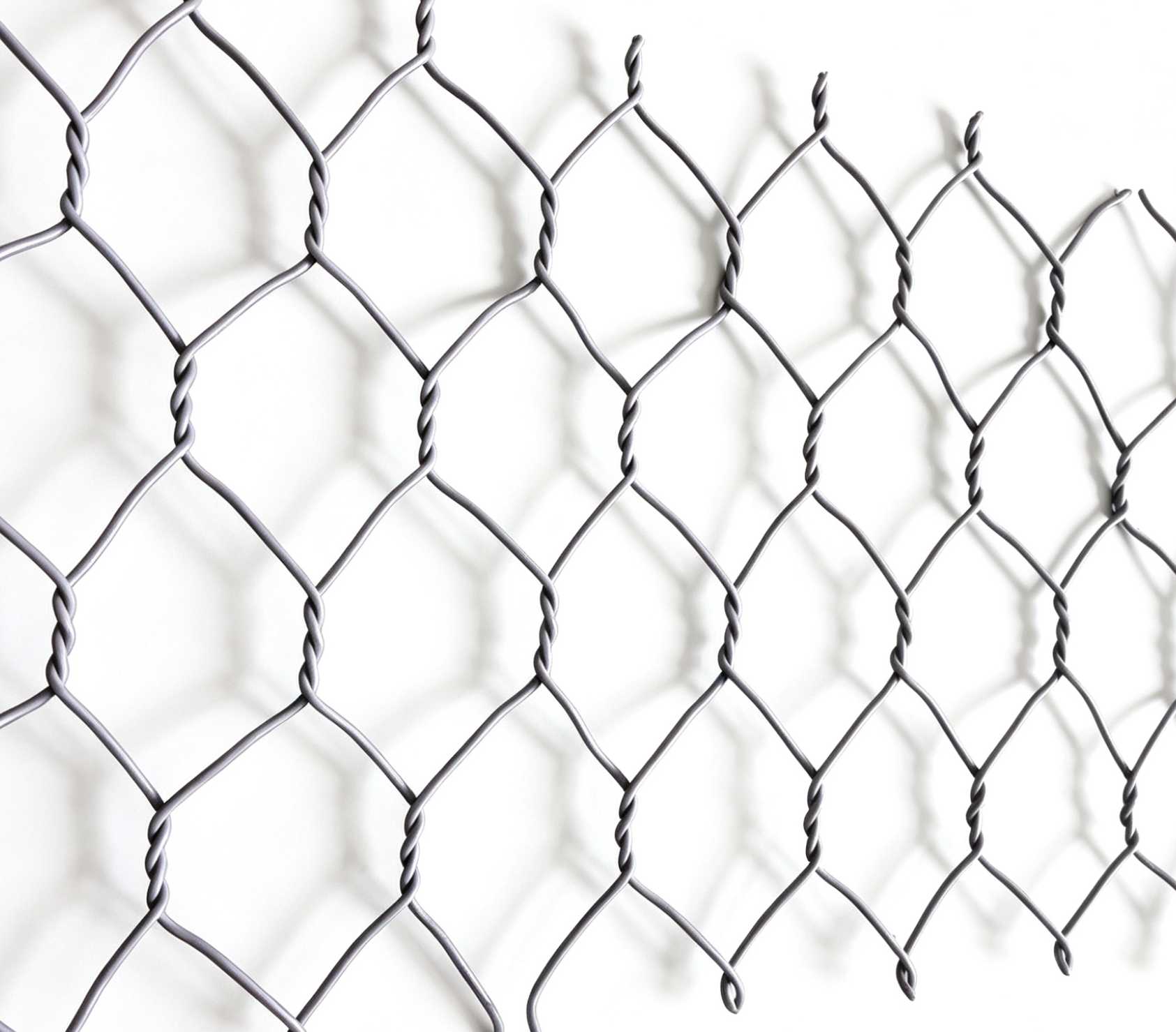
Gabion baskets follow standardized dimensions that balance structural performance with practical handling. Here are the most commonly specified sizes:
| Dimension | Standard Options | Notes |
|---|---|---|
| Length (L) | 1m, 1.5m, 2m, 3m, 4m | 3m and 4m are most economical per m³ |
| Width (W) | 0.5m, 1m | 1m width is standard for retaining walls |
| Height (H) | 0.5m, 1m | 1m height is most common for walls |
| Diaphragms | Every 1m of length | A 3m basket has 2 internal diaphragms |
The most frequently ordered size is 3m × 1m × 1m (L×W×H), which gives 3 cubic meters of stone fill capacity per basket. For larger projects, 4m × 1m × 1m baskets reduce the number of individual units while maintaining manageable weight.
2. Calculating Single Basket Volume
The volume of a single gabion basket is straightforward:
Basket Volume (m³) = Length × Width × Height
All dimensions in meters
Example 1 — Standard basket:
- Basket: 3m (L) × 1m (W) × 1m (H)
- Volume = 3 × 1 × 1 = 3 m³ per basket
Example 2 — Half-height basket:
- Basket: 2m (L) × 1m (W) × 0.5m (H)
- Volume = 2 × 1 × 0.5 = 1 m³ per basket
Example 3 — Narrow basket:
- Basket: 4m (L) × 0.5m (W) × 1m (H)
- Volume = 4 × 0.5 × 1 = 2 m³ per basket
3. Calculating Basket Surface Area (Mesh Required)
To estimate the amount of wire mesh needed, you need the total surface area of the basket — including the diaphragm panels. This is essential for cost estimation and material ordering.
Surface Area (m²) = (L×W×2) + (L×H×2) + (W×H×2) + (N×W×H)
Where N = number of diaphragms (L - 1, since diaphragms at every 1m)
Top lid included in first term (L×W×2 includes bottom + top)
Example — 3m × 1m × 1m basket (2 diaphragms):
- Bottom + Top: 3 × 1 × 2 = 6 m²
- Front + Back panels: 3 × 1 × 2 = 6 m²
- Side panels: 1 × 1 × 2 = 2 m²
- Diaphragms (N=2): 2 × 1 × 1 = 2 m²
- Total mesh area = 6 + 6 + 2 + 2 = 16 m²
For cost estimation: multiply this area by the price per square meter of the specified mesh type (2.7mm Galfan, 3.0mm galvanized, etc.).
4. Calculating Total Wall Volume and Basket Count
For a complete retaining wall, calculate the total volume first, then determine how many baskets you need:
Step-by-Step Calculation:
- Wall volume = Wall length × Wall height × Wall width (base-to-top average)
- Basket count = Wall volume ÷ Single basket volume
- Total mesh area = Basket count × Single basket surface area
- Stone fill tonnage = Wall volume × 1.6 (density factor: 1.6 tons per m³ of stone)
Real-world example — 50m retaining wall, 3m height:
- Wall volume: 50m × 3m × 1m = 150 m³
- Baskets (3×1×1m, 3 m³ each): 150 ÷ 3 = 50 baskets
- Total mesh area: 50 × 16 m² = 800 m²
- Stone fill required: 150 × 1.6 = 240 tons
5. Calculating Tiered / Stepped Walls
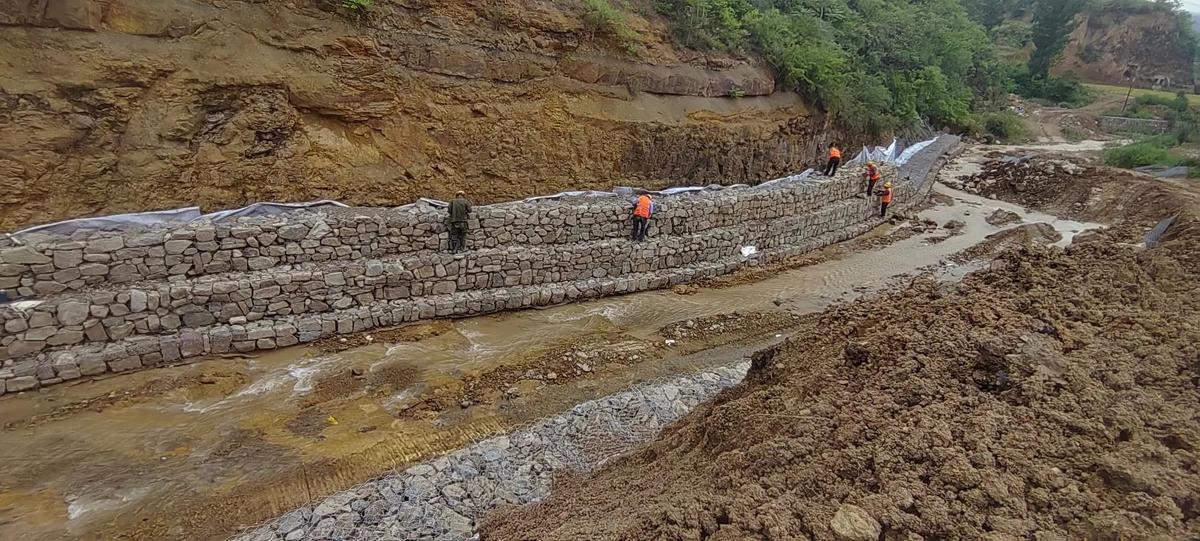
Most gabion retaining walls over 3m are designed as stepped or tiered walls — each upper tier is narrower than the one below, creating a terraced profile. This reduces lateral earth pressure and improves stability.
Tiered Wall Calculation:
- Calculate volume per tier: Length × Height(per tier) × Width(per tier)
- Sum all tier volumes for total volume
- Calculate basket count per tier separately (tiers may use different basket sizes)
Example — 3-tier wall, 30m length:
| Tier | Height | Width | Volume |
|---|---|---|---|
| Bottom Tier | 1m | 2m | 30 × 1 × 2 = 60 m³ |
| Middle Tier | 1m | 1.5m | 30 × 1 × 1.5 = 45 m³ |
| Top Tier | 1m | 1m | 30 × 1 × 1 = 30 m³ |
| Total Wall Volume | 135 m³ | ||
6. Stone Fill Calculation and Specifications
Stone fill is typically the largest cost component of a gabion project. Getting the specification right is critical:
- Stone size: 1.5-2× the mesh opening. For 80×100mm mesh, use 120-200mm diameter stones
- Density factor: Use 1.6 tons/m³ for standard rock fill. Adjust to 1.7 for dense basalt/granite, 1.4 for lighter limestone
- Void ratio: Gabion fill has approximately 30-35% void space. Account for this in drainage calculations
- Quality: Stone should be hard, durable, non-friable, and resistant to weathering. Avoid shale, claystone, and other soft rocks
Quick stone tonnage formula:
Stone Required (tons) = Wall Volume (m³) × 1.6
7. Common Calculation Mistakes to Avoid
Based on thousands of projects, here are the most frequent errors we see in gabion quantity calculations:
- Forgetting diaphragm area: Internal diaphragms add 10-15% to total mesh area. Omission leads to material shortages
- Using external dimensions for volume: The mesh itself occupies negligible volume. External basket dimensions = fillable volume
- Ignoring bulging factor: Filled gabions typically bulge 5-8% at the face. For precise architectural applications, account for this
- Not adding 5% waste factor: Always add 5% to your calculated mesh area for cutting waste, damage, and on-site adjustments
- Mixing unit systems: Convert everything to meters before calculating. A 4-foot × 3-foot × 3-foot basket should be 1.22m × 0.91m × 0.91m
8. Quick Reference: Common Basket Configurations
| Basket Size (L×W×H) | Volume | Mesh Area | Stone (tons) | Diaphragms |
|---|---|---|---|---|
| 2m × 1m × 1m | 2 m³ | 11 m² | 3.2 | 1 |
| 3m × 1m × 1m | 3 m³ | 16 m² | 4.8 | 2 |
| 4m × 1m × 1m | 4 m³ | 21 m² | 6.4 | 3 |
| 2m × 1m × 0.5m | 1 m³ | 7.5 m² | 1.6 | 1 |
| 1.5m × 1m × 1m | 1.5 m³ | 8.5 m² | 2.4 | 0 |
For any gabion project, we recommend sending your wall dimensions to our engineering team for a detailed quantity takeoff — it's free and typically returned within 24 hours.
📋 Table of Contents
- 1. Standard Gabion Basket Dimensions
- 2. Calculating Single Basket Volume
- 3. Calculating Basket Surface Area
- 4. Total Wall Volume and Basket Count
- 5. Calculating Tiered / Stepped Walls
- 6. Stone Fill Calculation and Specifications
- 7. Common Calculation Mistakes to Avoid
- 8. Quick Reference: Common Configurations
Get a Free Gabion Quantity Takeoff
Send us your wall dimensions — length, height, and tier configuration. Our engineers will prepare a detailed quantity breakdown with basket count, mesh area, and stone fill estimates within 24 hours.
📱 WhatsApp Inquiry 📧 Send Email