Gabion Mesh Rolls vs Gabion Baskets: Which One Fits Your Project?

When planning a gabion project — whether it's a retaining wall, riverbank protection, or landscape feature — one of the first decisions you'll face is choosing between gabion mesh rolls and prefabricated gabion baskets. Both products serve the same fundamental purpose of containing stone fill within a wire mesh structure, but they differ significantly in installation method, labor cost, structural flexibility, and suitability for different site conditions.
At Haobo Metal, we manufacture both gabion rolls and baskets, supplying projects across Asia, Africa, the Middle East, and South America. In this guide, we'll break down the key differences, help you evaluate which format works better for your specific application, and share practical installation tips that can save you 20-30% on labor costs.
1. What Are Gabion Mesh Rolls?
Gabion mesh rolls are continuous sheets of double-twist hexagonal wire mesh, typically supplied in standard dimensions of 2m or 3m width by 25m to 50m length. The mesh is manufactured with selvedge (reinforced edge wire) along both sides to prevent unraveling during transport and installation.
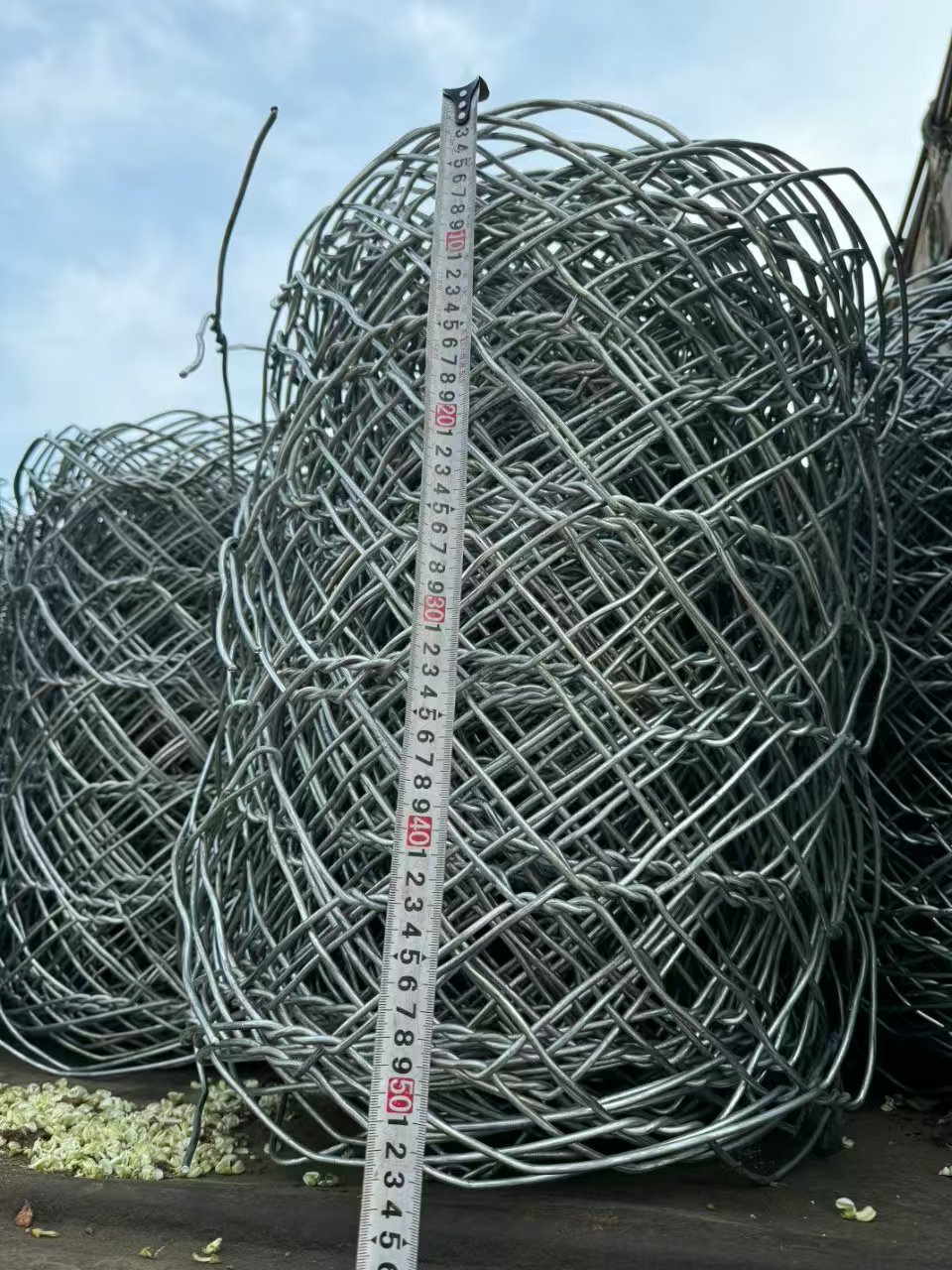
Key characteristics of gabion rolls:
- Flexibility: Can be cut to any desired length on-site, making them ideal for irregular terrain and curved structures
- Lower transport cost: Rolls are compact and stackable, reducing shipping volume by up to 40% compared to assembled baskets
- On-site assembly required: Workers must cut the roll to size, fold the panels, and lacing them together using spiral wire or C-rings
- Common sizes: 2m × 25m, 2m × 50m, 3m × 25m, 3m × 50m
- Mesh opening: Typically 60×80mm, 80×100mm, or 100×120mm
- Wire diameter: 2.0mm to 3.4mm (depending on project requirements)
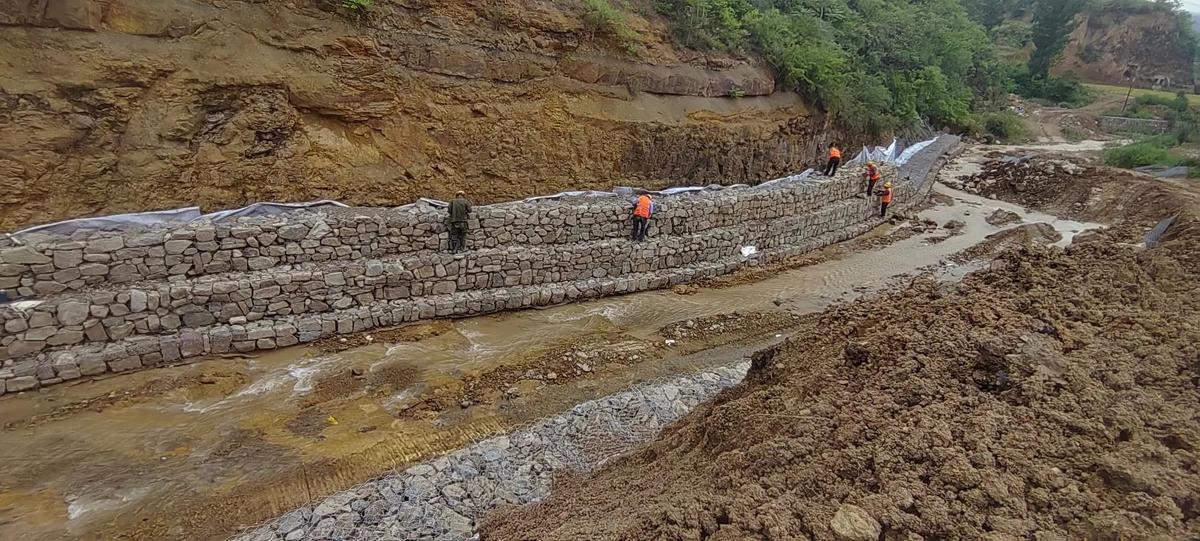
Gabion rolls are particularly popular for riverbank and coastal protection, roadside erosion control, and large-scale projects where the total linear meterage runs into the thousands. The ability to cut mesh to exact site measurements minimizes waste and allows contractors to adapt to unexpected terrain variations.
2. What Are Gabion Baskets (Prefabricated Boxes)?
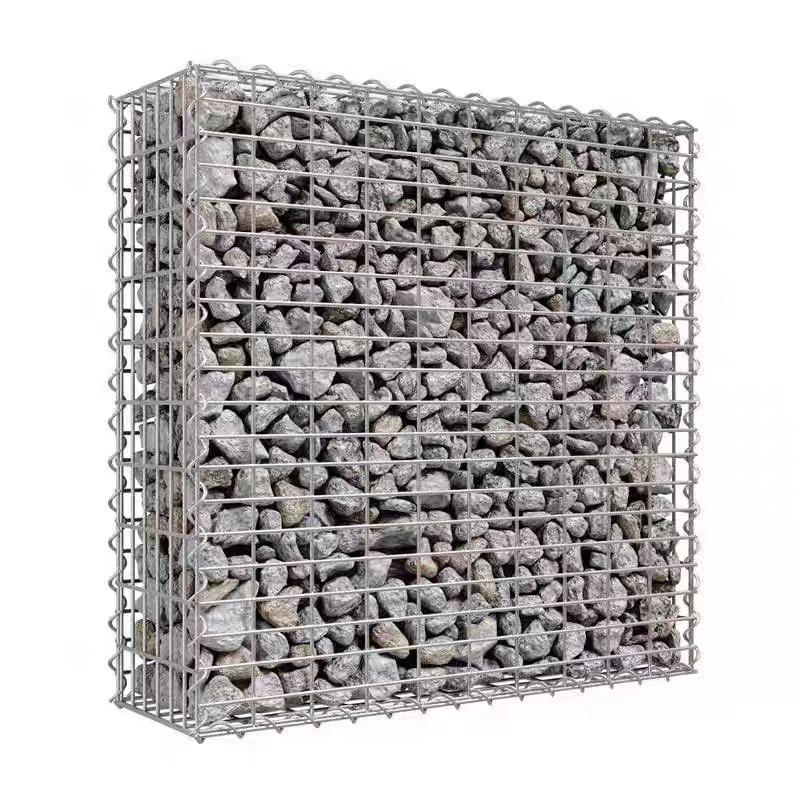
Gabion baskets (also called gabion boxes or welded gabion cages) are pre-assembled rectangular containers made from welded wire mesh or double-twist hexagonal mesh, delivered to site with all panels folded flat. Each basket includes integrated diaphragms (internal partition panels) at 1m intervals, which prevent the stone fill from bulging and maintain structural integrity.
Standard gabion basket dimensions include:
- Length: 1m, 1.5m, 2m, 3m, 4m
- Width: 0.5m, 1m
- Height: 0.5m, 1m
- Diaphragms: Every 1m (so a 3m basket has 2 internal diaphragms)
The key advantage of prefabricated baskets is faster installation. Workers simply unfold the flat-packed basket, connect the edges with lacing wire or spiral binders, install the diaphragms, and begin filling with stone. This reduces on-site labor time by approximately 30-40% compared to roll-based assembly, especially for standardized retaining wall designs.
Gabion baskets are the go-to choice for mechanically stabilized earth (MSE) retaining walls, architectural gabion facades, noise barriers, and projects where consistent box dimensions are critical for structural engineering calculations.
3. Head-to-Head Comparison: Rolls vs Baskets
| Feature | Gabion Rolls | Gabion Baskets |
|---|---|---|
| Installation Speed | Slower — requires cutting, folding, lacing | Faster — unfold, lace edges, fill |
| Labor Cost | Higher (more on-site work) | Lower (less assembly time) |
| Material Waste | Minimal (cut to exact length) | Low (standard sizes fit most designs) |
| Transport Cost | Lower (compact rolling) | Higher (flat-packed but bulkier) |
| Terrain Adaptability | Excellent (cut-to-fit flexibility) | Good (can stack and adjust) |
| Structural Uniformity | Depends on installation skill | Consistent (factory-made dimensions) |
| Best For | Riverbanks, slopes, irregular terrain | Retaining walls, architectural, MSE |
| Unit Cost (per m³) | $8–15 (material only) | $10–18 (material only) |
4. When to Choose Gabion Rolls
Gabion rolls are the better choice when:
- Project terrain is irregular: Riverbanks with curves, slopes with varying angles, or any site where standardized box dimensions won't fit neatly
- Total length exceeds 500m: For large-scale erosion control, the transport savings from rolls become significant — up to 40% less container space
- Remote site with limited access: Rolls can be carried by hand or small vehicles to locations where flat-packed baskets would be unwieldy
- Budget is the primary constraint: Rolls typically cost 10-20% less per square meter than equivalent baskets, plus lower shipping costs
- You have skilled labor available: If your crew has experience cutting, folding, and lacing gabion mesh, the installation time gap narrows
Real-world example: A 2km riverbank protection project in the Philippines saved approximately $12,000 in material and transport costs by choosing gabion rolls over prefabricated baskets, despite spending an extra 15 days on installation labor.
5. When to Choose Gabion Baskets
Prefabricated gabion baskets are the better choice when:
- Project requires engineered consistency: Retaining walls where every layer must have identical dimensions for structural calculations
- Timeline is tight: Projects with strict deadlines benefit from the 30-40% faster installation speed of baskets
- Architectural aesthetics matter: Gabion facades and decorative walls demand uniform box alignment — baskets deliver this better than rolls
- Labor is unskilled or limited: Baskets require less expertise to assemble correctly, reducing the risk of structural failures from poor lacing
- Welded mesh is preferred: If your specification calls for welded wire gabions (rather than double-twist hexagonal), baskets are the standard delivery format
Real-world example: A highway MSE retaining wall project in Kenya completed 40% faster using prefabricated gabion baskets, allowing the road to open two weeks ahead of schedule.
6. Coating and Material Considerations for Both Formats
Whether you choose rolls or baskets, the wire coating specification is critical for long-term durability:
- Hot-dip galvanized (Class A): Minimum 245 g/m² zinc coating, 30-50 year service life in normal conditions. Suitable for most applications.
- Galfan (Zn-5%Al): Minimum 275 g/m² alloy coating, 2-3× longer life in marine or acidic environments. Increasingly specified for coastal projects.
- PVC-coated: Additional 0.4-0.6mm PVC layer over galvanized wire. Provides extra protection and color options (green, gray, black). Recommended for highly corrosive environments and architectural applications.
Both rolls and baskets can be manufactured with any of these coatings. At Haobo Metal, our standard gabion products use hot-dip galvanized wire meeting ASTM A975 and EN 10223-3 standards.
7. Installation Tips for Both Formats
Regardless of which format you choose, these best practices will improve your gabion structure's performance:
- Foundation preparation: Level and compact the base. For retaining walls over 3m, pour a concrete footing.
- Stone fill size: Stone diameter should be 1.5-2× the mesh opening size. For 80×100mm mesh, use 120-200mm stones.
- Fill technique: Place larger stones against the face for aesthetics, smaller stones in the core. Avoid dropping stones from height — it can damage the wire coating.
- Bracing during filling: Use internal bracing wires to prevent the mesh face from bulging outward during stone placement.
- Lid tension: After filling, pull the lid tight and lace securely. A loose lid reduces the basket's structural contribution.
- Stacking: For multi-layer walls, stagger the vertical joints between layers (like brickwork) and lace adjacent baskets together at all contact edges.
Pro tip: If using rolls for a retaining wall, pre-cut all panels for an entire layer before starting assembly. This batch-processing approach reduces worker idle time and improves dimensional consistency across the wall.
8. Cost Analysis: Rolls vs Baskets — Total Project Economics
The decision between rolls and baskets isn't just about material cost. Here's a realistic cost comparison for a typical 500m³ retaining wall project:
| Cost Component | Gabion Rolls | Gabion Baskets |
|---|---|---|
| Mesh Material (2.7mm Galfan) | $8.50/m² | $10.20/m² |
| Ocean Freight (per m²) | $0.80/m² | $1.30/m² |
| Installation Labor | $6.00/m² | $4.00/m² |
| Total Installed Cost | $15.30/m² | $15.50/m² |
For this 500m³ project, the difference is negligible (~$100 total). But scale it to a 5,000m³ project, and rolls save approximately $1,000 — plus the transport advantage grows with distance. The breakeven point varies by local labor rates and shipping distance.
9. Making the Final Decision: A Decision Framework
Use this simple decision tree to determine which format fits your project:
- Is your site irregular terrain (riverbank, slope, curved alignment)? → Choose rolls
- Is it a vertical retaining wall with engineered dimensions? → Choose baskets
- Is labor skilled and readily available? → Rolls become more attractive
- Is the project timeline tight? → Baskets save significant installation time
- Is the project remote with high transport costs? → Rolls reduce shipping volume
Many projects actually use a hybrid approach: gabion baskets for the main retaining wall structure (where uniformity matters) and gabion rolls for the wing walls, toe protection, and apron areas (where terrain adaptability matters).
📋 Table of Contents
- 1. What Are Gabion Mesh Rolls?
- 2. What Are Gabion Baskets (Prefabricated Boxes)?
- 3. Head-to-Head Comparison: Rolls vs Baskets
- 4. When to Choose Gabion Rolls
- 5. When to Choose Gabion Baskets
- 6. Coating and Material Considerations
- 7. Installation Tips for Both Formats
- 8. Cost Analysis: Total Project Economics
- 9. Making the Final Decision
Need Gabion Mesh for Your Project?
Whether you need gabion rolls for riverbank protection or prefabricated baskets for a retaining wall — send us your specifications. Our engineers will provide a customized quotation and technical proposal within 24 hours.
📱 WhatsApp Inquiry 📧 Send Email